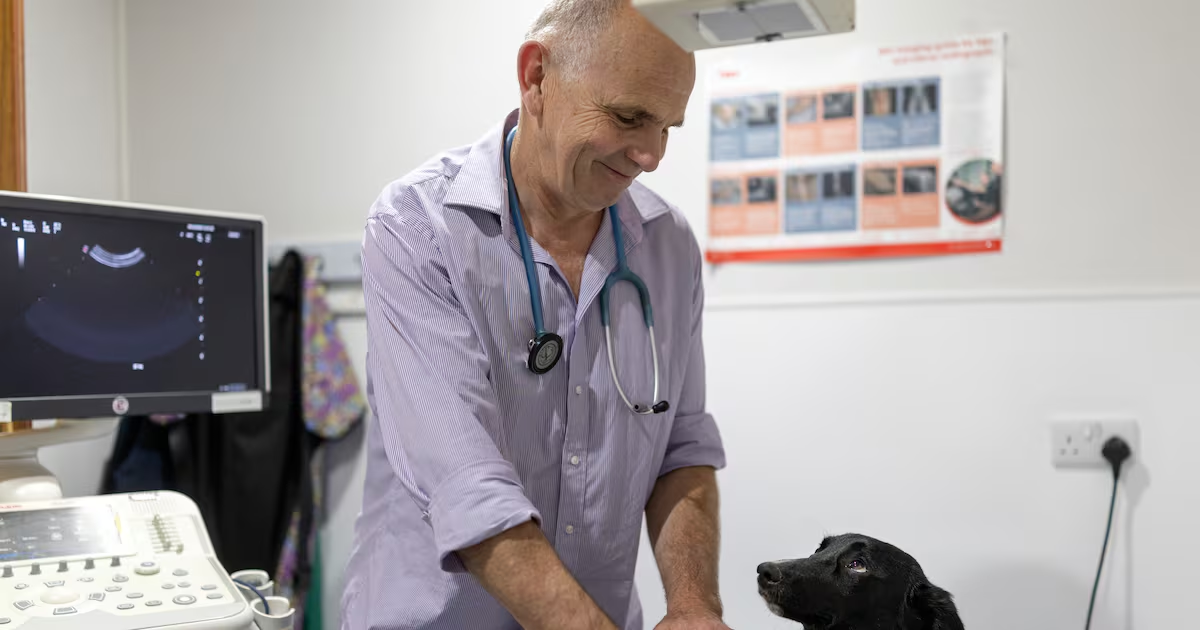
Not long ago, the most steady work a newly-qualified vet might find was in rural Ireland treating large farm animals. A lot has changed over the last few decades, but perhaps nothing as dramatically as the rise in popularity of companion animals and people’s willingness to pay to keep them healthy. Fifty-two per cent of respondents to a 2021 Central Statistics Office survey reported having a pet in their home, with one in five having acquired theirs during the Covid pandemic. Care for dogs, cats and exotic animals now dominates the veterinary sector, a trend that does not look like it is going to change any time soon. With business booming for pet specialists, it is no surprise the influence of large corporate players in the veterinary sector is increasing. A majority of Irish veterinary practices are still owned by individual practitioners. But greater consolidation of the sector is anticipated by 2030, especially in urban areas, according to a recent report carried out by advisory firm HLB Ireland. It shows the landscape is shifting. “My dad was a vet and I just followed on and did what he did,” says Conor Ó Scanaill, a long-time vet in Dublin. “My brother does it; uncles have done it; cousins have done it. So we like it, and that’s the way. My dad came to Swords in 1949 and there’s been an Ó Scanaill vet here since.”His practice, Ó Scanaill Veterinary Hospital, has transitioned over the years from “large animal economics” to “small animal care”. This is in line with the findings of a 2023 survey carried out by the Federation of Veterinarians in Europe, which drew more than 12,000 responses from across the Continent, including 253 from Ireland. Respondents set out the broad shift and their expectation that “the trajectory for future veterinary practice is greater specialisation, with the corporate sector likely to pursue this more aggressively”. Ó Scanaill sees it as a straightforward consequence of investment. If you sell your practice for €1 million, he says, the new owner will be aiming for a suitable return on that sum. By the same token, if you invest in a CT scanner, you would “have to justify it”. “You’d have to pay for it, so you’d be certainly working the unit,” Ó Scanaill says. He fears that if he were working under a practice manager in a corporate ownership group, the pressure to turn in greater profits would negatively influence his approach to treatment. For example, he says, some meetings with pet owners take longer than others, as not everyone communicates at the same speed.“The one thing that you want with your dog is that it’s properly looked after,” Ó Scanaill says. “Not that it’s done through a stopwatch, not that you’ve been upsold or anything else. Really, what you want is the best for your animal.”Larger, corporate chain practices can offer access to more advanced equipment and often provide 24-hour emergency care. Ó Scanaill says he has conversations with some clients in which he gives his opinion and then recommends that they go elsewhere if they want to pursue a more elaborate or specialist treatment plan. This occurs “frequently with neurology” and at times, in complex cases of breaks. An X-ray of a dog’s broken leg surgery at Ó Scanaill Veterinary Hospital. Photograph: Chris Maddaloni/The Irish Times
Veterinary in Ireland: Corporate chains grow as care expectations for pets ‘skyrocket’
With the advent of elaborate animal treatment plans, ethical dilemmas arise around caring for pets approaching the end of their time
1,791 words~8 min read