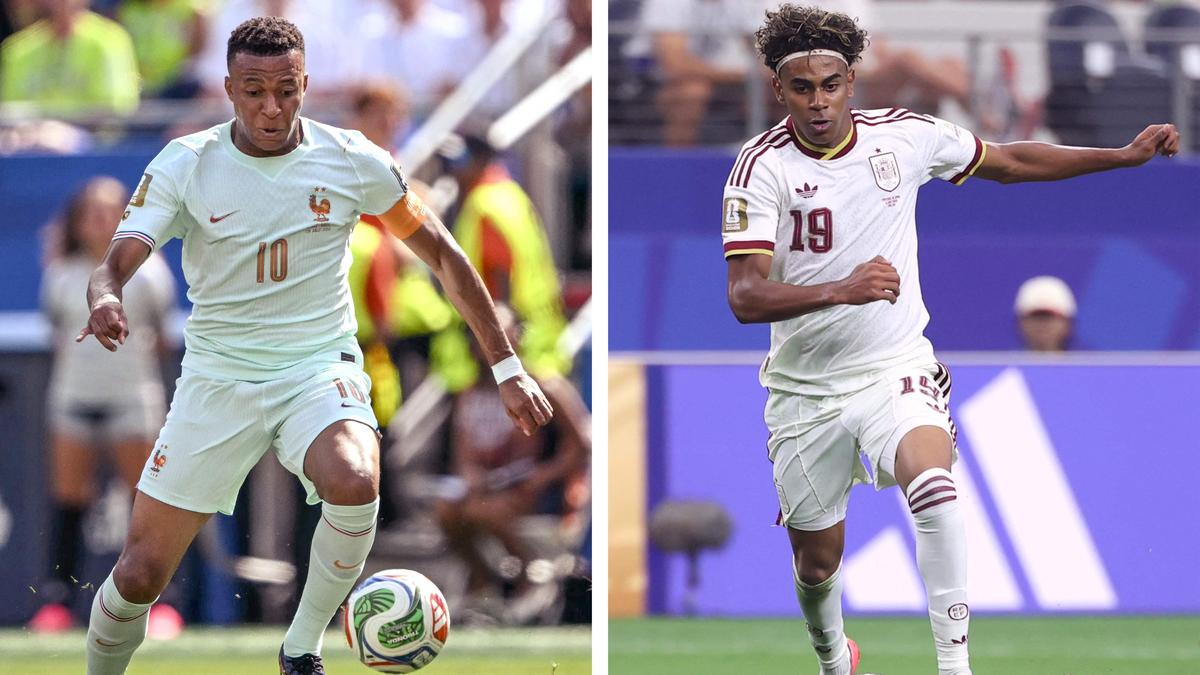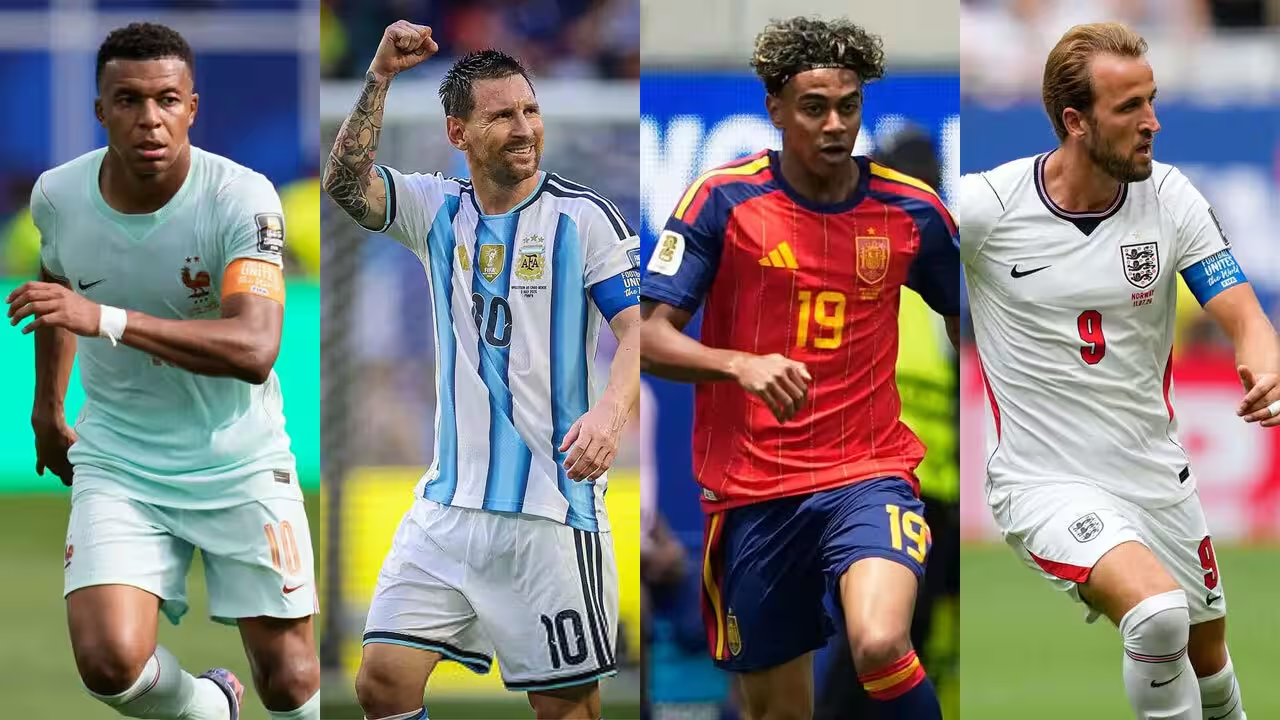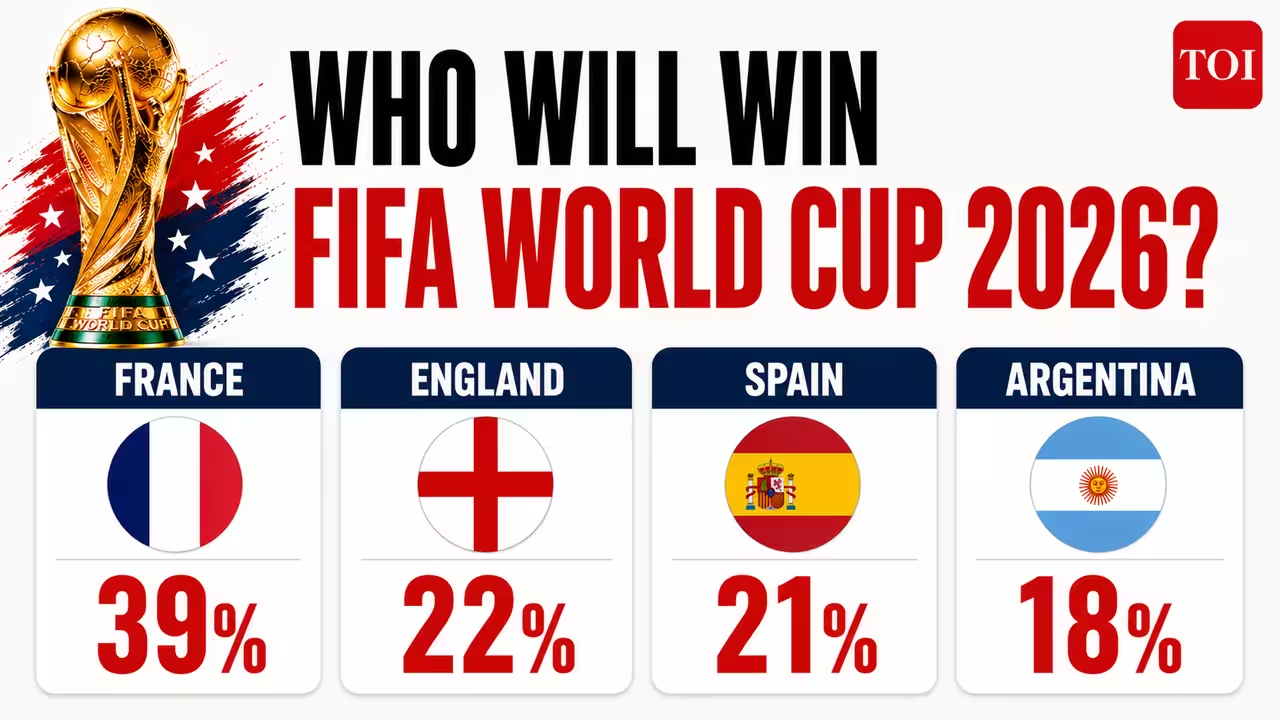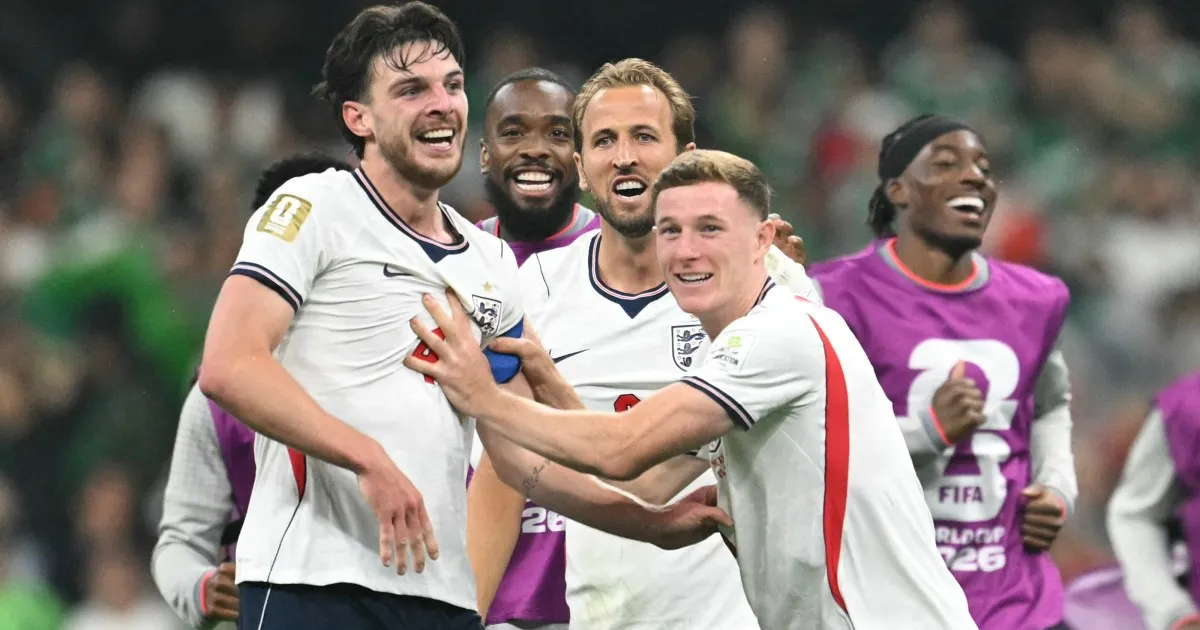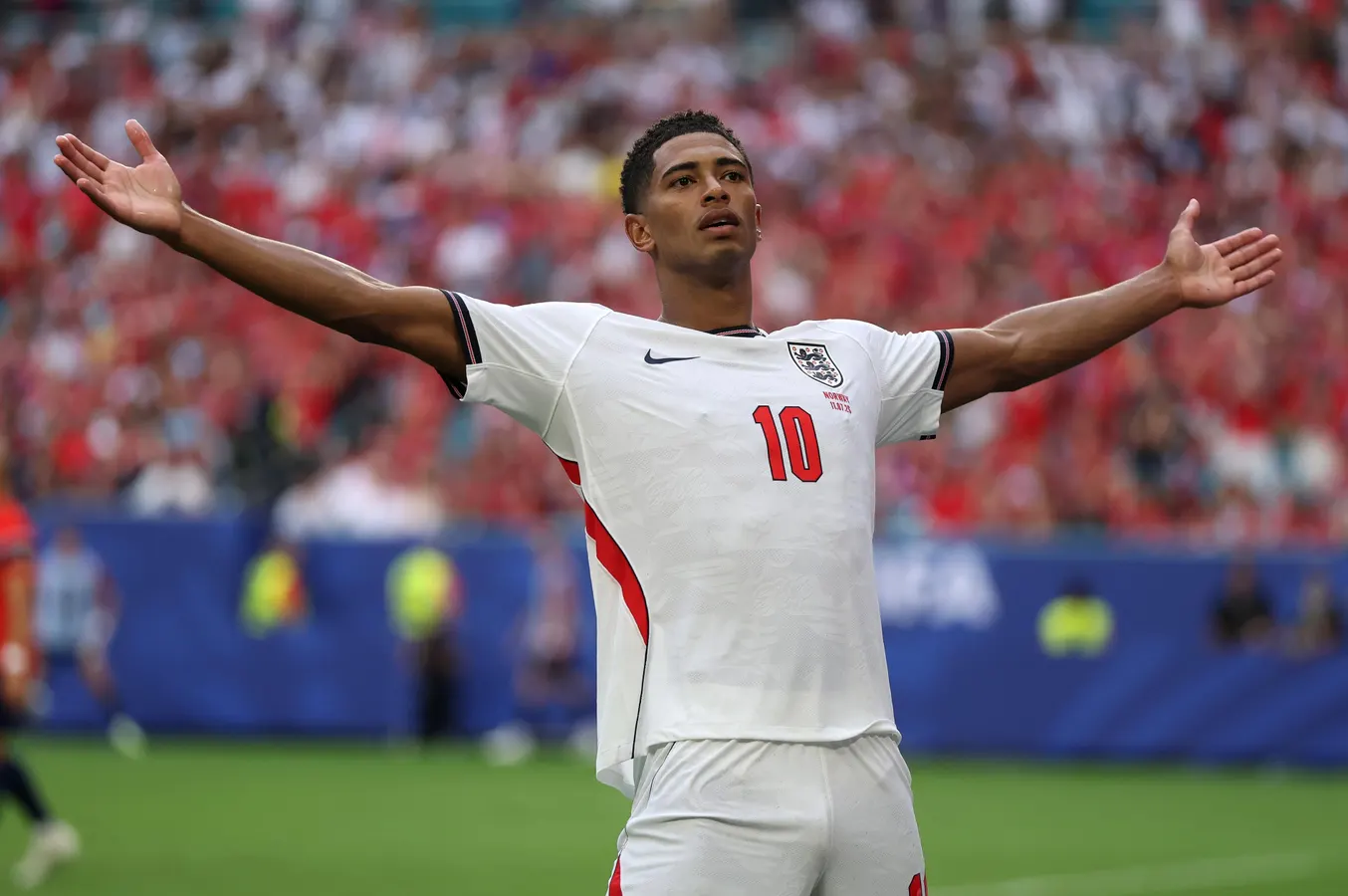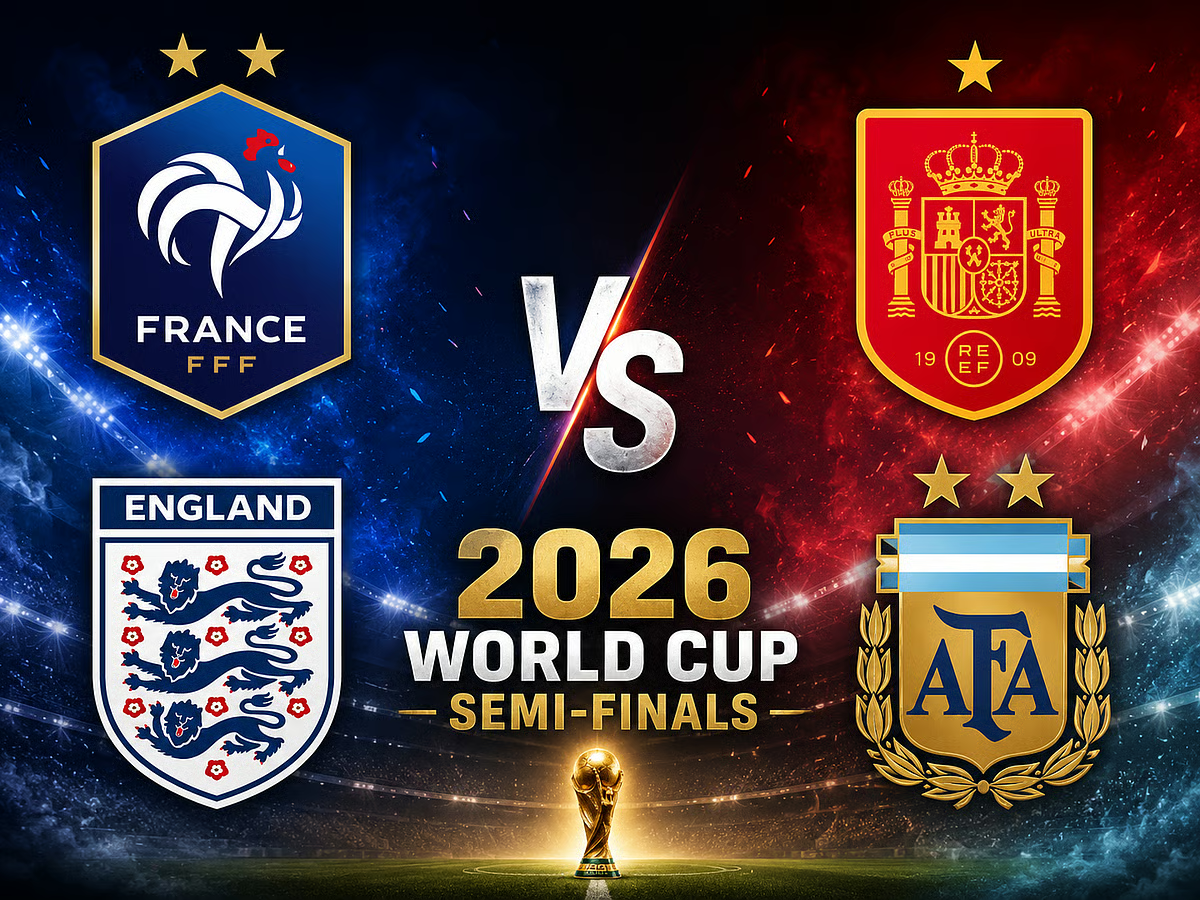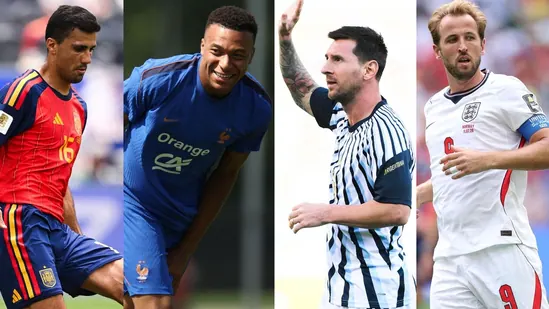
France, Spain, Argentina and England reached the World Cup semifinals through four contrasting statistical routes to victory. The FIFA World Cup 2026 has reached its semifinal stage, but the final four have not arrived here by following one dominant tactical formula.The captain of the four semifinal teams in the FIFA World Cup 2026. (AFP)France have overwhelmed opponents through attacking volume. Spain have suffocated them through possession and territorial control. Argentina have turned finishing into a competitive advantage. England have built their campaign around high-value chances and the decisive contributions of two extraordinary players.The numbers underline how different these routes have been. Only 1.5 expected goals separate the four semifinalists, yet Argentina have scored 17 goals, France 16, England 13 and Spain 11. The ability to convert broadly similar attacking output into very different results has shaped the tournament.The semifinals will therefore test more than four talented squads. They will test four contrasting ideas of how knockout football should be won.France have turned pressure into inevitabilityFrance have been the most relentless attacking side among the semifinalists. They average 18.5 shots per 90 minutes and have created 13.5 chances per 90, leading the final four in both categories. Their 50 shots on target are also the highest total among the remaining teams.The strength of France’s attack is not simply that they possess Kylian Mbappe, Ousmane Dembele and Michael Olise. It is the frequency with which those players force opponents to defend another transition, another carry or another shot.France have scored 16 goals from 11.7 expected goals. Outperforming their underlying chance quality by 4.3 goals. Mbappe and Dembele have scored 13 of those 16, making the attack heavily concentrated but also brutally effective.Stats of France ahead of the semifinal. (HT Digital)Their most revealing statistic, however, may be the timing of their goals. France have scored 11 times after half-time, accounting for nearly 69% of their total.They do not merely begin matches with quality. They become more dangerous as matches stretch, spaces increase, and opponents tire. What begins as pressure gradually becomes inevitability.That will be crucial against Spain. France may spend long periods without the ball, but they do not require sustained possession to generate danger. One regain, one carry and one defensive imbalance can be enough.Spain defend by refusing to surrender controlSpain have reached the semifinals through the tournament’s most complete model of territorial control.They average 66% possession, complete 92% of their passes and produce 632 passes per 90 minutes. No other semifinalist comes close to matching their ability to dictate where the match is played and who is allowed to control it.Spain’s possession is not decorative. It is defensive.They have conceded only one goal in six matches. Opponents struggle to threaten Spain because they are frequently denied the ball, pressed immediately after regaining possession, and pushed far away from the Spanish penalty area.Spain's stats ahead of the semifinal. (HT Digital)Their high turnover numbers are particularly significant. Spain do not simply recycle possession slowly. They regularly win the ball close to the opposition goal, preventing counters before they can develop and immediately begin another attacking sequence.Yet their dominance has not always produced equivalent attacking efficiency. Spain have generated 10.4 expected goals and scored 11. Their conversion rate of 10.6% is the lowest among the four semifinalists. France takes only slightly more shots but have scored five additional goals.That creates the central tension in the first semifinal. Spain may control more of the match, but France may control more of its most destructive moments.For Spain, possession must eventually become a lead. Allowing France to remain level in the final half-hour would invite their opponents into the period where they have been most dangerous.Argentina have made finishing a tactical weaponArgentina have been the most efficient attacking side of the World Cup. They have scored a tournament-high 17 goals from their 11.9 expected goals, outperforming their chance quality by 5.1. Their short conversion rate of 17.9% is comfortably the best among the semifinalists.Argentina do not take as many shots as France or Spain. Their advantage lies in what happens after those shots are created.Argentina stats ahead of the semifinal. (HT Digital)Their average attempt has the highest expected goal value among the final four, indicating they have generally selected good shooting positions. They have then finished those opportunities at an exceptional rate.Lionel Messi remains the central figure, scoring eight goals and contributing two assists. But Argentina’s attack is less dependent on one combination than England’s or France’s. Lautaro Martínez, Julian Alvarez, Alexis Mac Allister, Enzo Fernandez and several defenders have also contributed.Argentina can score through controlled possession, counters, corners, direct free-kicks and penalties. That variety makes them especially dangerous in knockout matches where one method can be removed, but another may remain visible.The weakness is at the other end. Argentina have conceded six goals and have failed to keep a clean sheet in any of their three knockout matches. They have scored three times in every knockout game, but their attack has repeatedly needed to compensate for defensive vulnerability.Their route has been thrilling, productive and effective; it has not always been secure.England are built around decisive actionEngland take fewer shots per 90 than the other semifinalists, but their chances tend to carry greater value. Nearly 49% of their attempts have been on target, the best accuracy rate among the final four. They have also created more big chances than any other team through the earlier knockout rounds.England are not trying to produce the volume of France or the control of Spain. Their football is geared towards reaching specific areas and allowing their best players to decide the outcome.Harry Kane and Jude Bellingham have scored 12 of England’s 13 goals. That represents 92% of their total output, making England the most concentrated attack left in the competition.Kane provides penalty-box positioning, aerial power and finishing. Bellingham provides late movement, physical authority and the ability to transform broken phases into goals. Together, they have made England dangerous even during matches in which the team has not been consistently dominant.England stats ahead of the semifinal. (HT Digital)England’s four headed goals also give them a clear point of difference. Set-pieces, crosses, and second balls become particularly important against Argentina's defence, which has already been placed under severe pressure during the knockout rounds.But England’s first-half record remains a concern. Five of the six goals they have conceded have arrived before the interval.They have repeatedly recovered, but falling behind against Argentina would be different. Argentina possess the passing quality, experience and game management required to slow matches once they are in front.Control against executionThe semifinals present a clear divide. France and Spain have produced the strongest processes. They control territory, possession, shot volume and overall shape of matches.Argentina and England are more dependent on decisive execution. Their football has been less consistently dominant, but they possess players capable of settling matches in a handful of actions.That is the enduring tension of tournament football. Over a league season, control is usually rewarded. Over one knockout match, efficiency, timing and individual quality can erase long periods of opposition superiority.France and Spain have reached this stage by determining what matches look like. Argentina and England have reached it by deciding what the scoreline will be.The World Cup has now narrowed to four teams and four competing models of success. The semifinals will reveal whether the tournament ultimately belongs to the sides that control the game - or those that control its decisive moments.Probuddha Bhattacharjee is a sports writer and analyst with expertise spanning cricket, football, and multi-sport events, with a strong emphasis on data-driven journalism and tactical storytelling. He currently focuses on international cricket, the Indian Premier League, global tournaments, and emerging trends shaping modern sport, blending advanced statistics with strong narrative context to explain performance, strategy, and decision-making. His work aims to bridge the gap between numbers and storytelling, helping readers understand not just what happened on the field, but the tactical and structural reasons behind it.
France, Spain, Argentina, England: Four identities, four routes to the World Cup Final
France, Spain, Argentina and England reached the World Cup semifinals through four contrasting statistical routes to victory. | Football News
1,496 words~7 min read