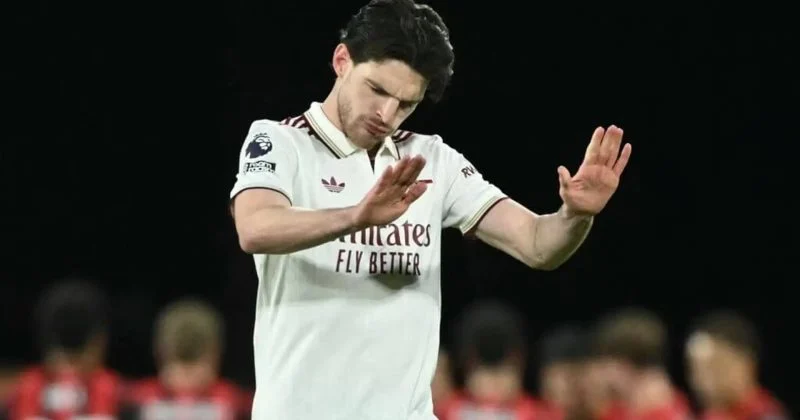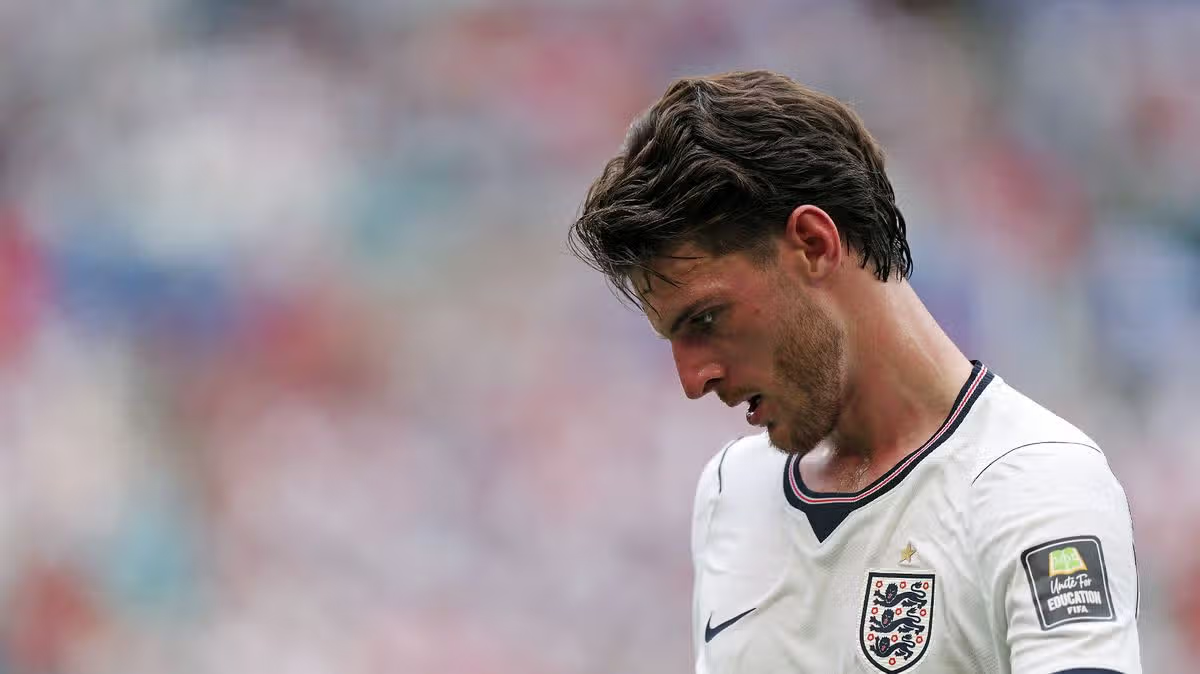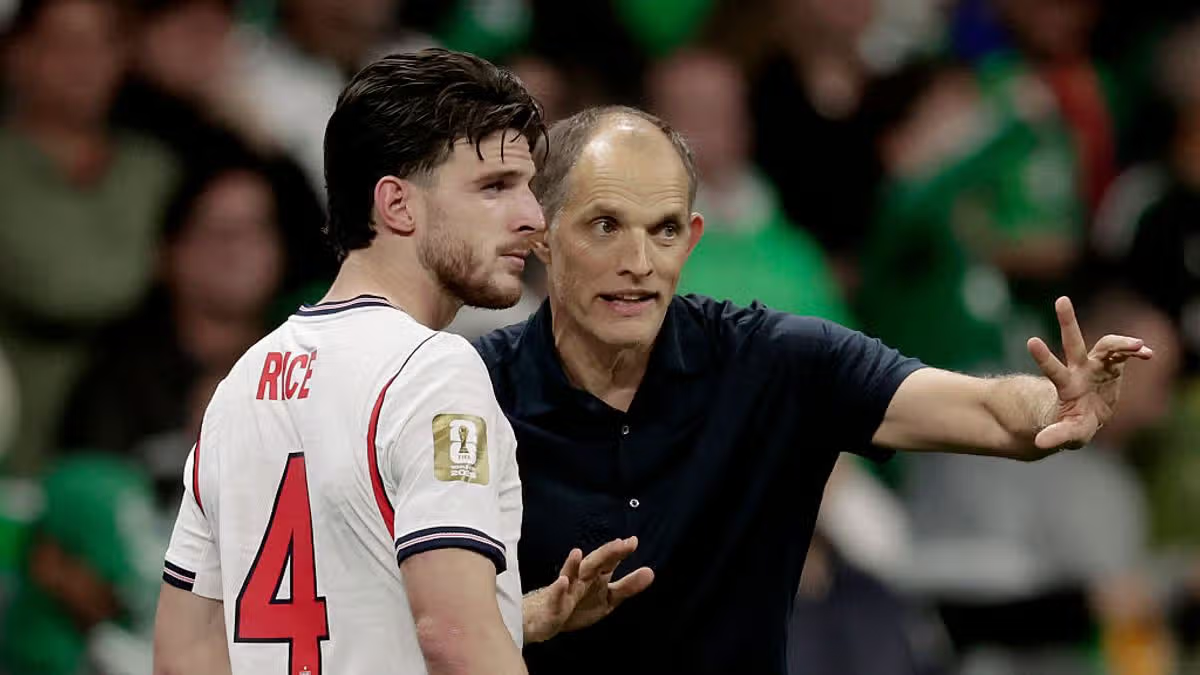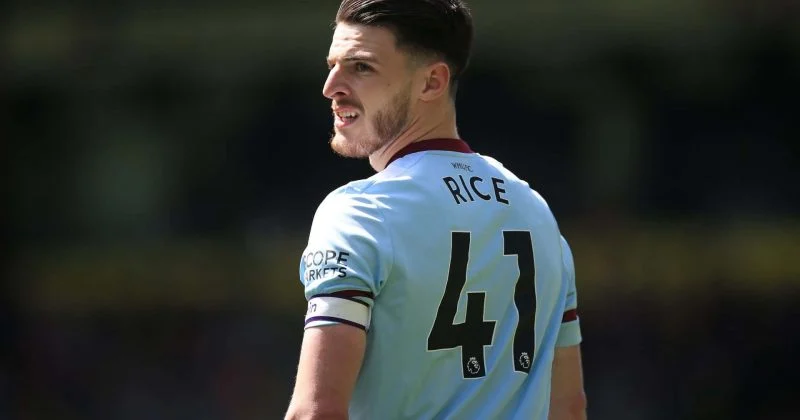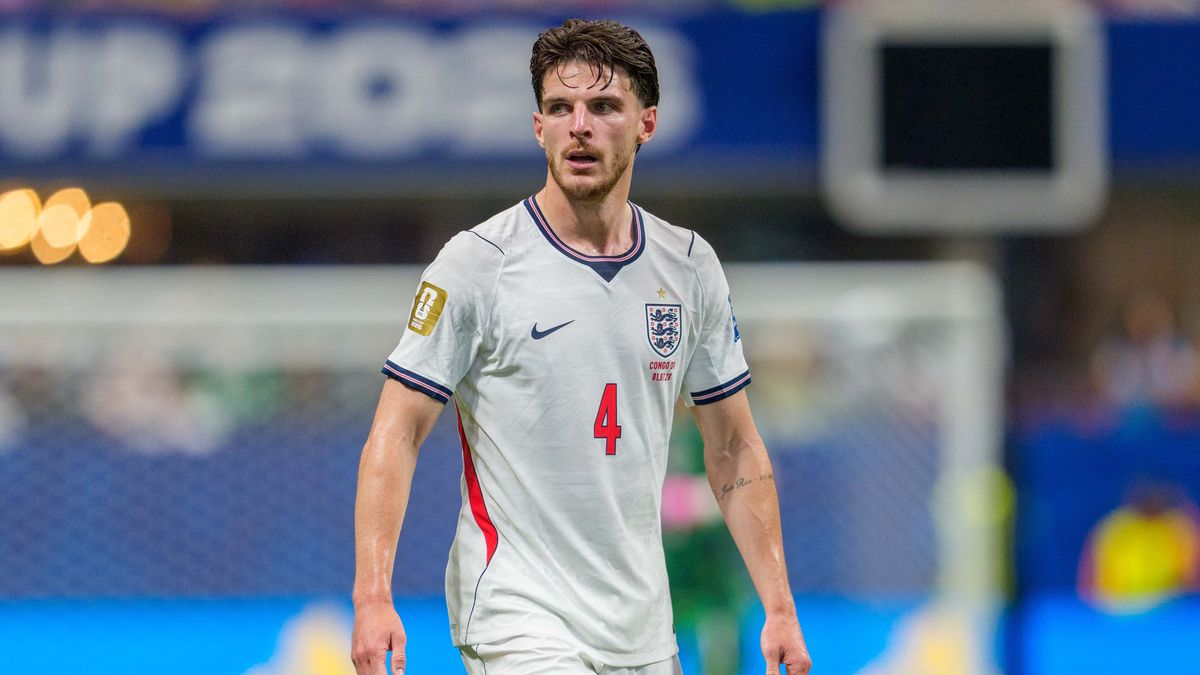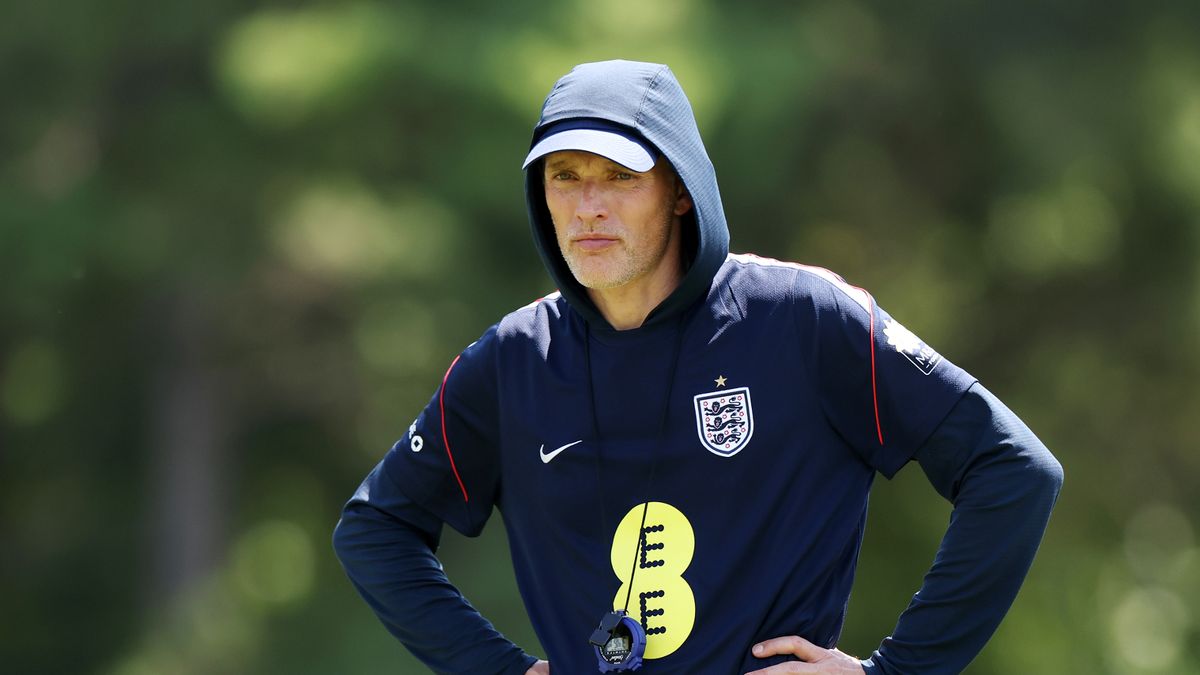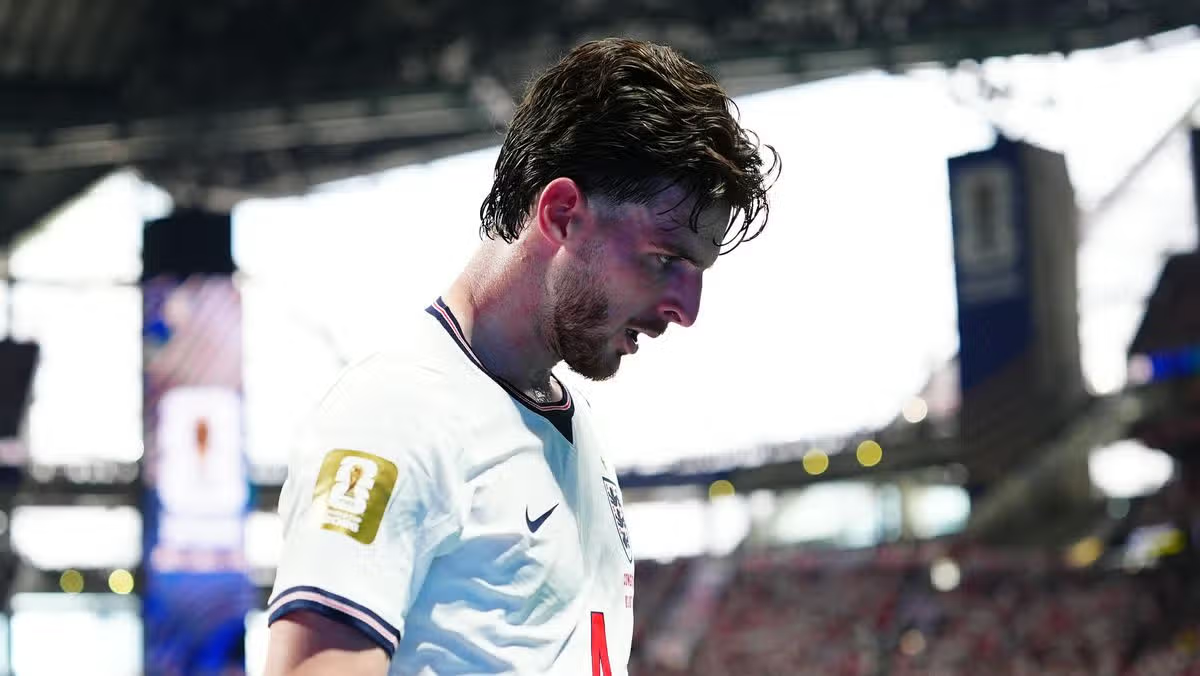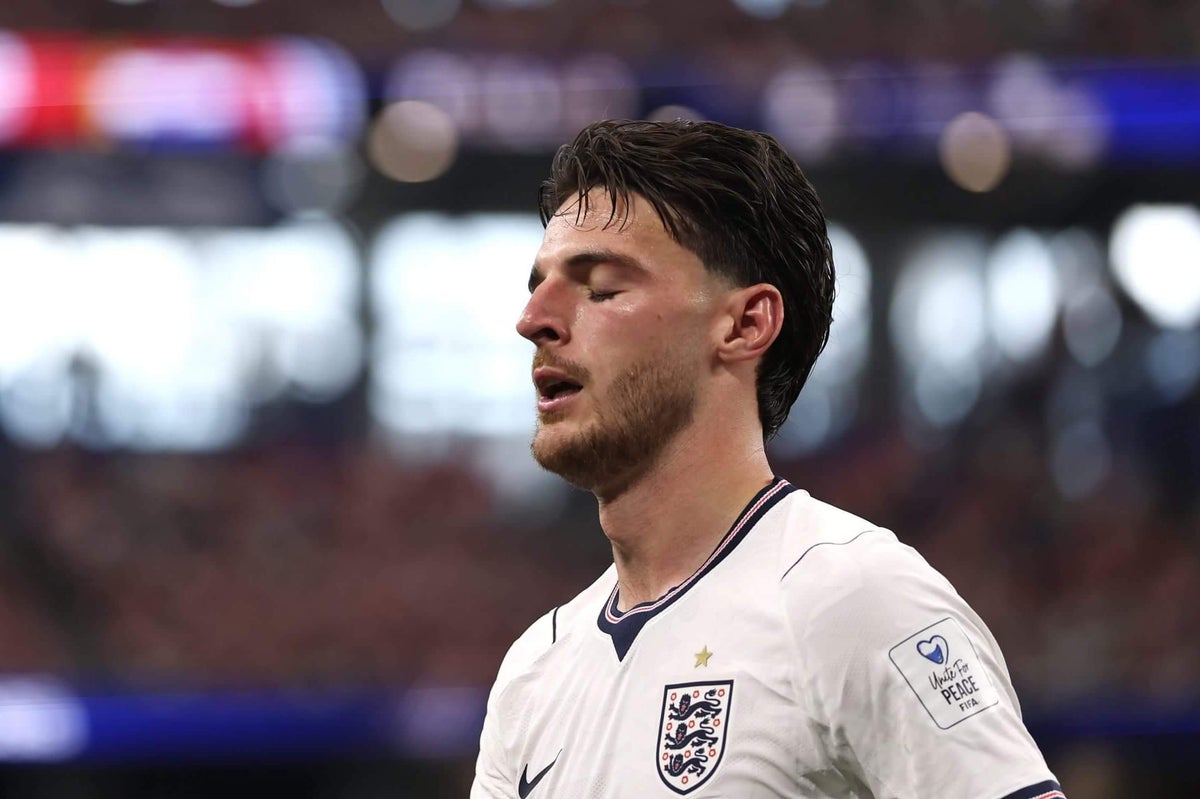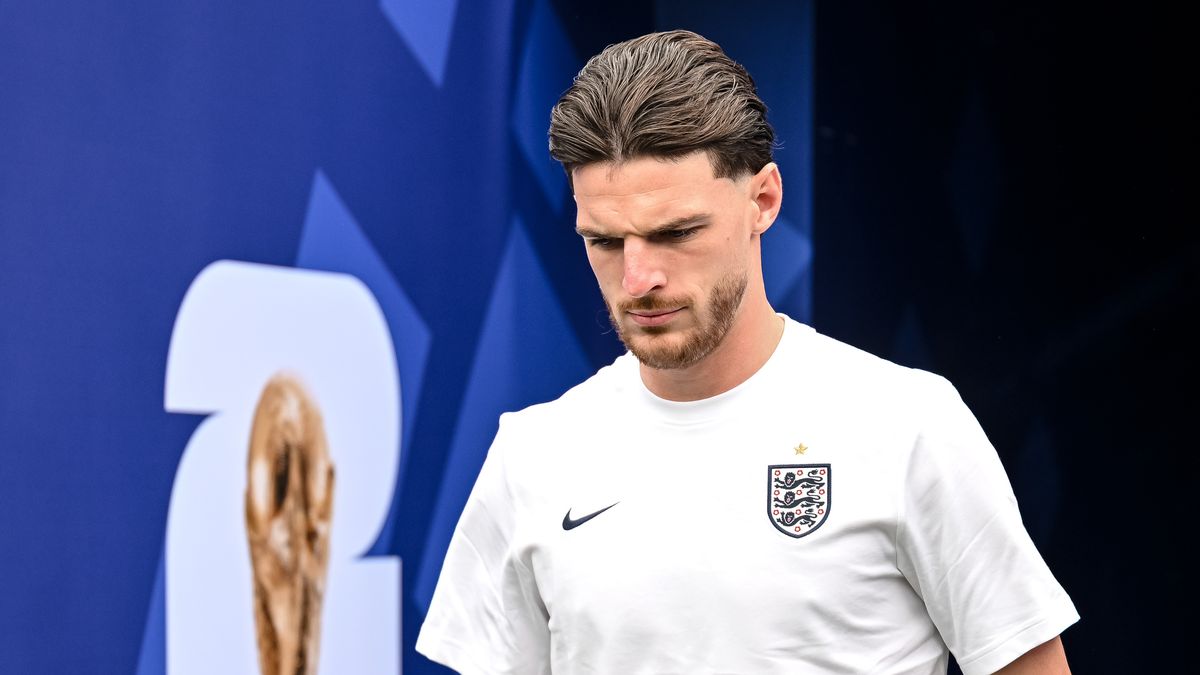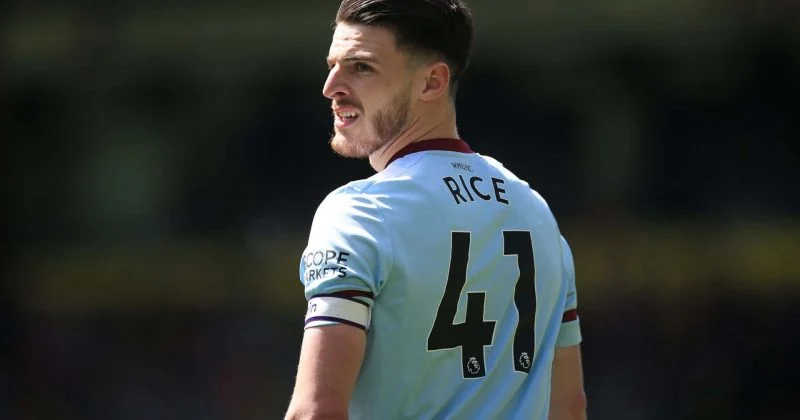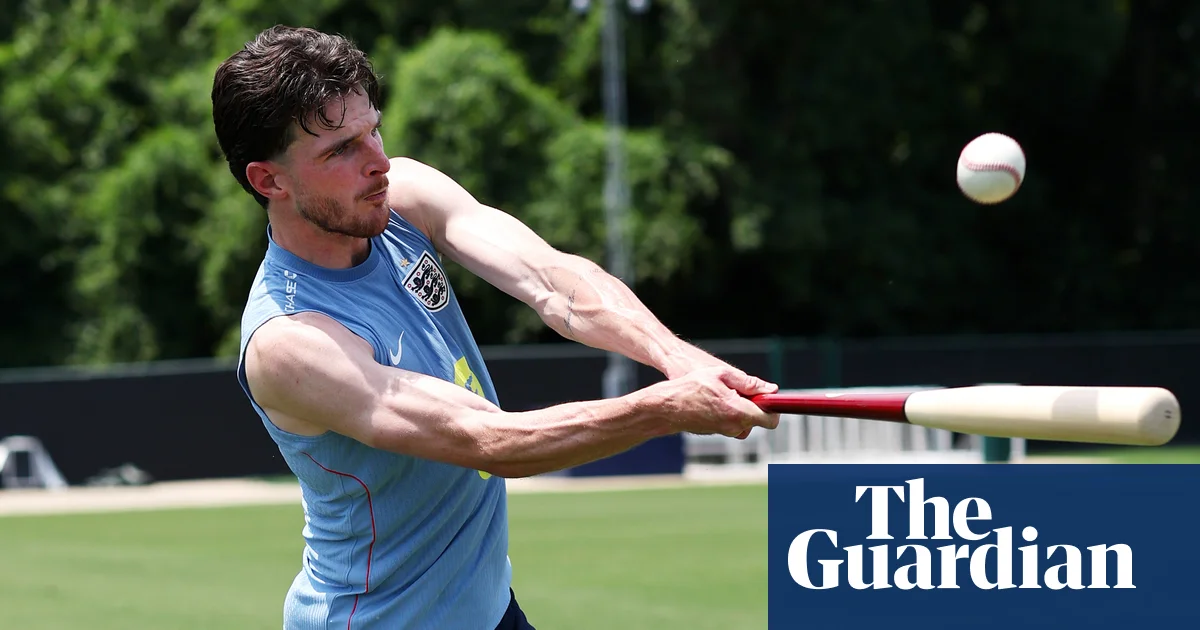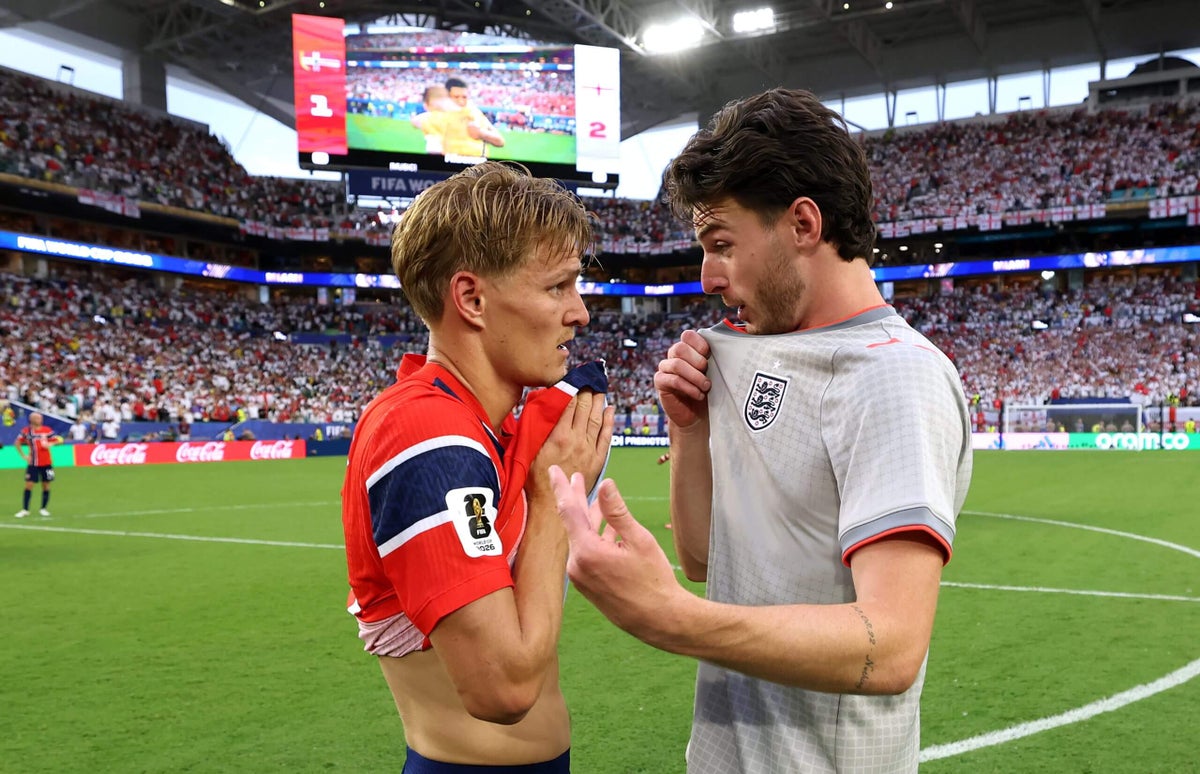
Speaking to the media before England’s 3-2 victory over Mexico in the World Cup last-16, England manager Thomas Tuchel gave an update on Declan Rice that would make Arsenal fans shudder.“I asked Declan (if he can play) and he said, ‘I can do it for the team, but I am in terrible pain.’ When Declan tells you that he is in terrible pain, then you know he cannot take it any more, so he was grateful that we took him off (against DR Congo),” Tuchel said.“He just said after the game it’s not an issue; he will recover, so there is no injury. He was just in pain. It’s more neural pain.”Last season was a long one for Arsenal as they ended their 22-year wait for a Premier League trophy. Reaching the Carabao Cup and Champions League finals meant 63 gruelling competitive games, often with very little time to rest and recover, and several players were stretched.Rice has spoken about playing through pain as he and his team-mates secured that Premier League title before heading into an expanded World Cup finals with their national teams. Others, such as Martin Odegaard, William Saliba and Bukayo Saka, will also have been causes for concern for Mikel Arteta during the tournament.Rice was the Arsenal outfield player who accumulated the most minutes during the 2025-26 campaign with 3,094.After England’s victory over Croatia, Rice told ITV Sport: “I was feeling a little bit of neural pain in my hamstring, which I was managing with Arsenal for a very long time. Obviously, not a lot of people would have known that.”In true Rice fashion, the 27-year-old said in that same interview: “I’m ready, fit and raring to go.”So how common is it for players to play through pain and injuries? And how long could it take these Arsenal players to return to full fitness?Playing with an injury is “more common than most people realise”, says Daniel Booth, high-performance consultant, coach and founder of MyoLab, a health and wellness centre.“Few players finish a season completely fit. They finish by managing niggles or longer-term injuries. The medical and performance staff and the player know the risk. That calculation shifts dramatically as the stakes increase. What gets protected in October gets pushed through in April.”It is not just Rice who will be feeling the effects of a long season.Arsenal captain Odegaard suffered a medial collateral ligament injury to his left knee on October 4 and started just 16 league games as injuries affected him throughout the title-winning season. While his Arsenal team-mates in the England squad had some time off after the Champions League final on May 30, Odegaard joined Norway for their friendly against Sweden a few days later on June 2, having stopped off in London for Arsenal’s title parade. He did, however, have some rest towards the end of the season and missed Norway’s March camp.Another who missed their country’s games in March was Saka.The winger started 25 of Arsenal’s 38 league matches, and did not feature in seven. Despite this, his contribution to league goals (seven scored, five assisted) was second only to Viktor Gyokeres (15) among Arteta’s squad.Saka has suffered with an Achilles injury and has had to be managed carefully. He missed England’s friendlies in March.“(Saka was) playing through discomfort at the end of the season,” Tuchel said of the 24-year-old in June. “Obviously managing it and playing at a high level but still not at 100 per cent. He is the one we are building and taking care of in training.”Saka has started just two of England’s six matches at the World Cup, but has got three assists. He came on at half-time against Norway on Saturday and played to the end of extra time, his longest game-time this tournament. As with Arsenal, England are a different threat when Saka is on the pitch.Saka has started two World Cup games (Buda Mendes/Getty Images)William Saliba was the Arsenal outfield player who played the fourth-most minutes (2,614) in the Premier League last season and Reuters reported last month that Saliba had to miss a France training session and has been dealing with a back issue.France are through to the semi-finals where they will meet Spain on Tuesday and Saliba has proved crucial to their run. The 25-year-old has played the full 90 minutes in five of France’s six matches, missing just the third group game against Norway. There will be at least another two games he may feature in before getting a rest, be that the final or the third-place play-off.Booth says the injuries Arsenal players have been dealing with need careful handling.“Achilles problems are load-dependent and slow to settle,” he says, with reference to Saka. “The Achilles will tolerate a certain amount until it no longer can. Players can feel fine in the warm-up and be struggling by the hour mark. Managing either of those through a tournament is a tightrope.”When asked about Rice, he adds: “Hamstring injuries — neural presentations especially — are unpredictable and uniquely difficult to manage. The nervous system doesn’t follow a linear recovery curve. Fatigue lowers the tolerance quickly, and a player can be largely symptom-free in the first half and deteriorating by the 65th minute without anything structurally worsening. That unpredictability is what makes them so hard to manage.”At this World Cup, Rice has played in (and started) five of England’s six games. He was seen with strapping on his left calf after suffering a dead leg against Ghana in England’s second game, having been substituted against Croatia in the opener. He did not play against Panama in the final group game, was taken off in stoppage time against DR Congo in the round of 32, and then played 90 minutes in the last-16 win over Mexico.Against Norway (and his Arsenal team-mate Odegaard, pictured at top) on Saturday, Rice was substituted at half-time, having suffered from illness before the game.As for Saliba, any back issue will be a concern. “Back issues affect everything. A player managing lumbar or nerve-related pain from the back is performing at the highest level with a compromised foundation and the compensations that creates elsewhere in the body generate their own injury risk over time.”In terms of how to deal with these injuries (and illnesses), Booth says the ideal course of action is rest, but he acknowledges that, with modern football’s relentless fixture schedule, that is unlikely. Not to mention being in the middle of a World Cup.“The smart model is managed minutes. Keep the player in competitive rhythm, protect them from the high-risk windows, and use a capable understudy to cover the exposure.“The tension between protecting the player and winning the next game is where minor injuries become serious ones.”At Arsenal, Saka had to be managed carefully towards the end of the season while Arteta also had to balance going for the title.Saka starred in the victory over Fulham on May 2 — having not started a game in April — a crucial three points in the run-in, and Arteta said of Saka and his injury after the game: “I think the pain is gone. That was always something that was restricting his capacity to deliver certain actions. He’s come back in the most important period of the season, and now he’s fresh, his mind is fresh, his hunger is at the highest possible height.”Arsenal manager Mikel Arteta will have to manage the minutes of his returning World Cup players (Etsuo Hara/Getty Images)Arsenal’s issues lie beyond the World Cup, though. After the final on July 19 — and with Arsenal players in both the French and Spain squads, some will feature — their first pre-season game is on August 1 against Girona.Arteta’s side have the Community Shield against Manchester City in Cardiff on August 16, and then they begin the defence of their Premier League title on August 21.There are 33 days between the World Cup final and the first day of the 2026-27 Premier League season.How long will Arsenal players (especially those who accumulated a large number of minutes last season and have gone far in this World Cup), need to rest, recover and be ready for the new campaign? And what can Arsenal expect from those returning players, particularly the key quartet of Rice, Odegaard, Saliba and Saka?Dr Archit Navandar, a sports scientist and football biomechanics specialist, tells The Athletic: “Arsenal put a lot of importance on load management, rotation, and have built impressive squad depth.“There is also a three-week international break in September. That’s going to be crucial to rotate players, to manage players and make sure that they get time off.”Booth adds: “Players who return from major international tournaments with less than six weeks of recovery show significantly elevated soft tissue injury rates in the first competitive block of the following season. Several of Arsenal’s most important players fall short of that threshold.“The rest window is the problem. Eight to 10 weeks is what the body needs after a season of this length. Arteta’s performance staff will have the data and they’ll manage it. But there’s no workaround for insufficient recovery time.“The injury risk in the opening months of 2026-27 is significant, and for a squad this reliant on a small group of key players, that’s a concern.”After a long domestic season and lack of rest time due to going deep into the World Cup, Rice is well aware of the sacrifices and the upsides.“It’s an obscene amount of games,” Rice said in that ITV Sport interview. “The schedule was crazy, but what can we do about it? You can’t sit and complain.“We have to just get on with it for the moments like winning that Premier League. It’s a lot of games, but we’ll get our break at the end.”However far Arsenal’s players have gone in the World Cup, it will be up to Arteta and his staff to carefully manage that downtime before they embark on their title defence.
How much could Arsenal players be affected by playing through the pain?
Several of Arsenal's title winners have gone deep into the World Cup while dealing with injury - what could be the fallout?
1,653 words~8 min read