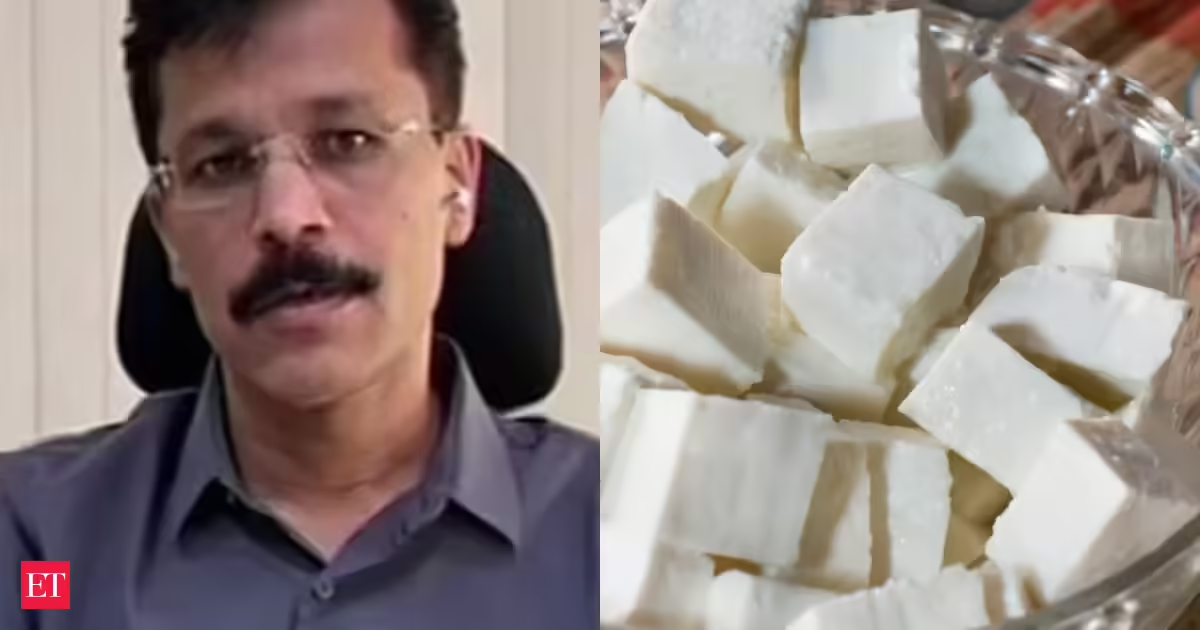
Pune: In a state where public institutions are increasingly judged by what they fail to do rather than what they achieve, an officer simply doing his job can appear extraordinary.Mumbai, India - July 3, 2026: Tukaram Mundhe, Commissioner of the Food and Drug Administration (FDA), during Monsson Assembly Session at Vidhan Bhavan in Mumbai, India, on Friday, July 3, 2026. (Photo by Anshuman Poyrekar/Hindustan Times) (Anshuman Poyrekar/HT Photo)Since taking charge as Maharashtra’s Food and Drug Administration (FDA) commissioner on May 25, Tukaram Mundhe has put food safety firmly back on the public agenda. In less than two months, the FDA has conducted raids across the state on manufacturers, wholesalers, eateries and retailers dealing in everything from paneer, sweets and spices to edible oils, packaged foods and meat products. Samples have been seized, licences suspended, notices issued, and businesses temporarily shut where serious violations were found.The latest focus has been milk and milk products, perhaps the most sensitive area of all. Milk reaches almost every household every single day. It is consumed by infants, children, patients and the elderly. The FDA’s inspections of dairies and milk-processing units, sampling drives and action against adulterated and substandard milk have therefore struck a chord with consumers. The message is simple: food safety is not limited to festive sweets or expensive restaurants; it begins with the very first cup of tea in the morning.For perhaps the first time in years, people have begun asking an uncomfortable but necessary question: What exactly are we eating? That, in itself, is an achievement.For decades, food adulteration has remained one of those crimes that everyone knows exists, but few believe will result in serious consequences. Stories of synthetic milk, artificial colours, reused cooking oil, adulterated spices or contaminated food surface every few months before quietly disappearing from public memory. Enforcement has often appeared sporadic, prosecution painfully slow, and punishment uncertain. The result was predictable. Adulteration became a low-risk, high-profit business. While Mundhe’s campaign has disrupted that comfort, the real question is whether this momentum can outlast the individual leading it.Mundhe has built a reputation over the years as an officer who is willing to confront entrenched interests. Whether as a municipal commissioner or now as FDA commissioner, he has rarely shied away from unpopular decisions. Admirers see him as uncompromising. Critics often describe him as rigid. Both perceptions may have some merit.What is beyond debate, however, is that he has reminded Maharashtra of something that should never have required reminding: regulators are expected to regulate.Perhaps that is why the current drive has received so much public attention. At a time when ethical standards in public life often appear to be slipping, citizens instinctively notice an official who treats the law not as a suggestion but as an obligation. The bar has unfortunately become so low that sincerity itself appears exceptional. Yet another aspect of the FDA’s campaign deserves equal attention.As raids on restaurants, hotels, cloud kitchens and food factories dominate headlines, they also raise an uncomfortable question about our own homes.Would the average Indian kitchen pass the standards that the FDA expects from a commercial establishment? Probably not.This is not to equate household cooking with commercial food businesses. The law rightly places a higher burden on establishments that prepare food for thousands of paying customers every day. But many of the habits that the FDA is highlighting—improper storage, poor hygiene, cross-contamination, expired ingredients, unsafe handling of food and careless cleanliness—are not unknown in domestic kitchens either.The FDA’s campaign, therefore, should not merely be seen as a crackdown on businesses. It is also an opportunity to build public awareness about safe food practices. Enforcement can punish violations, but lasting change comes only when consumers themselves become conscious about hygiene and quality.This is also why the success of the current drive cannot be measured only by the number of raids conducted or kilograms of adulterated food seized. Such campaigns often begin with great energy before gradually losing momentum as public attention shifts elsewhere.If food safety improves only during Mundhe’s tenure and weakens after his transfer—he has faced 25 transfers in his 21-year career so far—Maharashtra would merely have witnessed another successful campaign. If, however, this drive results in stronger laboratories, transparent inspection data, consistent enforcement and greater public awareness, it will have created something far more valuable than headlines—it will have strengthened the institution itself.The significance of Mundhe’s tenure, therefore, is not that Maharashtra has found an exceptional officer. It is that his work reminds us what citizens should routinely expect from every public servant: a willingness to enforce the law without fear or favour. That expectation should never be extraordinary.Perhaps the real measure of success will be the day when an FDA commissioner carrying out such inspections is no longer front-page news because every regulator, in every department, is expected to do exactly that.
Monday Musings: Tukaram Mundhe’s FDA drive sends strong message to violators
Since taking charge as Maharashtra’s Food and Drug Administration commissioner, Tukaram Mundhe has put food safety firmly back on the public agenda. In less than two months, the FDA has conducted raids across the state on manufacturers, wholesalers, eateries and retailers.
804 words~4 min read