South Africa’s electricity sector is experiencing one of the most far-reaching structural shifts in its history. The country is moving beyond a monopoly power supplier with a historically centralised, coal-dominated system towards a more diversified, lower-emission, competitive energy market, one in which multiple technologies and market participants will play a role. Early energy sector reform success highlights the results of challenging risks that cannot be ignored. Three years on from the load-shedding crisis the then-new board and executive management committee of Eskom chose to step into, restoring operational stability has been a necessary precondition to create the environment for the delivery of long-term electricity sector reform and advancing our unbundling.When we study sector reform globally and policy implementation, approaches that do not account for local conditions have often led to suboptimal outcomes. The evidence from more than 90 countries shows policy outcomes differ significantly based on context. Many electricity markets began restructuring between the 1990s and early 2000s and provide much experience to learn from.While no universal template exists, many hybrid models have proven effective when supported by strong governance systems, credit frameworks and regulatory rules backed by the rule of law. New rules required to implement policyNew rules are required to deliver an open, investable and competitive energy sector. This is to sustainably attract finance for the technologies that will act as the strategic enabler to improve efficiencies, lower emissions and the cost curve of electricity. Primarily, this will be in the areas of transmission grid buildout, reducing emissions and the costs of power generation. Getting the regulation right now means we are creating an environment ripe for investment and responsibly avoiding potential market delays or failure. As an industry, we have to provide confidence to new entrants that this is a well-designed market they are able to invest in while maintaining strong public oversight.The rules that are created now must enable all players to be able to steadily bend the cost and carbon curve downward for the benefit of consumers and the economy, while enabling participants to cover their efficient costs and a favourable rate of return on the cost of capital. Otherwise, there is a risk of market concentration where only one or two participants are able to survive.Reform progress to be proud ofThrough multi-stakeholder input at forums such as Operation Vulindlela, the National Energy Crisis Committee and the work of the department of electricity and energy, the public and private sectors have shaped the regulatory foundations for a reformed electricity market to be proud of. Recent successes include the delivery of the market operator licence by the National Energy Regulator of South Africa (Nersa) as a foundational step towards market operation.Equal access to all the transmission grids is now enshrined in law since December 2025 through the grid capacity allocation rules, whether it be those grids licensed to the municipalities, Eskom Distribution or the National Transmission Company South Africa today and the Independent Transmission Projects programme in the future.Nersa exercises regular oversight on compliance with the grid access rules, while each licensee retains operational control of its grid and remains responsible for meeting its licence conditions.South Africa’s reform journey is also underpinned by sustained co-ordination between Eskom and independent power providers (IPPs). Since the first IPP connection 13 years ago at the Kalkbult solar plant in the Northern Cape of 75MW, more than 100 generators have connected to the grid. Eskom has consistently met its obligations within clear contractual and regulatory frameworks, despite load-shedding, an outcome not commonly observed elsewhere.Delivering regulatory certaintyWhere there have been divergent views and risks needed to be ventilated and challenged, ongoing dialogue has been the way forward.In January, Eskom, Nersa and the electricity trader respondents agreed to suspend legal proceedings to allow further engagement on the development of the new trading licence rules. Trading licences for electricity are issued by Nersa and are required for entities to conduct electricity trading activities.The parties recognised the importance of regulatory certainty and clarity in supporting the evolution of South Africa’s electricity market. At that point in time, the granting of trading licences enabled new market entrants, such as traders and subsidy-contributing customers, to evade contributing towards billions of rand in subsidies, including the essential public interest obligations. During the further post-hearing engagements, the Energy Council of South Africa facilitated discussions between Eskom, the South African Local Government Association and energy traders on key areas of disagreement, including volume restrictions, non-bypassable charges and the phased implementation of retail competition. These engagements drew on international experience and lessons from electricity markets that have successfully transitioned to competitive retail structures. A key outcome of these engagements was recognition that market reform must be accompanied by mechanisms that ensure all customers continue to contribute fairly towards the shared costs of the electricity system and, critically, ensure essential public-interest obligations remain funded.Examples from jurisdictions such as the Philippines, California and Texas demonstrate that while customers may choose their energy supplier, they continue to contribute towards non-bypassable costs that prevent market failure or an unfair burden of cost being placed on the sovereign and, in turn, the taxpayer.Less than a year ago, Eskom was criticised and deemed obstructionist for challenging risks associated with implementing market reforms before the necessary trading rules were in place. These were risks that would have frightened away investors. Today, we will soon have rules for trading that take learnings from international experience and are a compromise based on established common risks to the market. These risks were only attended to because Eskom’s conviction was strong enough to approach the courts to protect all South Africans, especially the most vulnerable, while supporting a fair, sustainable and investable electricity market. Despite this positive outcome from the co-development of the trading rules, some quarters who may not have read the draft rules, or may have read them and not understood them, sadly continue to refer to Eskom’s court challenge as an anti-competitive stance.To further support the reform process, in June Eskom approved a wheeling policy that enables private IPPs and off-takers to wheel electricity across municipal networks. This is an important practical reform because it supports broader market participation by the private sector while helping to clarify the commercial and network-use arrangements required for a more competitive electricity market.Investing in analytics to fast-track liberalisationEskom Distribution has invested and partnered with Stellenbosch University and the University of Cape Town to develop key instruments that are currently missing but necessary to enable a functioning retail market for all participants. These include the Retail Tariff Code, cost pass-through mechanisms, and a balance responsibility framework for retail customers and distributors. Our distribution division stepped in because a gap was identified in the retail market instruments that are required on behalf of the industry. These instruments will be given to Nersa to form part of its forthcoming public consultation on the potential regulation of the retail market industry.Our distribution division has also procured the systems and tools needed to support participation in the future wholesale and retail electricity market. These capabilities will support day-ahead, intraday and balancing market activities, portfolio and position management, forecasting, transaction capture, settlement and reconciliation, credit and collateral monitoring, risk reporting and compliance with market rules. This investment strengthens Eskom’s readiness for the South African wholesale electricity market by enabling market transactions, financial exposures, costs and customer impacts to be managed in a controlled, transparent and auditable manner. Unbundling and investor confidenceEskom is following international best practice to create a rules-based market founded on transparent pricing, economic efficiency and a fair allocation of costs and risks to enable all players to compete fairly, with protections to remain funded and in place for the most vulnerable in society. The objective is to ensure public policy is implemented with a timetable that supports competition, advances unbundling and does not create undue risk to the sovereign. Further, we must preserve the financial sustainability of Eskom, new entrants, distributors, municipalities and the broader electricity supply value chain. To prevent a market failure, a competitive market must therefore be designed around clear rules, efficient price signals, non-bypassable cost recovery, disciplined risk allocation and mechanisms that protect customers and long-term system adequacy.Without this bedrock, new entrants won’t be able to invest in our market because the guardrails that credit and risk committees demand would not be in place. Nersa’s strong regulation provides comfort and even today does not allow Eskom to prioritise itself.Reform succeeds by enabling the coexistence between public and private participants across the value chain. Learning and implementing lessons from around the world helps increase the quality and pace of reform, support unbundling and minimise the pitfalls of rushing implementation. Together, we will rise to the responsibility of designing and leading an industry transformation that is structured to best serve the long-term interests of the South African people. We must rebuild this national asset that we can leave as a legacy to help support the future prosperity of this country. South Africa has already delivered encouraging early results that are developing fit-for-purpose rules by challenging risks now in order to reinforce investor confidence and build momentum for further electricity market reform.Marokane is group chief executive of Eskom Holdings.Business Day
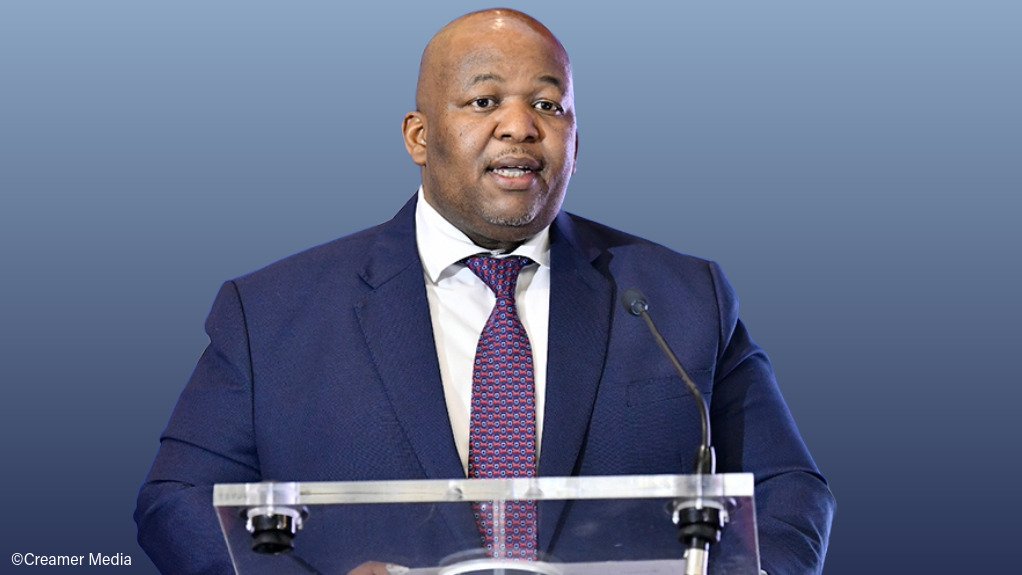
DAN MAROKANE | Eskom has come a long way towards competitive market reform, with more to follow
New regulatory frameworks aim to attract investment and ensure fair market access
1,526 words~7 min read