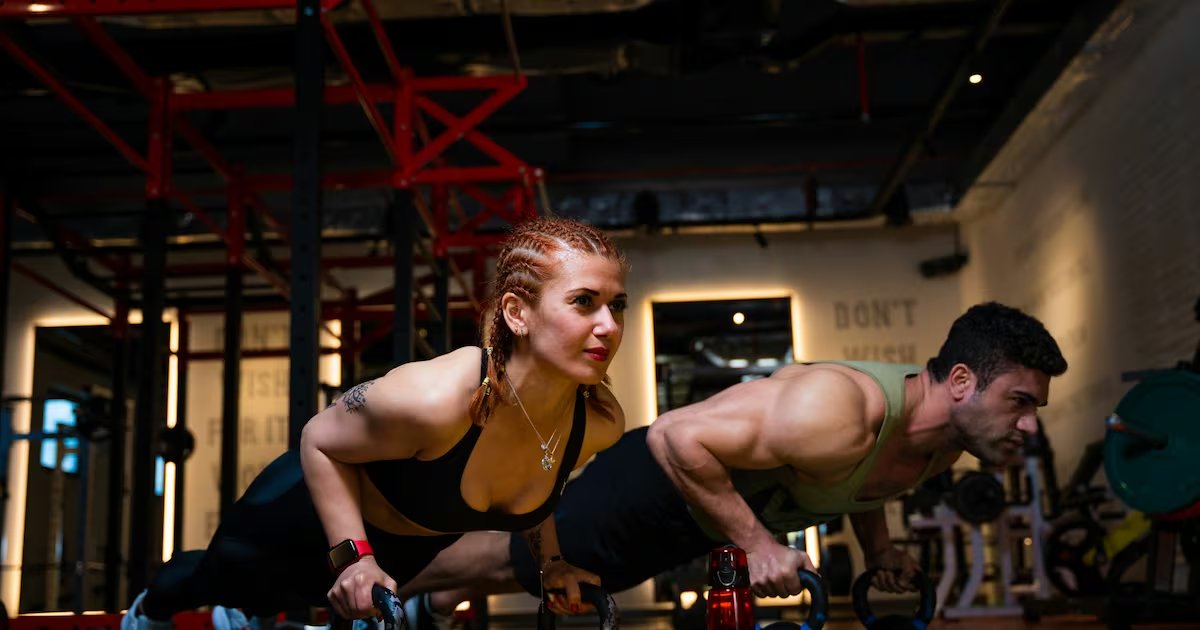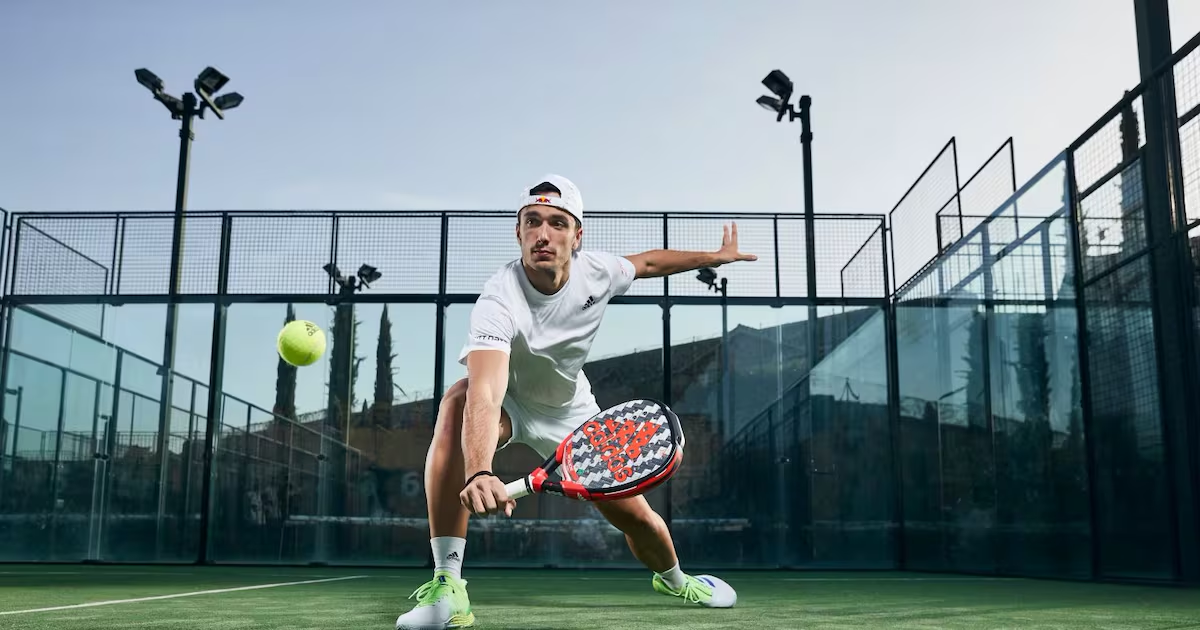
With all this talk on these pages about exercise, gym and weights, surely old-fashioned sport is best? Why don’t you advocate for people playing sports?This is a wonderfully loaded South African question, thank you. Whataboutery. It’s our national sport. Whether it’s politics or business, if you focus on A, you will be righteously reminded of your responsibility to advocate for B. Nevermind whether the person virtue signalling is really doing anything about it themselves. Usually they aren’t.And so, by asking this question, you have done the equivalent of showing me your ID or passport. Hello, fellow South African, pleased to meet you.I love sports. Ironic, as in 1998 I won my school’s public speaking award ― one of the oldest and most prestigious — by arguing that while sport builds bridges in society, it is an investment in the arts that builds the foundations.Be that as it may, I was incredibly excited to be at Ellis Park to watch our beloved Boks play England among more than 50,000 sports-mad people. Our country loves sport, or rather, we love destroying our bodies while others play it.I am one of those unfortunate South Africans who paid the full price for tickets before Saru was forced to confront reality from their ivory towers. The slashed prices pulled in the crowds, no doubt. Except that I spent the first half comforting my minor son, who kept asking me when the drunk man’s cigarette would end. It wouldn’t. He and all his friends were chain-smoking in the stands.Dr Nkosazana Dlamini Zuma was right during Covid. “When people zol, they put saliva on the paper, and then they share that zol … they are moving saliva from one to the other.” I got a taste of their saliva too, but not from zolling.They were standing and hugging and jumping, shouting a slobbery “Bokke” while facing us. They didn’t care about the field while passing around 200ml glass bottles of Old Brown Sherry. Their spit and smoke were overwhelming. Being asked to move as we were in the wrong seats (we weren’t, by the way) by another drunk duo that arrived at the start of the second half while the Boks were attacking meant we missed most of the build-up to Grant Williams’ try.The first thing we did at 10pm at home was watch the match so we could actually see what happened. Many South Africans, it would appear, treat sport as an excuse to become belligerent embarrassments. I presume this isn’t you, and you’re actually interested in the sport.A personal training client of my wife plays padel. I used to make jokes about “mini tennis”. Until I played it. You see, to this old hack, a Saturday afternoon game among friends is just as important as a World Cup semifinal. I gave it my all and was drenched in sweat. A great workout.The first thing we did at 10pm at home was watch the match so we could actually see what happened. Many South Africans, it would appear, treat sport as an excuse to become belligerent embarrassments. The point is this client uses strength and fitness training to enhance her padel. Her backhand has gone through the roof, her knees no longer complain and she works up a good sweat twice a week.Would I advocate for a middle-aged person playing soccer? Probably not, if you are not conditioned to handle it. Rugby? Are you joking? Running (watch your joints if you’re carrying weight), cycling, tennis, padel, pickleball, swimming? Absolutely. Golf? I’ll lose readers here, but I can’t see how that game is categorised as a sport.Yes, go partake in sports. Soak up the vitamin D. Breathe the semifresh South African suburban air. Work up a sweat. Make friends. Treat your heart to some sociable exercise. I do advocate for sports.However, try not to let that South African “third half” gene creep through. Don’t gather after a game and down as much alcohol and fried chips with cheese dip as possible. It defeats the point. Most importantly, don’t presume that the game alone is enough.It is surely better than nothing, but resistance training should absolutely be part of your regimen to ensure strong bones and tendons as you age, and enough skeletal muscle to add life to your years, not just years to your life. It also helps protect you against niggles and injuries that sport, ironically, can introduce to the equation.
Devlin Brown at the water cooler | Why sport isn’t enough for health and wellness
Celebrating with alcohol and junk food can offset the benefits of sociable exercise
735 words~3 min read