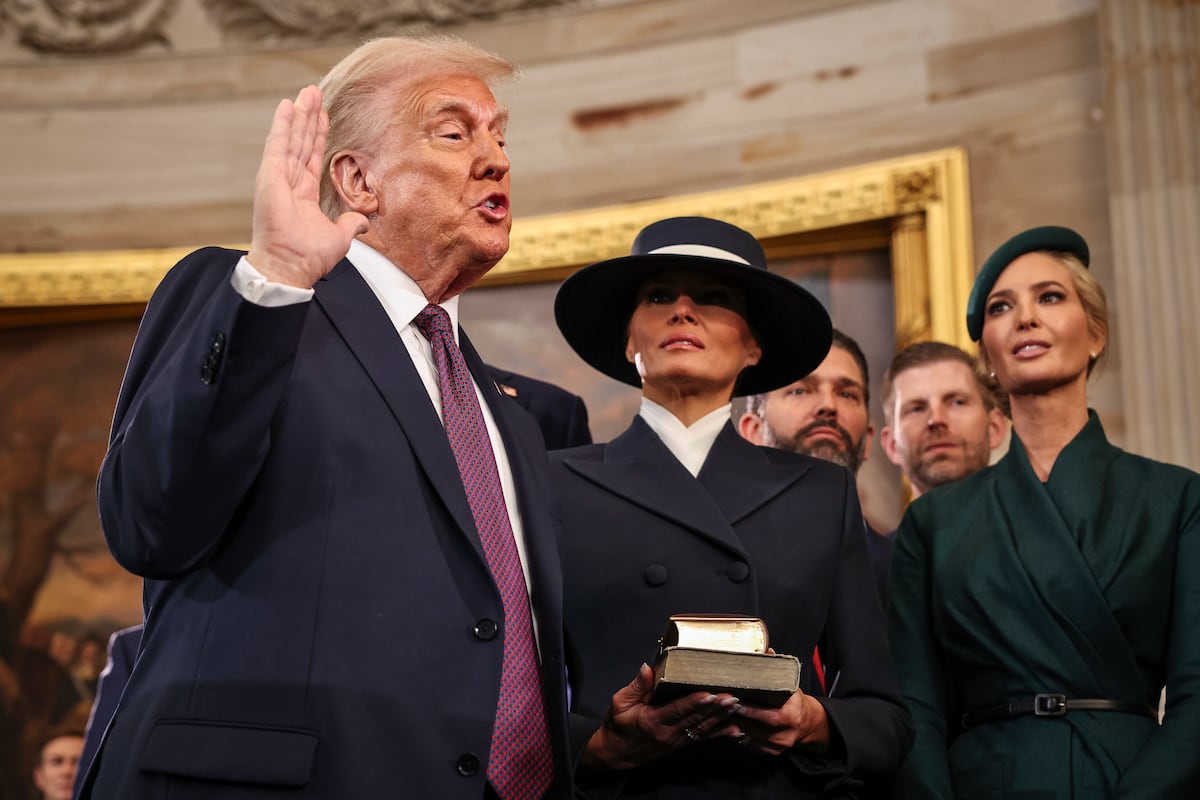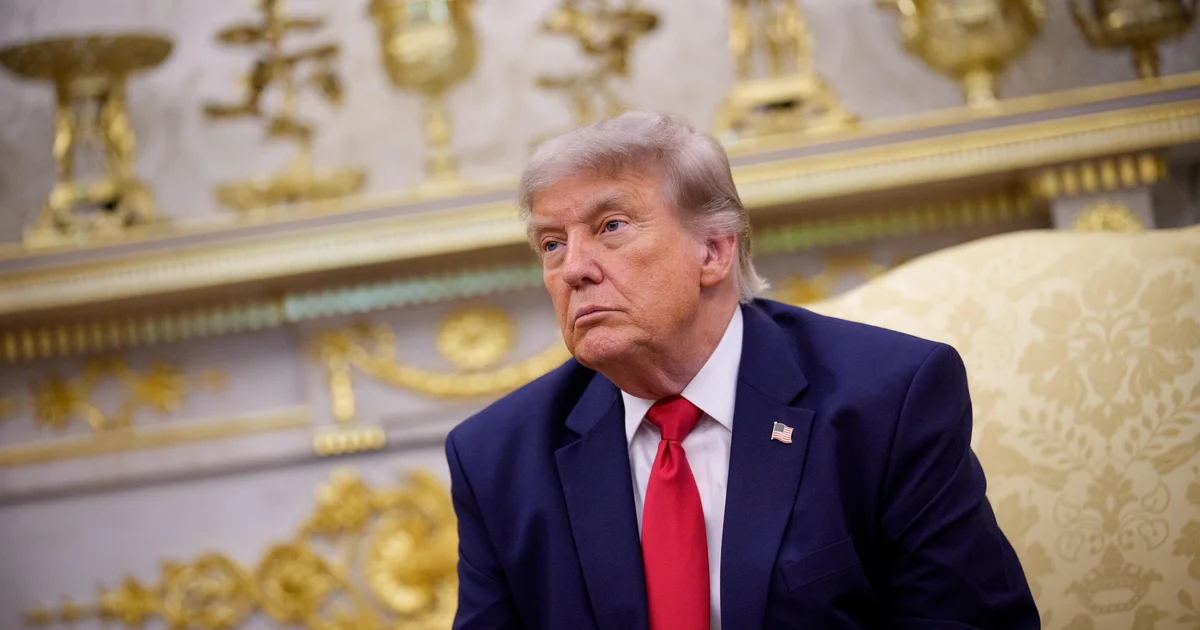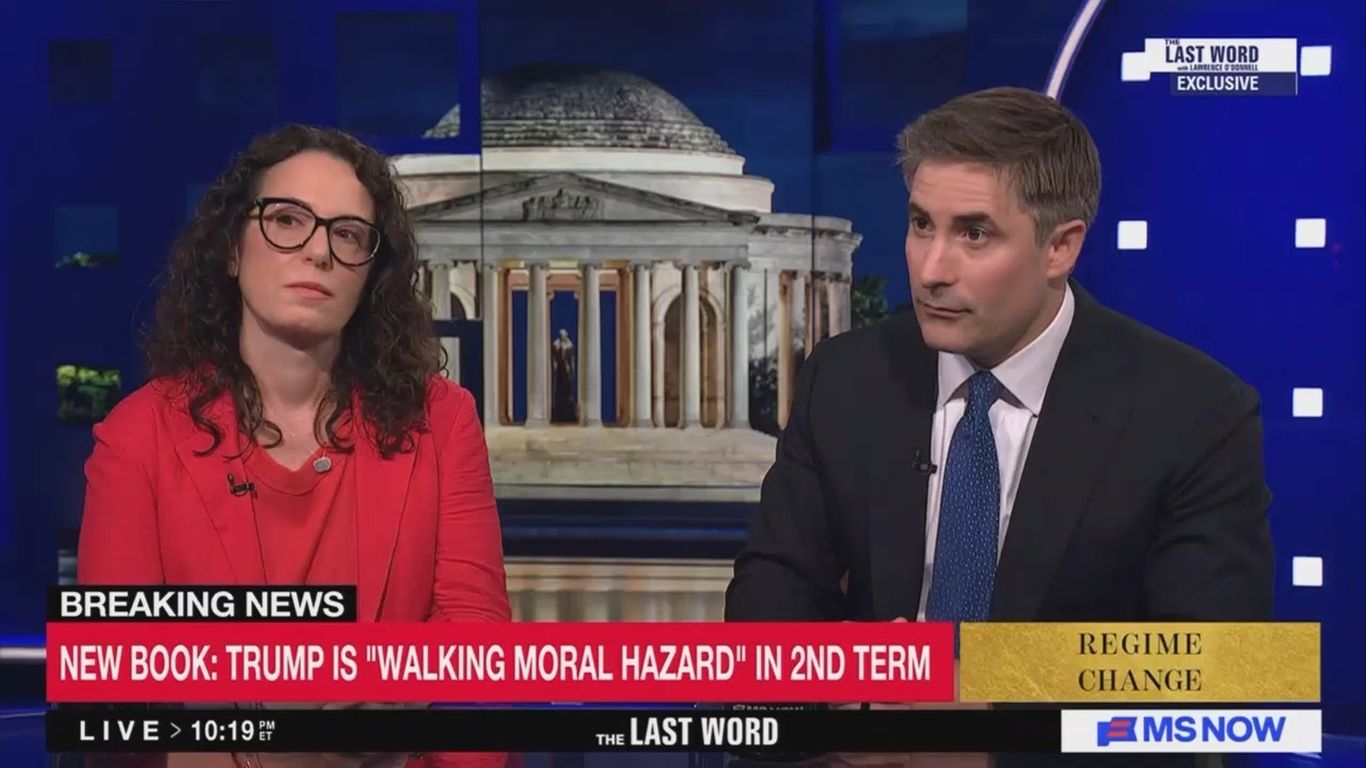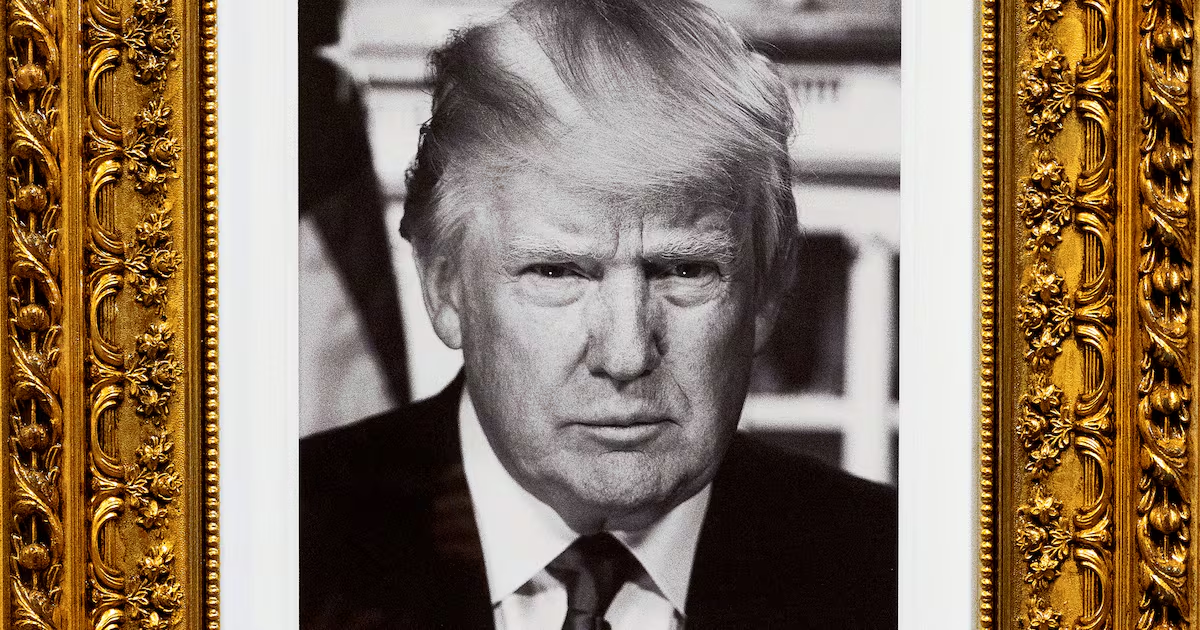
Regime Change: Inside the Imperial Presidency of Donald Trump Author: Maggie Haberman and Jonathan SwanISBN-13: 978-1-3985-6759-7Publisher: Simon & SchusterGuideline Price: £28The words “regime change” conjure up images of the overthrow of infamous outfits such as Gadafy’s in Libya and Saddam Hussein’s in Iraq, but not normally a transition following a US presidential election. Maggie Haberman and Jonathan Swan, two vastly experienced and well-connected New York Times journalists, make a convincing case for seeing the first year or so of the second Trump presidency as just such an event. They argue that Trump, “the most mercurial man ever to occupy the White House”, has altered “the very nature” of the American presidency.Regime Change: Inside the Imperial Presidency of Donald Trump is based on hundreds of anonymously reported interviews with administration insiders that yield blow-by-blow accounts of highly sensitive meetings. It is striking how many of those involved were prepared to talk freely provided they were not identified by name. That’s a feature of the US system with temporarily empowered political operatives ever eager to put their stamp on the first draft of history. Much of what this book recounts will be familiar to American politics obsessives (and who isn’t these days?), but the compendium is a reminder of the breakneck pace set by an impatient president touching 80 with an agenda as long as his elephantine memory for personal slights, and a corresponding urge for retribution against his enemies real and invented. The authors point to the irony that the Democrats’ success in ousting Trump in 2020 may accidentally have made him “the most consequential and feared President of our lifetimes”. That’s because by force of personality and the obdurate loyalty of his Maga base, Trump engineered a dramatic comeback from the nadir of the assault on the Capitol on January 6th, 2021, and gained unprecedented dominance over the Republican Party, wiping the floor with two well-qualified primary challengers, Ron DeSantis and Nikki Haley. [ ‘He’s clearly not well’: Donald Trump’s erratic behaviour revives mental health debateOpens in new window ]He also built a team of advisers distinguished by total loyalty to their boss. Unlike his first term, there would be no so-called adults in the room devoted to reining him in. His second coming in the Oval Office ushered in a presidency driven by the incumbent’s “pure gut instinct” and his willingness to take “breathtaking risks” capable of throwing “the whole world into chaos”. When I was ambassador in Washington during Trump 1, there was deep apprehension among western diplomats about the consequences of a second Trump term but that may have missed the mark. In an interview with the authors, Trump freely acknowledged that, had he served two consecutive terms, he would never have accumulated the kind of authority he has brandished since January 2025. He is described here as having “a feral instinct for power”. Haberman and Swan provide a bird’s-eye view of a unique presidency, with chaotic meetings that roamed from topic to topic, aspirants for high office judged by their appearance, and infighting within the governing circle, including an expletive-laden spat between treasury secretary Scott Besant and Elon Musk that almost came to blows. It was an environment without normal policy process where nothing counted other than proximity to a president who had acquired “mythic status” in the eyes of his team. Readers are likely to have a special interest in the account of the prelude to war in the Gulf. At a meeting in the White House on February 11th, Binyamin Netanyahu did a hard sell for a joint attack on Iran, promising Trump that Iran’s missile programme would be destroyed in a few weeks and that it would be unable to close the Strait of Hormuz or to do much in the way of retaliation against its neighbours. He also played up the prospects of domestic upheaval bringing regime change in Iran. Israel may yet pay a political price for this gross oversell. In an unusual show of resistance, members of Trump’s team pushed back hard against Netanyahu’s assessment, but to no avail. In the wake of his removal of Venezuela’s Maduro, Trump was, I think, lured by the prospect of a history-making eclipse of a regime that had bested successive US presidents for half a century. He may have ended up making a different kind of history by seriously undermining his country’s global standing. [ Iran has a valuable new hostage: Donald TrumpOpens in new window ]The book argues that Trump has been the first modern president to rule as though “the international system simply did not exist” and that as a consequence of his actions “the old order” is not coming back. I do expect the pendulum to swing again after Trump’s exit, but not to where it was before his emergence. One thing seems clear. The glory days of the Atlantic Alliance, from which Ireland has benefited without being a fully paid-up member, have likely been interred in some closet at Mar-a-Lago. Even if, as now seems likely, Republicans are vanquished at the November midterms (and the authors point to Trump’s relative indifference to their fate), we should not expect a stop to be put to his gallop. He will likely seek to plough on with his customary confidence. Any deceleration will be welcomed, for the world badly needs some respite from the full glare of the Donald Trump show. Daniel Mulhall is a former Irish ambassador to the US (2017-2022) and the author of Pilgrim Soul: WB Yeats and the Ireland of his Time
Regime Change: The chaos of Donald Trump exposed in blow-by-blow accounts of highly sensitive meetings
How the second coming of the most mercurial US leader in history ushered in a presidency driven by ‘pure gut instinct’
924 words~4 min read