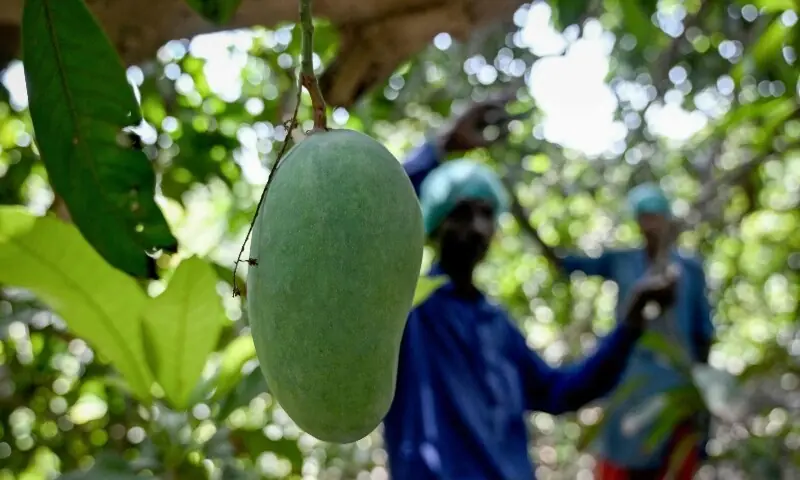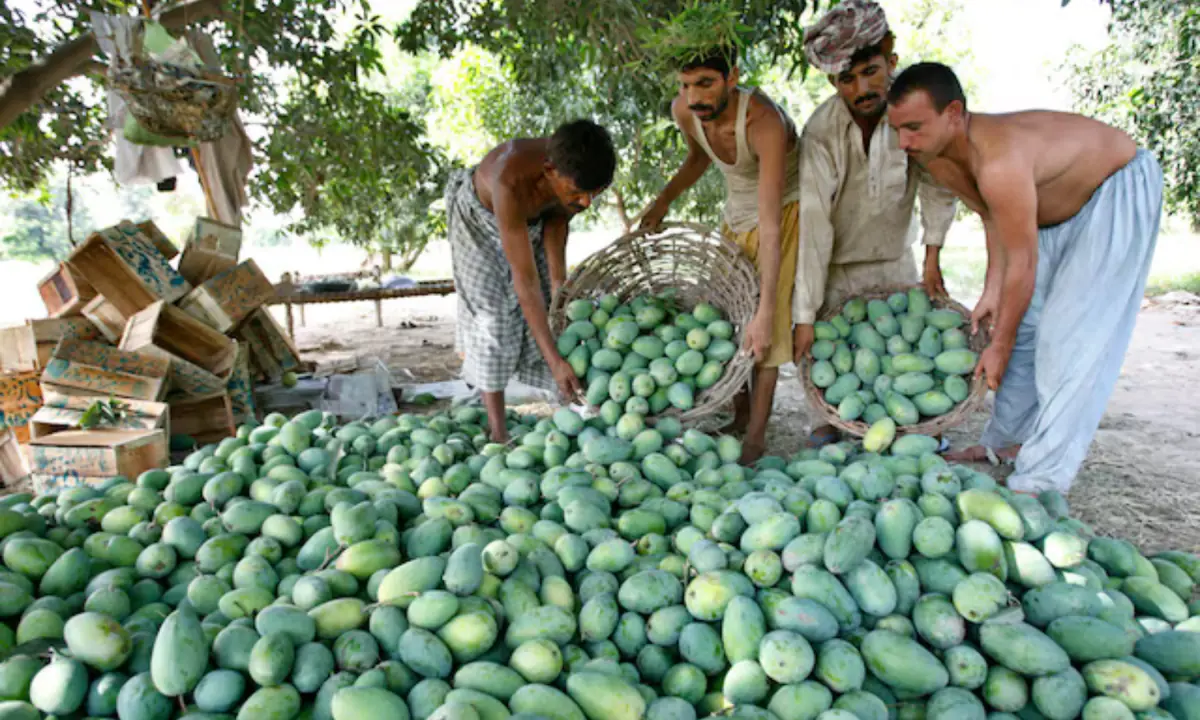
Mango — Pakistan’s national fruit and widely regarded as the king of fruits —is the latest addition to a growing list of horticultural crops that have caused financial losses for farmers over the past year, largely due to two factors.
The first is the reduction in fruit and vegetable exports caused by geopolitical developments in the region, particularly the prolonged closure of the Pakistan–Afghanistan border. With a population of around 46 million, Afghanistan has long been one of Pakistan’s key export markets for fruits, vegetables, and other agricultural produce. Unlike many international destinations, exports to Afghanistan face minimal sanitary and phytosanitary (SPS) requirements while also serving as a short, cost-effective transit corridor to the Central Asian states.
Last year, Pakistan exported around 109,600 tonnes of mangoes, of which Afghanistan accounted for nearly 22,500 tonnes — about 20.5 per cent. In the preceding season (2024 crop), exports to Afghanistan accounted for 28,700 tonnes of Pakistan’s total exports of 148,300 tonnes. This year, however, the situation has changed dramatically. Pakistan has exported hundreds of mango consignments to destinations around the world, yet exports to Afghanistan have remained zero.