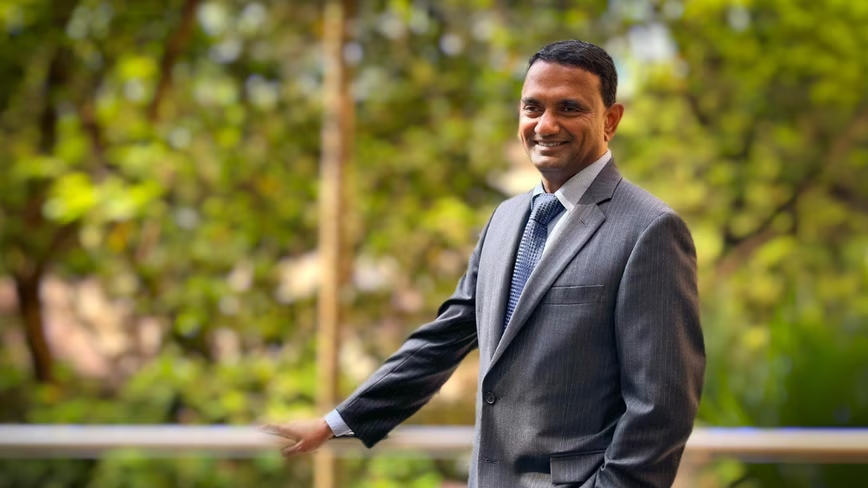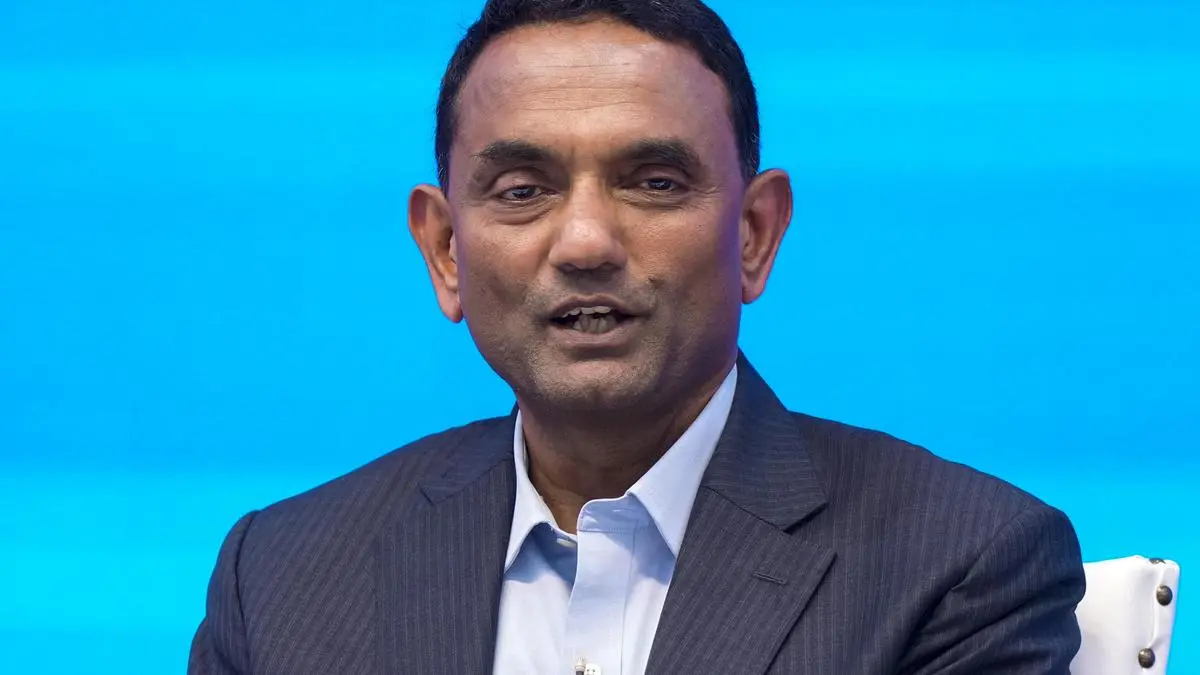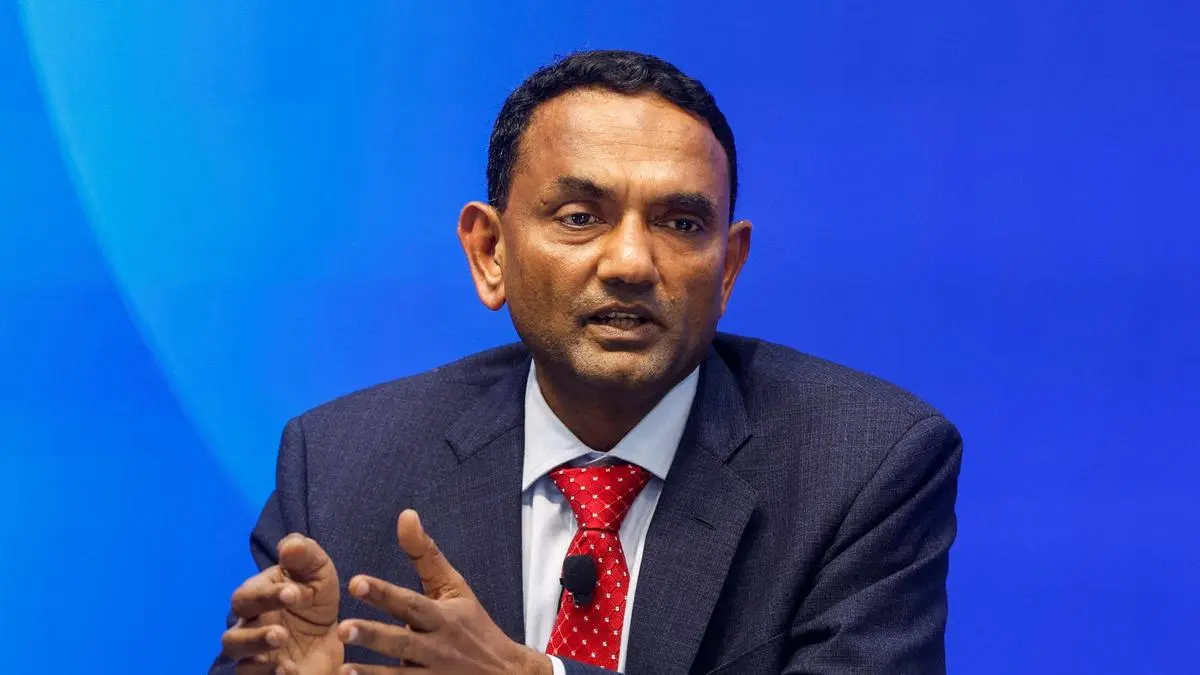
K Krithivasan, Chief Executive Officer & MD, TCS
| Photo Credit:
Amid growing concerns over AI sovereignty and access to frontier models, TCS has begun discussions with Indian AI model developers and said the country will need sovereign AI capabilities for sensitive workloads.“India will need a sovereign model, because you do not want to lose to the outside world, where you do not have complete control,” said K Krithivasan, CEO and Managing Director at TCS, in conversation with businessline. TCS is also building smaller, domain-specific language models for customers using its own capabilities.The comments come at a time when governments and enterprises are increasingly examining the risks of relying exclusively on global AI platforms amid rising geopolitical tensions, export controls and evolving regulations around advanced AI technologies.AI readinessHowever, Krithivasan played down concerns that restrictions on access to cutting-edge AI models could put Indian technology companies at a disadvantage. Referring to recent debates over restricted access to frontier models like Anthropic’s Mythos, he said the issue has been “overblown” because most enterprises were yet to fully exploit the capabilities of AI models already available to them.“While there is always a question of why Mythos is not available to me, a common question we ask customers is: what did you do with the model available to you before?” he said, arguing that concerns over access to the latest models were “not a major disadvantage” at this stage.Instead, enterprises are increasingly adopting a pragmatic approach, choosing different AI models depending on cost, performance and the nature of workloads. TCS expects customers to use a mix of proprietary, open-source and small language models rather than depend on a single provider.Krithivasan said AI revenues would continue to be “lumpy” as most AI transformation engagements are short-duration projects rather than traditional multi-year outsourcing contracts. TCS follows a narrow definition of AI revenue, counting only projects where AI delivers measurable business outcomes. While such projects conclude within two or three quarters, he said the company sees significant headroom as enterprises begin redesigning entire business value chains around AI.On whether technology vendors such as Microsoft, which are expanding Forward Deployed Engineer teams to work directly with enterprises, could emerge as competitors, Krithivasan said system integrators would remain relevant because they understand customers’ business processes and technology environments. “The thesis we have been putting out is that the role of system integrators will only increase,” he said, adding that AI vendors may have deep product expertise but lack the customer context that companies such as TCS bring to large transformation programmes.Client sentimentOn concerns that enterprises have been slower than expected in scaling AI deployments, Krithivasan attributed it to the complexity of large organisations.“It’s one thing to do a POC and find what looks good. Making it, productionising, scaling it and seeing the true business benefit takes some time. That’s why you have to reimagine the whole process,” he said.India will need a sovereign model, because you do not want to lose to the outside world, where you do not have complete control.K KrithivasanCEO and Managing Director, TCSPublished on July 13, 2026