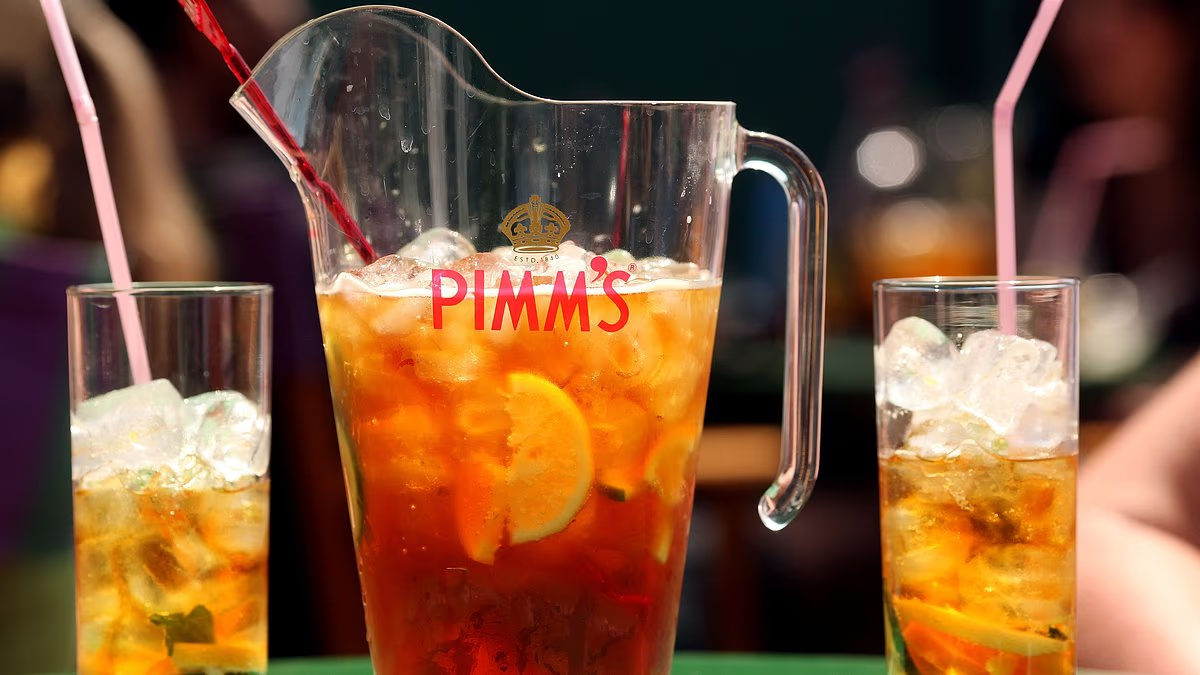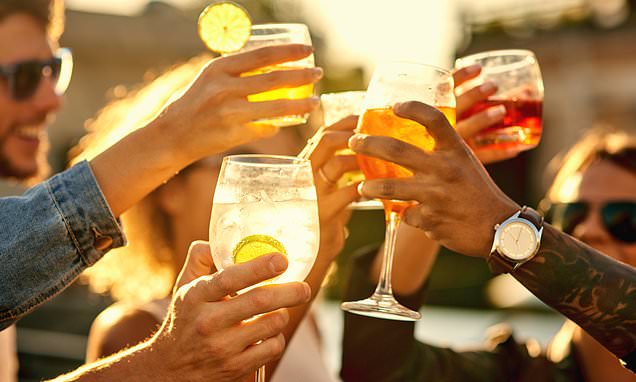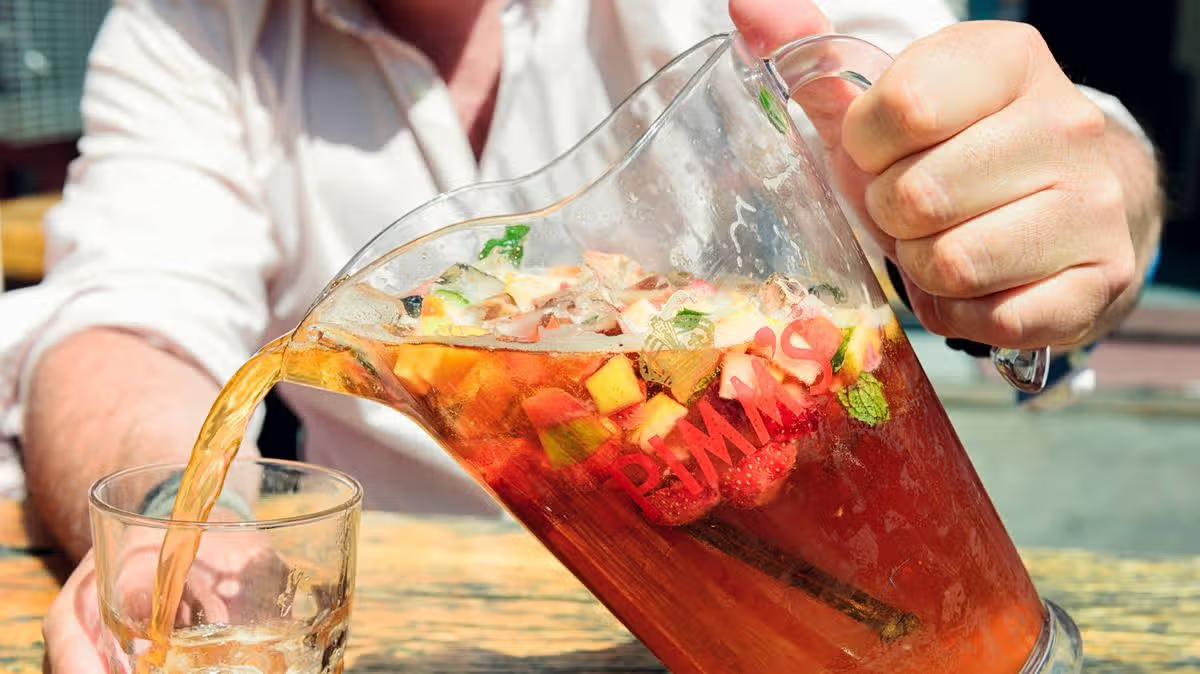
I like a drink. There, I’ve said it. A fruity Pimm’s in the garden on a summer’s day. A cold beer on holiday by the pool. A robust red with an autumnal fireside pub lunch.I have a favourite tipple for most occasions. And on my camera reel, a search for the word ‘cocktails’ brings up hundreds of photos that speak of margarita good times.But if I’m being completely honest, I just can’t drink the same way at the age of 52 as I did in my 20s and 30s. Who can? Who wants to?At the same time, I don’t want to quit completely. I know more and more people are – and good for them – but I genuinely enjoy drinking, especially the social side of it.The problem is those 1am finishes, resulting in tiredness while trying to work the next day, the mild anxiety, the lingering headache.However, I recently discovered a new trend for tipplers like me. It’s called ‘daycapping’ and it’s been a revelation.Daycapping is essentially when you start to drink earlier and also finish earlier. There’s no official cut-off time but it usually involves starting in the afternoon and wrapping things up by 8pm.No more 8.30pm dinners with pudding and Baileys at 11pm. With daycapping, it’s pub gardens for ciders and an afternoon of live music, or 4pm pre-dinner cocktails, supper, then home by 9pm. For over 30 years drinking was a big part of Anna-Louise's life, beginning with university drinking culture and continuing into her booze-filled social life as a journalist in the 1990s Daycapping is when you start to drink earlier and also finish earlier. There’s no official cut-off time but it usually involves starting in the afternoon and wrapping things up by 8pmI keep a sleep app, and my average bedtime for the past few months has been 10.30pm. Rock ’n’ roll!Nowadays, if my friends and I go out for ‘dinner’ on Saturday, we’ll often book it for 5pm (added bonus, it’s easier to bag a table at that time) and have a couple of drinks in the bar before.I try to have family events in the day rather than the evening, since I find a couple of Aperol spritzes on a sunny afternoon have no effect on me the following morning – as long as my last one is before 8pm.For more than 30 years, alcohol played a big part in my life. It all started at university, which was a constant party. Eat, pub, sleep, repeat (maybe with a bit of studying thrown in). I rarely suffered hangovers and good genes (thanks, Mum) meant there weren’t that many ill-effects.Then I got a job as a writer on a magazine – and cue the drinking decade. It was at the tail end of the 1990s when bars and eateries were our meeting rooms. It wasn’t unusual to drink most days, with the weekly 14-unit limit surpassed by Monday.Back then I was features editor at Off Licence News, where we were sent free booze to the office and flown to wine regions to eat, drink and be merry. After that, at 26, I became editor of a film magazine, and there were always evening events and premieres with free-flowing champagne.Throughout my 30s, there was wine with dinner most days, and occasional lunchtime drinks with school mums. But drinking shenanigans have – on occasion – got me into trouble. Not least, one time in the early 2000s when I woke up in Nottingham at 3am having boarded the train out of London at 11pm. It was only meant to be a 45-minute journey home to Northamptonshire, but after a glamorous party at MGM Studios where I’d drunk neat vodka, I’d slept through my stop . . . and the next six.I got off at Nottingham onto a cold, deserted platform. I called my husband, who was livid. He yelled that I had a one-year-old at home, and when was I going to grow up? I put the phone down and settled into a photo booth to sleep. My husband and I divorced a year later.But – in a story as old as time – once I turned 40, things changed. The booze was hitting me harder, especially late-night drinking, and there was definitely a slower recovery the next day.Then on New Year’s Day 2021, my dad died. He had lung cancer, and Mum told me she’d seen his doctor’s notes, which said he was also an alcoholic, which hadn’t helped his prognosis.He loved his job as a welding inspector for the National Grid, but it meant weeks or even months away in hotels and B&Bs. The nightly tipple became habitual. When he got sick and stopped working, he was drinking red wine straight from the bottle.After Dad died, I got into journalling and meditating. I know it sounds all wellness-y, but it helped. I also started to prioritise sleep and noticed that if I had a drink after 9pm it would really affect the quality of my rest.I still enjoyed wine with food, and the occasional cocktail with friends, but it turned out they wanted to go out earlier, too. So we started ‘daycapping’ in earnest. It is, of course, mostly a weekend thing, as daytime drinking doesn’t fit into a working day (any more!) – although there are very occasional weekday lunches when we might have a couple of glasses of wine.Maybe we’re taking a leaf out of the Gen Z book. As Business Insider reported recently, the younger generation are ‘prioritising quality, flavour and social context over quantity’.‘That change is pushing bars and alcohol brands to design products for daytime moments, the rise of the “daycap”, and reshaping how the industry defines a drinking occasion,’ the report read.This means products being orientated towards brunches, festivals and dinner reservations before sunset rather than late-night bar crawls.Jamila Juma-Ware, co-founder of Drapers, a luxury spirit producer and hospitality venue operator, says they’re seeing a significant shift towards earlier, experience-led drinking occasions, particularly among guests in their 40s and 50s.According to Juma-Ware: ‘People aren’t necessarily drinking more or less; they’re drinking better. We are parents and business owners. We love a daytime cocktail and live for daytime discos as we’re asleep by midnight.’My narrower drinking window means I’ve cut my weekly units from 30-plus to around 14. My sleep, skin and mood are better. I’m more productive, make fewer bad decisions and have more time for exercise.Dr Thuva Amuthan says cutting down alcohol is one of the simplest lifestyle changes to improve health quickly. ‘Staying within the UK guidance of no more than 14 units a week, spread over three or more days, can help reduce the risk of high blood pressure, liver disease, poor sleep, anxiety, weight gain and several alcohol-related cancers.‘Even small reductions, such as drink-free days or switching to low-strength options, can make a meaningful difference.’I still love a big occasion. The only difference is I don’t drink the whole bottle – and I’m home on my sofa at a sensible hour.
I was drinking 30 units a week until I found the Goldilocks method
I like a drink. There, I've said it. A fruity Pimm's in the garden on a summer's day. A cold beer on holiday by the pool. A robust red with an autumnal fireside pub lunch.
1,168 words~5 min read