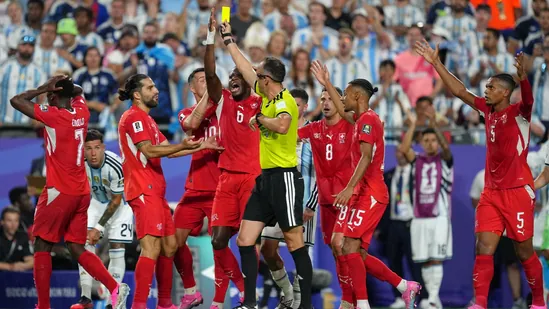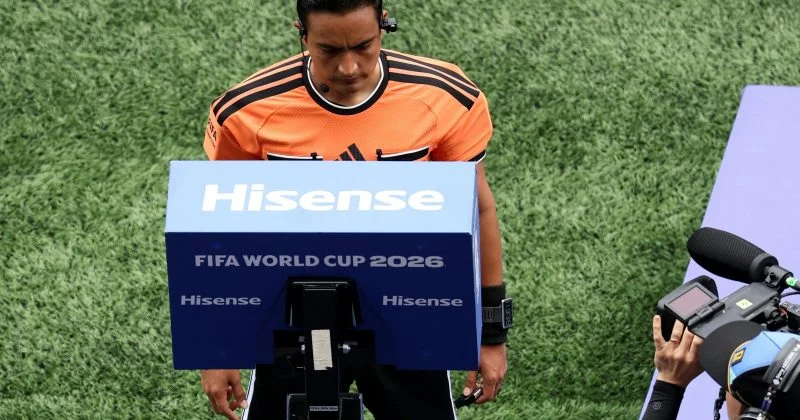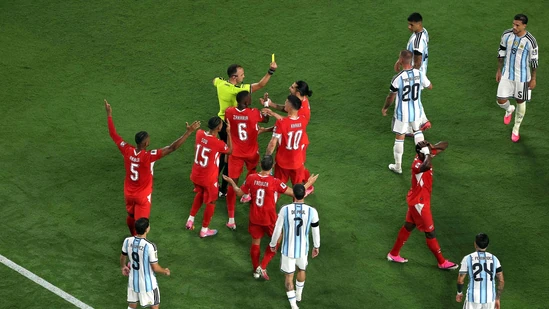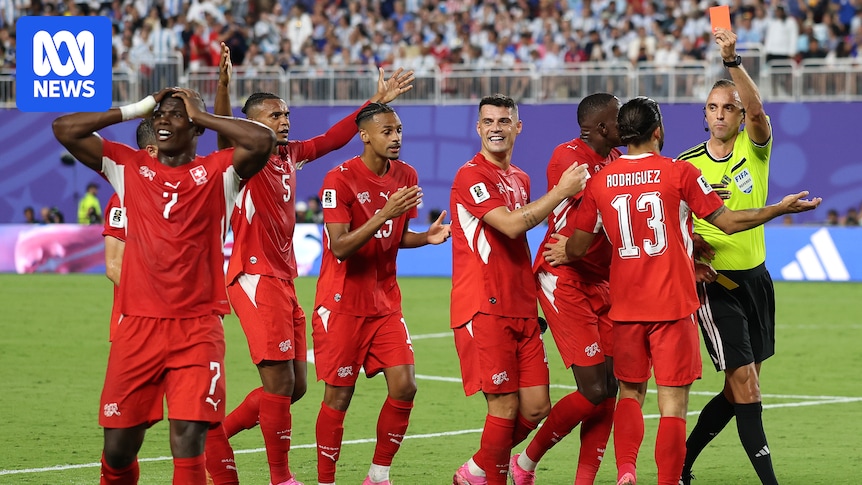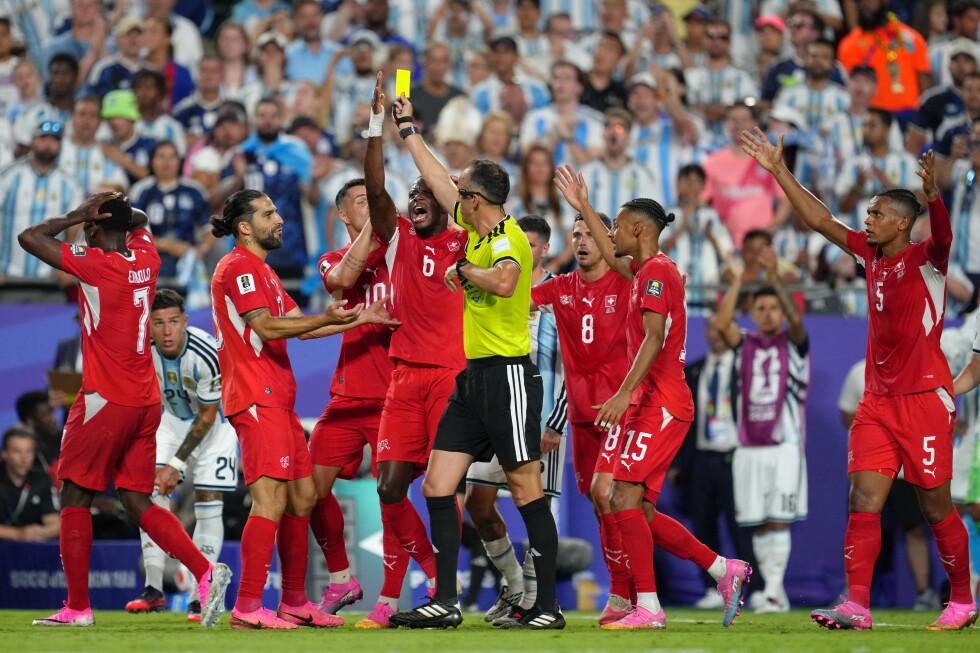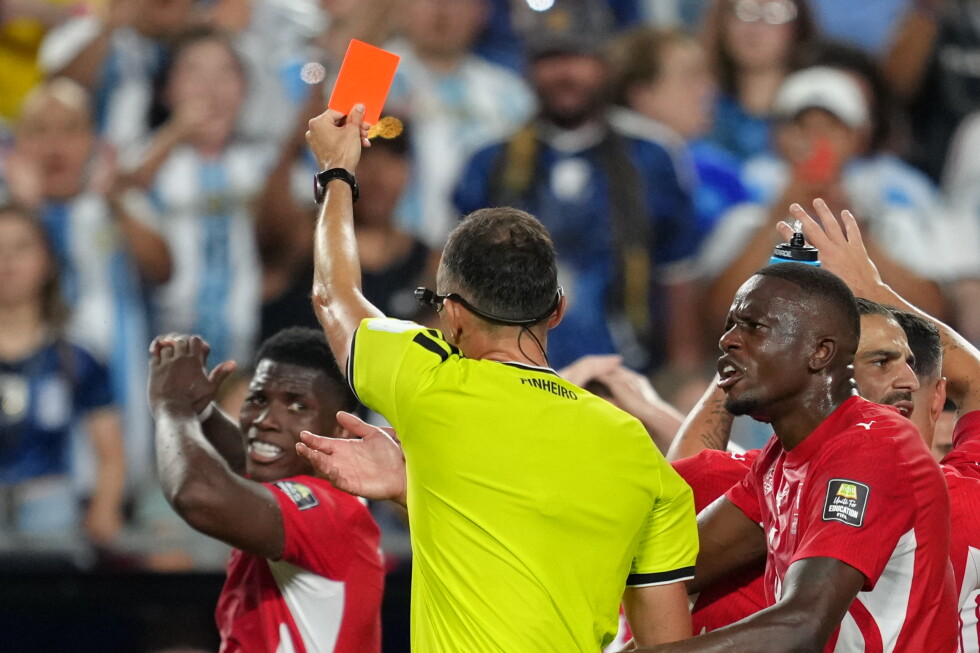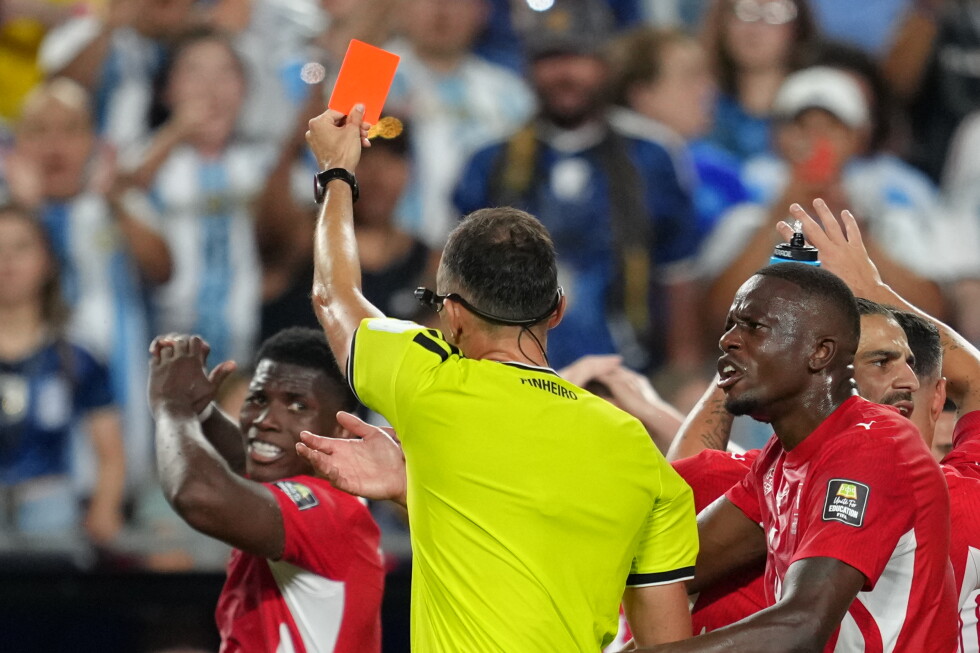
ATLANTA (AP) — It was another game-changing moment at the World Cup that had more to do with television replays in a room far away than a moment of brilliance on the field. The sending off of Switzerland’s Breel Embolo in Saturday’s quarterfinal game against Argentina was the latest call that may have left fans scratching their heads, not least because of the confusing name of the newly implemented law that swung the match. It is called the “mistaken identity” rule. Yet, technically, Embolo was not shown a second yellow card — resulting in a red — for a case of mistaken identity. It was because the referee Joao Pinheiro did not see in real time that the forward had simulated a foul under a challenge from Argentina’s Leandro Paredes. Paredes was initially shown a yellow card, which is a key factor. Under FIFA rules, because Paredes was shown a card, the video assistant referee (VAR) can intervene and recommend that the onfield official reviews the sideline monitor. After review the referee deemed Embolo to have committed a “clear simulation” and showed him a second yellow card and sent him off.
The rules state that the VAR can assist when the referee penalizes the “wrong team for an offense that results in a red or yellow card being shown to the wrong player.”