Isabelle LeeJuly 13, 2026 — 6:25amFinancial markets are facing more uncertainty after US President Donald Trump ordered a wave of strikes on Iran over the weekend and Tehran closed the Strait of Hormuz to shipping.Futures markets are pointing to a climb of 43 points or 0.49 per cent for the local bourse following markets closing higher in the US on Friday, but that was before the latest wave of strikes in Iran. The dollar was fetching US69.50¢ on Monday at 6am AEST.Markets face more uncertainty after wave of strikes on Iran over the weekend and Tehran closed the Strait of Hormuz to shipping. Peter BraigOn Wall Street, the S&P 500 rose 0.4 per cent to close out its fourth winning week in the last five. The Dow Jones Industrial Average added 149 points, or 0.3 per cent, and the Nasdaq composite climbed 0.3 per cent.SK Hynix, a giant South Korean maker of memory chips, shone in the debut of its stock trading on the Nasdaq. After raising roughly $US26.5 billion by selling American depositary shares at a price of $US149 each, it jumped immediately after trading began in the midday hours and finished with a gain of 13.1 per cent. SK Hynix’s stock in Seoul has already surged 634 per cent over the last year thanks to euphoria around AI.The boom has created real profits due to surging demand for computer memory. But it’s also raised worries that AI stock prices have shot have too high and that all the world’s spending on chips and data centres won’t be able to produce enough productivity and profit growth to make it worth it. That’s led to sharp recent swings for AI stocks, which have grown into some of Wall Street’s most influential because of their huge sizes.Nvidia was the strongest single force lifting the S&P 500 Friday after rising 4 per cent.Beyond the uncertainty about AI, the focus on Wall Street is shifting to the upcoming reporting season for companies’ profits, but the outlook is a split-screen.That contrast was evident Friday. Oil traders continued parsing every signal from Washington and Tehran as negotiations with Iran remained fragile. Equity investors, meanwhile, were already looking ahead to quarterly results.Barclays says correlations across major asset classes sit in roughly the 93rd percentile of their historical range, meaning oil, bonds and currencies have tended to move together more than usual. At the same time, stock correlations have fallen to their lowest levels in more than a decade. While equities can still move with broader asset markets, the companies within the index are increasingly moving in different directions as investors distinguish between AI winners and losers.Oil traders continued parsing every signal from Washington and Tehran while equity investors look to quarterly results.ReutersBarclays points to a parallel in the dot-com era — when another once-in-a-generation technology shift created unusually wide gaps between perceived winners and losers.“Investors are always looking to find the next beneficiaries of the AI trade and that’s creating a lot of rotation,” said Stefano Pascale, head of US equity derivatives research at Barclays.The market repricing extends beyond equities.Higher real Treasury yields have weighed on gold this year, even as equities and credit have remained resilient. Gold would ordinarily be expected to benefit from geopolitical strain, inflation concerns and persistent fiscal deficits. Instead, the metal has struggled as higher real yields increased the opportunity cost of holding an asset that produces no income.Florian Ielpo, head of macro at Lombard Odier Investment Managers, argues markets are still pricing expansion rather than stagflation. AI investment is lifting expectations for earnings even as it pushes up demand for capital, allowing equities to absorb higher borrowing costs more easily than gold does.“Higher real yields are not yet simply a tightening shock for equities: they are also the price of a stronger investment and profit cycle,” Ielpo said. “The risk would emerge if real yields continued to rise after expected earnings stopped improving.”The price for a barrel of Brent crude oil, the international standard, dipped 0.4 per cent to $US76.01.That’s above its $US72 price from the start of last week, but it’s still well below its wartime peak of nearly $US120. The worry is that continued fighting could block oil tankers from the Strait of Hormuz and prevent the delivery of crude from the Persian Gulf to customers worldwide.President Donald Trump said on his social-media platform that he agreed to continue talks with Iran but also that the United States told Iran “that the Cease Fire is OVER!”In the bond market, Treasury yields ticked higher. The yield on the 10-year Treasury rose to 4.56 per cent from 4.54 per cent late Thursday.High yields have weighed on financial markets worldwide. Yields have climbed on worries about expensive oil and high inflation, which could push the Federal Reserve and other central banks to raise interest rates.Higher rates can keep a lid on inflation, but they also slow the economy and hurt prices for all kinds of investments.In stock markets abroad, indexes were mixed. South Korea’s Kospi jumped 2.5 per cent, and Japan’s Nikkei 225 rose 1.2 per cent for two of the world’s bigger moves, but stocks fell 1 per cent in Shanghai.With Bloomberg, APThe Market Recap newsletter is a wrap of the day’s trading. Get it each weekday afternoon.More:SharemarketInvestingAussie dollarSharesBondsCommoditiesCurrenciesFrom our partners
ASX to climb, but Iran strikes escalate uncertainty
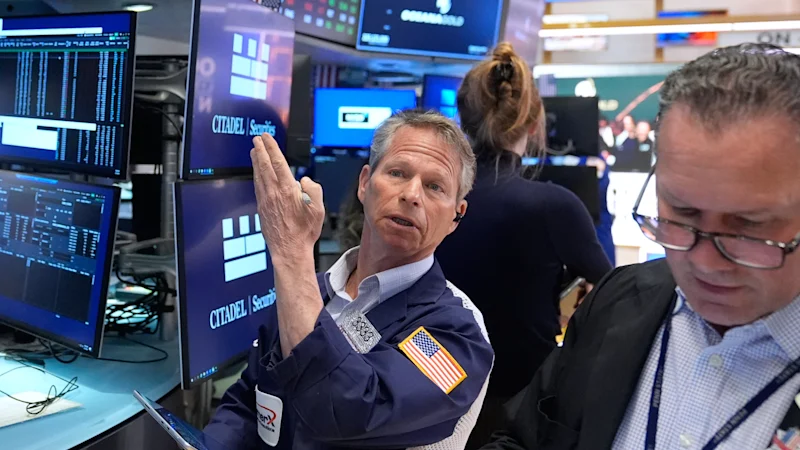
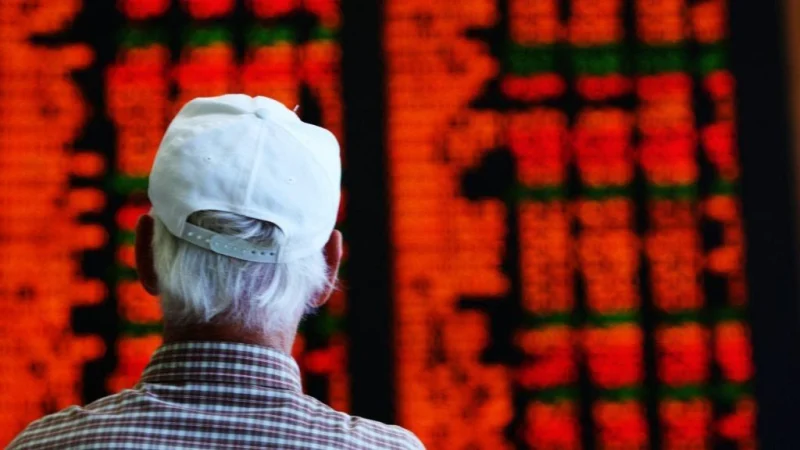
Markets face more uncertainty after wave of strikes on Iran over the weekend and Tehran closed the Strait of Hormuz to shipping.
881 words~4 min read