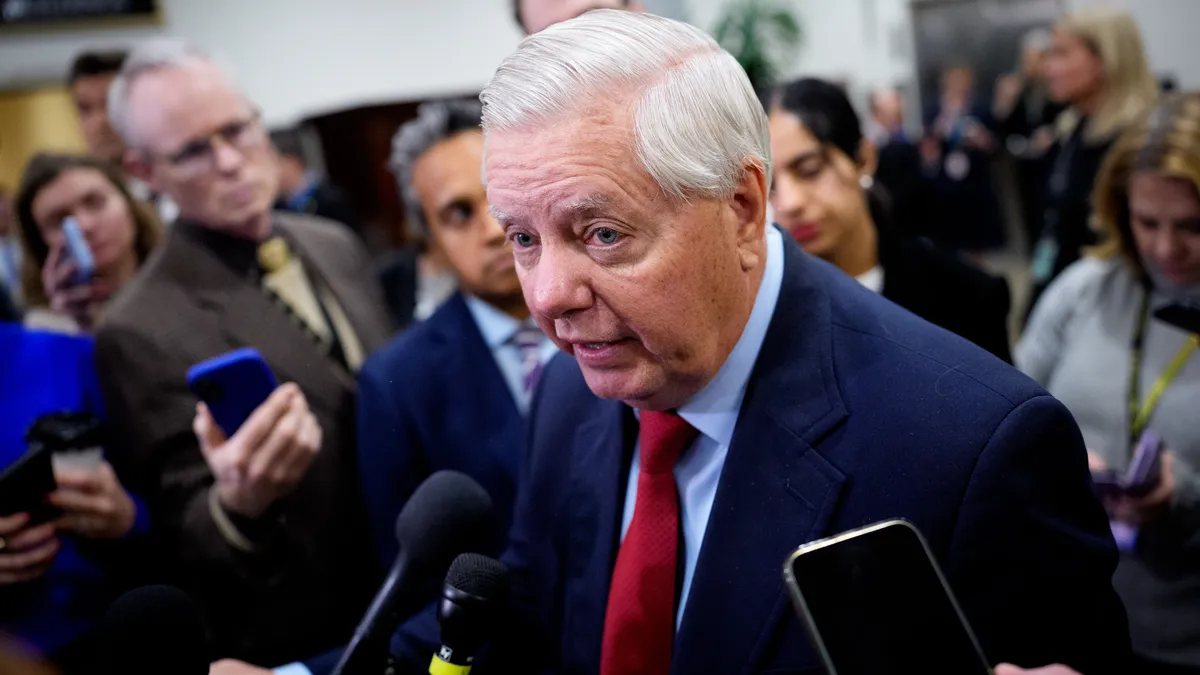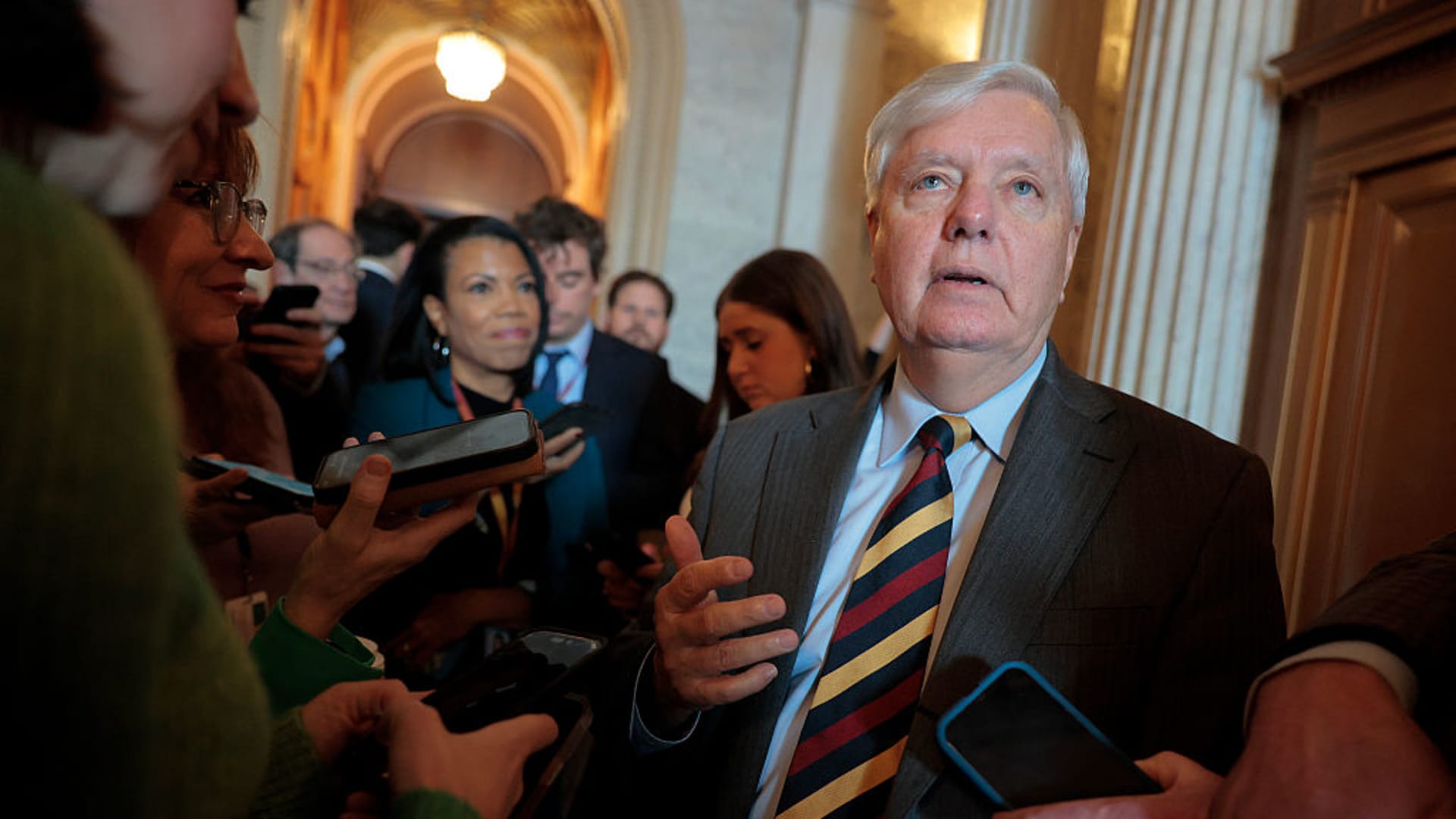
Sen. Lindsey Graham waits to begin a hearing on Capitol Hill in Washington, DC.
Pool/Getty Images
Republican lawmaker Lindsey Graham, who died on Saturday at the age of 71, had a major influence on corporate tax rates, tariff policies, and defense spending.Graham's office said in a statement on Sunday that the four-term senator died after a "brief and sudden" illness. Graham, an ally of President Donald Trump, had just returned from a trip to Kyiv, where he had met with Ukrainian President Volodymyr Zelenskyy.In his 23 years in the Senate, Graham helped shape a protectionist, national-security-driven approach to trade and business-friendly policies that lowered corporate tax rates. His interventionist foreign policy views also translated into support for increased defense spending. Billions of dollars in military spending ultimately flowed to his home state of South Carolina.Here's how the late lawmaker impacted American businesses and the US economy.Corporate taxesGraham was instrumental in pushing corporate tax cuts through Congress over the last decade. He was a major supporter of the 2017 Tax Cuts and Jobs Act, which lowered the corporate tax rate from 35% to 21%.During Graham's unsuccessful 2016 run for president, he made cutting corporate taxes a central part of his campaign. During a Republican primary debate in 2015, Graham argued that the corporate tax rate should be lowered to prevent businesses from relocating overseas and to help create jobs for middle-class Americans."The best way to grow the middle class is to make it a good place to create a job," he said during a debate at the time.