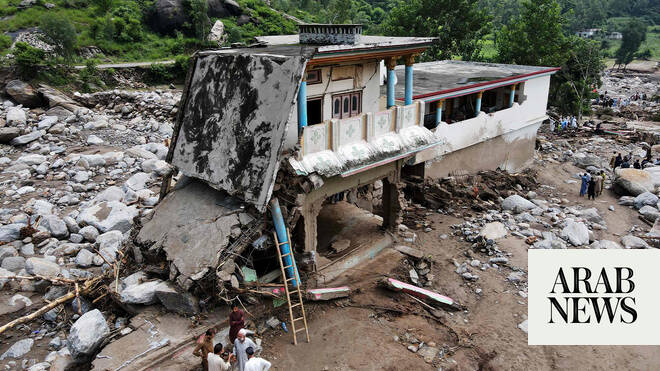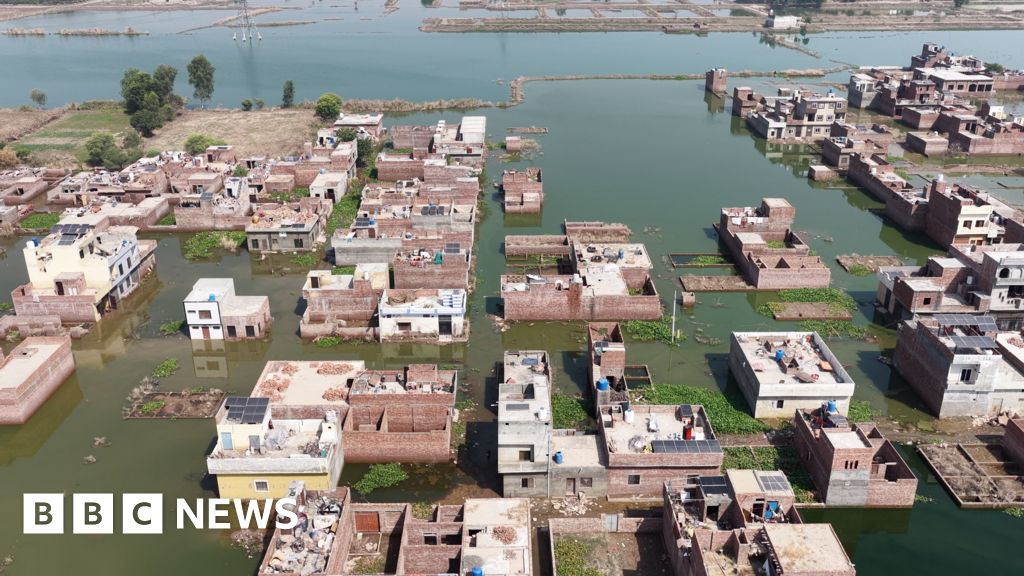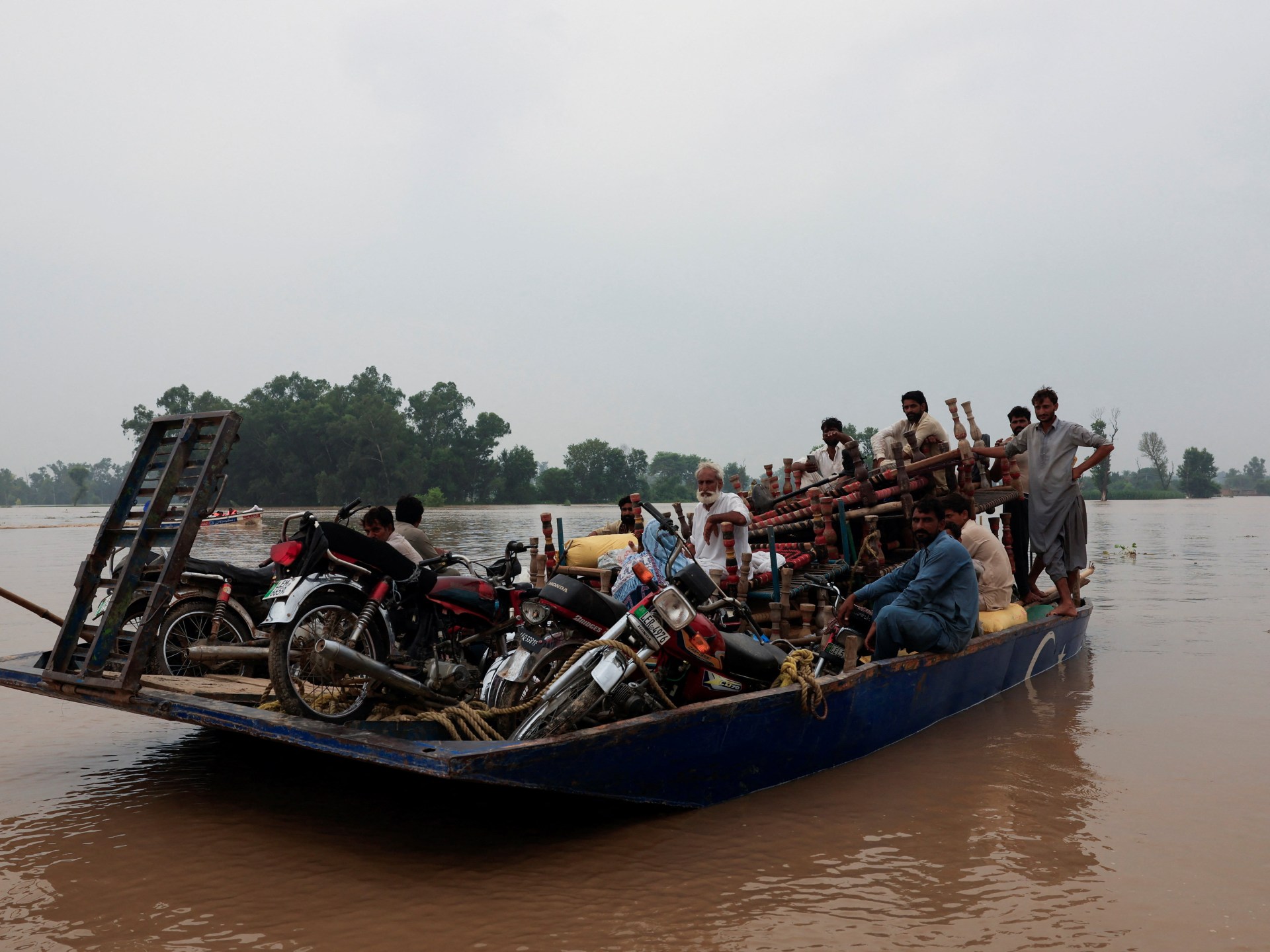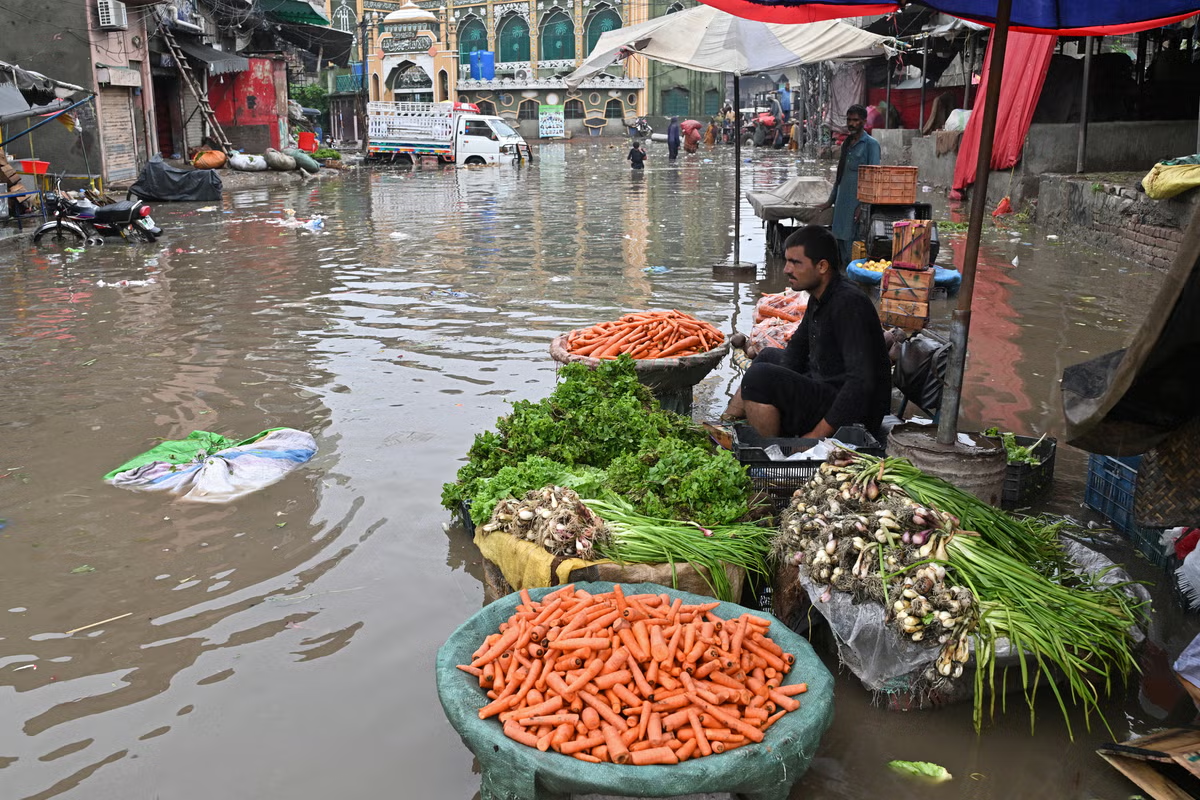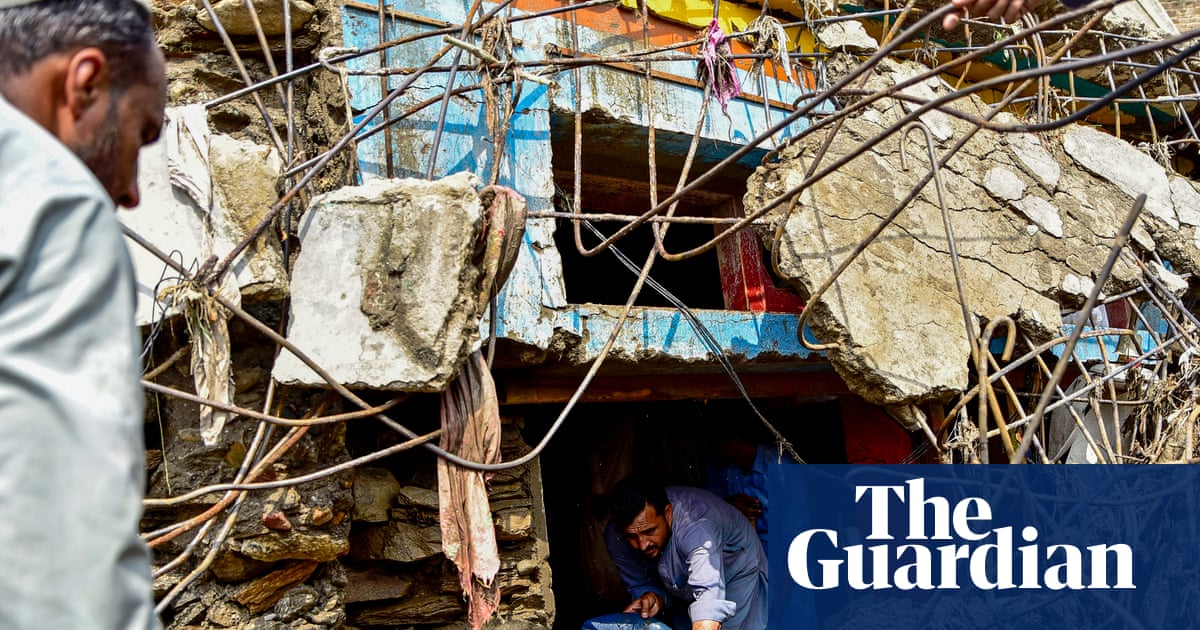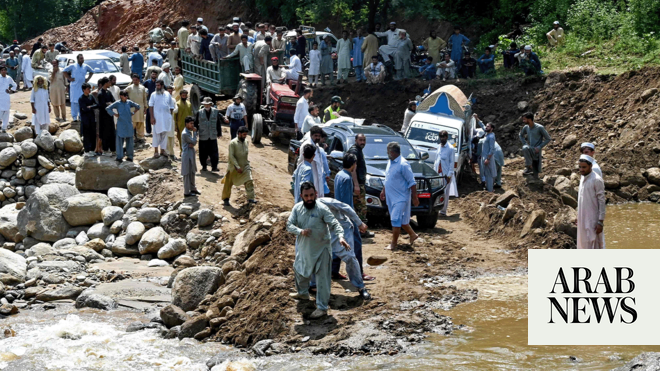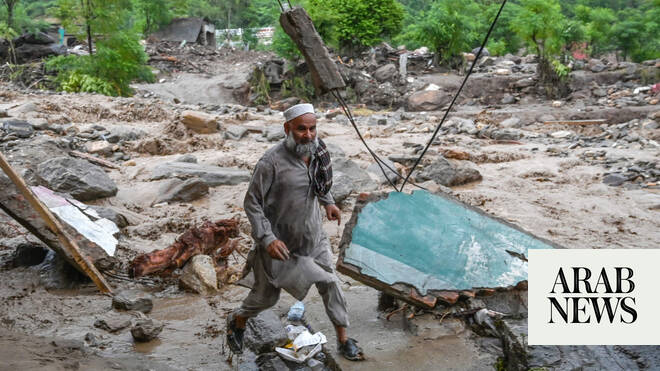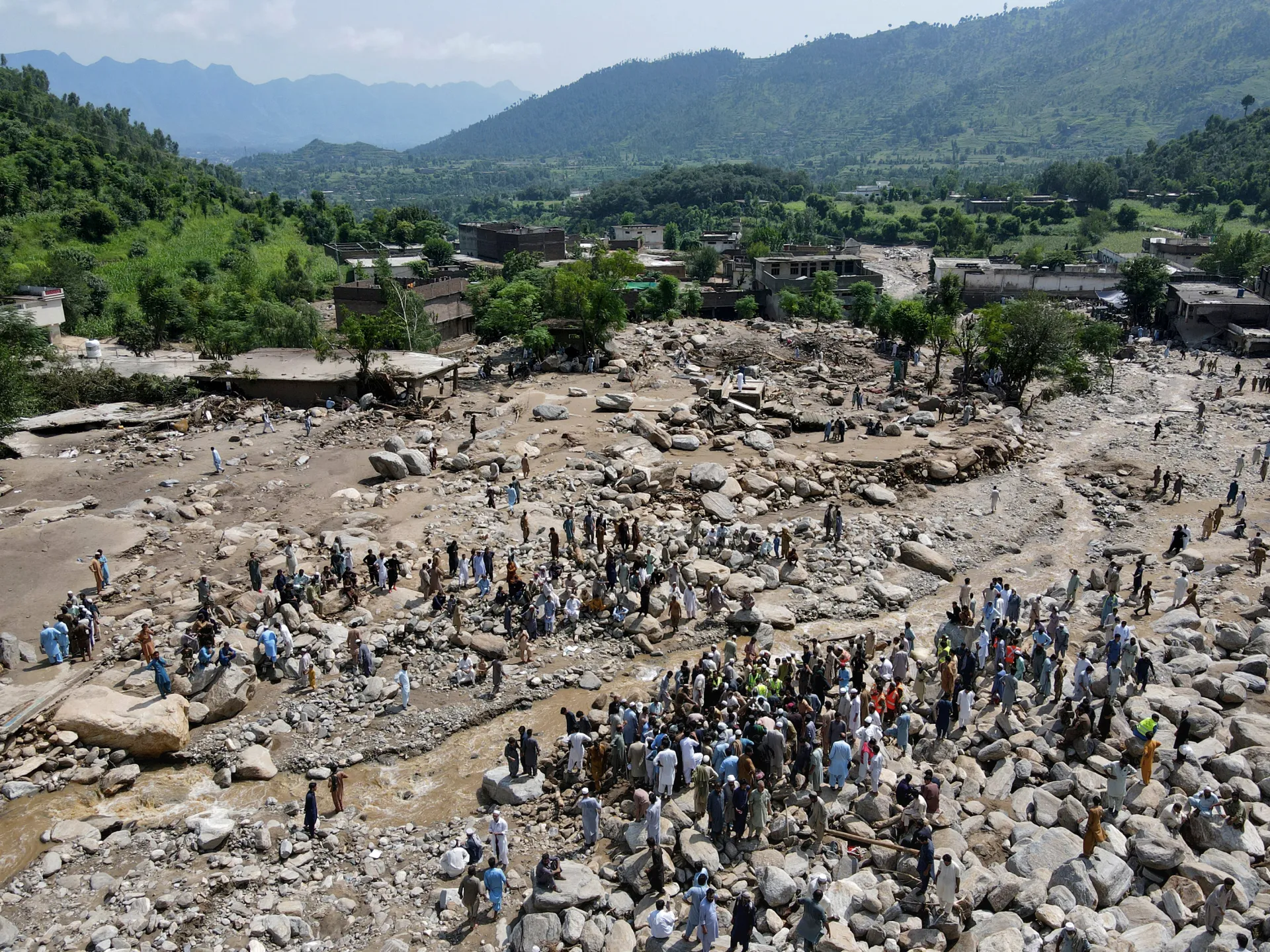
Underneath the fatal climate events that have hit the country's mountainous north are factors that are controllable yet ignored every year, every time.
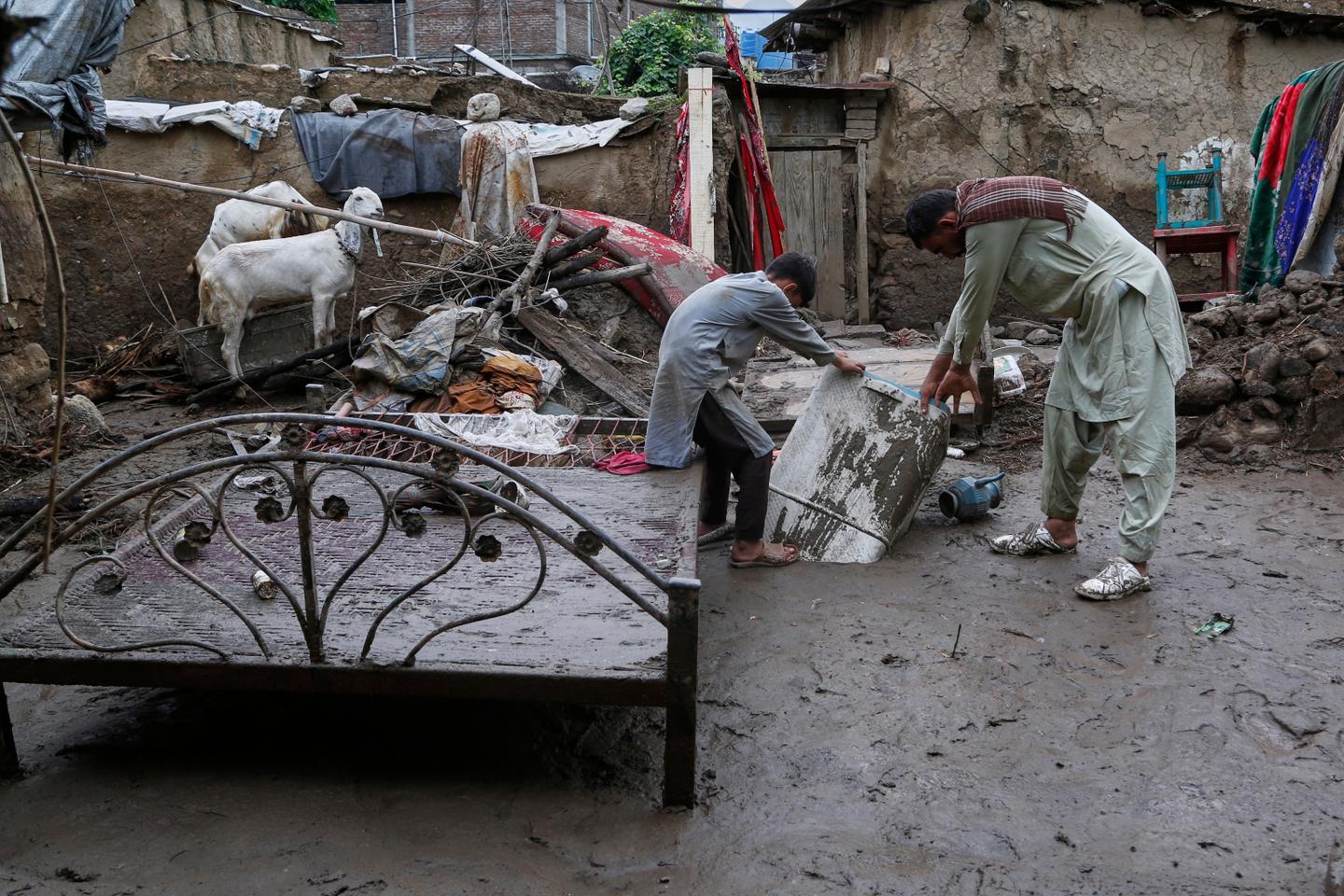
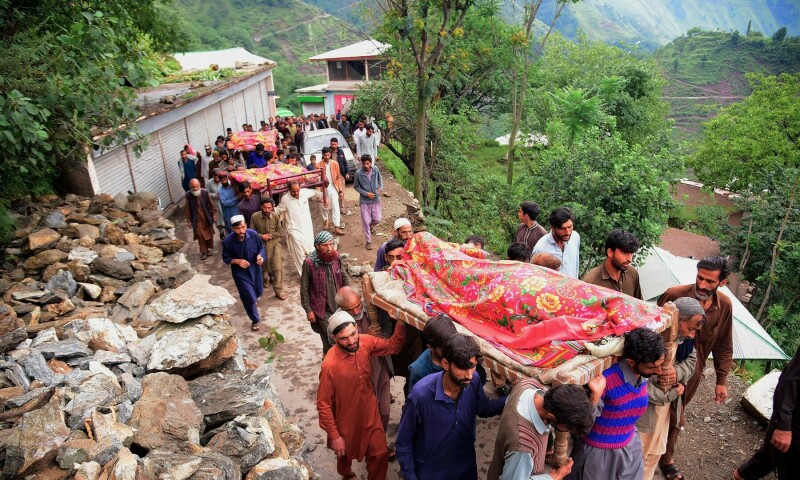
We’ve seen these headlines before. Heard anchors screech body counts as if they’re in a competition for the highest number. Hundreds of lives lost, thousands displaced, homes swept away and losses that won’t ever be compensated.
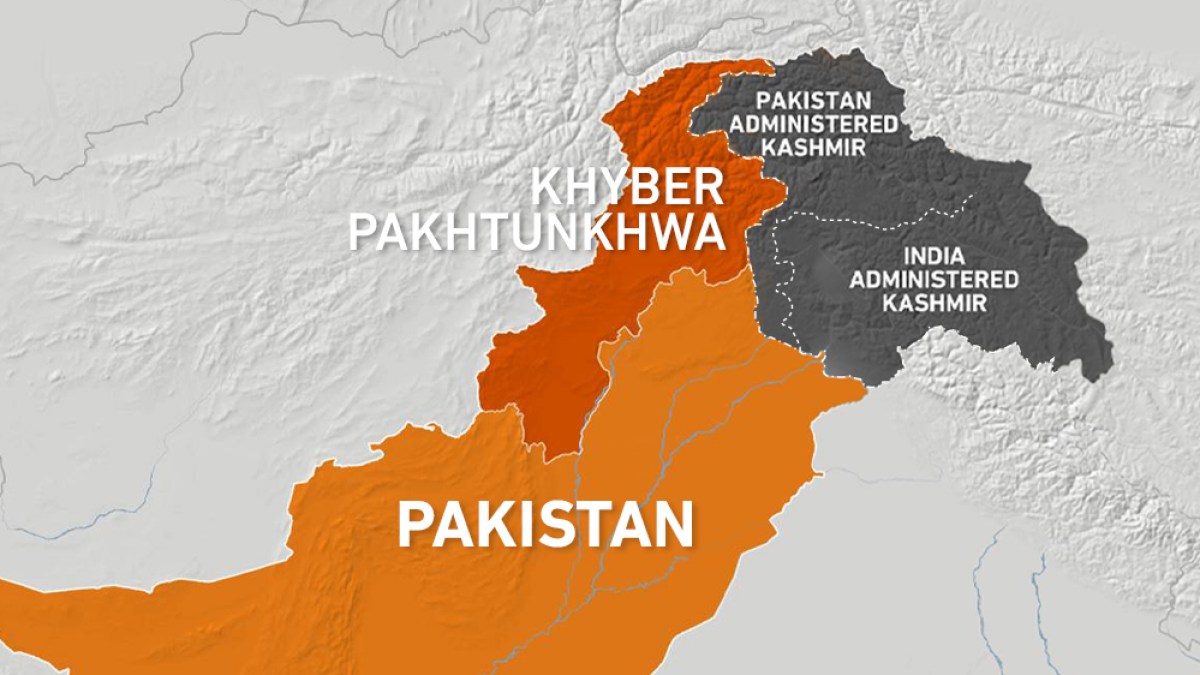
Pakistan is once again in the midst of a ruthless monsoon season, which began in late June, and on the radar is the country’s mountainous north — Khyber Pakhtunkhwa, Gilgit Baltistan, and Azad Jammu and Kashmir.
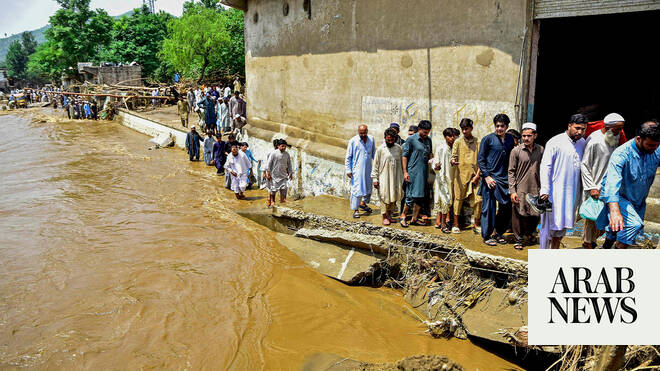
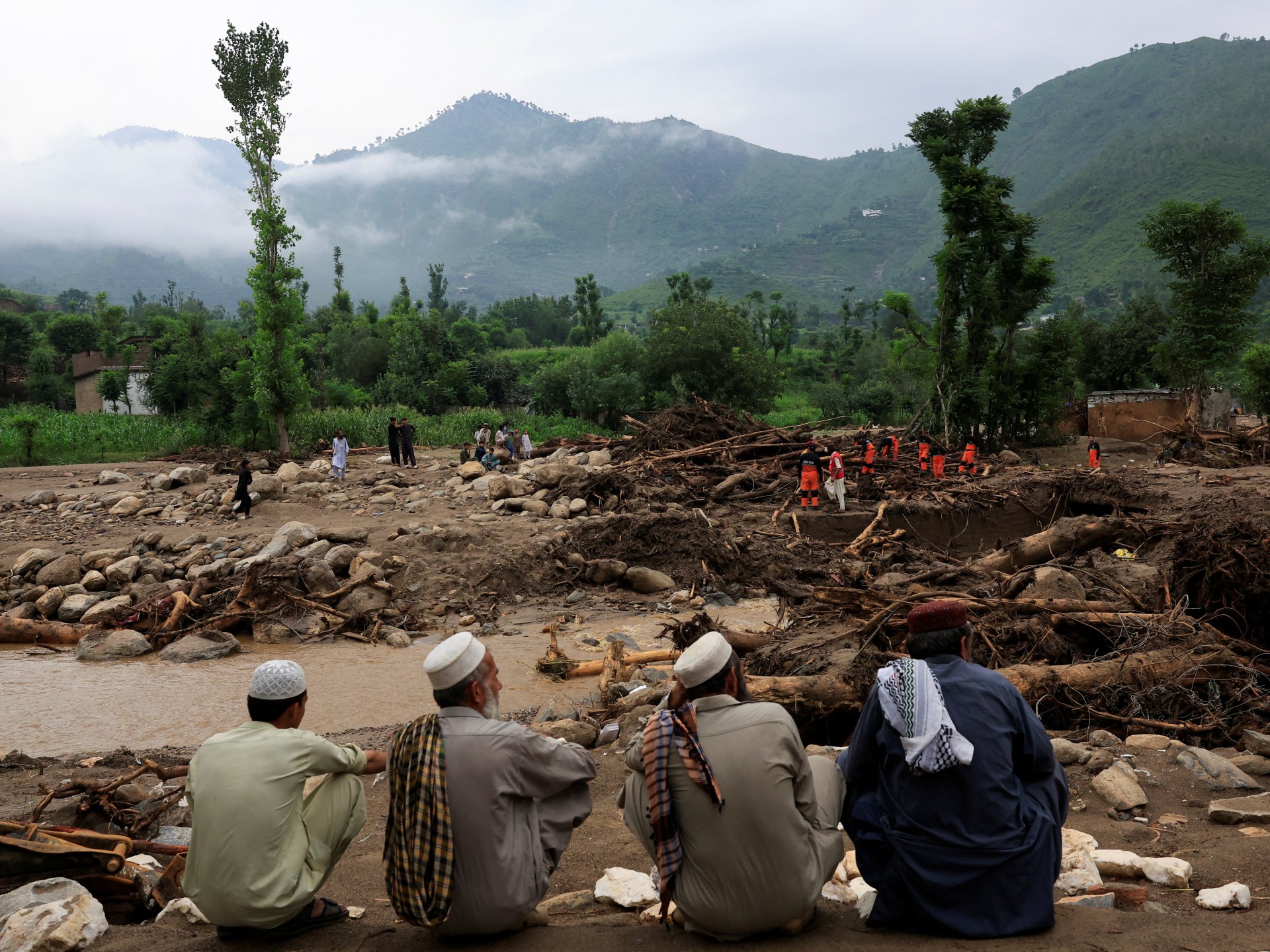
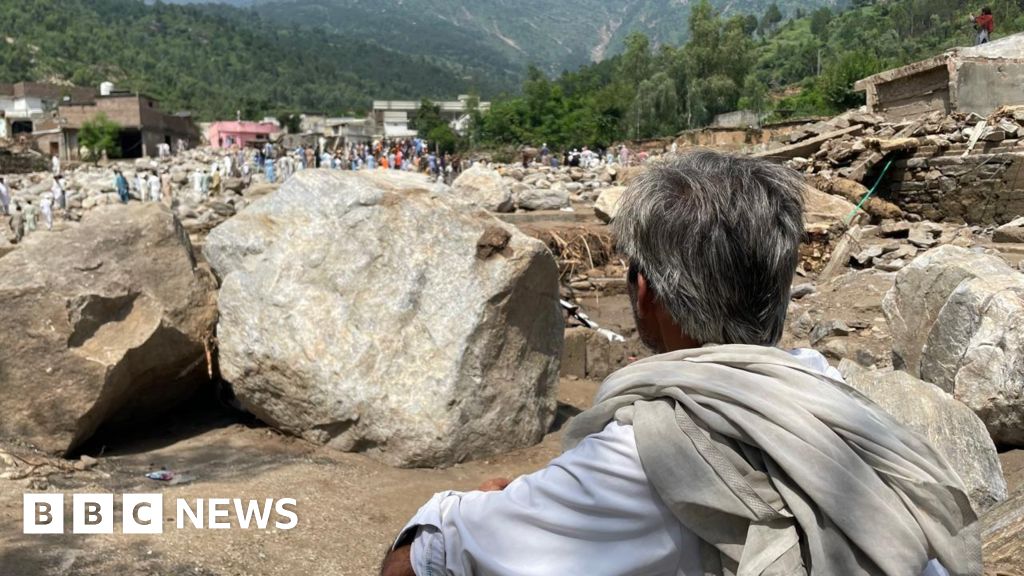
Last week, unprecedented flash floods left behind a trail of wreckage in Buner, Swat, Shangla, Mansehra, and beyond. A week before that, Muzaffarabad bore the brunt of monsoon rains. Almost a month back, 37 villages across GB were declared calamity-hit.
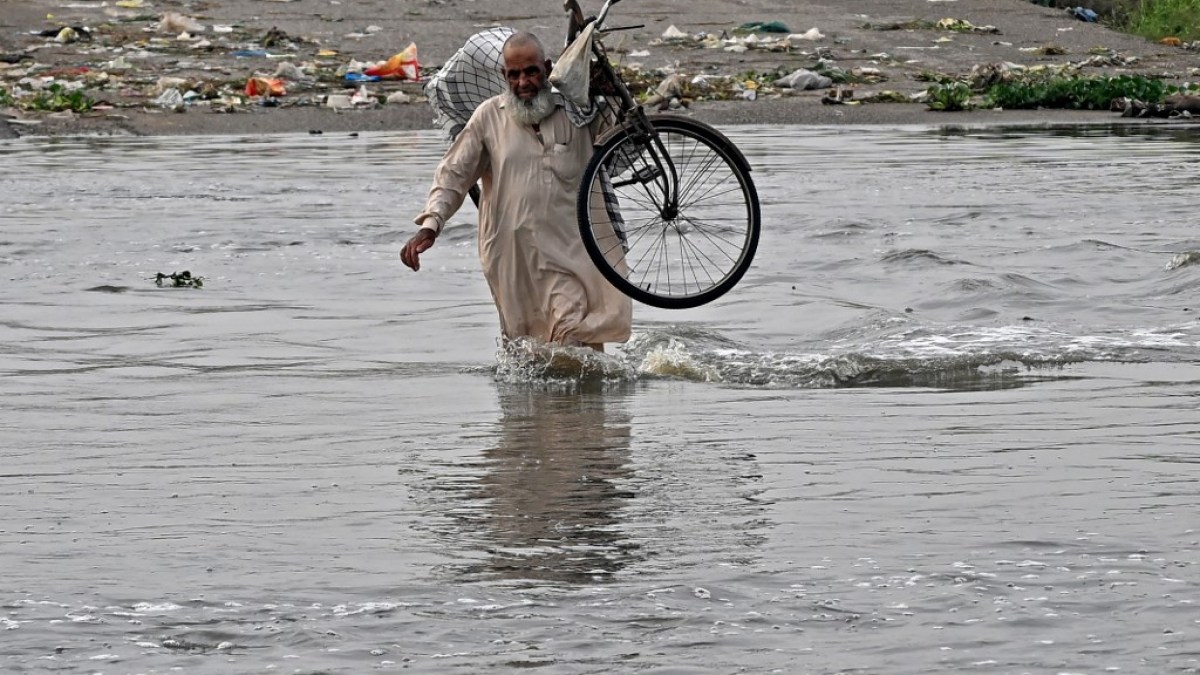
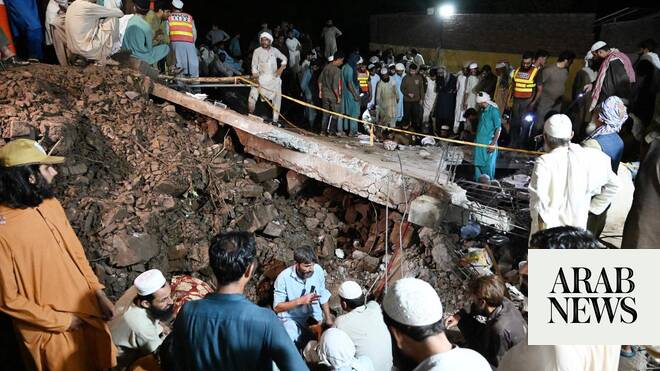
Visuals coming out of the region are terrifying; monstrous rivers unleashing their wrath and sweeping along anything in their way, from main city bazaars to entire villages. According to a report by the National Disaster Management Authority, at least 392 people have died in KP from June 26 to August 18. The number of fatalities in GB stands at 34, while 15 people were killed in AJK during this period.