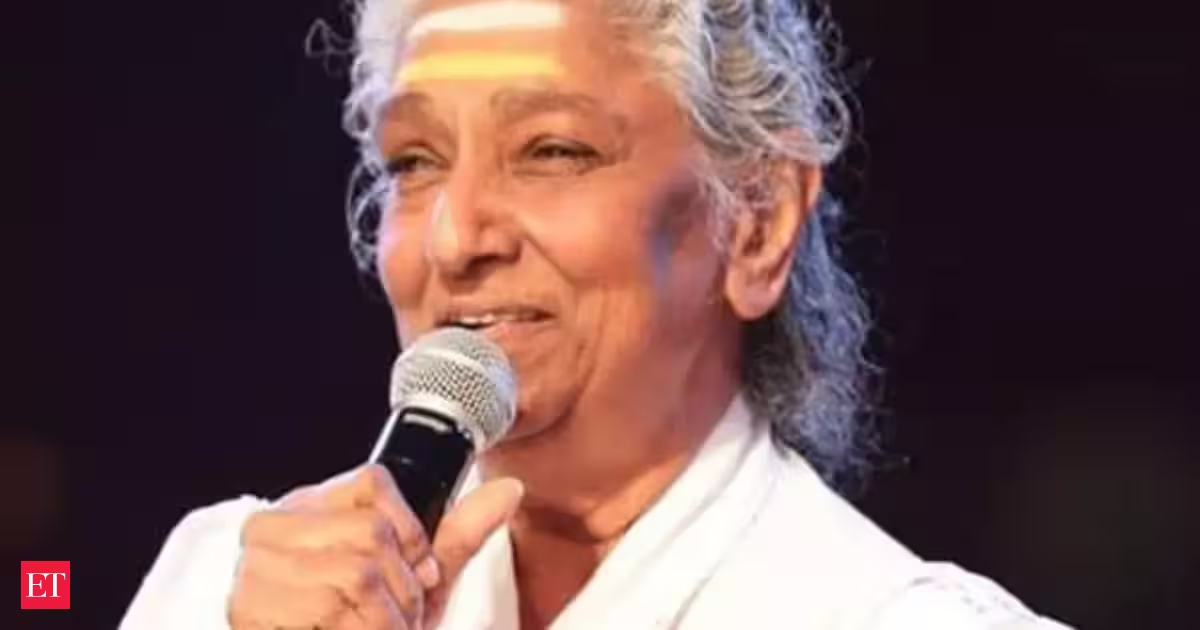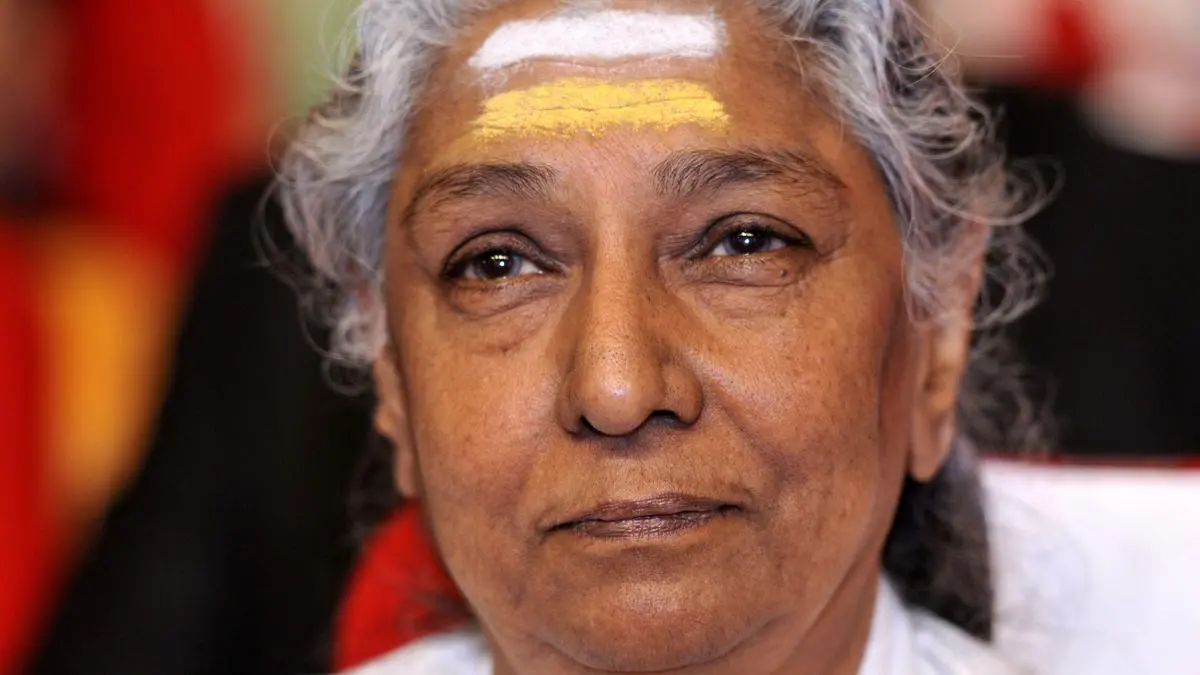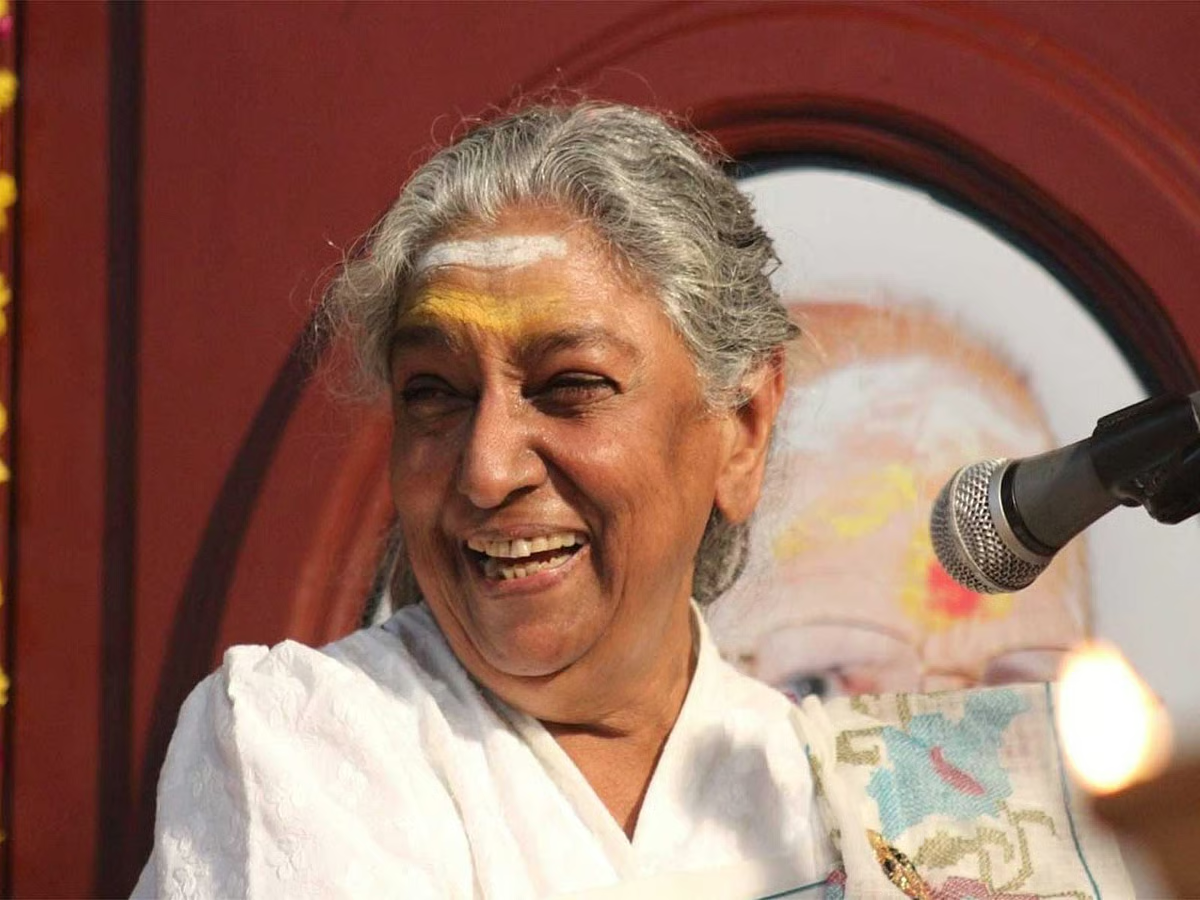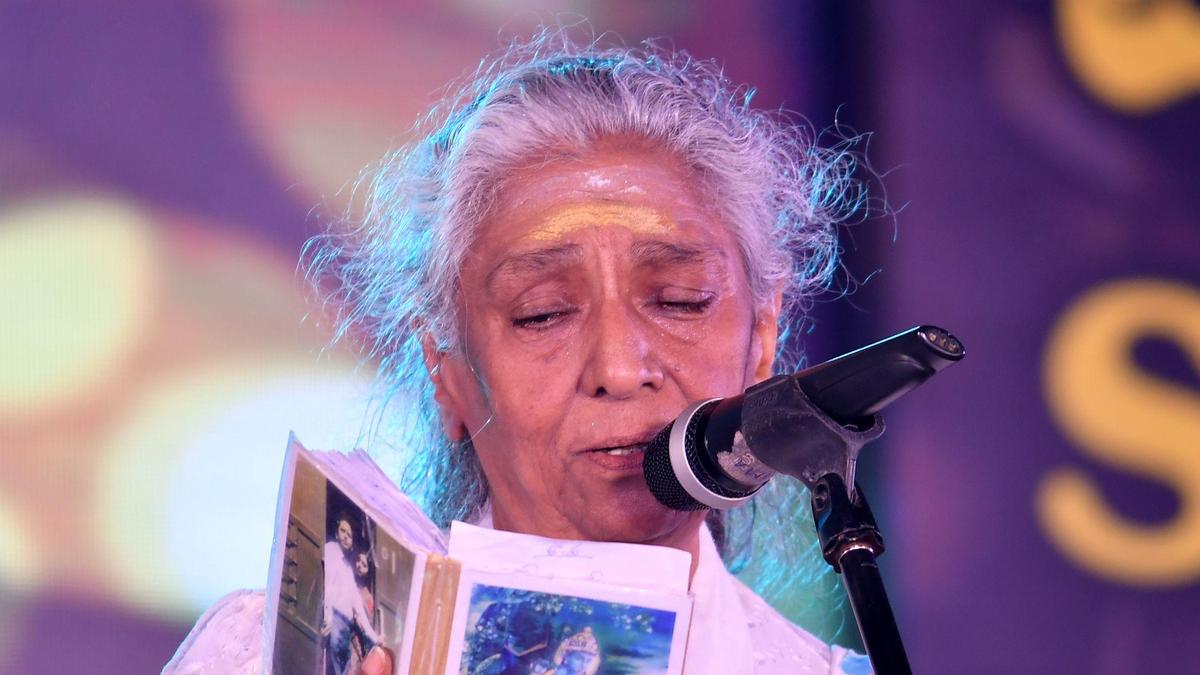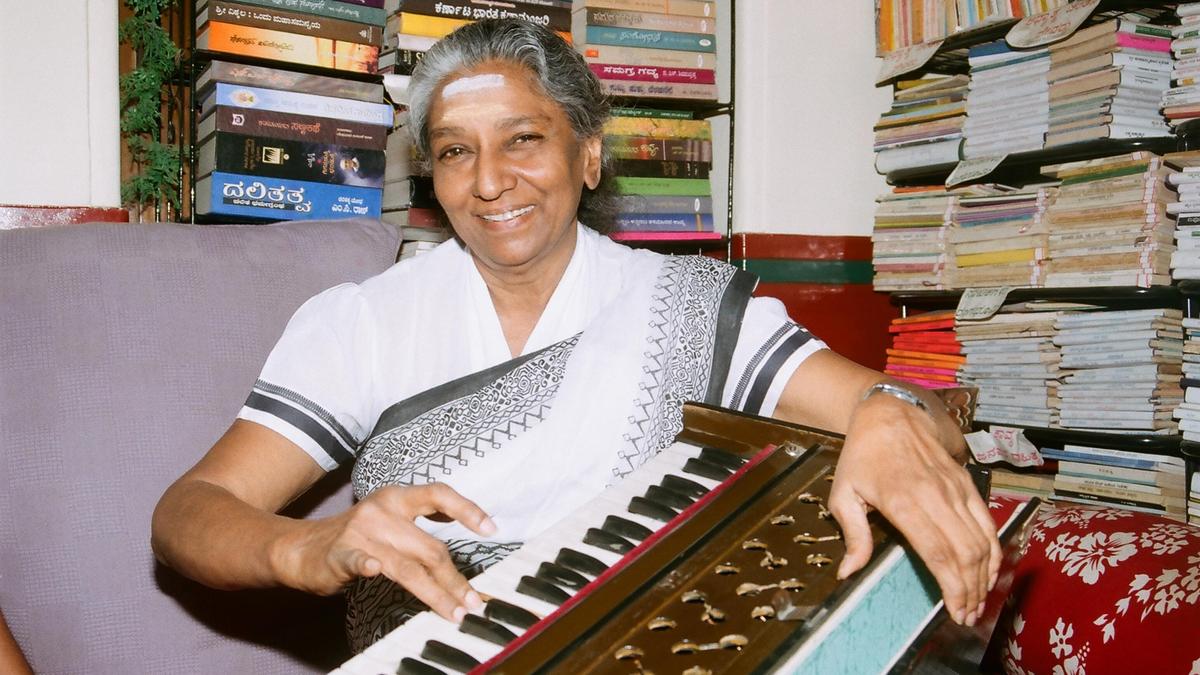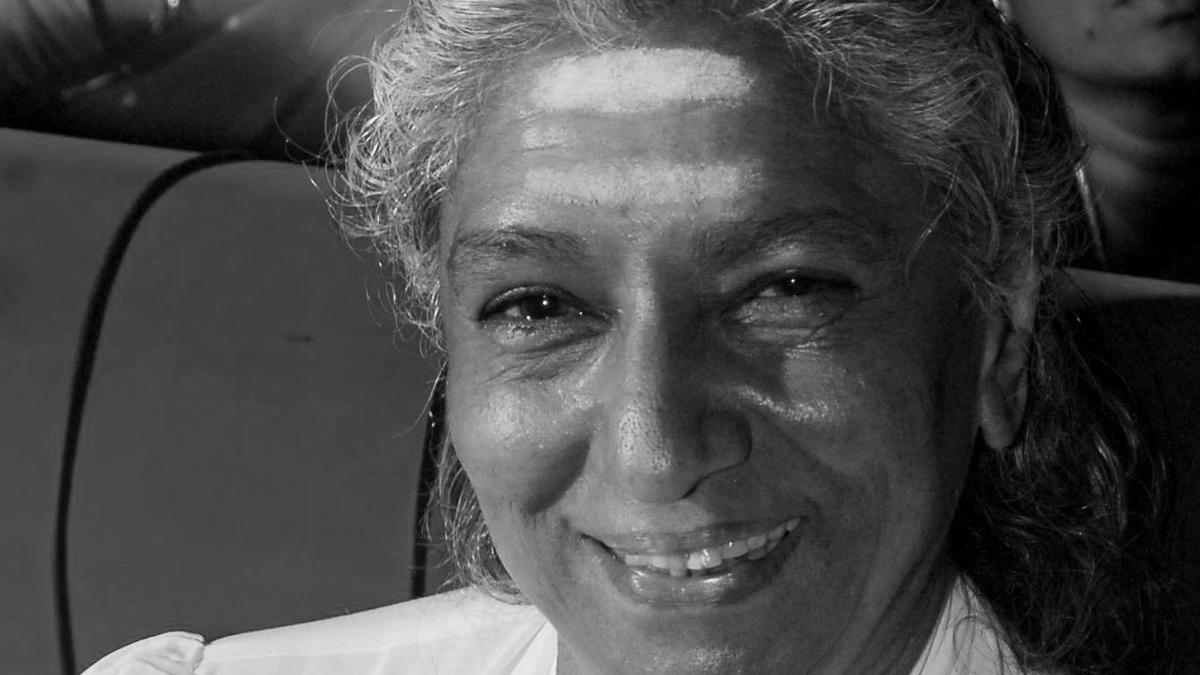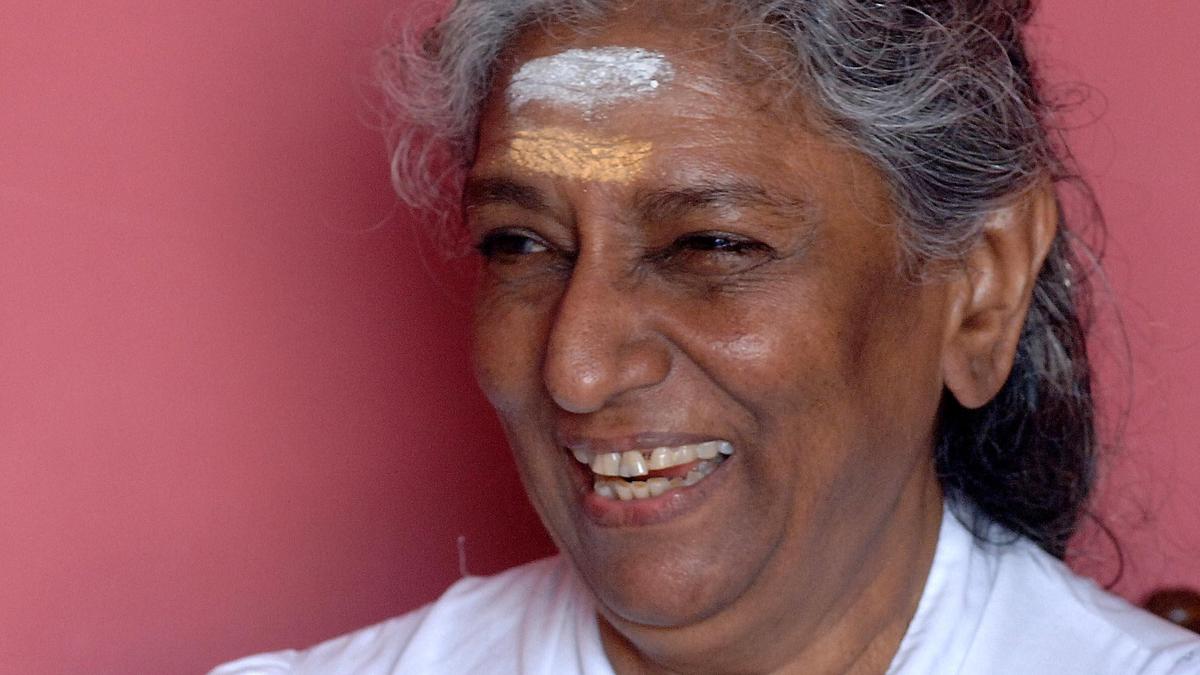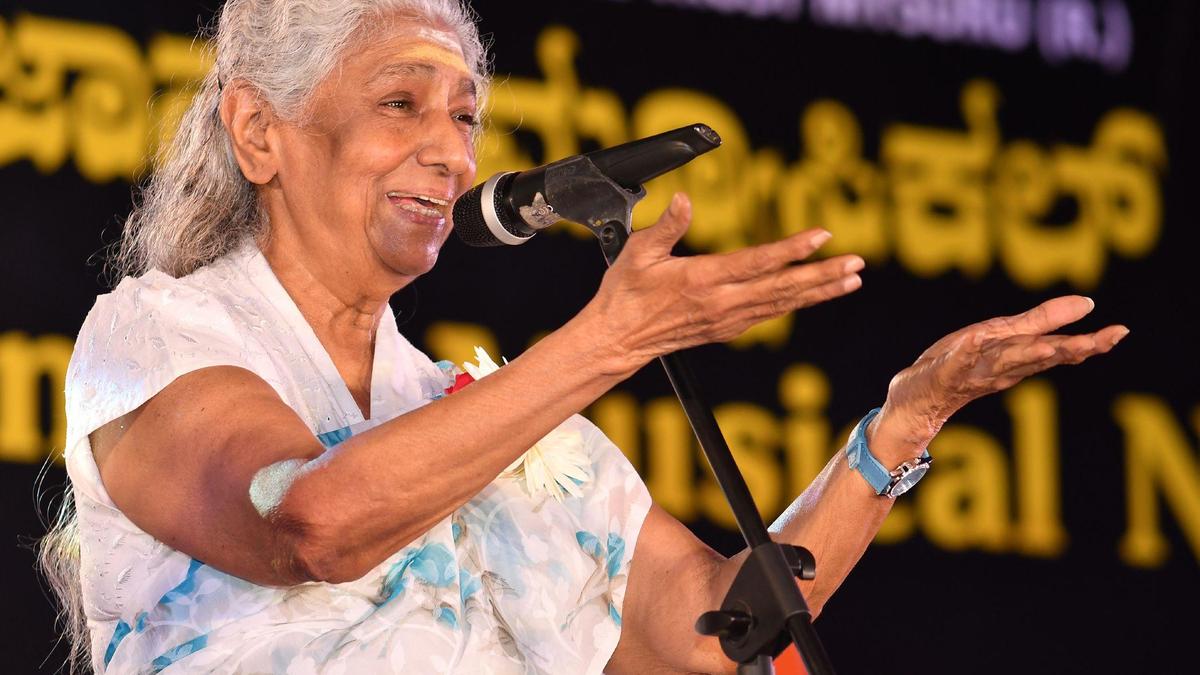
Janaki had recorded a devotional album, Thyagaraja Kritis, for Sangeetha Cassettes, featuring compositions of Saint Tyagaraja.
| Photo Credit: File photo
Although S. Janaki received formal training in Carnatic music for less than a year, she went on to become perhaps the playback singer who rendered some of the finest film songs based on Carnatic ragas during her illustrious career.“Whenever she had to sing compositions rooted in the Carnatic tradition, she did so with remarkable mastery. She had an extraordinary grasp of a wide range of musical genres,” said Vamanan, author of Thirai Isai Alaigal.Janaki’s devotion to Carnatic music extended beyond cinema, although she often said she never enjoyed the rigours of formal classical training. She recorded a devotional album, Thyagaraja Kritis, for Sangeetha Cassettes, featuring compositions of Saint Tyagaraja. The collection included Nagumomu, Rarama Intidaka, Balakanakamaya, and Entuko Dayaradura, preceded by a brief alapana in raga Todi.She learnt the basics of Carnatic music from the nagaswaram artiste Paitisamy, who also taught her elder sister. “He liked the way I sang and immediately began teaching me the kriti Nagumomu. Unfortunately, he passed away within 10 months, and I could not continue my lessons,” Janaki recalled during an interaction with singer Mano.Janaki often said it was perhaps Paitisamy’s blessings that guided her when she recorded the immortal Singaravelane Deva for Konjum Salangai with the legendary nagaswaram maestro Karukurichi Arunachalam. The song remains one of the greatest achievements in the history of Tamil film music.Among her personal favourites was Thennankeetru Oonjalile from Paathai Theriyudhu Paar, directed by Nimai Ghosh and written by the celebrated writer Jayakanthan. The song she rendered with P.B. Srinivas reflected her ability to infuse even simple melodies with grace, emotion, and classical sensitivity. Published - July 12, 2026 09:57 pm IST