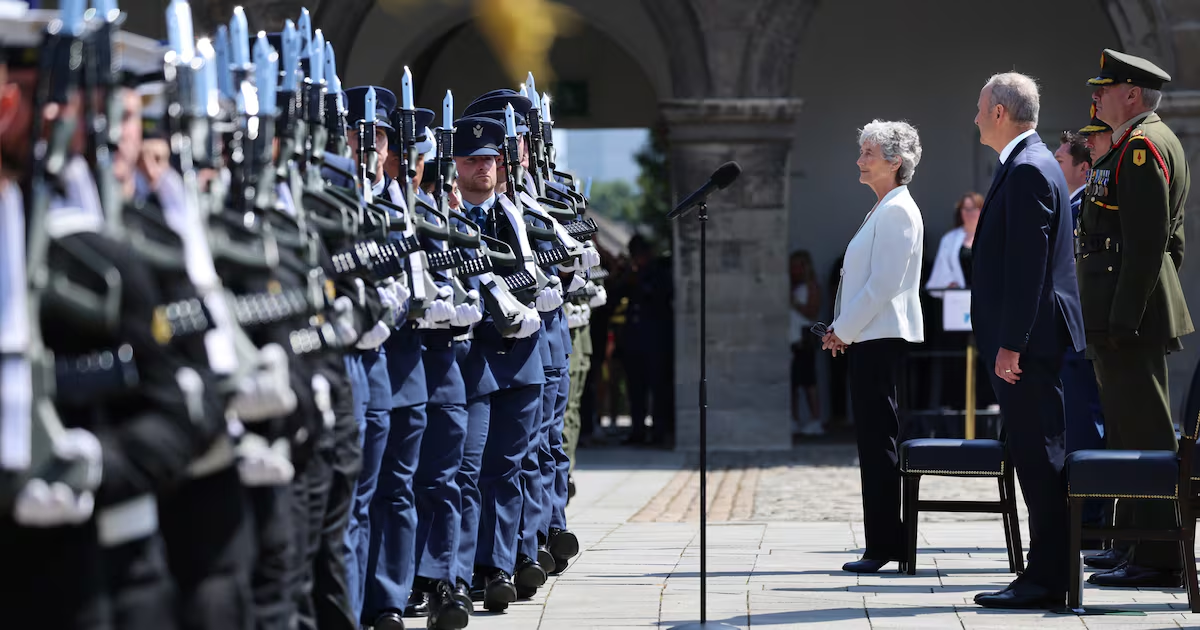
“We remember our dead. It is important that they are honoured and that we pay our respects to them like family,” said retired sergeant Robert Bradshaw. He was among the hundreds of veterans, families and representatives who gathered at a sun-soaked Royal Hospital Kilmainham in Dublin on Sunday for the National Day of Commemoration to the Irish service members who died in past wars or in the service of peace.Regiments from across the Defence Forces were in attendance, while four Pilatus PC-9M aircraft represented the Air Corps in a flyover. President Catherine Connolly laid a commemorative wreath. For veterans, it is a day of celebration and remembrance, tinged with sadness as they pay tribute to their fallen brothers and sisters, they said.Air Corp DC9’s fly over the National Day of Commemoration ceremony at the Royal Hospital Kilmainham in Dublin on Sunday. Photograph: Dara Mac Dónaill Seated alongside Bradshaw (71) were his friends, retired sergeant Pat Gibney (71) and retired corporal Tony Elliot (71).Originally from different sides of the Border but now all living in Newry, the three veterans were part of the 27th Infantry Battalion, dubbed the “Border Bunnies” as they “were in and out of every ditch along the Border”. As they spoke, the trio were joined by Eddie Costigan (69), a retired Colonel with the Fighting 5th Infantry Battalion.A raucous welcome later, the four veterans said that serving in the army bound them together “like family”, each chiming in with their own stories from their time together in the Defence Forces.Eddie Costigan of the 5th Infantry Battalion and his former comrades Pat Gibney, Robert Bradshaw and Tony Elliot at the event. Photograph: Hugh Dooley Bradshaw said the National Day of Commemoration is special because it recognises service people regardless of their background or for whom they served.“It doesn’t matter what denomination you are, we’ll remember everybody,” he said. “We all served. We may have served with different units, in different places but that is the intricate link between everybody.”John Joe McHugh, formerly of the Corps of Engineers and now a lecturer at Atlantic Technological University, said it was great to see the “legacy of the Good Friday Agreement” in action, with veterans from different countries “side by side” at the commemoration.ATU lecturer and Corps of Engineers veteran, John Joe McHugh at the Royal Hospital Kilmainham. Photograph: Hugh Dooley “It is a wonderful moment as well for peace and reconciliation, and also to remember those who lost their lives in all wars.”It is the first time that McHugh has attended the event, explaining he was doing so to remember his uncle Pat McHugh, who fought in the second World War for the British Army and later died while serving.Royal navy veteran Owen Medland, who spent 28 years working for the RNLI, said days like today “bring people together” and give veterans an opportunity to “put on their medals, puff out their chests and say with pride; ‘I’ve done my bit’.”Royal navy veteran Owen Medland. Photograph: Hugh Dooley Medland said the National Day of Commemoration also gives those who do not seek recognition for their service the chance to be seen.He stressed many veterans “might not be the type of person who would ask for help”, even if they may need it, and encouraged the public to support organisations that help them after their service.A minute’s silence observed to remember those who lost their lives in the service of the State was punctuated by a blast from a 25mm field cannon.The noise reminded retired corporal Danny McEntee of his time serving as an artilleryman 4th Field Artillery Regiment. He and his friend retired sergeant Ray McMahon served 28 and 26 years respectively in the armed forces. Each wore the white and blue colours of the United Nations peacekeepers in conflict areas including Lebanon, Bosnia, Iran and Iraq.Danny McEntee (left) and Ray McMahon, both from Mullingar, at the ceremony. Photograph: Dara Mac Dónaill McEntee said he wanted to remember those who died at Tibnin Bridge, a checkpoint near the Israeli border in 1982, when corporal Gregory Morrow, private Peter Burke and private Thomas Murphy were killed. He said he also wanted to pay tribute to those currently serving.McMahon said he wanted to remember anyone who was killed overseas, noting that members of An Garda Síochána had also died overseas and should also be remembered.
‘We’ll remember everybody’: Hundreds gather for National Day of Commemoration in Dublin
For surviving Irish service members, it is a day of celebration and remembrance, tinged with sadness
723 words~3 min read