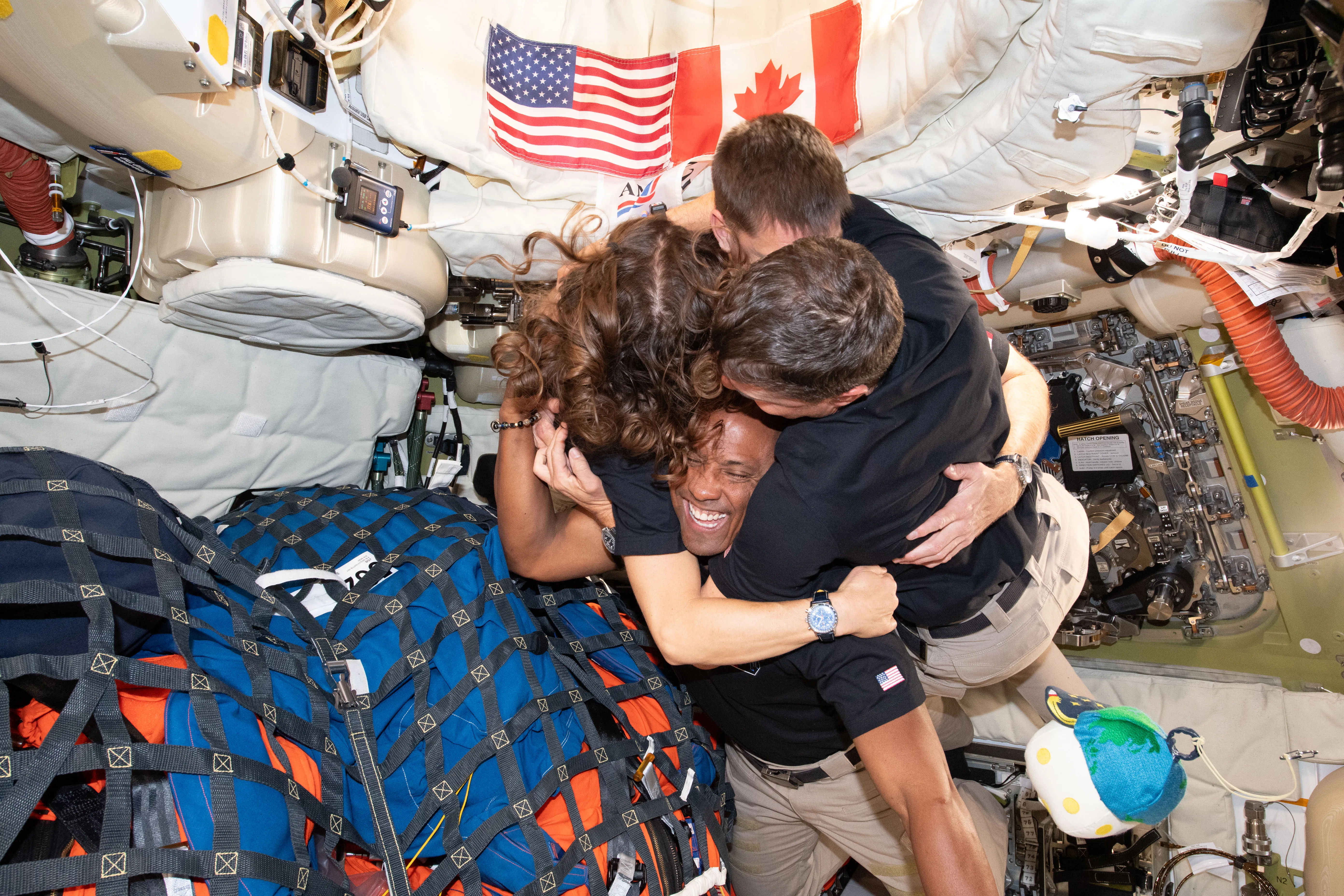
From left: The Artemis II crew—NASA astronaut Christina Koch; CSA (Canadian Space Agency) astronaut Jeremy Hansen; and NASA astronauts Reid Wiseman and Victor Glover—take time out for a group hug inside the Orion spacecraft on April 6, 2026.
(Image credit: NASA)
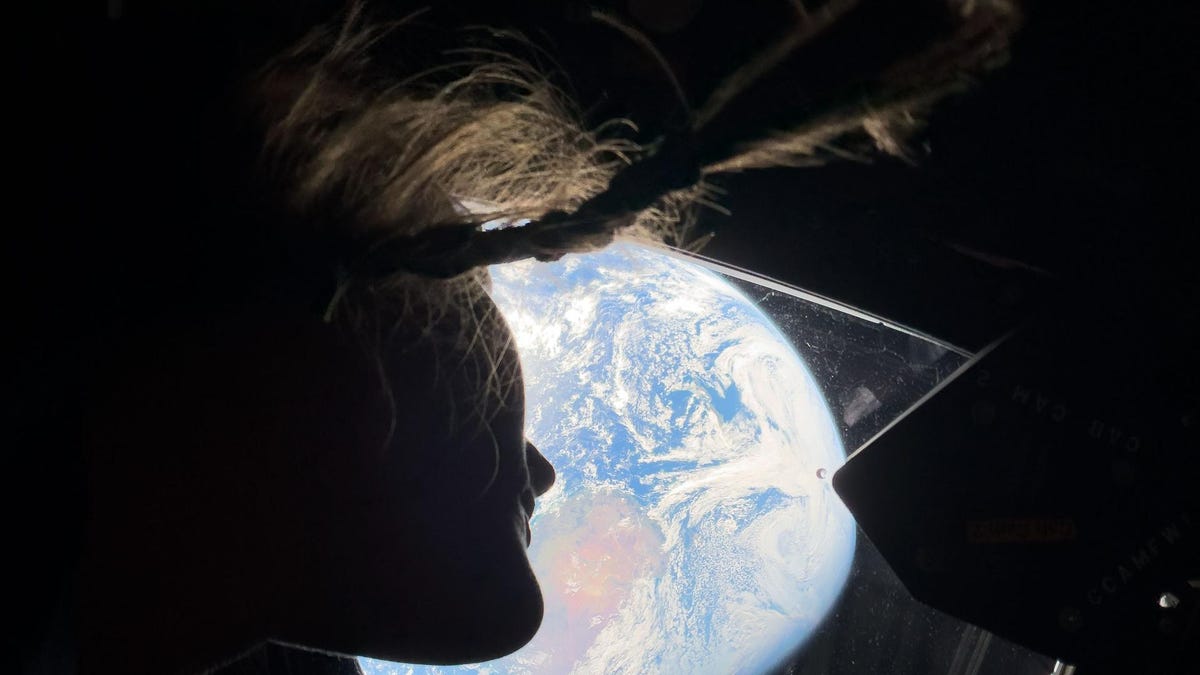
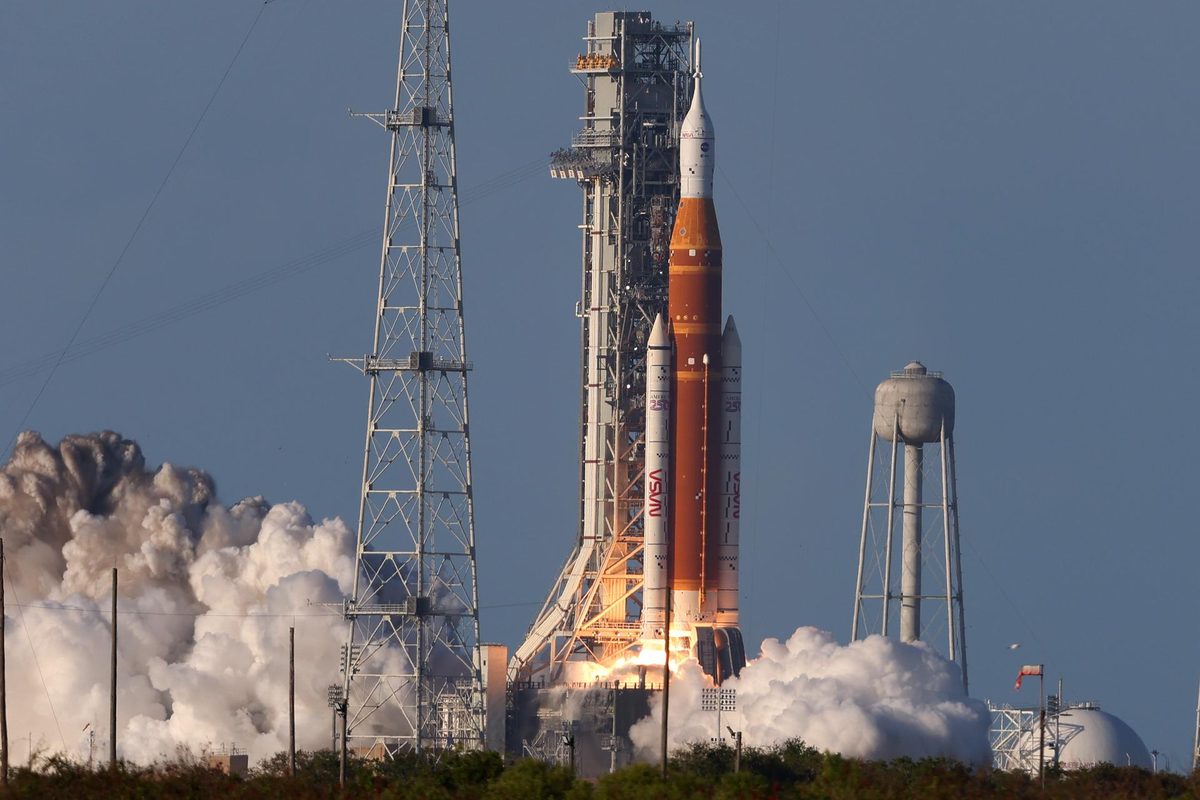
Nearly 150 million people shared in the "moon joy" of Artemis II on NASA channels, setting a new agency record in the process.NASA numbers indicate that 149.4 million people used agency platforms in March and April to follow the four astronauts of Artemis II as they prepped for their mission, lifted off aboard the Space Launch System rocket, flew by the moon and finally splashed down in the Pacific Ocean. The viewership figure includes the mission's 24/7 livestreams of mission activities and views from the Orion spacecraft."Artemis II's human‑spaceflight narrative, real‑time crew updates, and highly visual moments drew millions of new followers across platforms," the agency stated of the historic lunar flyby mission, which ran from April 1 to April 10.On board were NASA astronauts Reid Wiseman, Victor Glover and Christina Koch as well as Canadian Space Agency astronaut Jeremy Hansen. The quartet flew farther than any human before them while making the first journey to the moon since Apollo 17's landing in 1972.Glover, Koch and Hansen became the first Black person, woman and non-American, respectively, to fly beyond low Earth orbit, and the crew engaged repeatedly in live events with politicians, journalists, students and other audiences from afar.The live broadcast drew praise on social media for showing the work of the astronauts, including struggles with toilet venting, the crew's descriptions of the lunar surface and a moving group hug when the crew suggested naming a lunar crater after Wiseman's late wife, Carroll.Launch (April 1)NASA's official Artemis II launch webcast reached a peak of nearly 3.67 million simultaneous viewers. That's a record, surpassing other big launches in recent agency history, NASA stated, including that of the uncrewed Artemis I mission to lunar orbit in November 2022 or the James Webb Space Telescope in December 2021. (The agency did not disclose in the release how many views each event received.)Roughly 16.6 million people watched the Artemis II launch live across agency platforms, with that number rising to 23.9 million views when taking into account those who tuned in after the fact. NASA's Spanish-language broadcast alone received a "landmark peak" of 458,366 simultaneous views, which has since risen to 2.8 million total views, according to the agency.Lunar flyby (April 6)NASA's lunar flyby broadcast alone "delivered one of the largest peak audiences ever recorded," according to the agency. As many as 1,471,069 people tuned in at the same time. Nearly 900,000 of those folks watched on YouTube, and about 190,000 viewers tuned in via X or Twitch.