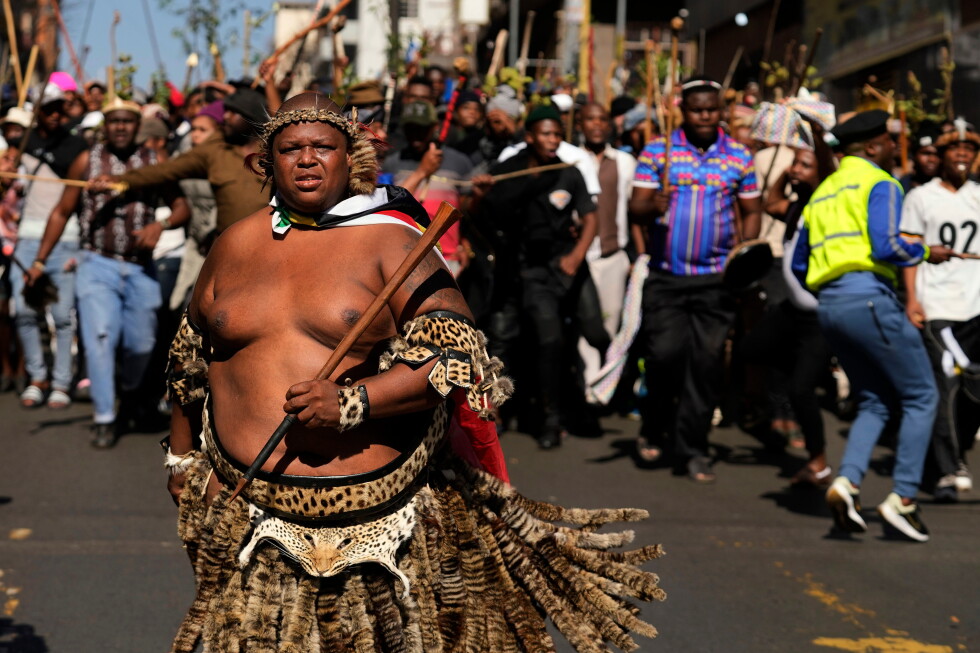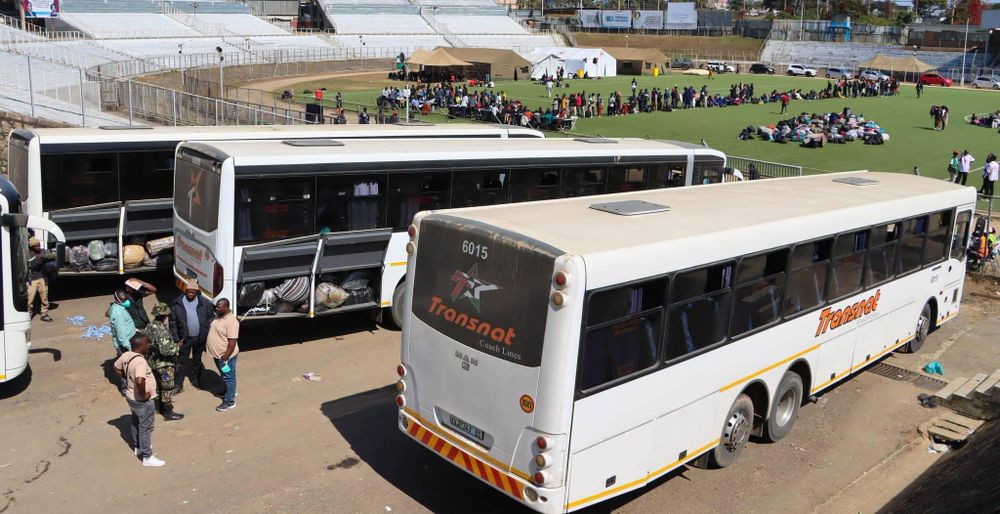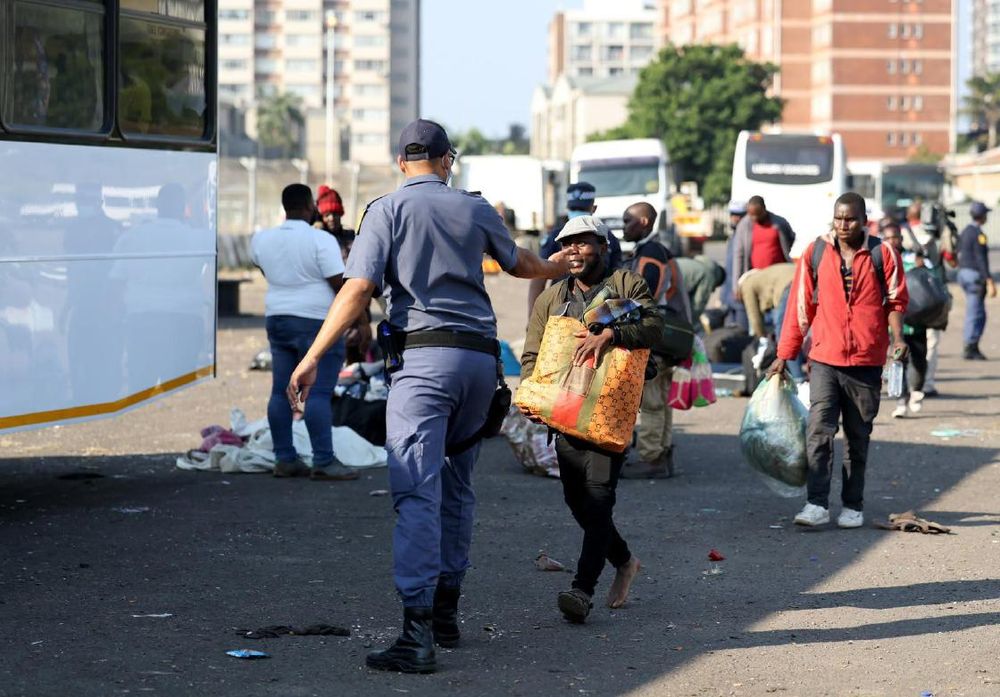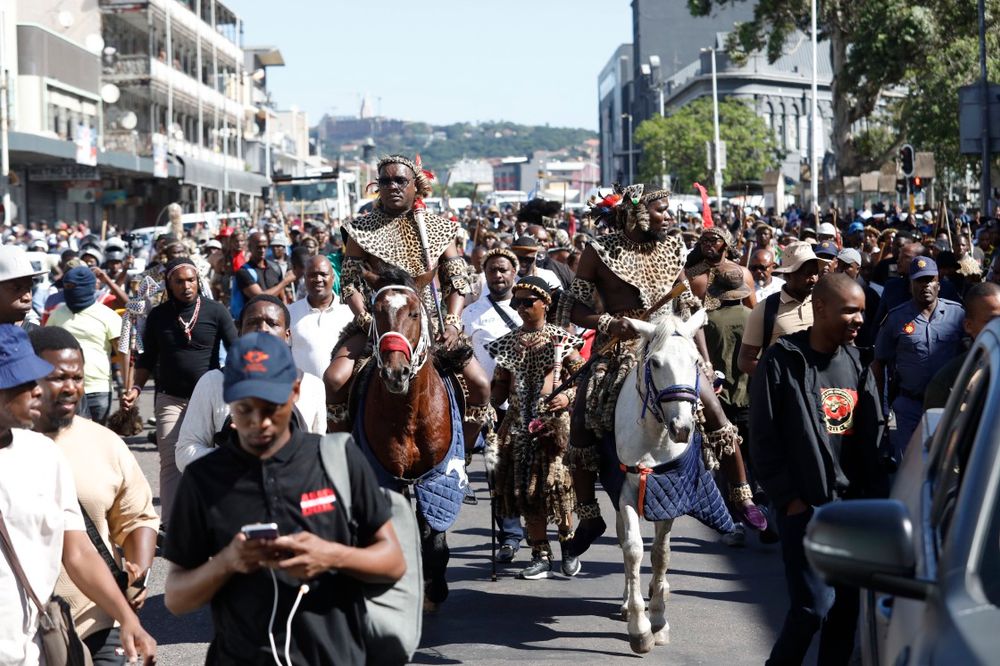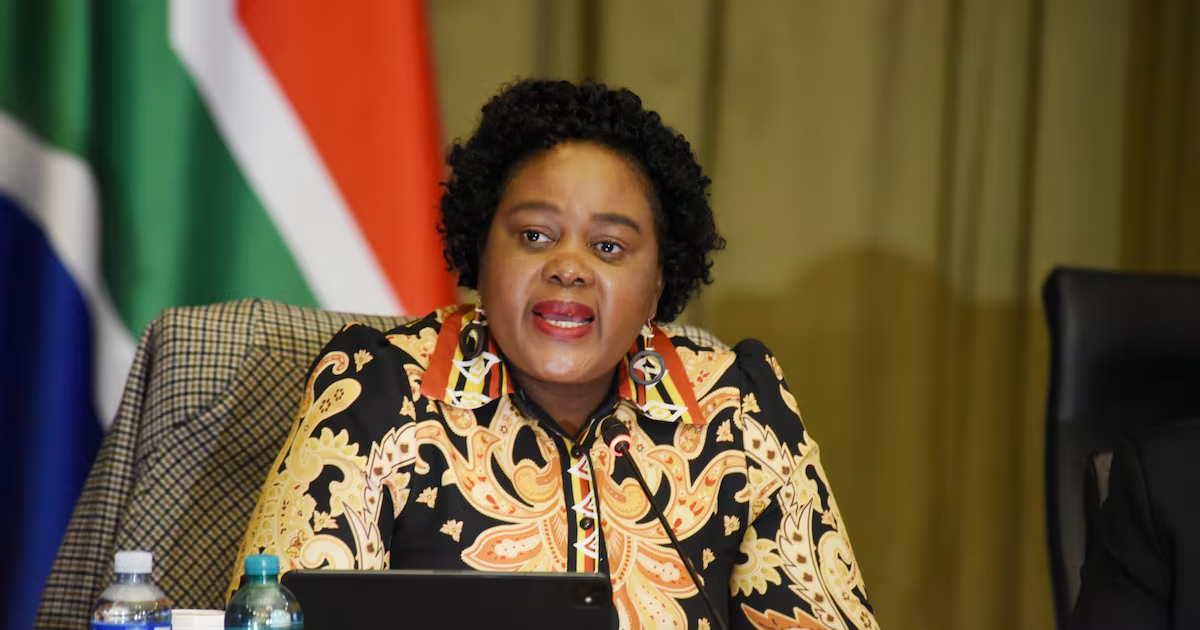
The government is considering scaling back its efforts and deployment of resources as the number of repatriations linked to the anti-illegal migration protests declined from a peak of nearly 4,850 on July 5 to 1,139 on July 11, interministerial committee on migration (IMC) chairperson Mmamoloko Kubayi said on Sunday.So far more than 53,000 foreigners have been processed for repatriation and deportation.“We envisage a phased scaling down of the process which will not negatively impact or compromise the deportation and repatriation processes we are undertaking. The reality is that these temporary measures, which are costly to our fiscus, were never meant to be permanent,” Kubayi said during a media briefing. “The state, however, remains with the legal obligation to continuously deport those who are found to have transgressed the Immigration Act. As such, a total of 15,398 foreign nationals have been deported between April 1 and June 30. During the same period, 2,519 joint law enforcement operations were undertaken.” The media briefing was aimed at giving feedback and reporting progress on the work the IMC is doing in implementing the five-point plan on managing migration as announced by President Cyril Ramaphosa on June 7. The plan includes cracking down on violations of the country’s immigration laws, securing borders, strengthening the immigration system, closing gaps in laws and policies on migration and working closely with South Africa’s continental counterparts in managing migration. The anti-illegal migration group March and March held nationwide protests on June 30, with activists including its leader Jacinta Ngobese-Zuma and Ngizwe Mchunu and Nkosikhona “Phakelumthakathi” Ndabandaba calling on those in South Africa illegally to leave the country. There were reported acts of intimidation, violence, and looting, especially in KwaZulu-Natal and Gauteng. “[By] July 8, 205 cases had been registered, 350 persons arrested, 69 cases were pending investigation, and 112 cases were on the court roll in relation to incidents linked to unlawful conduct, intimidation, incitement and related offences,” Kubayi said. “The government will continue to act firmly against criminality, vigilantism, public violence, intimidation, discrimination and any attempts to conduct informal enforcement of immigration-related concerns.” She said the government continued to facilitate the return of foreigners to their countries through deportation or assisted voluntary repatriation. “To date (close of business, 11/07/2026), a total of 53,449 foreign nationals have been processed for deportation and repatriation, which is dominated by the Malawians (more than 80%), followed by the Zimbabweans and Mozambicans. “Repatriations to countries beyond the Sadc amount to 2,615 and include returns to Kenya with a total of 431, Nigeria 1,159, the Republic of Congo 86, and Uganda 939,” Kubayi said. “In addition to the repatriation, the normal immigration deportation processes continued. For June, a total of 4,898 (Malawi 1,929, Zimbabwe 1,384, Mozambique 1,200, and Lesotho 342) were deported, and last, for the period June 14 to July 8, a total of 2,801 (Malawi 910, Zimbabwe 903, Mozambique 755, and Lesotho 187) were deported.” More than 20,000 foreigners (Malawians, Zimbabweans and Mozambicans) have been repatriated through the temporary repatriation processing centre (TRPC) in Musina, which began operations on July 1. “The repatriation centres used in eThekwini and Umsunduzi officially closed on June 30, and all Malawian nationals who had assembled before June 30 were transferred to the TRPC; these include those that were at the Musina refugee reception centre and Musina Showgrounds who were transferred by July 3.”Business Day
Government considers scaling back illegal migration crackdown
Repatriations linked to anti-illegal migration protests have fallen from nearly 4,850 on July 5 to 1,139 by July 11
558 words~3 min read