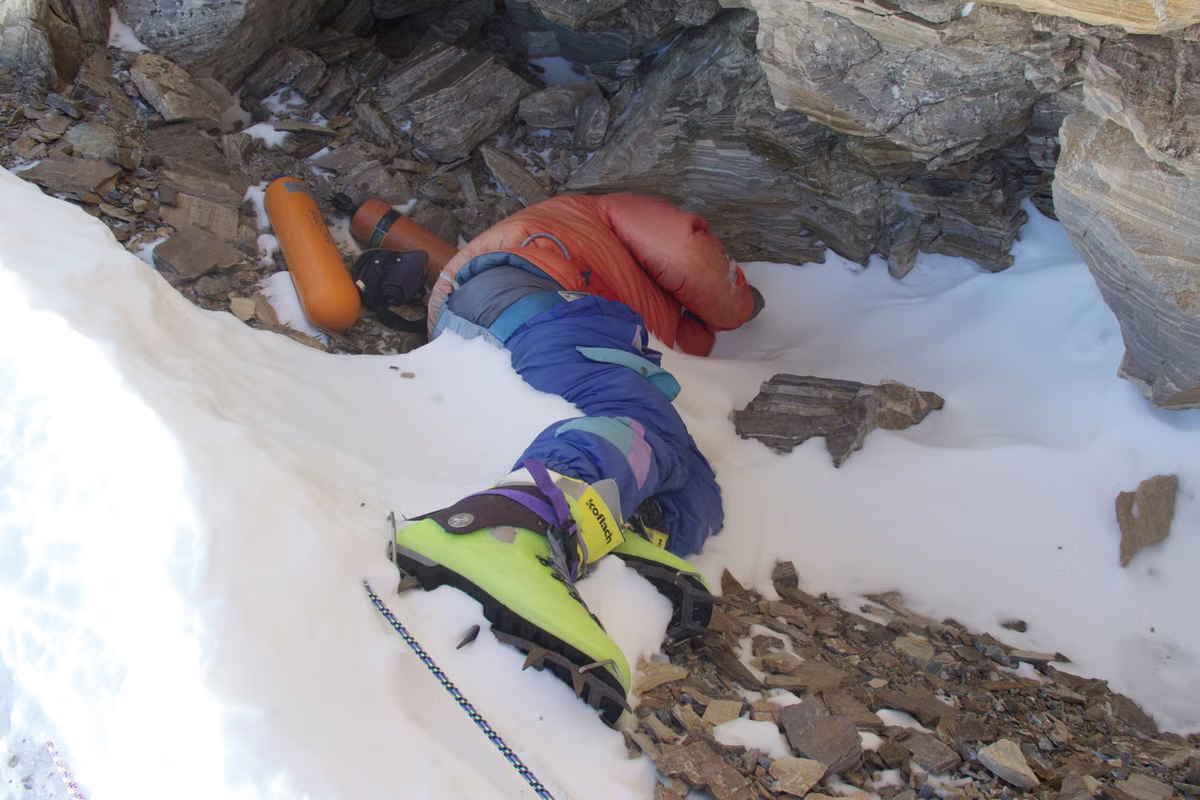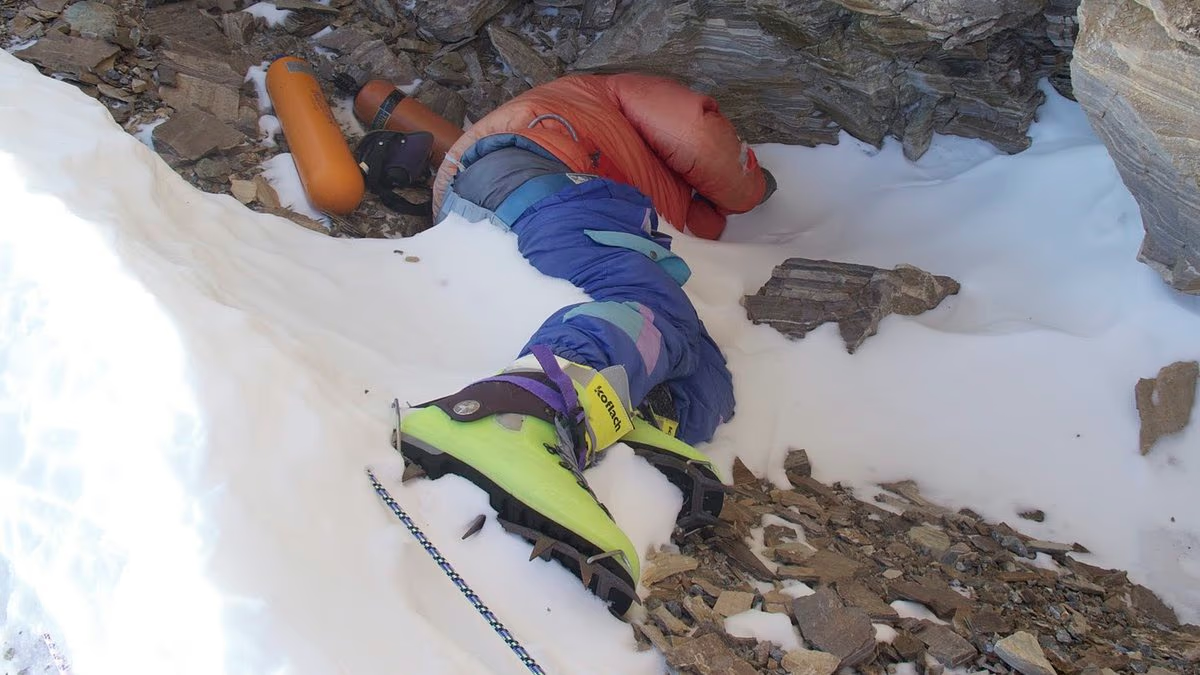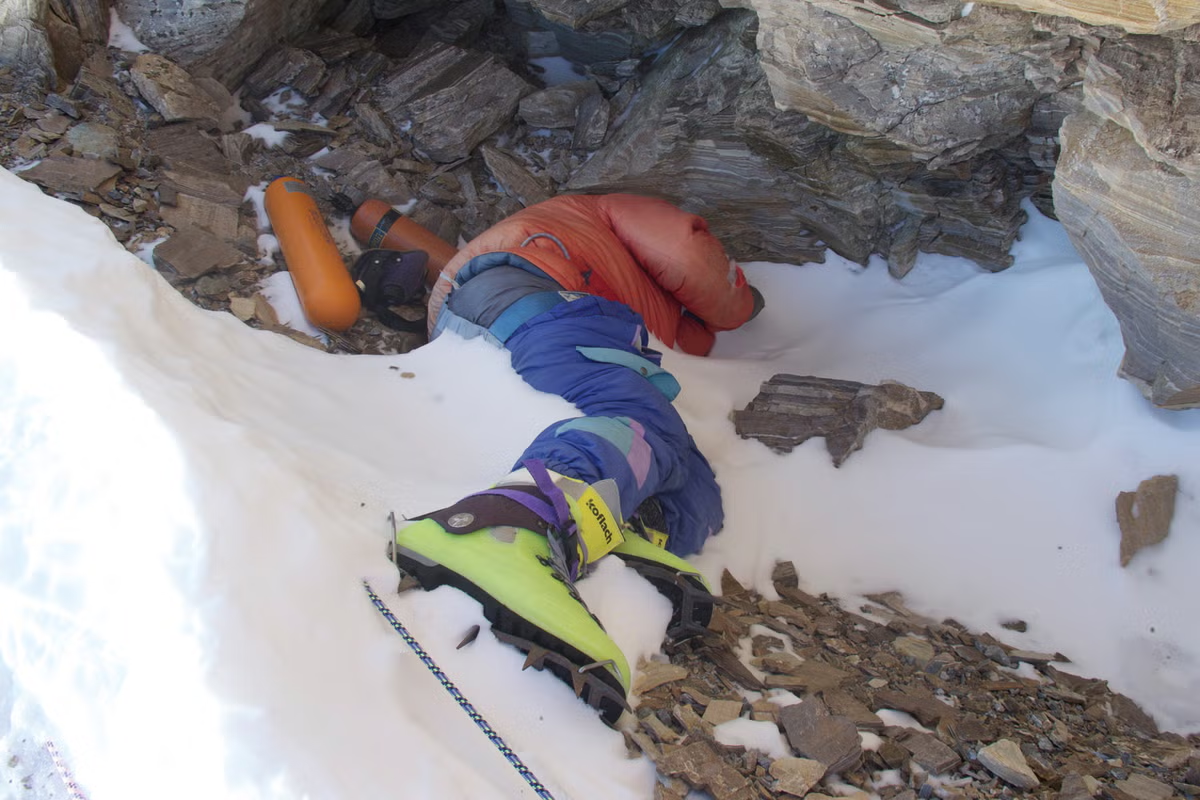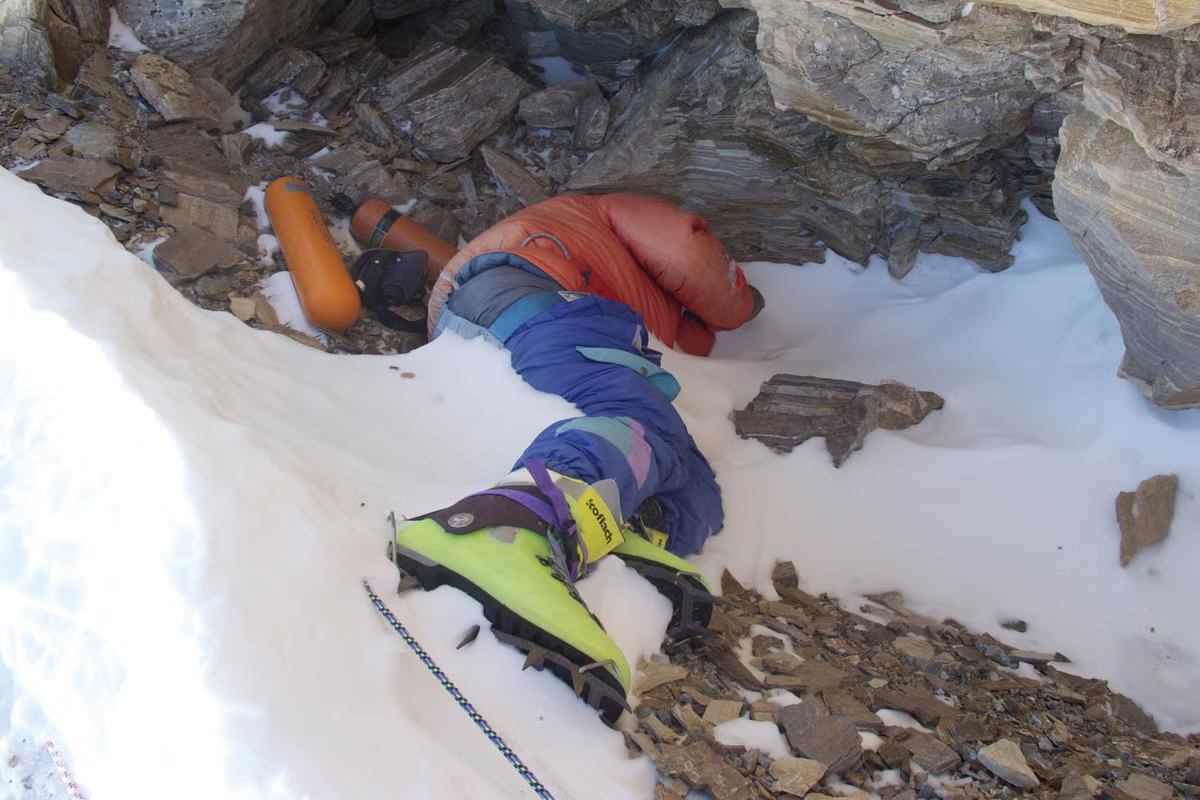
In May this year, two Indian climbers died on Mount Everest’s southern slopes in Nepal. Arun Kumar Tiwari reached the summit but developed acute mountain sickness (AMS) on the descent and died at about 8,790 metres. His teammate, Sandeep Are, also collapsed but was dragged down to Camp II by five Sherpas only to succumb to altitude sickness there.
Both deaths were tragic. Both were, in my view, avoidable.
Around 200 bodies are still believed to remain on Everest. Some are hidden beneath snow and ice while others lie where hundreds of climbers walk past them
After 22 years working for the Himalayan Database, the archive of expeditions in the Nepal Himalaya, I have seen the same pattern again and again. Summit fever has an extraordinary ability to override signals from the body. Climbers ignore headaches, confusion and exhaustion because the summit is tantalisingly close. Nobody should die of AMS on Everest, yet many still do.
Are’s body could be flown down by helicopter from Camp II and returned to his family. Tiwari’s could not. Recovering a body from nearly 8,800 metres is one of the most dangerous undertakings, and one of the most expensive. Faced with the staggering cost, his family decided to leave him where he lay, saying they were happy for him to remain in “Lord Shiva’s abode”.