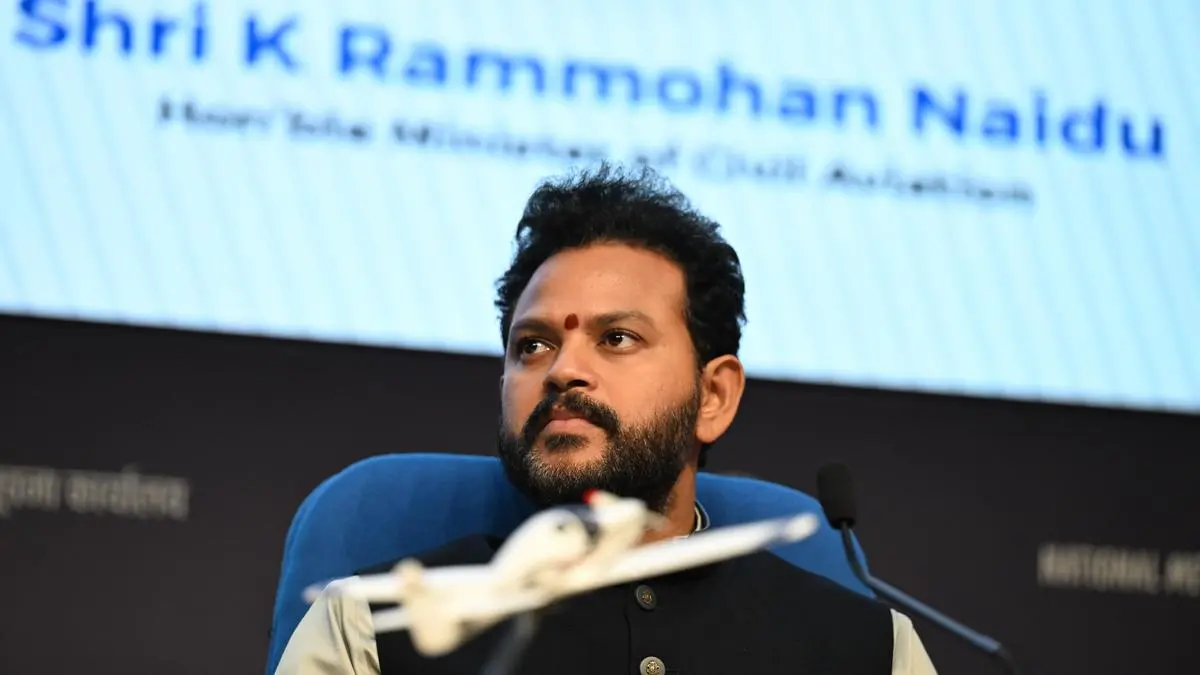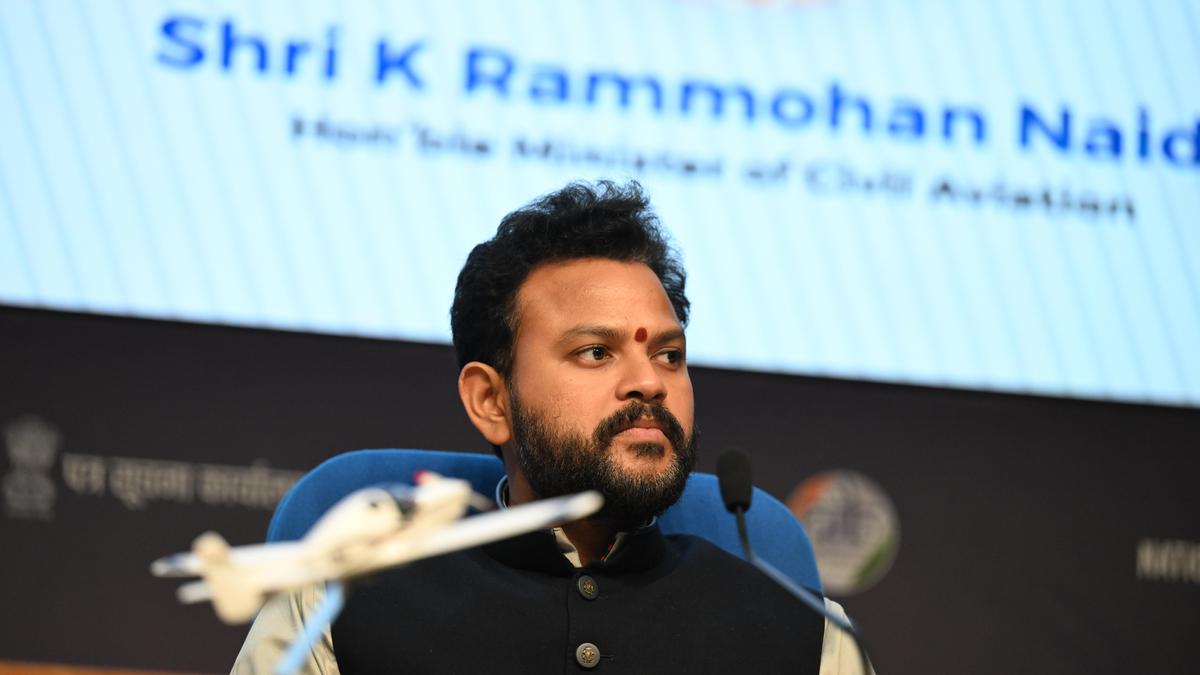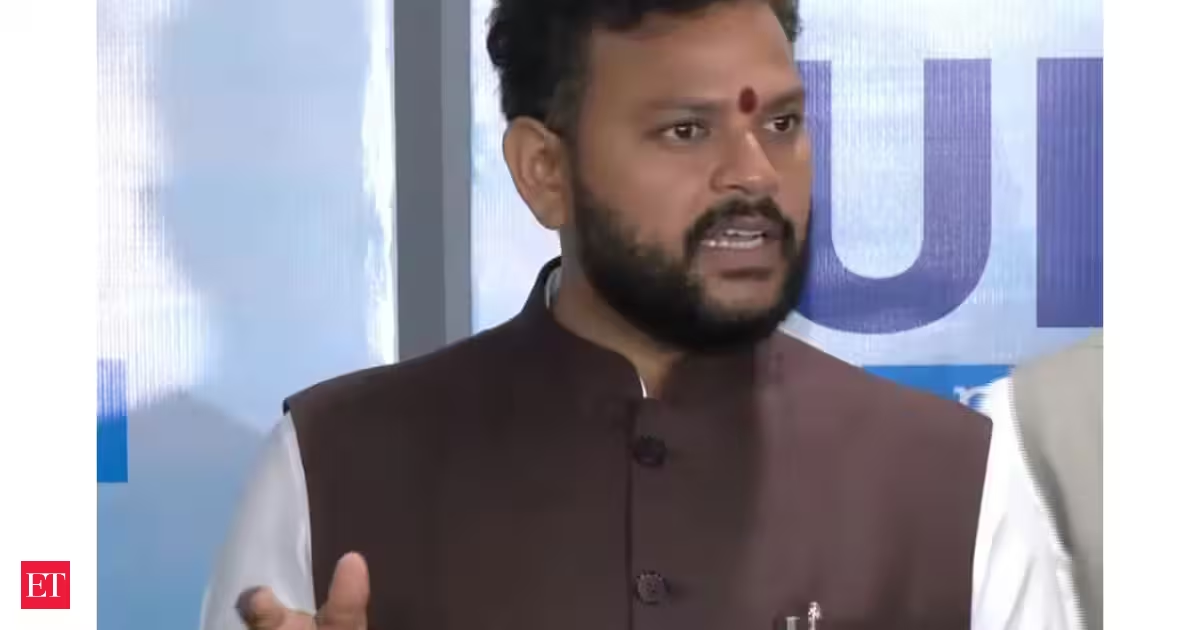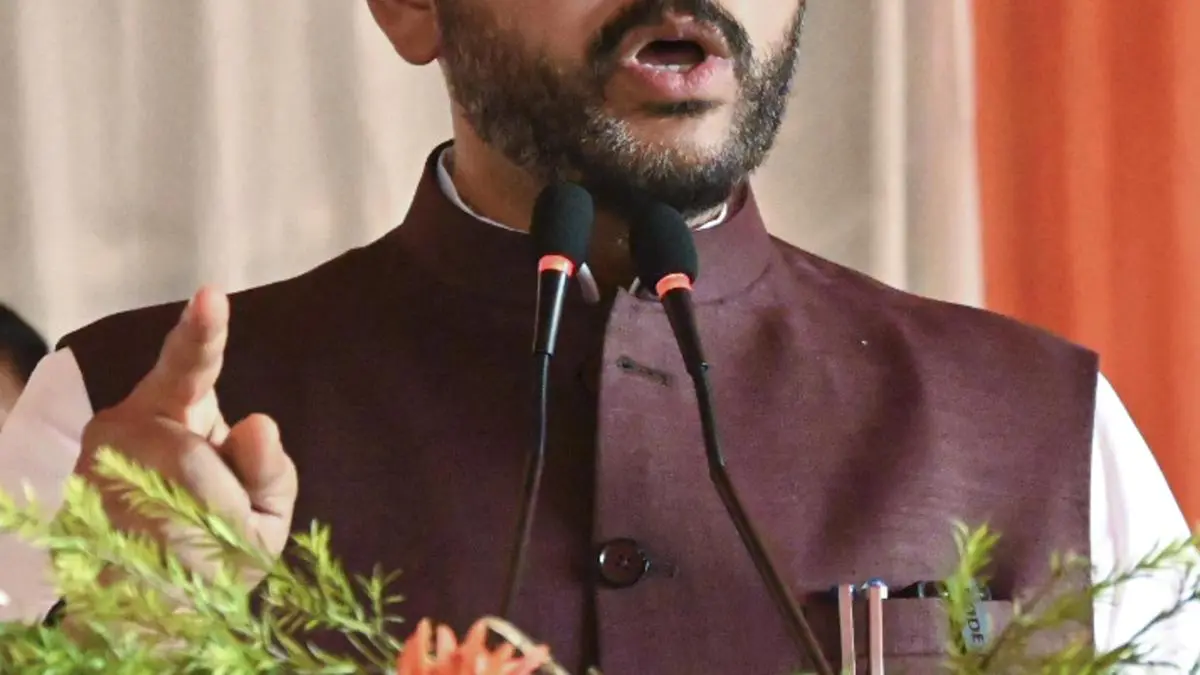
Union Civil Aviation Minister Ram Mohan Naidu Kinjarapu
| Photo Credit:
The Centre now sees civil aviation as a priority sector and is prepared to intervene to ensure operational as well as financial stability prevails whenever the industry faces external shocks, Civil Aviation Minister Kinjarapu Ram Mohan Naidu told businessline.In an exclusive interview, Naidu said the government’s response .during the recent West Asia crisis reflected this approach, under which the aviation sector received strategic policy support in view of its growing contribution to the economy and its increasing importance for millions of Indian travellers.“Today, aviation is a priority sector. The government is keeping a watch and doing what is necessary to bring stability to the sector,” Naidu said.According to the Minister, Centre’s intervention helped insulate Indian carriers from the financial stress witnessed by several airlines globally following the disruption in the Middle East.During the crisis, the Centre introduced a series of measures to cushion the sector, including capping Aviation Turbine Fuel (ATF) prices, limiting increases in landing and parking charges at airports, extending the Emergency Credit Line Guarantee Scheme (ECLGS) to airlines and creating a ₹10,000-crore Price Stabilisation Fund to address fuel price volatility.Naidu said the Centre also engaged with States to reduce Value Added Tax (VAT) on ATF, particularly at major aviation hubs, thereby lowering operating costs for airlines.“The idea was that when the sector faces a challenge, every stakeholder has to contribute,” he said, adding that oil marketing companies, airports, financial institutions and State governments were all brought into the stabilisation effort.Besides, the Minister said the government’s approach reflected the transformation of aviation into a critical pillar of India’s economic growth over the past decade.“As aviation has grown, it has become closely linked with the aspirations of the common man. Because of the growth we have achieved, the government now considers aviation to be a priority sector,” he said.India currently operates around 165 airports with a fleet of about 800 aircraft, while daily passenger traffic has already crossed the five lakh-mark, a level that Naidu described as “the new normal.”Furthermore, Naidu said the modified UDAN regional connectivity scheme would anchor the next phase of growth in India’s aviation sector.“A significant part of the growth story that we talk about today has been achieved because of the UDAN scheme over the last 10 years. What once appeared to be an extraordinary achievement has now become the norm. Naturally, we now have to plan ahead,” he said.The Minister said the modified scheme has been designed after incorporating feedback received over the past decade and would provide stronger support to airlines while expanding regional connectivity.“This is not merely an extension of the existing scheme. We have studied what worked well over the last 10 years, understood the feedback and redesigned it into a much more comprehensive programme,” he said.Approved with an outlay of around ₹29,000 crore, the modified UDAN scheme extends Viability Gap Funding for airlines operating on regional routes from three years to five years on a tapered basis, increases the minimum weekly flight requirement from seven to 14, provides operations and maintenance support for smaller airports and envisages the development of 100 airports under a challenge-mode framework.In addition, Naidu said the revised framework would improve the long-term viability of regional routes, encourage airlines to expand services to Tier-II and Tier-III cities and create the momentum required to achieve Centre’s long-term aviation objectives.Beyond regional connectivity, the Centre is also pursuing parallel initiatives to strengthen aircraft manufacturing, increase domestic maintenance, repair and overhaul (MRO) capabilities, seaplane operations and creation of airport-led economic ecosystems as part of its broader aviation strategy.Published on July 12, 2026