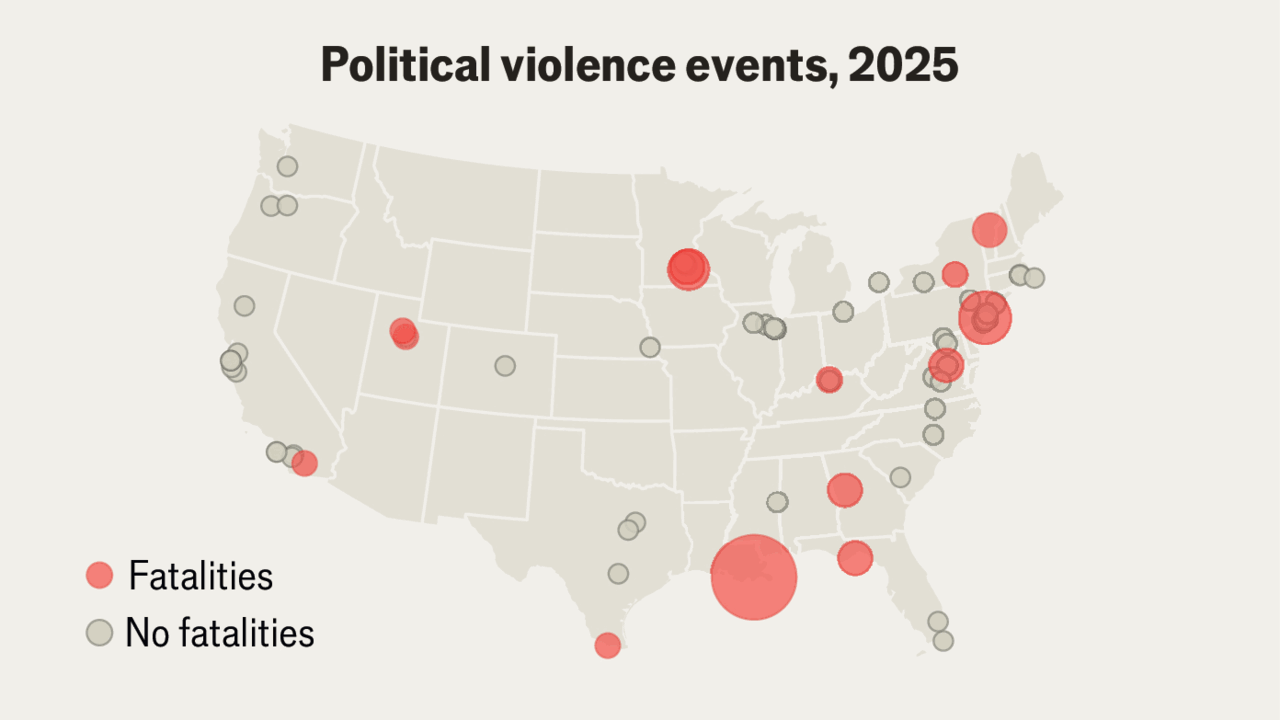
For decades, academic and popular histories have treated political violence as a phenomenon defined largely by its distance from the naturally occurring liberal center. “The rise of the right” is cast in apocalyptic terms — more Darth Vader than ordinary politics, its actors, many of whom bear little resemblance to traditional conservatism, depicted as aberrations: dangerous, irrational, and fundamentally alien to the democratic order, operating in secret and speaking in code to thwart liberal heroes.Liberalism, and violence associated with the Left, by contrast, is rarely examined in the same way. In Blood and Progress: A Century of Left-Wing Violence in America, National Review senior writer Noah Rothman challenges that asymmetry. The book does not simply recount episodes of left-wing political violence, but interrogates the intellectual frameworks and institutional networks that have sustained and normalized them. In Rothman’s telling, these episodes do not remain isolated acts. They are absorbed, reframed, and ultimately transformed into a kind of folklore within segments of the liberal intellectual class. As Rothman moves from one episode to the next, a pattern emerges that is more damning than any individual case: the treatment of the violence — and, in some cases, its near-erasure, once it becomes politically inconvenient — becomes more consequential than the events themselves. From early anarchists attempting to poison the wealthy, to bomb-planting radicals who either fled or were quietly rehabilitated into polite society, to more recent radicals whose actions have been softened into slogans, left-wing violence often undergoes a process of reinterpretation and euphemization in political discourse.
Review of Blood and Progress
The book does not simply recount episodes of left-wing political violence, but interrogates what has sustained and normalized them.
1,170 words~5 min read