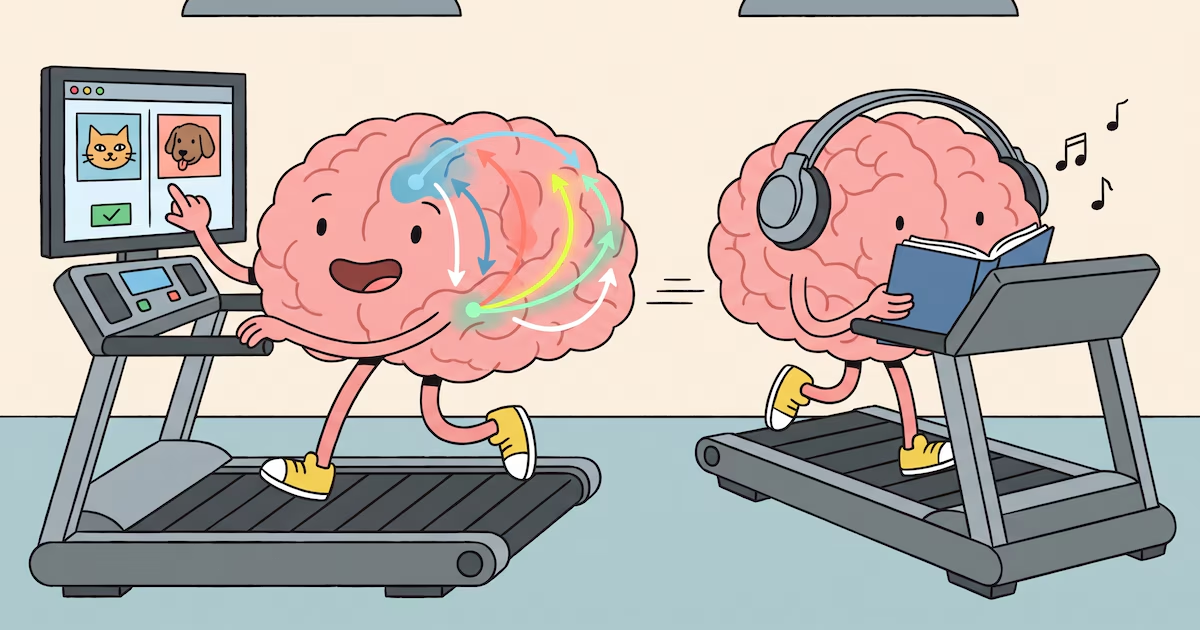
Researchers at Georgetown University have uncovered new evidence that the brain physically reorganizes itself as people master a skill, allowing well-practiced tasks to become automatic. The findings challenge the long-standing idea that humans cannot truly multitask, suggesting that with enough experience, the brain can perform certain activities simultaneously instead of simply switching rapidly between them.
The discovery could have implications beyond everyday life. It may help scientists better understand how habits form, why some behaviors are difficult to change, and how future artificial intelligence systems could become better at building new skills from previous learning.
"We have another stepping stone in our understanding of how the brain learns," said senior author Maximilian Riesenhuber, PhD, a professor of neuroscience at Georgetown University School of Medicine, and co-director of the Center for Neuroengineering. "The encouraging part is that you really can learn to multitask. There is actually a way to remodel your brain architecture and use other parts of your brain."
How the Brain Automates Learned Skills
The research expands on decades of work exploring how the brain acquires new abilities. While scientists have learned a great deal about the early stages of learning, much less has been known about what happens after a skill has been practiced extensively and becomes almost effortless.