Apple and OpenAI's relationship deteriorated after their 2024 ChatGPT–Siri partnership failed to meet either company's wider ambitions. OpenAI reportedly believed Apple had made ChatGPT difficult to discover and had produced far less growth in users and subscriptions than promised. Apple, meanwhile, grew concerned that OpenAI was moving beyond software and assembling a competing hardware business around Jony Ive, former Apple executive Tang Tan and hundreds of engineers recruited from Apple.The dispute hardened when Apple selected Google's Gemini models and cloud technology as the foundation for its next generation of Apple Foundation Models and a more personalised Siri, in a multi-year arrangement announced in mid-January 2026. On 10 July 2026, Apple sued OpenAI, io Products, Tan and former Apple engineer Chang Liu in the US District Court for the Northern District of California, alleging a systematic effort to obtain confidential hardware, manufacturing and supplier information. The complaint claims the scheme operated "at every level, from members of its Technical Staff to its Chief Hardware Officer, and in coordination with business partners". OpenAI says it has no interest in competitors' trade secrets. The allegations remain unproved.About The AuthorAt heart, I am a storyteller drawn to the watershed moments that bend the technology landscape. I braid narrative with data, humanise statistics, and trace the arc from first spark to world-changing impact. My reportage, features and reviews are witty, sardonic, visual and vivid, using anecdote to illuminate rather than eviscerate.
Apple’s Next CEO Is Now at War With OpenAI’s Hardware Chief — Inside the Siri Fallout and Sam Altman’s IPO Crisis
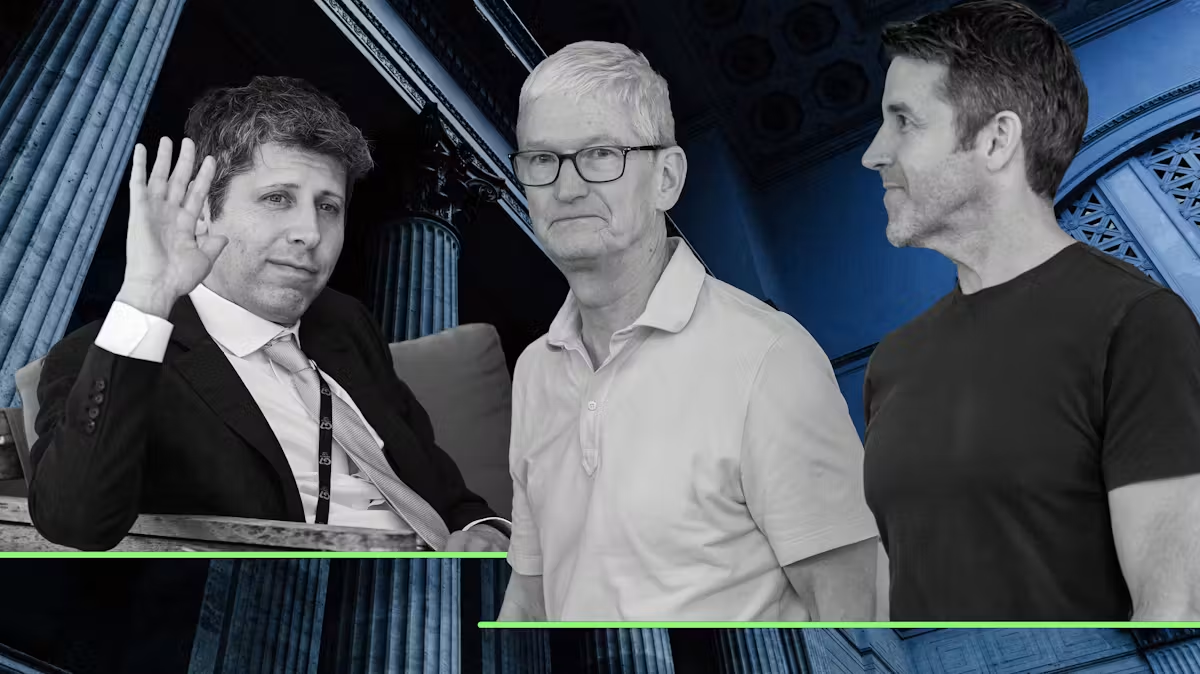
John Ternus and Tang Tan had competed for control of Apple’s hardware organisation years before Tan left to build OpenAI’s iPhone challenger. Now Tan is personally accused in Apple’s trade-secret lawsuit, while most of OpenAI’s 400 Apple recruits reportedly came from the division Ternus once led.
9,011 words~41 min read