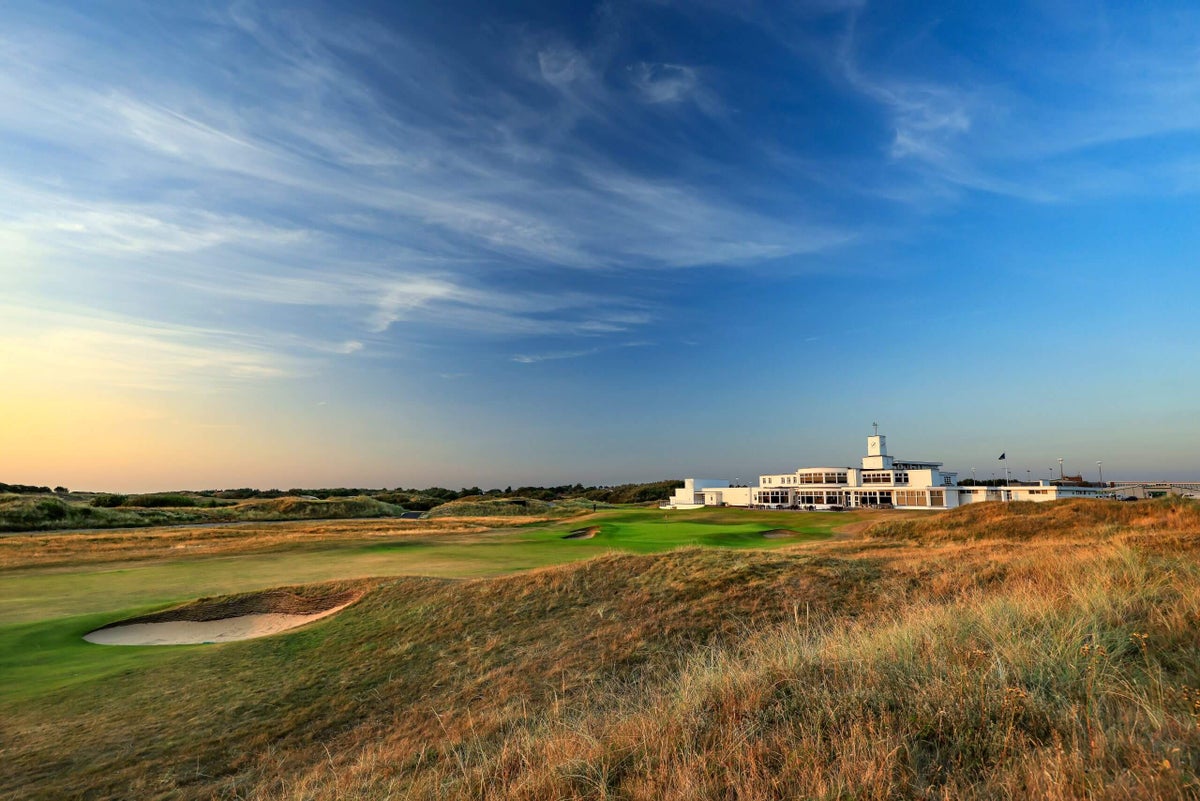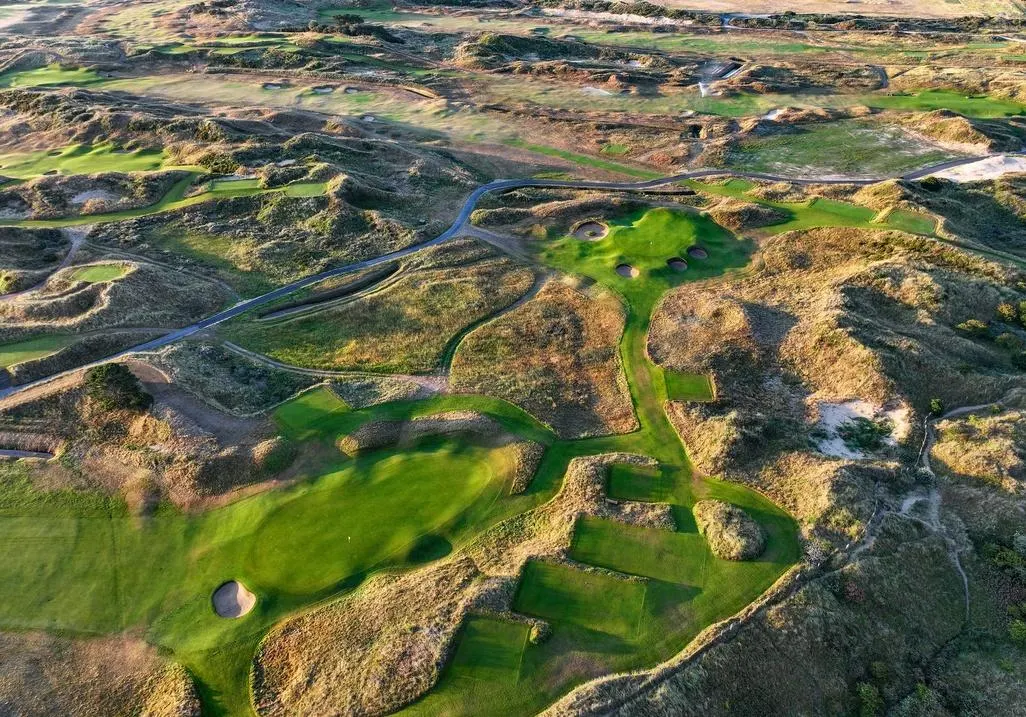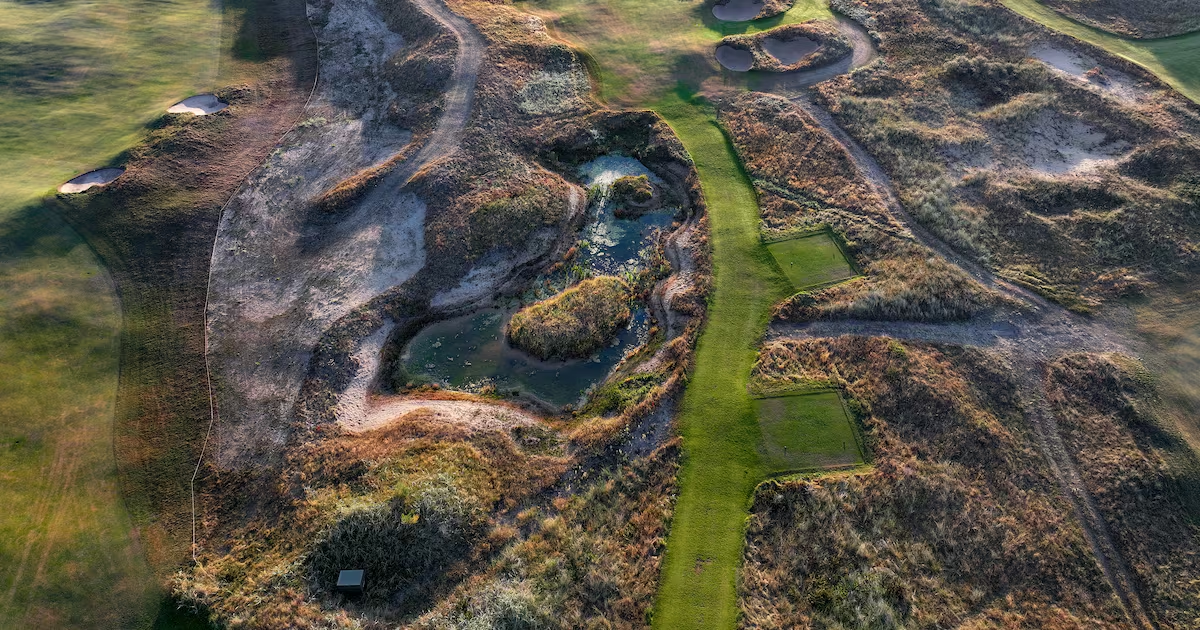
Even natural masterpieces can benefit from some brush strokes. In the case of Royal Birkdale, the links on England’s western seaboard that hosts the 154th Open Championship, has involved a number of changes since Jordan Spieth lifted the Claret Jug back in 2017.The go-to course renovators for the R&A in recent times are the architectural team of Mackenzie & Ebert – fronted by Tom Mackenzie and Martin Ebert – and every single hole has had some work conducted in a project which commenced in May 2024, with two totally new holes added to the layout.The most notable changes for the 11th staging of golf’s oldest Major championship at Birkdale involved the complete redesign of the par 4 fifth hole, while the old 14th has gone (converted to a practice area) so that old 15th – lengthened to a par 5 of 602 yards – has moved to become the 14th. A completely new par 3, the 15th, is 240 yards on the scorecard in the most significant of the moving and shaking.Of the new hole, the longest par 3 at Birkdale, Mackenzie observed: “[The aim is to encourage] shots to be dropped short or just on the front edge and running up the green which falls away softly to the back ... it will often play downwind. Expect to see players hitting long irons or more, depending on the conditions.”Not that Rory McIlroy, who paid an advance reconnaissance visit recently, exactly saw it that way. The Northern Irishman’s take was that he was “undecided” about the new creation.“There may be a couple of holes locations on the green where the hole is a little bit too long for those hole locations,” McIlroy said. “It’s maybe a little bit silly to be hitting a 3-iron into some of them. But if they moved up the tee box where you’re hitting like a 6- or 7-iron in, it’s good. But it’s going to be an interesting hole. I think it’s going to be a big talking point during the week.”An aerial view of the second shot on the 322-yard par 4, fifth hole at Royal Birkdale. Photograph: David Cannon/Getty While the club members-led renovation project involved adjustments to fairway bunkering that included addressing historical drainage issues, rebuilding almost all of the tees and developing closely mown green surrounds, the other notable change came with the reimagining of the fifth hole which will potentially play as a drivable risk-reward par 4 of 320 yards.A new fifth green was shifted left so that it is now more visible off the tee with a large bunker to the left of the fairway and a number of bunkers protecting the right, where the rough has been lowered to create a dune slack – a damp, wet area – that is unlikely to be in play.“It is now a genuinely drivable short par 4, compared to a hole that was previously forgettable and widely recognised as the weakest on the course,” said Mackenzie. “Some [players] will have a go at trying to drive the green and may only need a 3-wood, while there are multiple lay-up options for those who decide not to. As a spectator, it is also greatly improved, and it will be exciting to see how the world’s best choose to play it.”Old photos were also used to restore the vision of JH Taylor, a former Open champion, and Fred G Hawtree, who planned the old championship routing. This was true of the 11th, where an historical aerial photography showed an enormous cross-bunker beyond the landing area and inspired rebunkering work. It also helped at the 17th, where according to Mackenzie, “photos inspired the restoration of the sandy areas that are now set into the face of the dune on the left of the drive, with another right of the approach.”The course for this latest visit of The Open to Royal Birkdale will play to a length of 7,223 yards – just 67 yards longer than it was in 2017 when Spieth won – and a par of 70, with each of the 156 players looking to add their name to a roll of honour that features past winners of Peter Thomson (1954), Arnold Palmer (1961), Lee Trevino (1971), Johnny Miller (1976), Tom Watson (1983), Ian Baker Finch (1991), Mark O’Meara (1998), Pádraig Harrington (2008) and most recently Spieth.
‘Improved’ Royal Birkdale ready to test the world’s best at The Open
There has been a complete redesign of the par 4 fifth hole on the English links, as well as a completely new par 3
725 words~3 min read