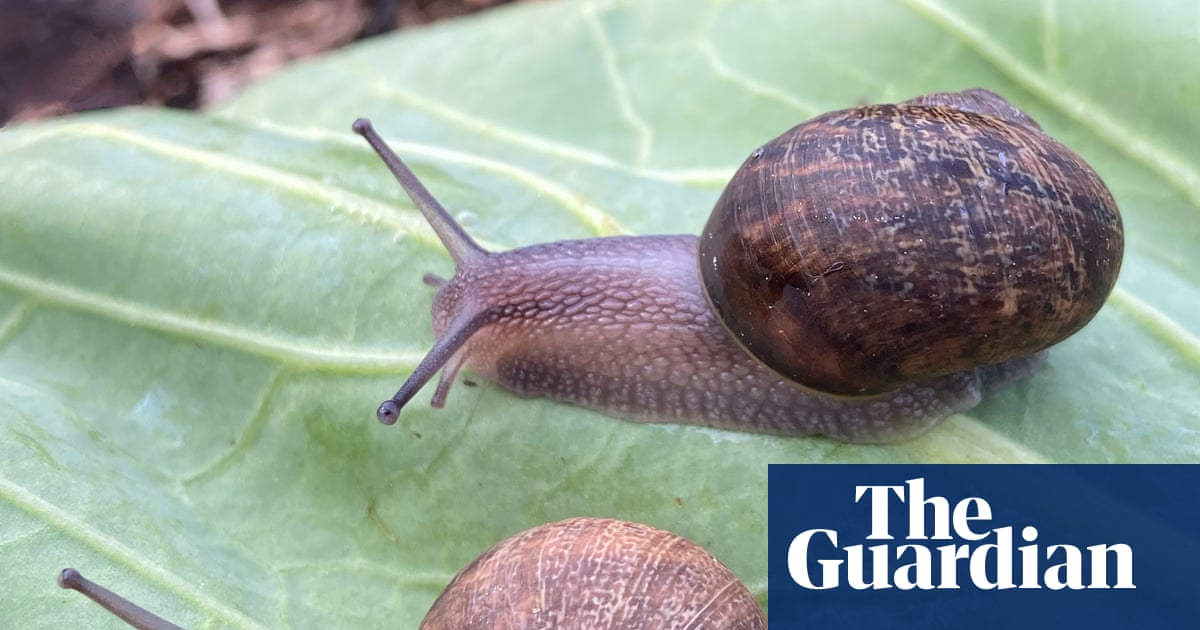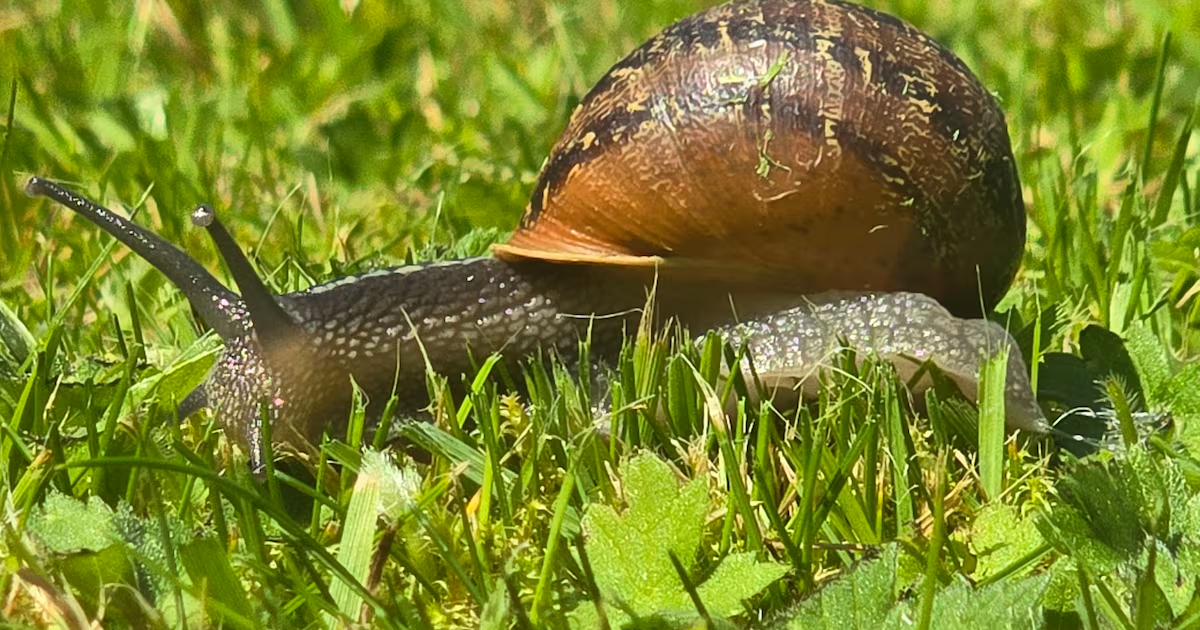
I captured this lad leaving my lettuce plants after his breakfast. What type of snail is this? Joe Reid, Termonfeckin, Co LouthA considerably less hungry snail than when it entered your lettuce patch. This is the Garden Snail – Heilx aspersa – whose brown shell can grow up to 40mm across. And it is not a lad either, or indeed a lassie. Garden snails are all hermaphrodite, which means they have both male and female reproductive organs. They must mate with another snail for genetic diversity, but both then go off to lay up to 100 eggs each. No wonder it is so common. The 22-spot ladybird is widespread in Ireland Is this a regular ladybird? I’ve never seen a green one before. Found in Rockfield Park in Blackrock, Co Dublin. Anne-Marie Wood WolfeI too have never seen a green ladybird and the picture you sent is not one of a green ladybird either. It is an excellent image of the 22-spot ladybird, Psyllobora 22-punctata. This small ladybird (3-4mm) is yellow with 20-22 black spots on the wing cases and five more on the pronotum, the area behind the head. It is widespread in Ireland – most common in the east. It feeds on mildews on leaves and stems, not on aphids. Lily beetles feed on plants in the lily family I spotted these red bugs on my lilies and thought to myself, ‘great, I have a pair of breeding ladybirds’. However, I noticed that they had no spots. What are they and are they good for the garden? Ned KellyThese insects are not some sort of spotless ladybird. They are the dreaded Lily beetles which feed on plants in the lily family, often completely stripping them of leaves. The results of the actions of this acrobatic pair will be tiny red lines of eggs underneath the leaves which will quickly hatch into orange larvae. They have the delightful habit of covering themselves with their own black excrement so that they look like slugs, and so escape being eaten by the birds. Your lilies are kaput, I fear.Mayfly spotted in Sligo While walking along the Garvoge river from Sligo we saw movements on the still water. We could see flies on the surface. Then in the clear water we could see little bits rising from the riverbed to the surface and “becoming” flies. They started to flap and after a few minutes we saw one rising and flying off. Returning later on, one landed on my jacket and allowed this photo to be taken. Eric Gill, Firhouse, DublinMayflies have a very interesting life cycle. Having spent up to two years in tunnels in the bottom of the river, the great day comes when they emerge and move towards shallower water where they rise up to the surface. Here they transition into winged adults with three tails and two pairs of wings. This is the dun stage, and your picture is of a female Ephemera danica (Green Drake) in this stage. Later on, after the second moult, it reaches the spinner stage which has darker wings and even longer tails. Mating takes place in a frenzy in the air, and the females touch down periodically to deposit their eggs. By dark it is all over and the trout feast on the spent creatures.Swan gives cygnets a rest I saw this beautiful swan with her cygnets at the end of June on the Royal Canal near the 12th Lock. Motherly love in action? Pauline O’ConnellYou could say that. The female will sometimes carry the young on her back during their first two weeks. This keeps them warm among her feathers, protects them from predators and gives them a rest from swimming while they are very small. The male often swims alongside as added protection.Please submit your nature query or observation, ideally with a photo and location, via irishtimes.com/eyeonnature or by email to weekend@irishtimes.comPlease submit your nature query or observation, ideally with a photo and location, using the form below or by email to weekend@irishtimes.com
This snail is not a lad, or indeed a lassie. Garden snails are all hermaphrodite
Your notes and queries for Éanna Ní Lamhna
672 words~3 min read