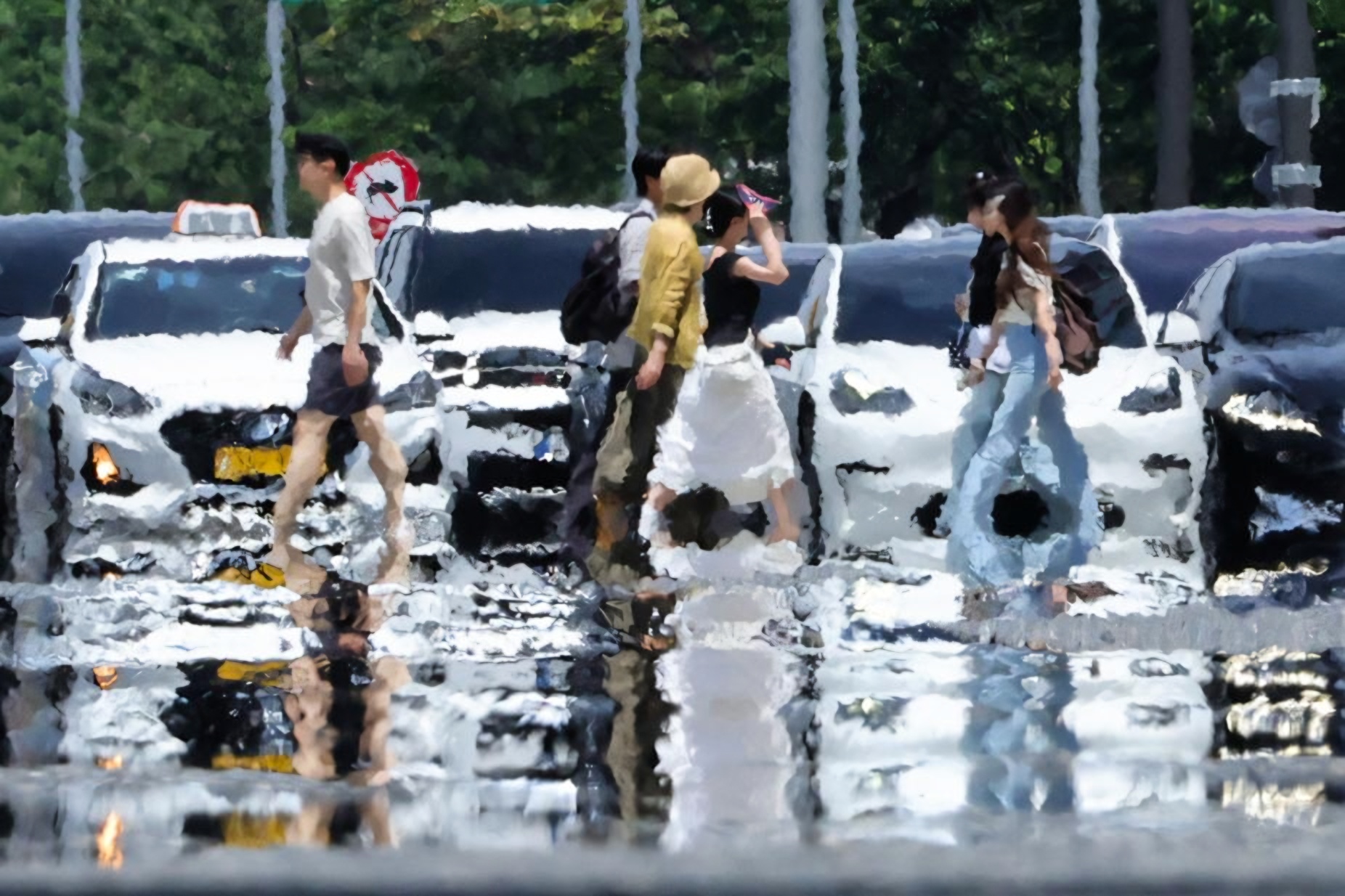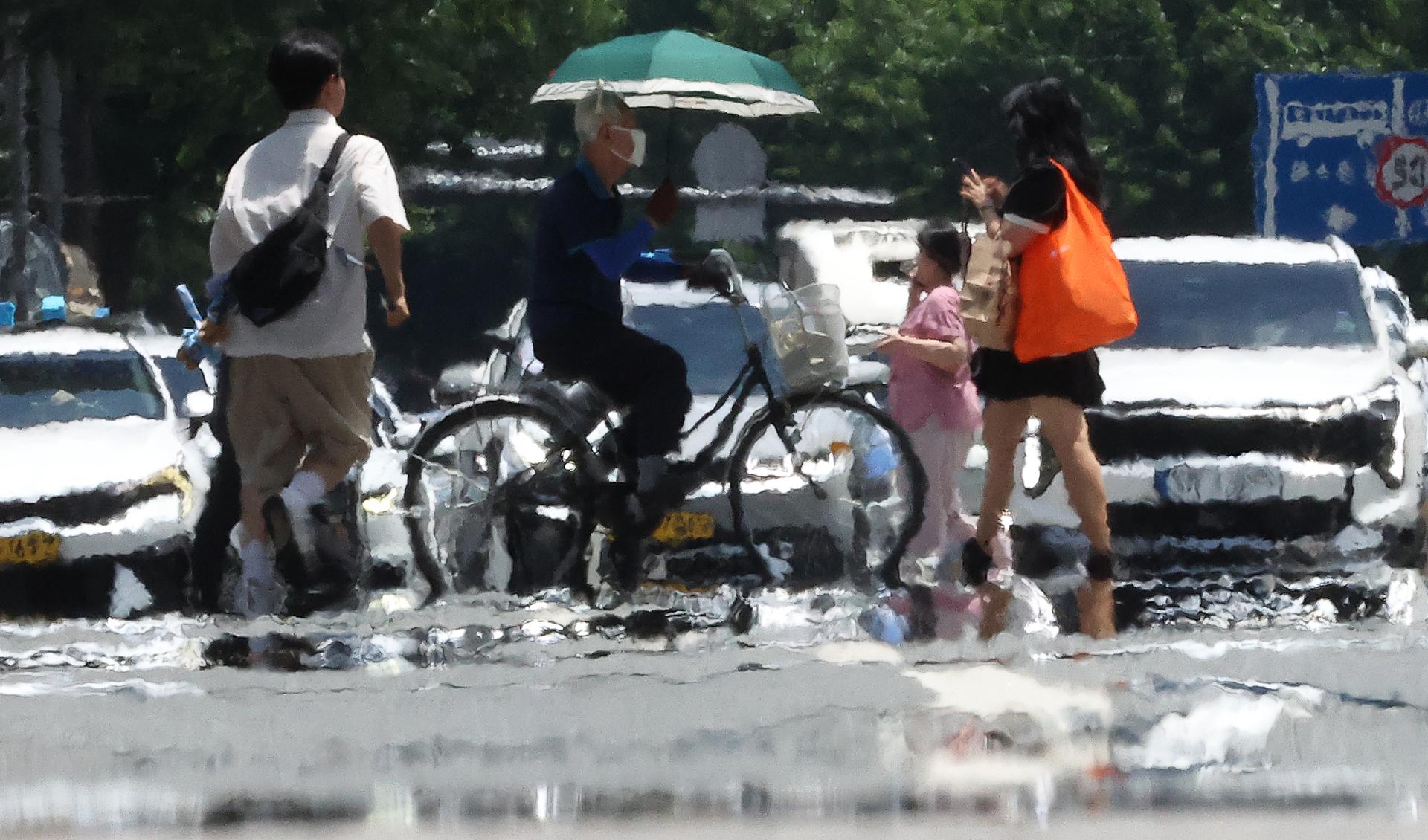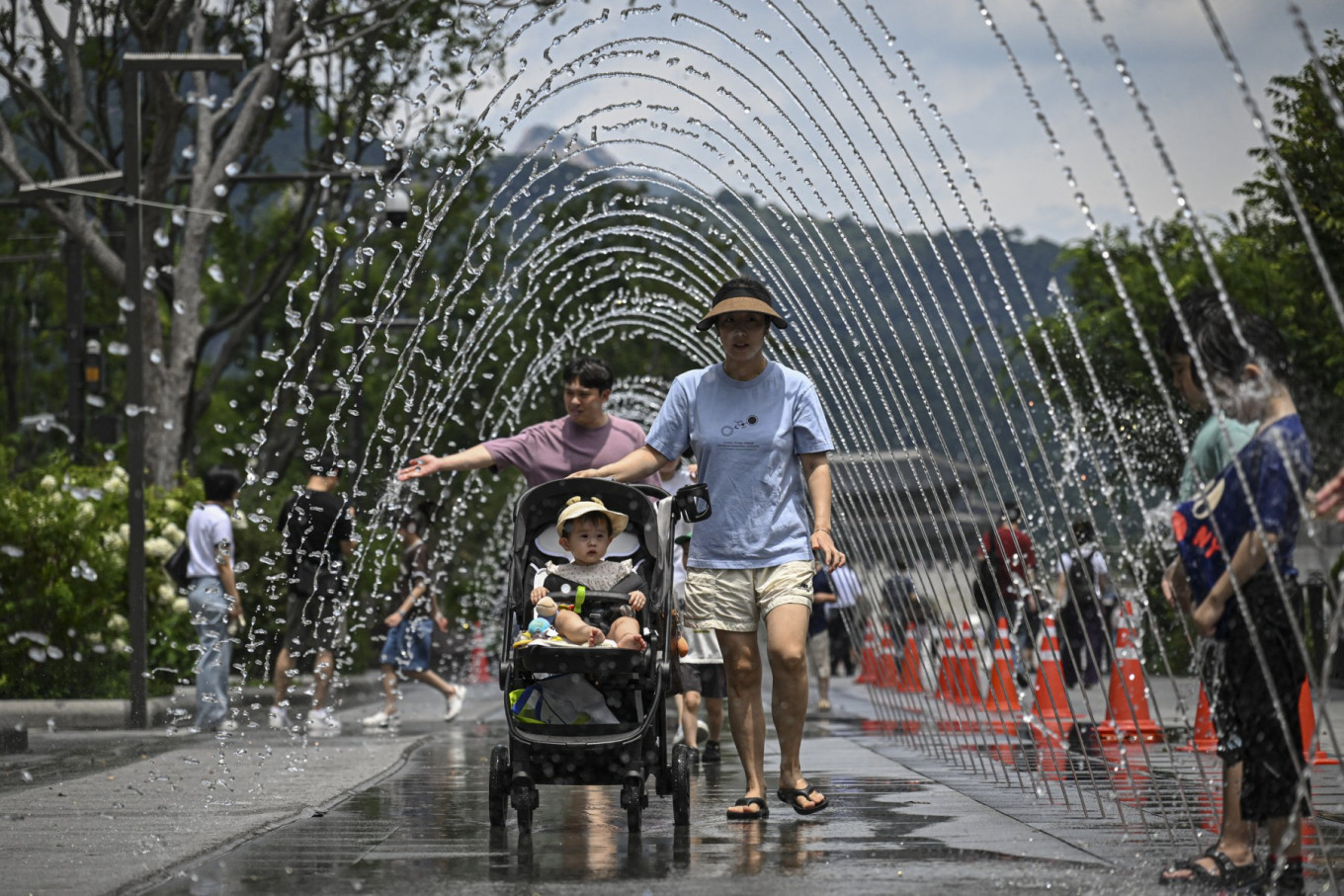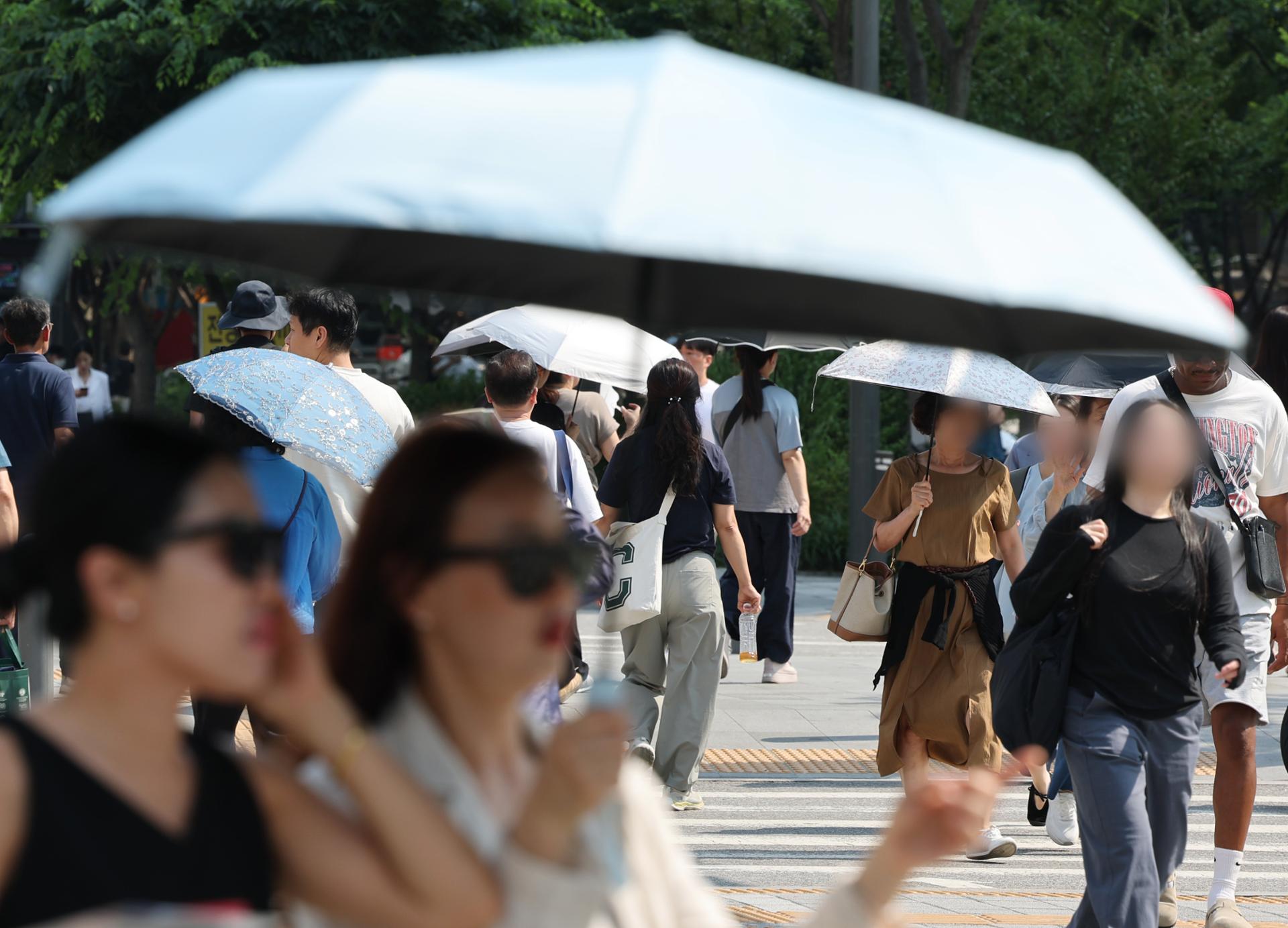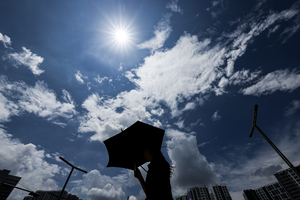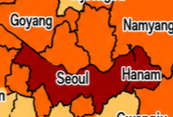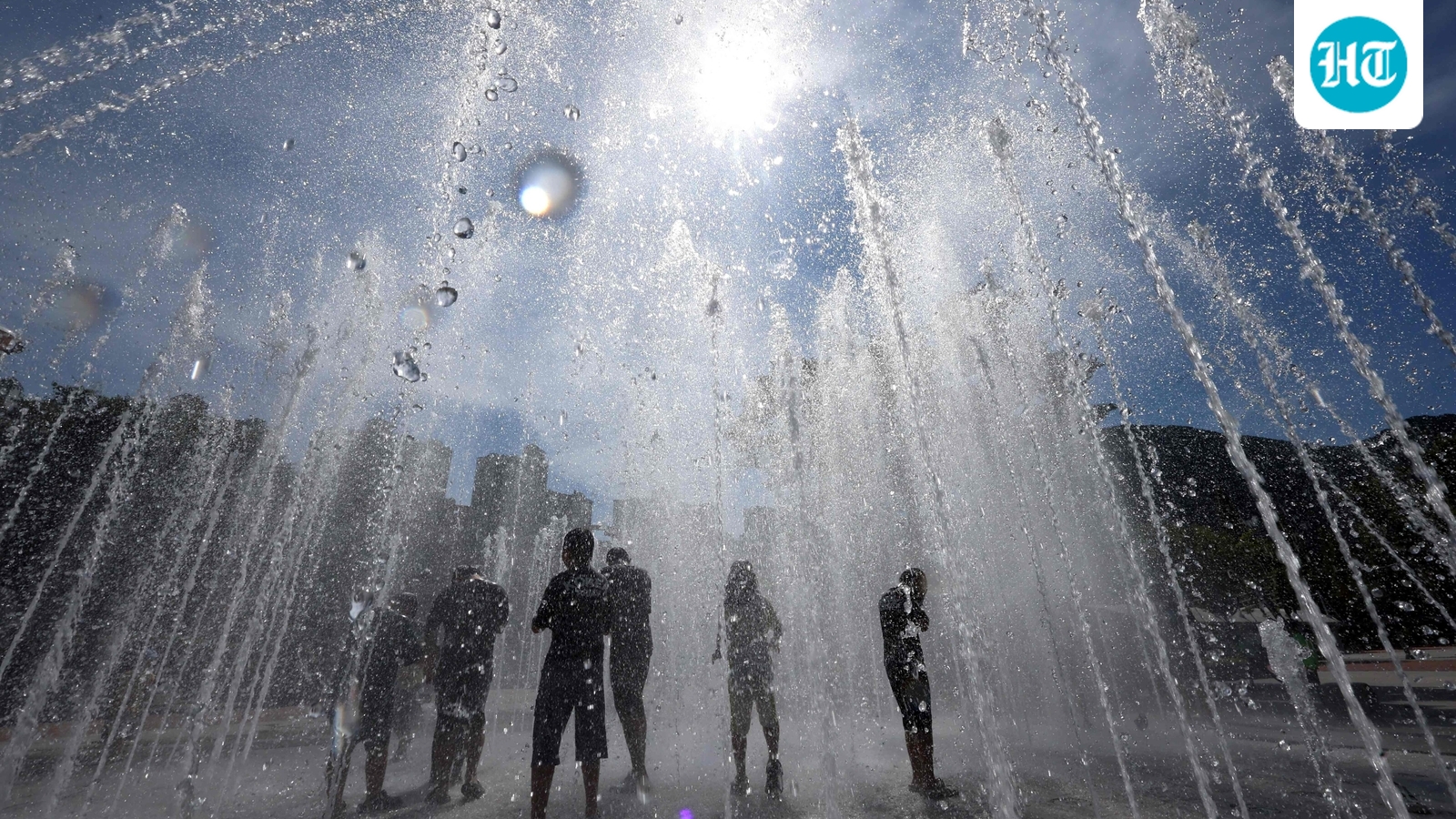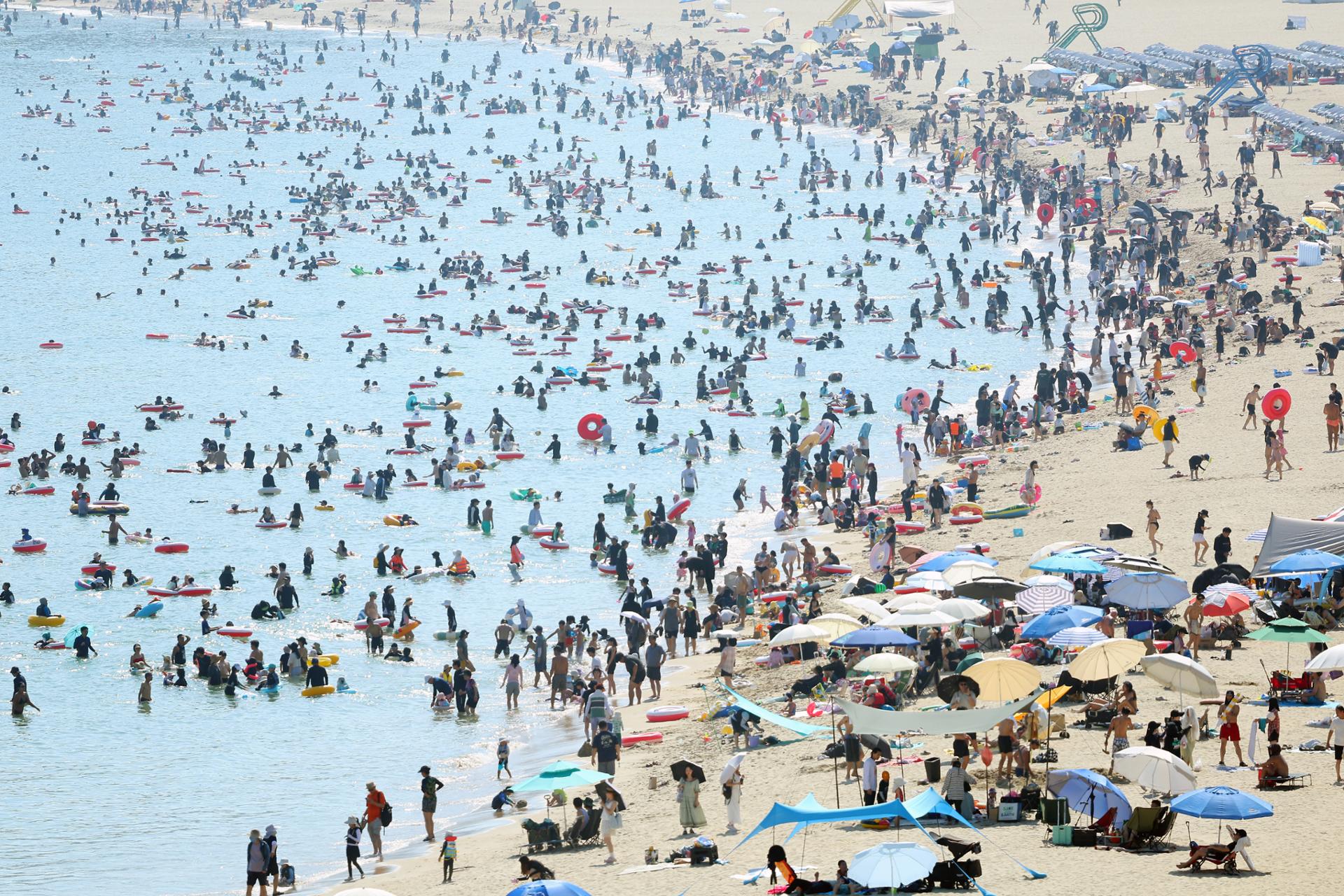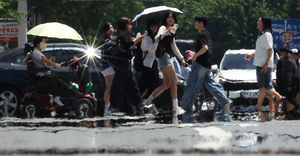
New highest-level alert takes effect for the first time as temperatures reach 40 C and officials warn of health risks People use umbrellas to fight off the sun on Saturday in Daegu. (Yonhap) The Korea Meteorological Administration issued a heat wave emergency warning for Gyeongsan and Pohang in North Gyeongsang Province at 10 a.m. Sunday, marking the first use of the highest-level alert since the agency overhauled its heat advisory system on June 1.Under the revised system, the heat wave emergency warning may be issued when the feels-like temperature is forecast to exceed 38 degrees Celsius after remaining above 35 degrees for two consecutive days. It may also be issued when air temperatures are expected to surpass 39 degrees for more than one day.The new three-tier system was adopted in June to warn the public about extreme temperatures that exceed the level of regular heat wave warnings in the previous two-tier structure.The KMA warned that temperatures at emergency warning levels pose heat-related health risks even to healthy adults.Residents in affected areas were advised to stop outdoor activities immediately, seek shelter indoors or in shaded areas, stay hydrated and check on elderly neighbors and others who may be vulnerable to heat-related illnesses.The warning came as South Korea experienced an intense weekend heat wave driven by the combined influence of the North Pacific High and the Tibetan High. In southern North Gyeongsang Province, hot southerly foehn winds further boosted temperatures.Foehn winds are warm, dry downslope winds that develop on the leeward side of mountain ranges, often causing temperatures to rise rapidly.Gyeongsan recorded a high of 37.9 degrees Celsius at 3:08 p.m. Saturday, while temperatures in the city's Hayang-eup climbed to 39.9 degrees.In Pohang, the official high reached 34 degrees, although some parts of the city recorded temperatures as high as 37.2 degrees.Temperatures in parts of both cities were forecast to exceed 39 degrees on Sunday.The KMA had previously identified North Gyeongsang Province as one of the regions most likely to trigger the new emergency warning after analyzing heat data from 2016 to 2025.According to the agency, Gyeongsan would have met the emergency warning criteria an average of 3.1 times a year during that period had the system existed -- the highest frequency among all heat advisory regions nationwide. By comparison, 53 percent of advisory areas would not have met the criteria even once over the same period.The Korea Disease Control and Prevention Agency said the relative risk of death increases by 16 percent when the feels-like temperature exceeds 38 degrees or when the air temperature is above 39 degrees.The Ministry of the Interior and Safety dispatched an on-site situation management official and launched an interministerial response.The ministry’s senior natural disaster response official held a meeting at Gyeongsan City Hall on Sunday with officials from the Health Ministry, Labor Ministry, Gyeongsan city government and the Rural Development Administration.The Interior Ministry said a preemptive response was needed because Gyeongsan and Pohang have large elderly populations, as well as many people working outdoors at industrial complexes and construction sites.Officials discussed measures including extending operating hours at heat-wave shelters for older residents, checking on vulnerable groups and advising businesses to suspend outdoor work.They also reviewed measures to prevent heat-related damage to crops and livestock.
KMA issues 1st heat wave emergency warning in southeastern region
The Korea Meteorological Administration issued a heat wave emergency warning for Gyeongsan and Pohang in North Gyeongsang Province at 10 a.m. Sunday, marking th
539 words~2 min read