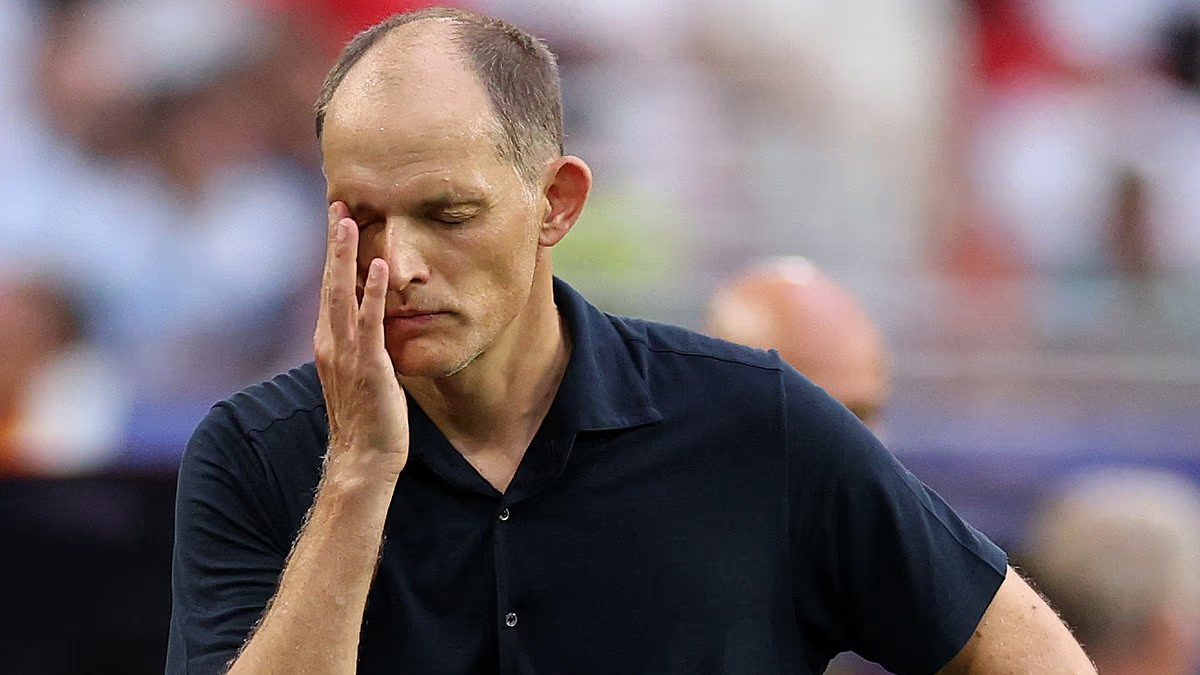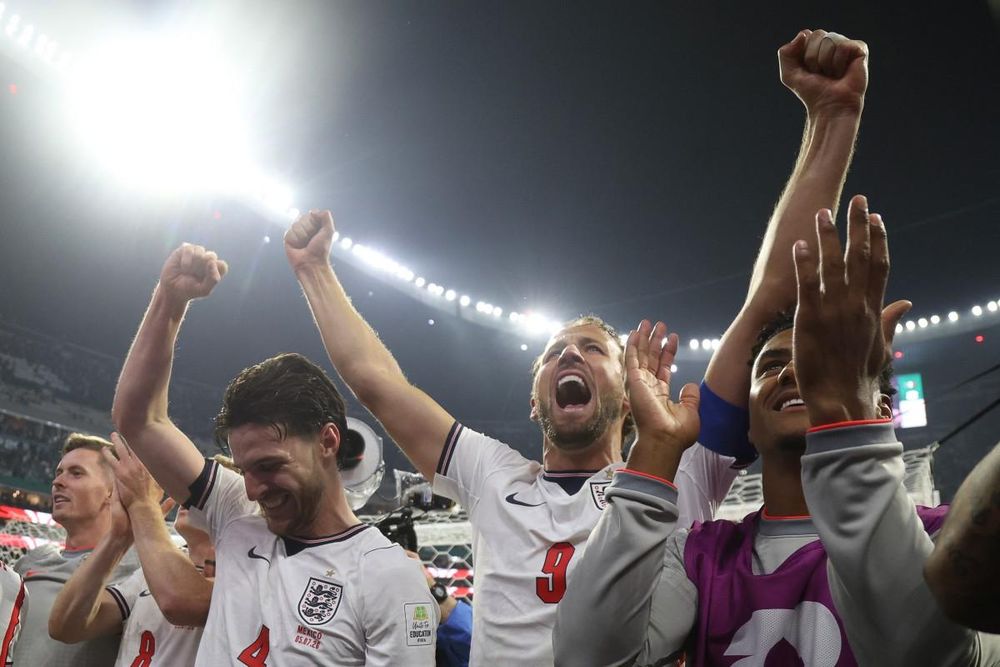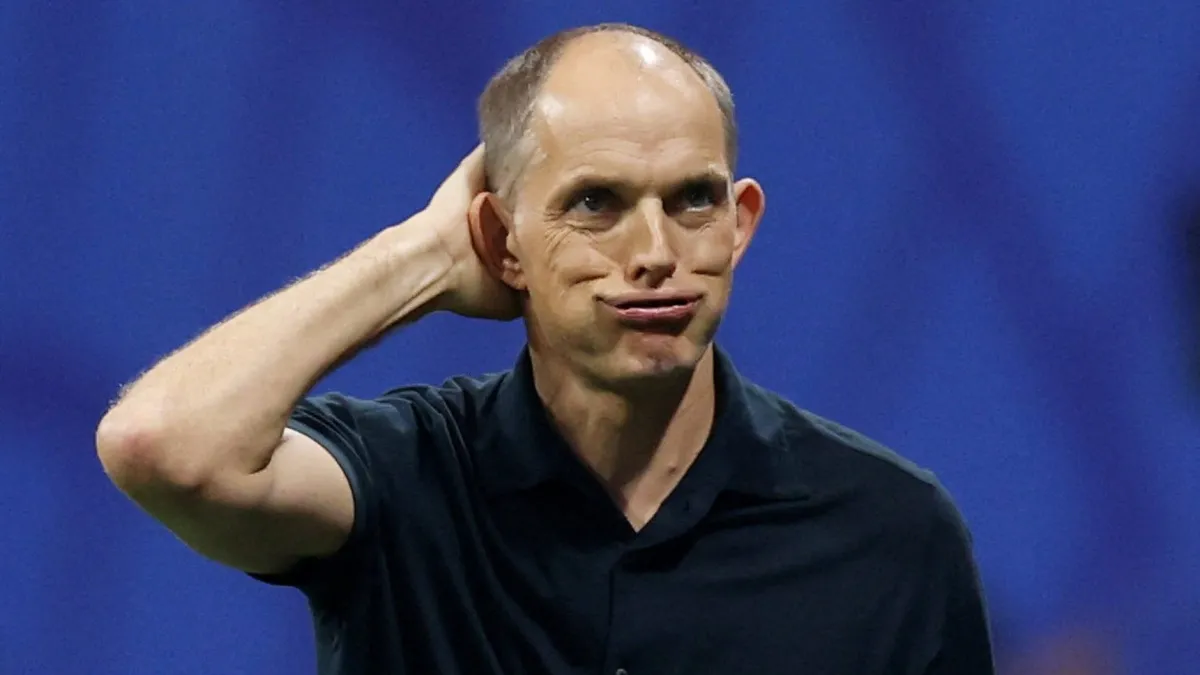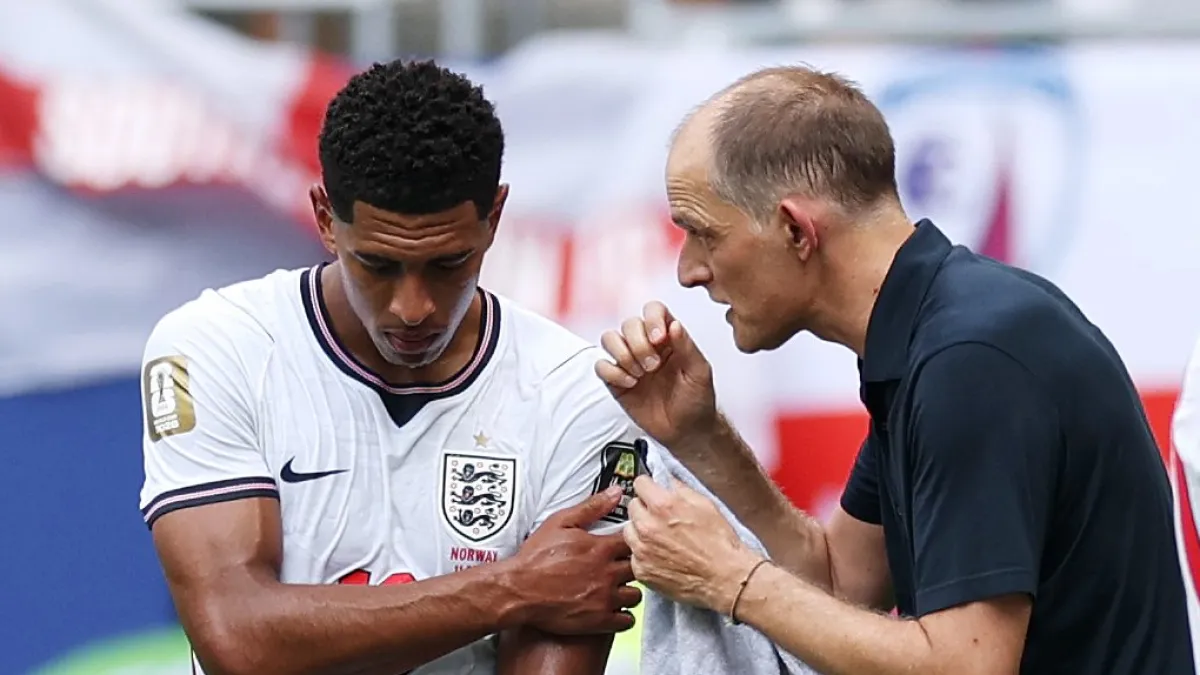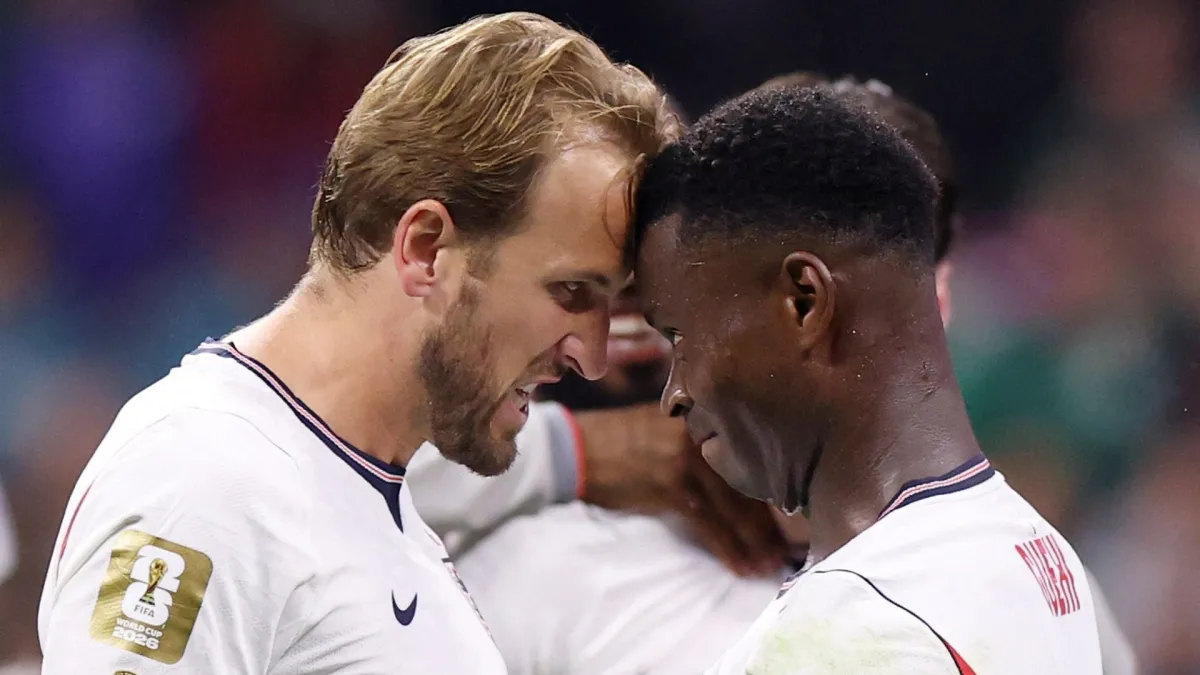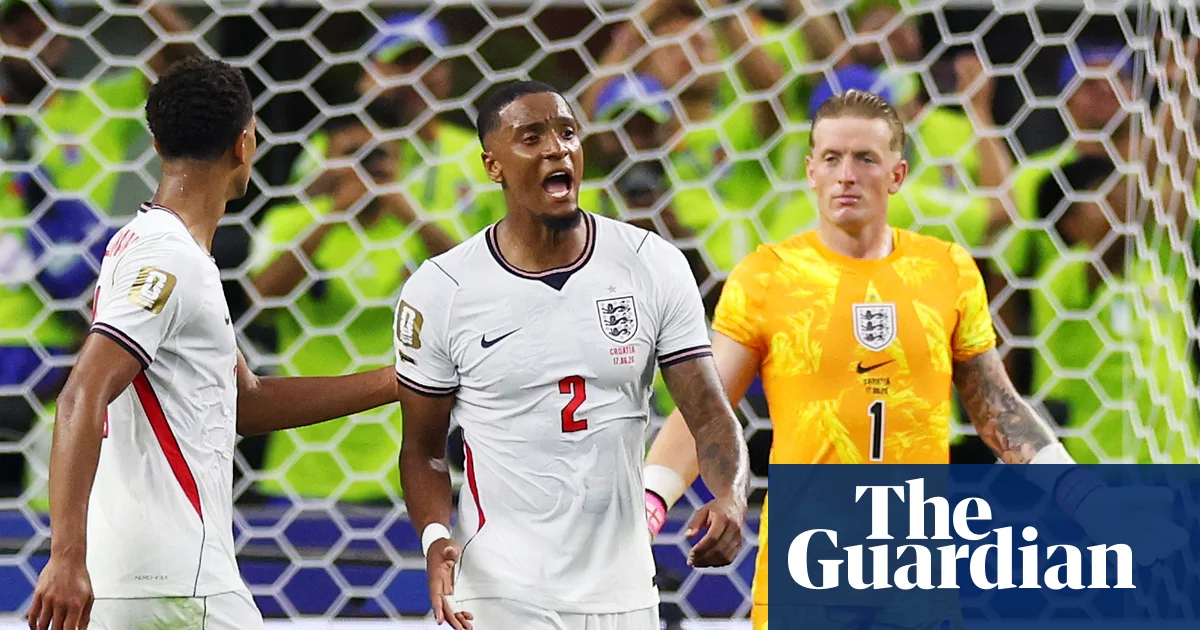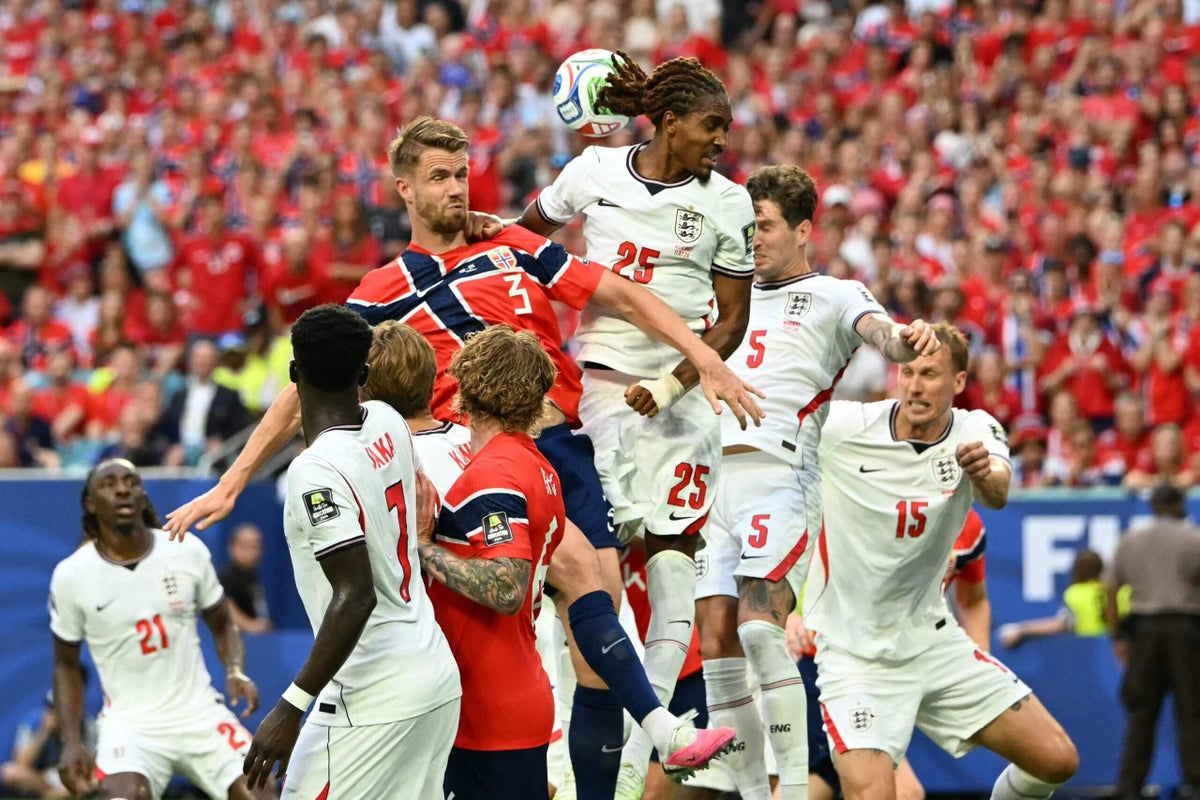
You could be forgiven, when Clement Turpin blew his whistle to end the 90 minutes in Miami, for thinking that you had seen it all before. Another strong England start in a big game, another loss of control in the second half. England had lost their structure, lost their composure, and had lost the ball to a calmer, cleverer opposition. They were fortunate to make it out of the 90 minutes alive.Any England fan would recognise the feeling. This was the Luzhniki Stadium, eight years ago on Saturday, when England lost their grip on a World Cup semi-final, and Croatia deservedly won it in extra-time.It was Wembley five years ago, when Gareth Southgate’s side were frozen by the occasion of the European Championship final, even at 1-0 up, and were eventually beaten on penalties by Italy.For all of Thomas Tuchel’s attempts to build something different, it felt as if his team were getting sucked into the same inevitable whirlpool that did for Southgate’s sides. As if even Tuchel himself could not reverse the gravitational pull of these long, painful nights.This is why that extra-time surge that won the game was so compelling. That is why Jude Bellingham was left talking about “warriors” at the end, and Tuchel ascribing the victory to “pure mentality”, and a “refusal to give in”. Because this was an exhausting physical and mental effort from England — especially from their substitutes and fringe players — to overpower Norway in extra-time. To find that extra level, one that nobody thought they could find, in order to win the game.Enough will be said today about Bellingham, who is currently having a World Cup you would pause before writing in a comic book. He was implausibly decisive again here, rescuing a spiralling first half performance with a ruthless equaliser, and then popping up three minutes into extra-time to win the game. Six goals now in this World Cup already for him. No Englishman has ever scored more. Few Englishmen have ever played like this. And he has given so much this week, in Mexico City and in Miami, that most fans will forgive him his moment of defensiveness in his post-match interview.But to reduce this win to one brilliant individual, even one with the Homeric qualities of Bellingham, seems somehow to miss the point. This was billed as a clash between Norway’s star and England’s two, and yet the actual flow of the game did not lend itself to stellar quality. This was a true slog, an exhausting, messy, bitty game, played in almost unplayable conditions. For long spells it felt like something from another era, the humidity preventing teams from pressing properly, leading to long spells of almost uncontested possession.Tuchel had told his players beforehand that this was the day to “be brave” and “let go”. Instead this was, for most of the 90 minutes, England’s worst performance of the World Cup. They lost their early grip on the game, started making errors, conceded one and should have conceded two, only for John Stones to stop Alexander Sorloth from setting up Erling Haaland.Thomas Tuchel sought to be proactive as his team struggled (Elsa/Getty Images)Even though Bellingham equalised before the break, the second half was even worse. Tuchel tried to be proactive but unbalanced the side, removing Declan Rice for Eberechi Eze, and spent the rest of the second half scrambling to fix his mistake. At times England were so open and disjointed that Norway could run straight through them, and only the VAR disallowing Torbjorn Heggem’s goal and some brave defending kept England in the game. Without the England back four being as good as they were, sticking together, shackling Haaland, this game would have been over fast. And the half-time changes, the loss of control, the sense of miscalculation, would be held against Tuchel for years.All this then is just context for the effort that won the game. Remember who was on the pitch when extra-time began. Reece James, who had not played for almost three weeks, on at right-back. Stones, 90 exhausting minutes into his first start for almost one month, alongside him. Djed Spence, who felt his calf last week, on at left-back. Bukayo Saka, who has not looked right all World Cup, out on the wing. Morgan Rogers having to sacrifice himself for the team to do a job alongside Elliot Anderson in the middle.These were the players who decided that this time, in Miami, in the melting heat, would be different. These were the players who did not want this to be another Croatia, another Italy, and realised that they were the only ones who could change that. Saka is miles from his best but he somehow kept running and pinned Norway back. Rogers had the courage to shoot from 25 yards and Bellingham turned in the rebound. James and Stones made up for what they lacked in rhythm by getting every defensive intervention right.Most impressive of all however was Spence. He was one of the heroes of the Azteca, on at left-wing-back, letting nobody past, winning every tackle. Tonight he did all of that and more. He sprinted from one end to the other, never once looking bothered by the conditions. He charged down an Orjan Nyland kick and nearly scored. He won a penalty which was overturned by VAR. He forced another save from Nyland in the second half of extra-time.Djed Spence ran the length of the pitch to charge down Norway goalkeeper Orjan Nyland (Elsa/Getty Images)At times at this World Cup it has felt as if England are almost too much about Kane and Bellingham, that the ‘hero moments’, as England call them, were not evenly distributed. But the Azteca started to change that, with that long second half rearguard, the deep 5-3-1, those endless headers and blocks and punches.This game was very different from that, slower, less structured, less exciting. But there were hero moments here too, the same refusal to lose, the same team-work, the same selfless effort in exhausting physical conditions. Watching Spence, Saka, James and Rogers keep going and going and going out there in the stifling heat, you got the same sense of unity, the same sense of ‘brotherhood’ that you did watching England defend against Mexico. And if you desperately wanted another Dan Burn header that sounded like a kettledrum being hit, there was one of those too, towering over Leo Ostigard in the final minutes of extra-time.England’s players have bonded in adversity (Patricia De Melo Moreira/AFP via Getty Images)By the end England somehow — as unlikely as this sounds — looked even more exhausted than they did in Mexico City. Kane and James fell to the floor. Stones could not stand up. Burn had used all of his strength to peel Jordan Pickford’s soaking gloves from his hands. England’s players could barely summon the energy to run together towards the England fans as they did on Sunday night.Because it was mentality alone that dragged England over the line here, through the steamy heat, past Norway, and into the semi-finals. A refusal to lose, a refusal to fly home this weekend, and a refusal to let yet another big game slip out of their tired hands.
England’s mentality monsters find a new level of resilience, forged in the Miami furnace
When it looked like the game was following a familiar script for England, Thomas Tuchel's side dug deep and found a way to change the story
1,202 words~5 min read