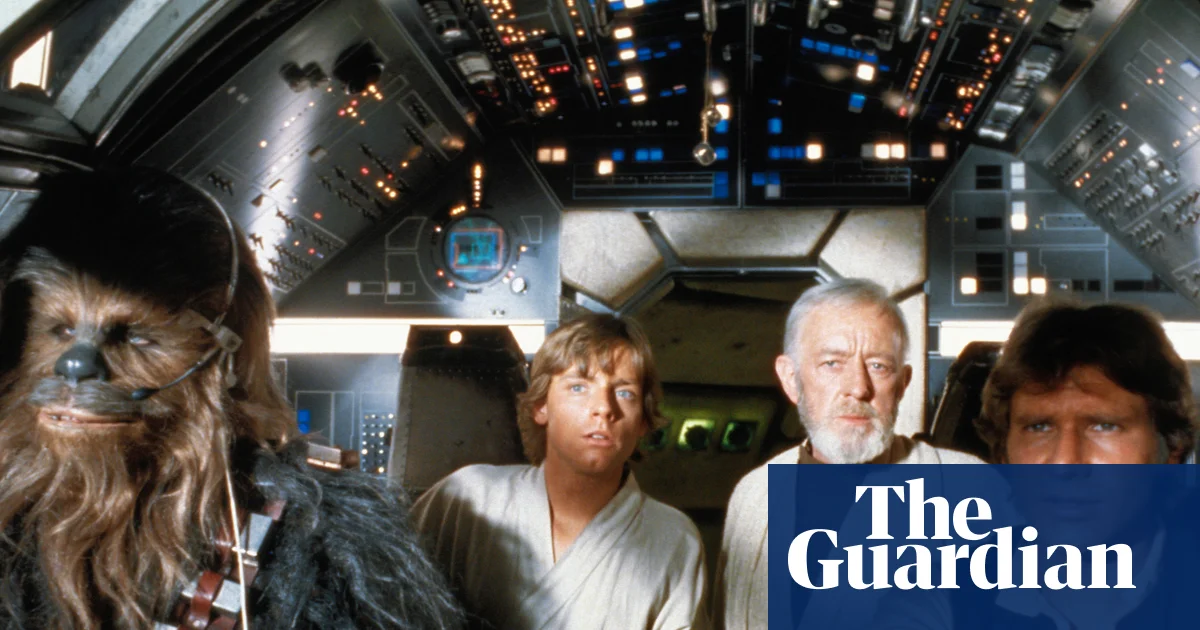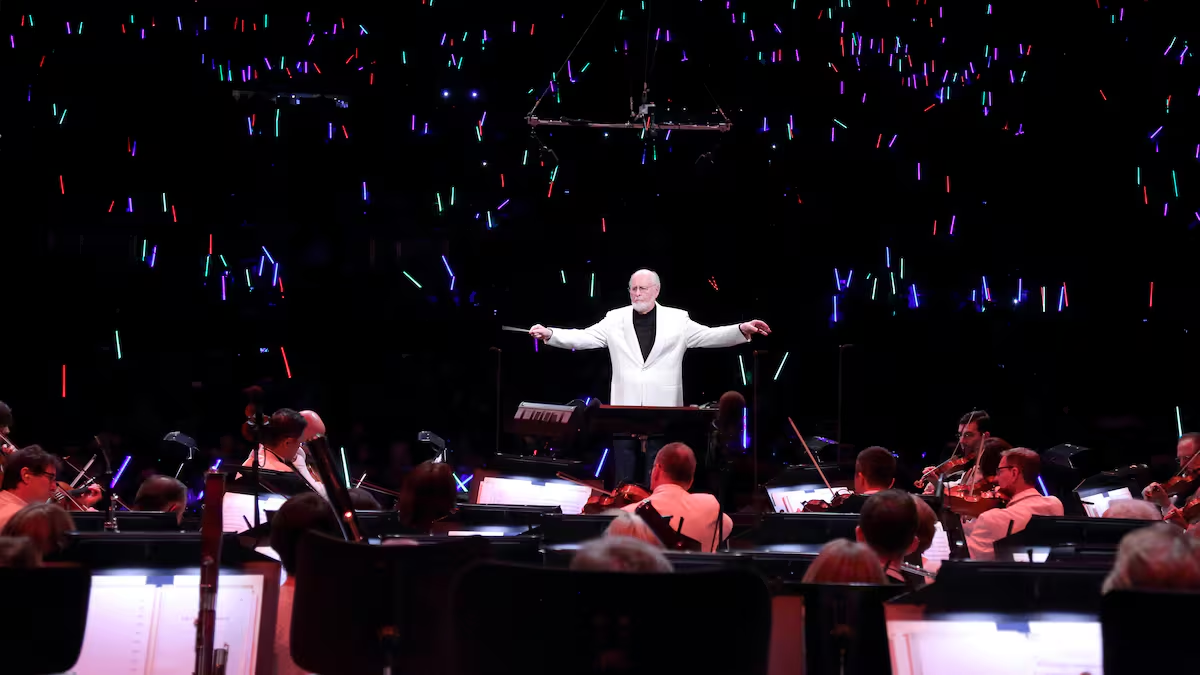
The ominous two-note shark theme in Jaws. Indiana Jones’ triumphal musical flourish. Darth Vader’s dark Imperial March.Memorable moments in classic film scores are part of a shared language that seeps into everyday life. Concert producer, musician and podcaster Andrew Pogson says his daughter was three when she would often imitate the Jaws theme in the pool even though she had never watched the movie.Dan Golding, left, and Andrew Pogson from Art of the Score with images from Star Wars, The Lord of the Rings and Titanic. Simon Schluter and Monique Westermann“I never showed her Jaws but the idea that those two notes were intrinsically linked to sharks, human beings are just born with it now,” he says.There are many other examples of instantly recognisable movie themes, including the James Bond series, Psycho, Chariots of Fire, Titanic, The Godfather Part II, La La Land and, in this country, Picnic at Hanging Rock and Gallipoli.While most film lovers can see the value of a catchy original song - and appreciate why the ubiquitous hit Golden from KPop Demon Lovers won an Oscar this year – understanding what an orchestral film score does is a very different question.How does it help the story a filmmaker wants to tell? What mysterious alchemy do composers bring to a movie? What are the greatest ever scores?Enter Art of the Score, a Melbourne-based podcast that been explaining and celebrating movie music for a decade while expanding into almost 100 live orchestral events around Australia, New Zealand, Hong Kong and the United Kingdom.Next up is the premiere of The Music of The Lord of the Rings in Sydney this week then a continuing run for The Music of Hans Zimmer, the prolific composer for such films as Gladiator, Interstellar, Inception, The Dark Knight trilogy, The Lion King and Dune, in Canberra and Christchurch.Pogson says the format is “let’s talk about how the music paints a picture, what it’s doing to you emotionally”, by focussing on the score without the movie screening. That contrasts with the many popular concerts that Pogson once produced for Melbourne Symphony Orchestra, which showed the film while the orchestra played.“I love that format,” he says. “You really get to see the magic of it happening in real time. But there was a part of me going ‘sometimes I don’t want the visuals. I just want to hear the music’.”Their live events have shown that fans of a particular score want to know more about it.Composer and conductor Nicholas Buc, who joins Andrew Pogson and Dan Golding in the Art of the Score podcast and live orchestral events.Art of the Score“The reaction from most of the fans is that the magic is increased when you start going, ‘oh wow, there’s this little turn in the music here’, or ‘this is a certain technique being used’ or ‘wow, now it’s making me feel like this’,” Pogson says.“You leave the concert hall with an even greater appreciation for the thing you already loved, without it feeling like a lecture.”Pogson, the creative director of the orchestral events company Concert Lab, is joined on Art of the Score by composer and author Dan Golding, who is professor of media at Monash University and host of Screen Sounds on ABC Classic, and composer-conductor Nicholas Buc.Golding believes the score is an under-appreciated element of film craft.A ubiquitous musical theme: Andrew Pogson’s then three-year-old daughter would imitate the Jaws theme in the pool even though she had never seen the movie. Universal Pictures“The language we have around film is we ‘see’ a film and we ‘watch’ Netflix, but audio is a huge, huge factor in the experience,” he says. “Music shapes how you emotionally feel about a scene. Sometimes it can tell you about the narrative.“It can even tell you what’s happening in the film before you actually see it on screen – you might hear Darth Vader’s theme played before you see him enter the frame.”Golding considers Howard Shore’s double-Oscar winning score for The Lord of the Rings trilogy the pinnacle of a particular type of musical storytelling – using leitmotifs or recurring musical phrases – that dates back to Wagnerian opera.“Basically you assign little melodies or musical ideas for characters or places,” he says. “In Lord of the Rings, it’s most often the various peoples of the story – elves or hobbits or orcs.“The music is just as complicated as Tolkien’s world – Howard Shore wrote more than 90 melodies for various characters, people and places in the films.”Even if it is not consciously noticed, the best scores deepen emotions and guide audiences in their response to key moments in a movie – setting a tone – in an original way.So what are the greatest-ever movie scores?Many film fans will cite Elmer Bernstein’s score for The Great Escape, Anton Karas’ The Third Man, Maurice Jarre’s Lawrence of Arabia and Doctor Zhivago and Craig Armstrong’s Romeo + Juliet, as well as those already mentioned earlier.A classic movie score: Gladiator.APGolding says his list is topped by John Williams’ score for Star Wars (“the whole world is built on melodies for characters and places; it’s really emotionally resonant. You can listen to it at home and still get a version of the story”) followed by Shore’s The Lord of the Rings trilogy (“Perhaps Star Wars is the only other film series that comes close in terms of that scale of character and world building through the music”).He rounds out his top five with Bernard Herrmann’s Vertigo (“he helped establish a tradition that’s much more about atmosphere and psychology in music and texture”), Erich Wolfgang Korngold’s The Adventures of Robin Hood (“one of the great – if not the first great – original film scores, with Korngold bringing a European concert hall sound and sophistication to Hollywood”) and, from Japan, Joe Hisaishi’s My Neighbour Totoro (“there’s something so joyous about the music that’s really atmospheric and sophisticated for a children’s movie”).Pogson has The Lord of the Rings trilogy at number one (“it feels like the music was always there and now we’re just exploring the world”) followed by Williams’ The Empire Strikes Back (In Star Wars “he was forced to imitate some classical scores but in the second one, everyone has full confidence in him, he knows what he’s doing and he’s allowed to be fully John Williams from start to finish”).A simple melody conveys what the character is thinking, feeling and going through many times: Harrison Ford in Indiana Jones and the Last Crusade.ParamountFor the rest of what he admits is a weird top five, Pogson went with Alan Silvestri’s Back To The Future (“pure Hollywood adventure excitement”), Williams’ Indiana Jones and The Last Crusade (for “the number of different ways [he] is able to convey what the character is thinking and feeling and going through at any given moment with just that simple melody”) and Basil Poledouris’ Conan The Barbarian (“another score that I believe is really stunning, especially for a time when there were hardly any fantasy films around”).Sometimes it doesn’t matter if a film is “ridiculous” with a star in Arnold Schwarzenegger who is “terrible”, as Pogson says of Conan. It can still have a masterful score.Art of the Score’s The Music of Lord of the Rings, with Sydney Symphony Orchestra, Sydney Children’s Choir, Sydney Philharmonia Choirs and Kate Miller-Heidke, is at Sydney Opera House from July 16-18.Want more movies? We’ve got you.Must-see movies, interviews and all the latest from the world of film delivered to your inbox. Sign up for our Screening Room newsletter.A burnt school blazer was just the start for this bold young director‘I have a lot of repressed rage’: Hugh Jackman on playing a dark Robin Hood‘Did homophobia become OK again?’ Backlash inspires breakthrough horror filmHow Silent Friend - a film about a tree - wowed the world.
Jaws, Star Wars and The Lord of the Rings: Why we love the greatest movie scores so much
The team behind a popular podcast and series of live concerts explain the brilliance of film’s best composers.
1,302 words~6 min read