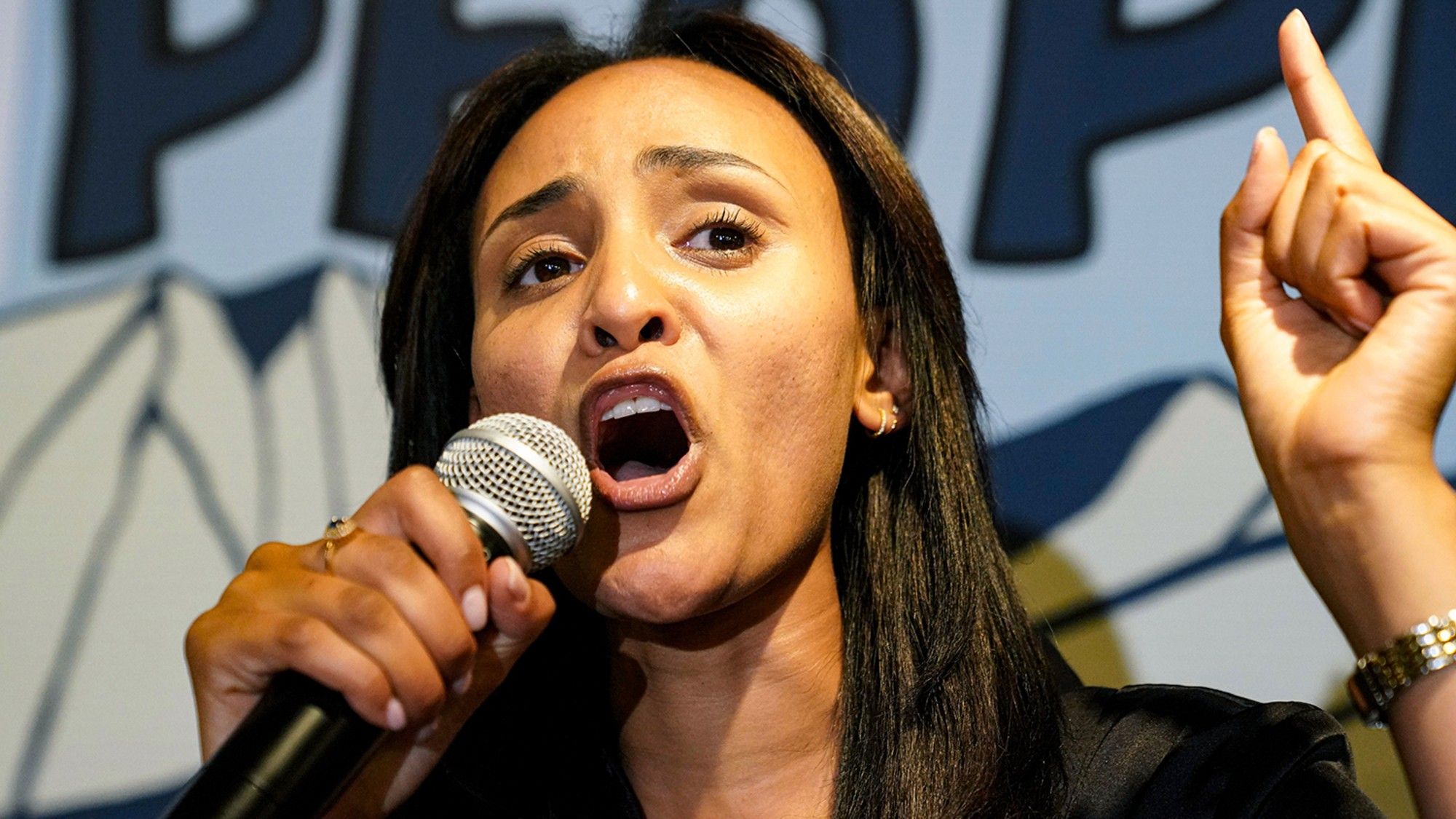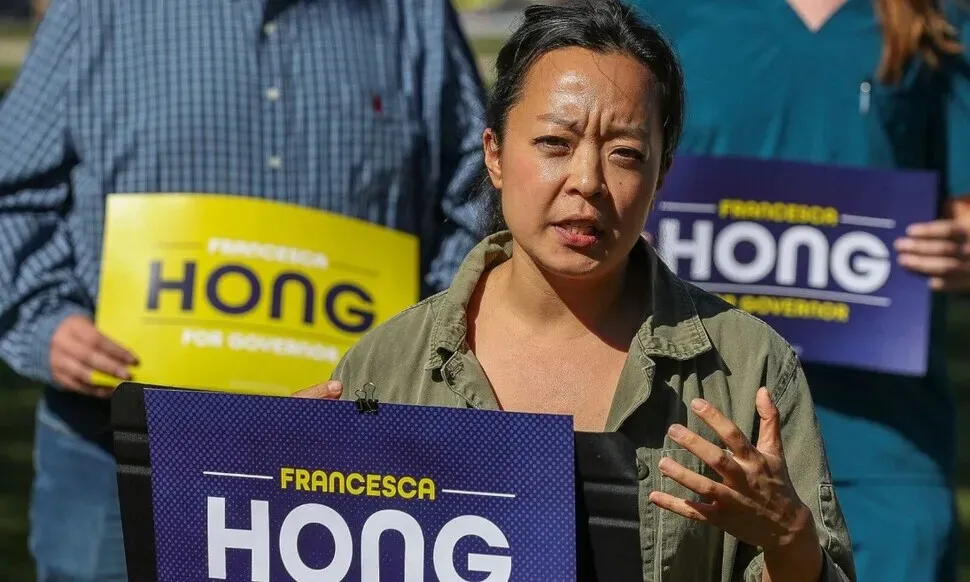
Francesca Hong, a democratic socialist candidate for governor of Wisconsin, campaigns in Ashwaubenon, Wisconsin, on Sept. 25, 2025. (via CNN)
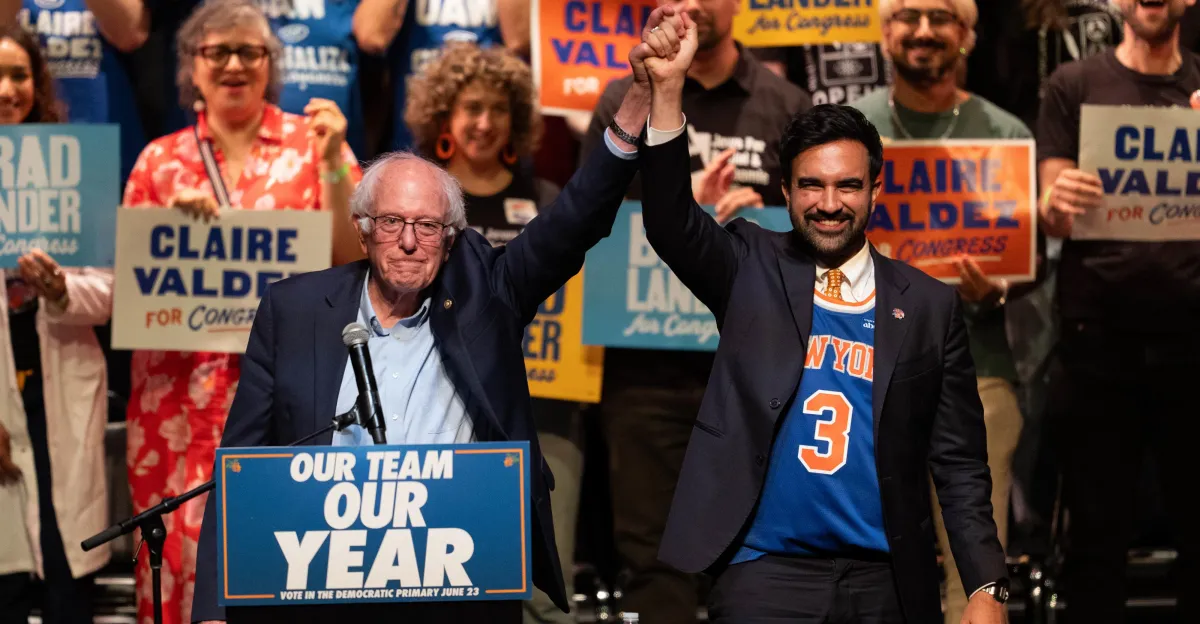
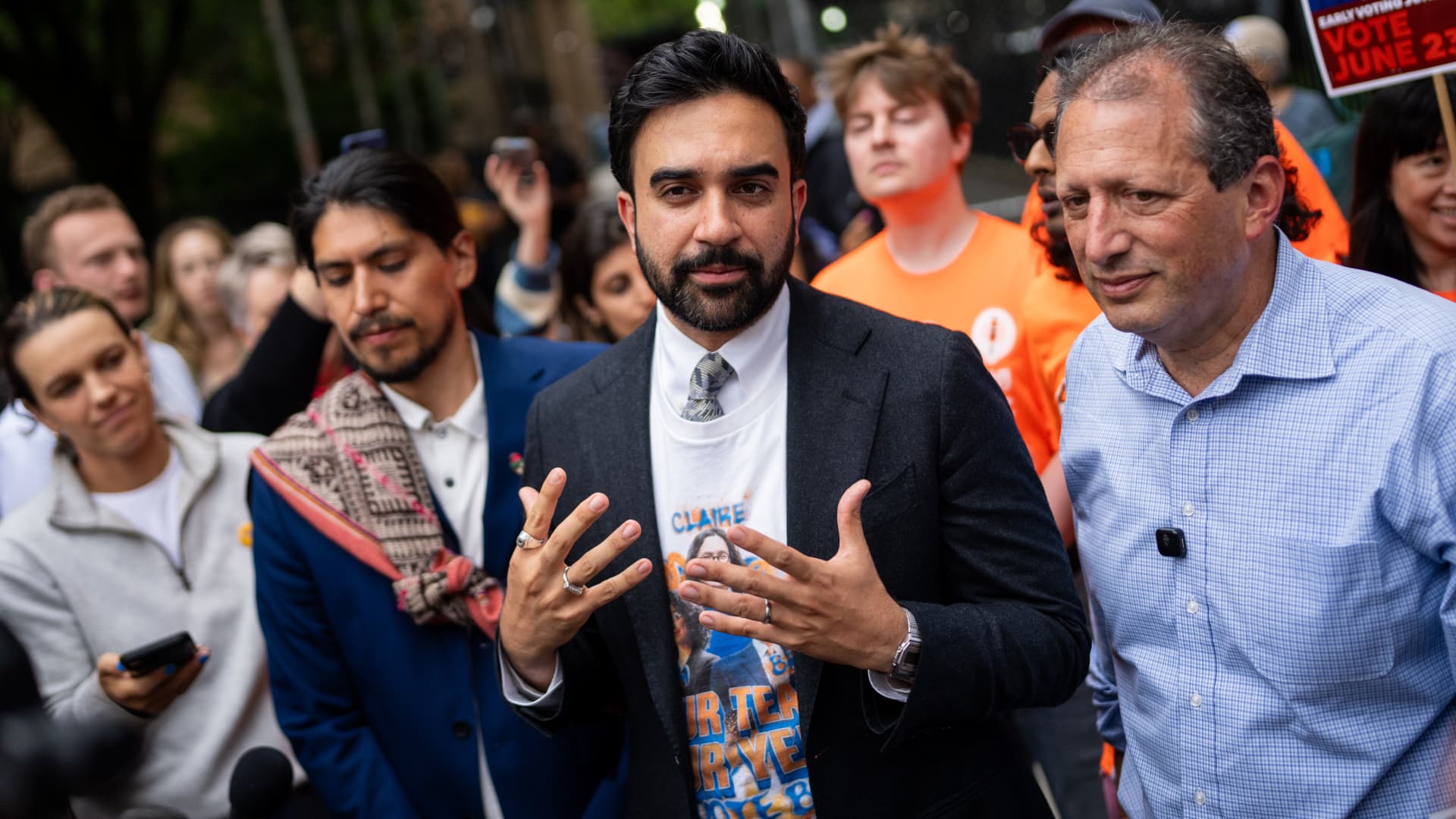
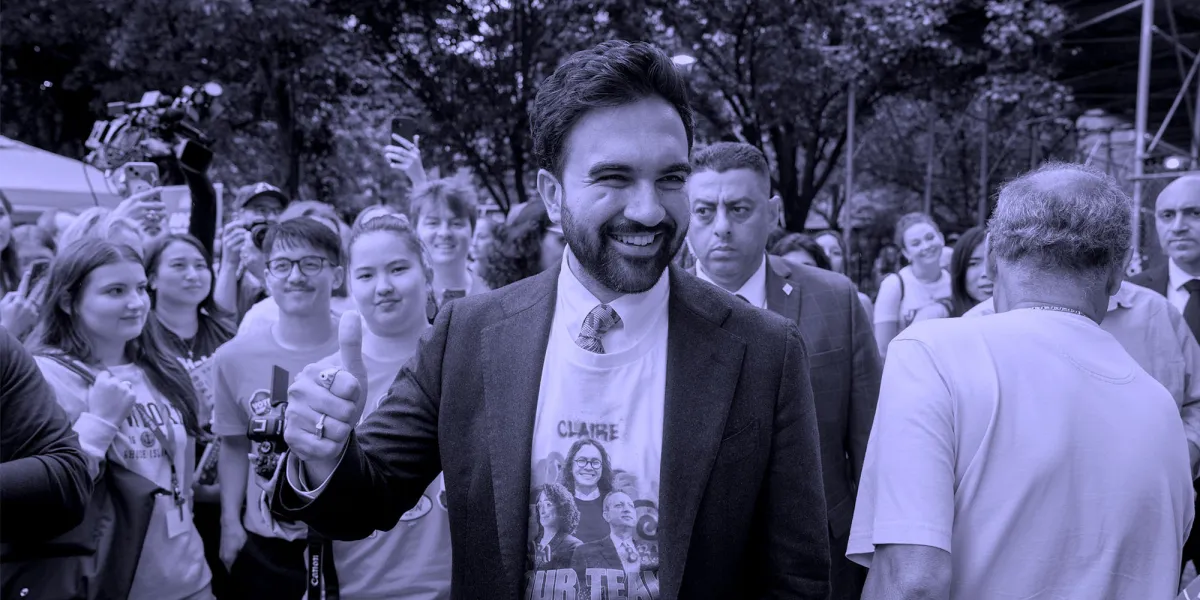
Getting up to speedFollowing the election last November of Zohran Mamdani, a member of the Democratic Socialists of America (DSA), as mayor of New York City, three Mamdani-backed candidates defeated mainstream candidates, including sitting lawmakers, in the Democratic primaries for New York congressional seats on June 23. These candidates’ primary victories, which herald the rise of a socialist-friendly progressive wing in the Democratic Party, have become a major variable in the midterm elections in November and in the next presidential election. But while these democratic socialists are putting on a strong showing in a range of primaries, it remains to be seen whether they will energize voters turned off by the Democratic Party or whether they scare off moderates and rally the base of the Republican Party.We’ve rounded up common questions about this insurgent movement in the US. Q: What kind of organization is the Democratic Socialists of America (DSA), which has been making great strides in Democratic Party primaries? Does it differ from Nordic social democracy? A: As the largest socialist-leaning political organization in the US, its membership exceeded 100,000 in February. It’s less of a political party than a member-based political organization. It generally operates on the periphery of the Democratic Party’s progressive wing while running candidates in Democratic Party primaries.The DSA was founded in 1982 through the merger of the New American Movement, which was borne from the social movements of the 1960s, and the Democratic Socialist Organization Committee. That latter organization was established in 1973 by Michael Harrington, the socialist intellectual and author of “The Other America,” the book credited as having inspired the US government’s “War on Poverty” in the 1960s. The DSA can be regarded as a “big tent” progressive coalition that combines a variety of factions — including traditional socialists, environmentalists, feminists and revolutionary Marxists — around the common denominator of social democracy.Under the slogan of “workers deserve more,” the DSA’s platform advocates universal healthcare, a “green new deal” to tackle climate change, protections for renters, expansion of public services, free higher education and stronger workers’ rights. In addition to these short-term reform goals, the DSA has the long-term goals of implementing democratic control and social ownership of the economy.The DSA is opposed to military interventions, supports the Palestinian cause and advocates an amnesty for migrants. More recently, it adopted a more radical reform plan that includes abolishing the US Senate and drafting a new constitution.“Our vision pushes further than historic social democracy and leaves behind authoritarian visions of socialism in the dustbin of history,” the DSA said in its explanation of democratic socialism. Q: What’s behind the sudden rise of democratic socialists? A: The DSA used to be a minor organization with just a few thousand members. But after the phenomenal performance of Bernie Sanders, who is a democratic socialist, in the Democratic Party’s primaries in 2016, as well as Donald Trump’s reelection as president, young people have been joining in droves.Even in Trump’s first presidency, Democratic voters regarded the DSA’s rapid growth as a temporary aberration. But as Trump’s MAGA (“Make America Great Again”) movement took over the Republican Party, democratic norms began to fray. That led more people inside the Democratic Party to call for a break with moderation and compromise. Bernie Sanders and Alexandria Ocasio-Cortez’s “Fighting Oligarchy” tour brought out large numbers of young people as well as older, anti-establishment voters who had previously supported moderate candidates.These trends were accelerated by the war in Gaza that broke out in October 2023. Israel’s repeated attacks on Palestinian civilians have led 8 in 10 supporters of the Democratic Party to oppose Israel.The party’s leaders and mainstream politicians have maintained their pro-Israel stance, either out of intimidation or genuine sympathy for the truculent stance that supporting the Palestinians amounts to antisemitism. Those politicians were easy targets for the American Israel Public Affairs Committee (AIPAC), a pro-Israel lobbying group that wields immense influence in American politics.But the Democratic Party’s base has aligned itself with democratic socialists who call out candidates who accept AIPAC donations. All the democratic socialist candidates who prevailed in the party’s New York primaries rallied the base by framing the election as a referendum on Israel and AIPAC.Bernie Sanders’ ardent young fans during the 2016 primaries may be entering middle age, but many retain their socialist leanings. Democratic socialism has taken root as the predominant sentiment of a generation.Over the past 10 years, democratic socialists have built their strength through grassroots activities in major cities. Now they’ve extended their sway beyond urban districts largely populated by young people and renters to whole cities. That’s demonstrated by Mamdani’s election as mayor of New York City and by Janeese Lewis George’s victory in the Democratic primary for mayor of Washington, DC (which all but guarantees her victory in the general election). Q: Democratic socialists’ election victories can’t be entirely explained by our current conditions. What’s behind their mass appeal? A: Basically, it boils down to what has been dubbed “sewer socialism.” Socialists used to obsess over metanarratives such as historical justice and criticism of the market economy. But Mamdani and other democratic socialists running for office today are focusing on public services that have a direct bearing on people’s lives. A good example of this is Mamdani’s slogan of “affordability.” He’s taking aim at such issues as public transportation, rent, minimum wage, health insurance, tuition and public schools.These issues are being foregrounded in a mass political movement that relies on party members. A face-to-face campaign run by a grassroots organization has cracked the code of elections that used to be defined by political advertisements funded by rich donors and elite politicians.A case in point is the Democratic Party primary in New York’s 7th Congressional District. Brooklyn borough president Antonio Reynoso, who was progressive-leaning, relied on big-money donors. But democratic socialist Claire Valdez won a decisive victory with a human-centric approach that mobilized the party members who actually live in the district. That represented the triumph of a disciplined left that focused on workers and other voters without having to answer to donors.Q: Who are some of the main democratic socialists who are either poised to win or have already won? A: Last November, around the time Mamdani was elected mayor of New York, democratic socialist Katie Wilson, a public transportation activist, won the mayoral election in Seattle. Then in the national capital of Washington, DC, you have Janeese Lewis George, a Black woman and council member who secured the Democratic Party’s nomination for mayor in the June 18 primary. In Los Angeles, Nithya Raman, a city council member, won 29.0% of the vote in the primary, advancing to the general election alongside current mayor Karen Bass. If both George and Raman are victorious, democratic socialists will be mayors of the US’ two largest cities and its capital.Current congressmembers Alexandria Ocasio-Cortez and Rashida Tlaib are certain to win in November, along with Claire Valdez, Darializa Avila Chevalier and Brad Lander, who clinched the Democratic Party’s nomination for New York congressional seats. On a state level, Francesca Hong is running in the gubernatorial race in Wisconsin. This Korean American chef-turned-assemblywoman has placed first among candidates in the Democratic Party’s gubernatorial primaries in three consecutive polls.As of 2025, there are 250 democratic socialists in public office, 90% of whom were elected since 2019. Primary wins in June are sure to bring those numbers up even further. Q: Most of the democratic socialists have been elected in big cities and other Democratic strongholds. Some people question how viable their candidacies are in tight races and rural areas, and say they could end up giving Republicans a leg up. A: That’s the question. Political analysts warn that democratic socialists trying to emulate Mamdani’s victory outside of the solidly blue New York City are in for a surprise, and could even create rifts in the Democratic Party by alienating white middle-class moderates and Jewish members of the base. Trump has ridiculed the Democratic Party as having been taken over by communists in an attempt to rally the Republican base while simultaneously winning over independents and moderates that could have otherwise leaned Democratic. However, others say that democratic socialist candidates can more than make up for any lost moderates by bringing in young voters and non-white voters who had given up on the Democratic Party. The fact that Mamdani has defied moderates’ fears and is doing a competent job running New York City could also help democratic socialists in their races. In that sense, Francesca Hong’s campaign for governor of Wisconsin will be an acid test for the movement. While so far democratic socialists have pulled off victories in major cities or heavily blue districts, Hong is running in a deeply purple Wisconsin. Hong is often citing the fact that Bernie Sanders won 71 or 72 counties in Wisconsin during the 2016 primary. Now, the democratic socialists are far more established and are generally viewed positively by regular voters. November will be an important test of whether democratic socialism can establish a real foothold in American politics. By Jung E-gil, senior staff writerPlease direct questions or comments to [english@hani.co.kr]