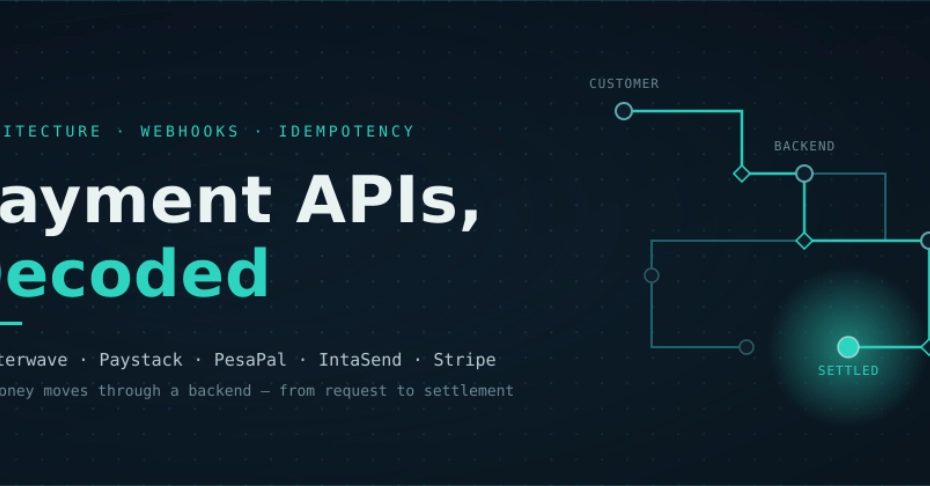
If you've integrated a payment API before, you've probably followed a quickstart guide, pasted in a secret key, hit an endpoint, and shipped it. It works — until a webhook doesn't fire, a customer double-clicks "Pay Now," or a refund silently fails and support gets flooded with tickets.
This article isn't a quickstart guide. It's an attempt to explain why payment APIs are built the way they are,the failure modes they're designed around, and the tradeoffs different providers make — using five real providers as concrete reference points: Flutterwave, Paystack, PesaPal, IntaSend, and Stripe.
If you're a backend engineer who's touched one payment API and wants to understand the category, not just the vendor, this is for you.
1. What a Payment API Actually Is
A Payment API is a service that lets your application move money between two parties — a customer and a merchant — without your application ever directly touching a bank's core systems, a card network's rails, or a mobile money operator's ledger.