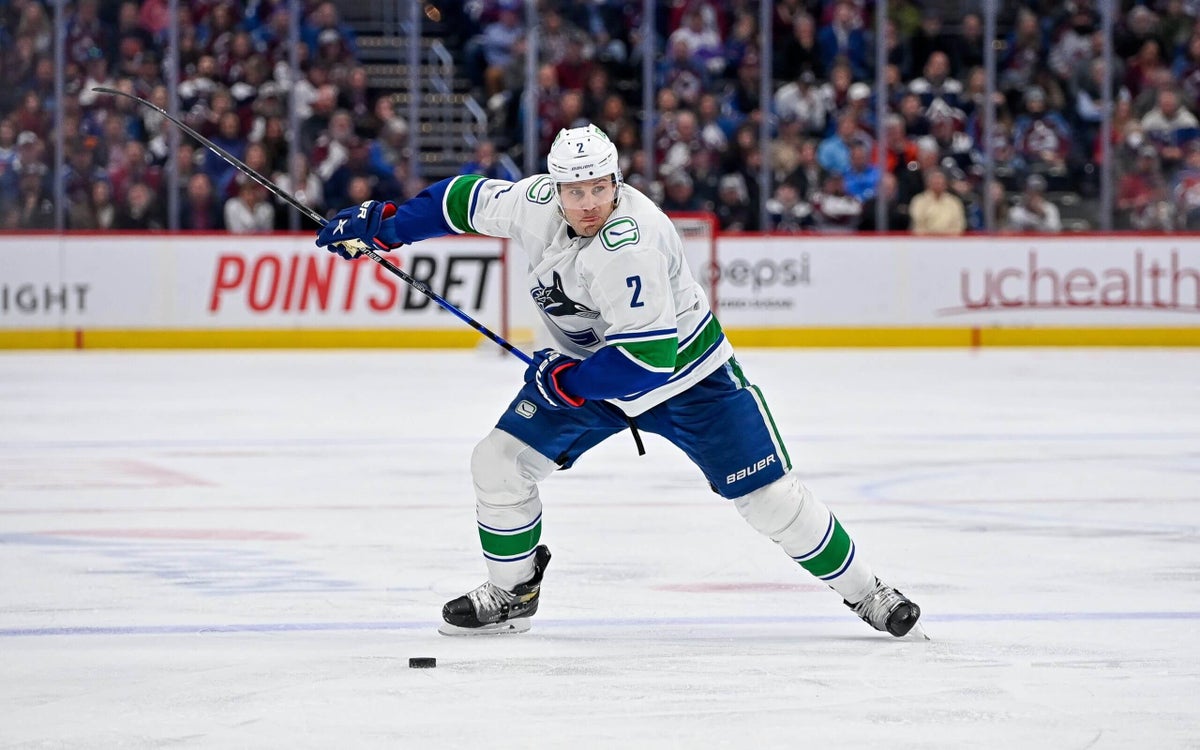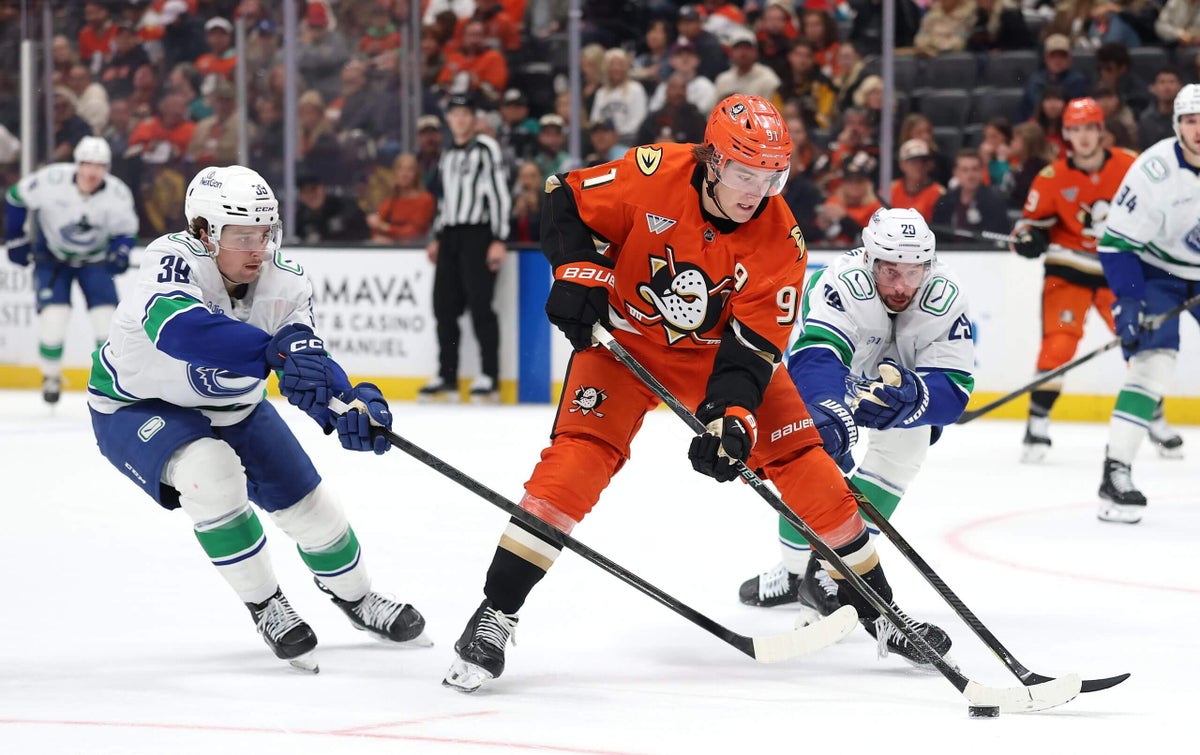
It’s not quite the dog days of the Vancouver Canucks’ offseason, but we’re getting there in a hurry.On Friday, we dipped into the VIP mailbag to answer your offseason questions, but we received so many quality submissions from our subscribers that we wanted to double-dip and answer even more of them.What does a successful 2026-27 season look like for the Canucks? How does Marco Rossi fit into this rebuild long-term? What does the Leo Carlsson situation tell us about big-picture rebuilding strategy in the cap growth era?We get into all of that and more in part 2 of our Canucks offseason mailbag.Note: Submitted questions may be edited for clarity and style.NHL offer sheets are just businessSean Gentille and Sean McIndoeHow do you see Marco Rossi’s future in Vancouver? What will be his role in the next year(s)? How long will he stay? — Markus O.When Rossi returned from injury in late February, he produced 20 points in Vancouver’s final 25 games while quarterbacking a legitimately dangerous first power-play unit. That production, pro-rated over 82 games, would make Rossi a 66-point centre.There’s upside for him to do even more than that, too, given how sparingly he was utilized at five-on-five (he played fewer five-on-five minutes than Teddy Blueger, absurdly, toward the tail end of Adam Foote’s one season as Vancouver’s head coach).This season, I genuinely think the Canucks consider Rossi as their first-line centre. He had legitimate chemistry with Brock Boeser, and I think that left wing spot is probably the best place to park Jake DeBrusk next season, if he isn’t dealt this summer.As for Rossi’s future, he has two seasons remaining on his bridge contract and will be an arbitration-eligible restricted free agent on the expiry of his contract. That’s suboptimal, of course, because Rossi is likely to get significant opportunity and produce over the next two seasons. He’ll probably have an enormous amount of leverage as a result of his projected role, productivity and the fact that he’s legitimately good.That latter point is where this becomes tricky. Rossi is underrated and probably has more actual hockey value than he has exchange value. Because he’s undersized, however, the best way for his exchange value to catch his actual hockey value is for him to succeed in playing a big role for a team that wins in the playoffs, which he’s unlikely to have the opportunity to do in Vancouver.Navigating this tension is the key for Vancouver in optimizing Rossi’s value. He’s a perfect piece for the rebuild for this season, and next, there’s no question about that, but the club will need to be careful about managing his third contract.In my view, you probably need to make a proactive bet in either direction within the next 12 months.You either strongly consider exploring the trade market for Rossi at the trade deadline in 2027 or in the offseason. Or you commit to signing him to a long-term extension in July 2027 as soon as he becomes extension eligible, on the theory that his leverage will only go up, and the market for productive top-six centres is only going to keep inflating as the cap continues to rise.My lean, given that Rossi will be 27 when his third contract kicks in, and that Vancouver’s next great first-line centre might be a half-decade out from arriving in any event, is that the optimal strategy is to let Rossi succeed and produce in a top-of-the-lineup role this season. If you get a mega offer for him at the deadline, great, but in all likelihood, I suspect you’ll be better off attempting to take care of him proactively with a five- or six-year contract extension next summer and paying extra in salary and cap hit to avoid cumbersome no-trade and no-move protections on that deal.With the Leo Carlsson offer sheet sending shock waves through the hockey world, what are the takeaways for the Canucks? Other than the obvious: sign your young players as early as possible? — Raphael F.The big takeaway from the Carlsson situation is an unfortunate one from a Canucks perspective. After years of the Canucks charting a congenitally impatient course, living day to day and eschewing the sort of long-term planning required of championship teams, what the Carlsson offer sheet properly signals is the end of the patient rebuilding era in the NHL.The evidence of this extends well beyond the Anaheim Ducks. You’re seeing teams grapple with this new reality in Chicago, where Connor Bedard remains unsigned (and is now injured), motivating the Blackhawks to attempt to short-circuit their ascendance with reckless trades for the likes of Bowen Byram. You’re seeing it too in San Jose, where Mike Grier has committed an unholy amount of cap and asset resources to bring in Jacob Trouba, Darnell Nurse, Mason Marchment and Kiefer Sherwood at inflated salaries over the past 12 months.
Canucks mailbag, part 2: Leo Carlsson and the end of the patient rebuild
It's not quite the dog days of the Canucks' offseason, but we're getting there in a hurry.
2,119 words~10 min read