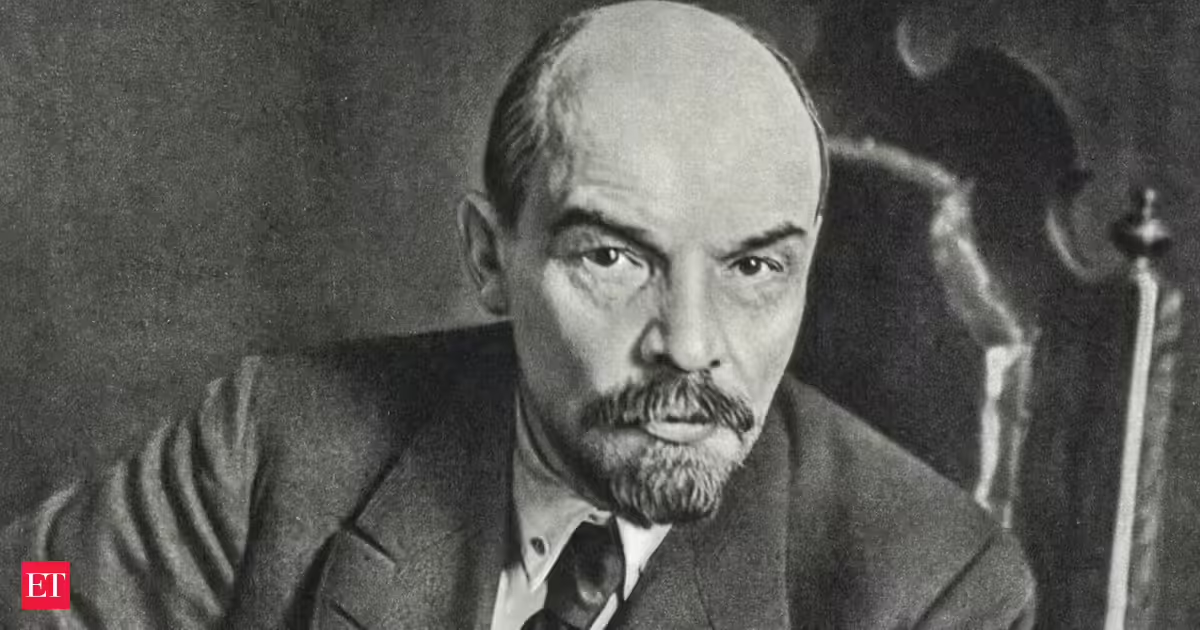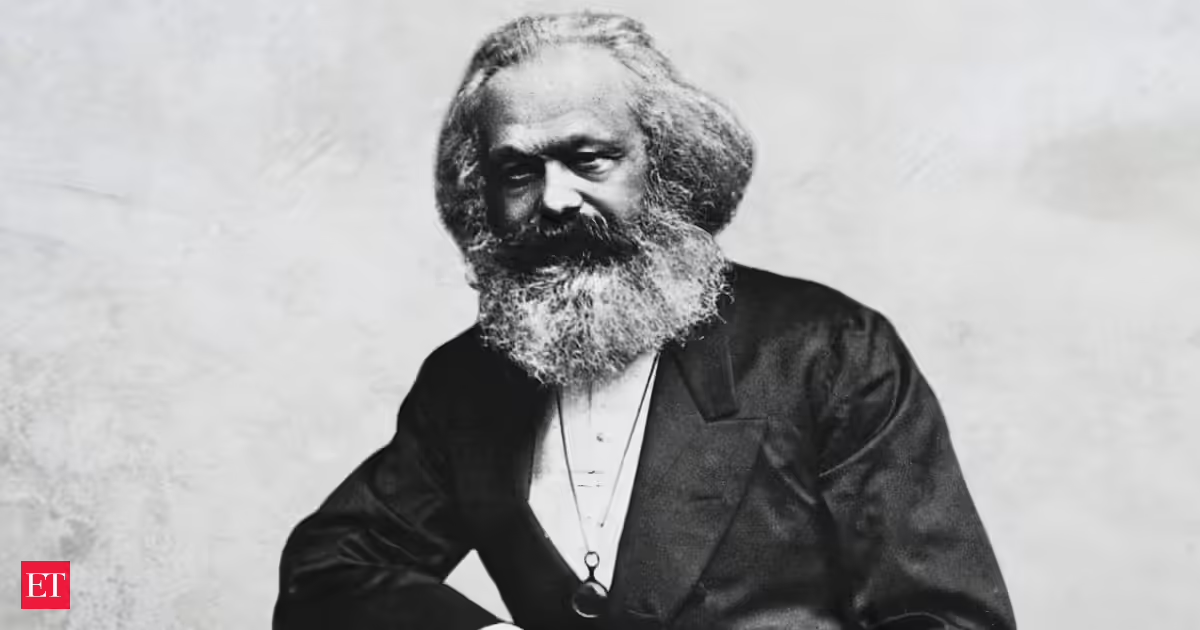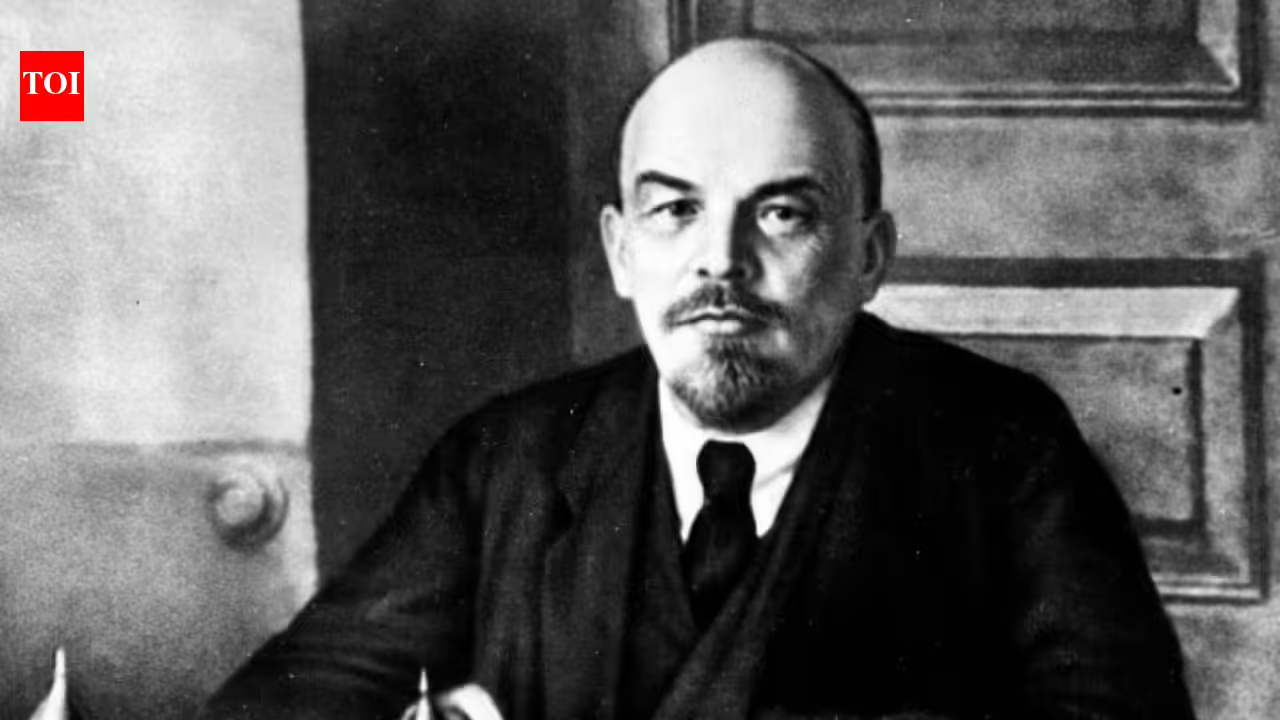
Vladimir Lenin (AP file photo)Few political quotes have captured the idea of revolutionary change as powerfully as Soviet leader Vladimir Lenin's remark, "Sometimes – history needs a push." The line reflects the Bolshevik leader's belief that history does not always move forward on its own and that decisive action is sometimes needed to bring about political and social transformation.The quote has become closely associated with Lenin's revolutionary philosophy and is often cited in discussions about leadership, activism and moments of sweeping historical change. While supporters view it as a call for bold action in pursuit of progress, critics argue that it also encapsulates the mindset that justified the use of force in achieving political goals.What did Vladimir Lenin mean?The phrase suggests that societies can reach moments where existing political or economic systems become incapable of reforming themselves. In such situations, Lenin believed that determined individuals or organised movements could accelerate historical change.For Lenin, the "push" was not merely symbolic. It referred to organised political action that could overthrow an existing order and replace it with a new system. The quote embodies the marxist belief that history progresses through conflict between social classes, and that revolutions can hasten inevitable historical developments.Over time, however, the quote has also taken on a broader meaning. Today, it is frequently used outside politics to suggest that major change—whether in society, business or personal life—often requires courage, initiative and decisive action.Who was Vladimir Lenin?Born as Vladimir Ilyich Ulyanov in 1870 in Simbirsk, Russian Empire, Lenin emerged as one of the most influential political thinkers and revolutionaries of the 20th century. Lenin was also the founding father of USSR that dominated the world for decades. Inspired by the writings of Karl Marx, he became a leading figure in the Russian revolutionary movement after years of political activism and exile.In 1917, Lenin led the Bolsheviks during the October Revolution, which overthrew Russia's provisional government and paved the way for the creation of the world's first socialist state. He served as the head of the Soviet government until his death in 1924.His writings on imperialism, class struggle and revolutionary organisation continue to influence political thought across the world.The revolution that changed historyLenin's leadership transformed Russia during one of the most turbulent periods in its history. The Russian Empire had been weakened by economic hardship, political unrest and the First World War. Public dissatisfaction with Tsar Nicholas II led to the February Revolution of 1917, forcing the monarch to abdicate.Months later, the Bolsheviks seized power under Lenin's leadership in the October Revolution. The new government withdrew Russia from World War I, nationalised industries and redistributed land. However, the revolution also triggered a brutal civil war between the Bolsheviks and their opponents, resulting in millions of deaths through fighting, famine and disease.Following the Bolshevik victory, the Union of Soviet Socialist Republics (USSR) was formally established in 1922, fundamentally reshaping global politics for much of the 20th century.A legacy that remains deeply contestedTo supporters, Lenin was a visionary who challenged monarchy, promoted workers' rights and laid the foundations of a socialist state. Across many countries, he remains an important figure in left-wing political thought.Critics, however, argue that his government curtailed political freedoms, suppressed opposition and established institutions that later enabled widespread repression under Joseph Stalin. Historians continue to debate the extent to which Lenin's policies contributed to the authoritarian character of the Soviet state.Regardless of these differing perspectives, Lenin remains one of history's most consequential political figures. His statement, "Sometimes – history needs a push," continues to resonate because it captures a timeless debate: whether meaningful change emerges gradually through reform or whether extraordinary moments demand bold and decisive action.
Quote of the day by Vladimir Lenin: 'Sometimes – history needs a push'
Few political quotes have captured the idea of revolutionary change as powerfully as Soviet leader Vladimir Lenin's remark, "Sometimes – history needs a push." The line reflects the Bolshevik leader's belief that history does not always move forward on its own and that decisive action is sometimes needed to bring about political and social transformation.
608 words~3 min read