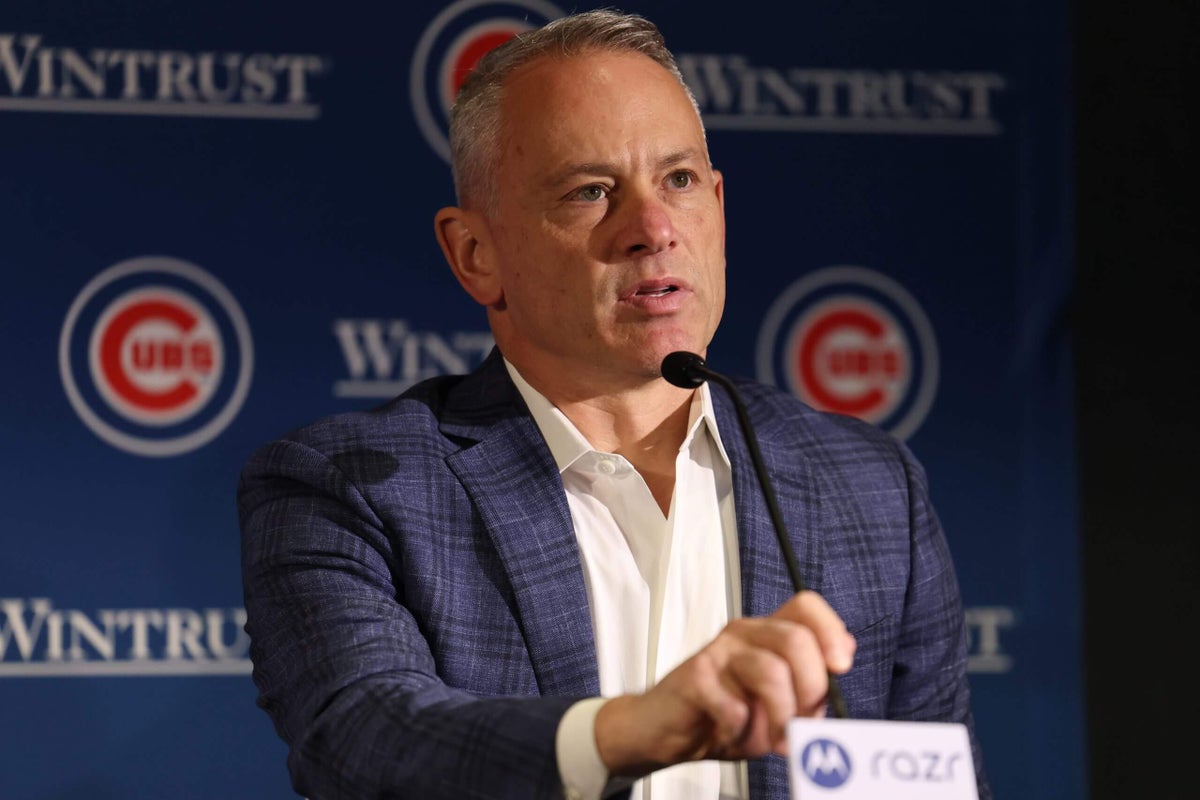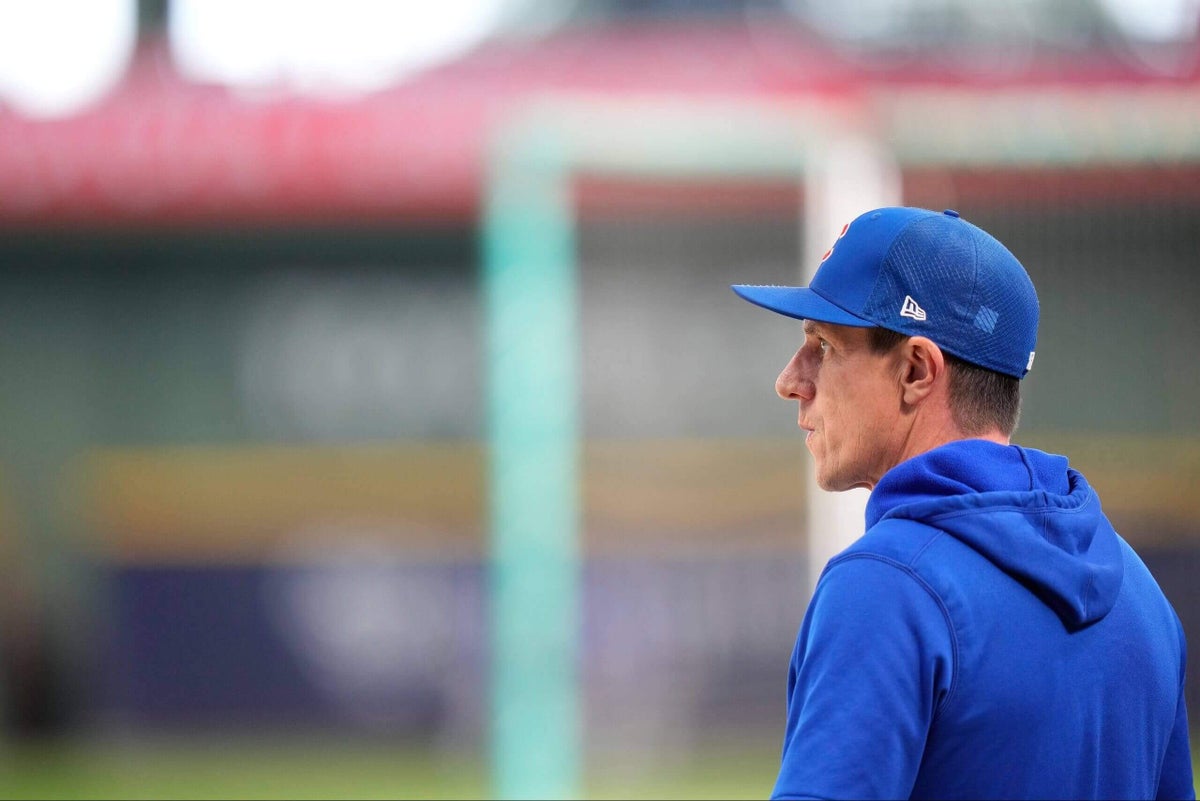
Even with a pitching staff that constantly feels under siege, the Chicago Cubs entered the final weekend before the All-Star break on pace to win 90 games — and finish well behind the Milwaukee Brewers in the National League Central race.“We’ve got a decent record,” Cubs manager Craig Counsell said before Friday night’s 4-0 loss to the Cincinnati Reds at Great American Ball Park. “We put ourselves in a pretty good position. That doesn’t guarantee us anything going forward.”That makes the Aug. 3 trade deadline a big opportunity for Cubs president of baseball operations Jed Hoyer and his front office, as well as the obvious topic of your questions, which have been lightly edited for clarity.Among Cubs who have appeared in games with the MLB club this season, who is the most likely to be traded: Kevin Alcántara, Matt Shaw, Pedro Ramírez or Moisés Ballesteros? — Corey B.Sharma: Choosing between those four names, Alcántara would be the most likely to be traded. The other three have at least shown flashes that they belong on the big-league roster. Alcántara has immense talent and a high ceiling, but he just hasn’t gotten a chance to play regularly. When he has, he hasn’t shown the power upside that he has displayed in the minors. While he has a .296 ISO at Triple A this season, he’s yet to get an extra-base hit in 38 MLB plate appearances spread across three years.At his best, Alcántara is a plus defender in center field with speed on the bases and power at the plate, but his mistakes on the bases this season have limited him to being used solely as a bat against lefties. He hasn’t done enough in those moments to force the issue and earn more playing time. That and the fact that the outfield has three everyday players has made it feel like Alcántara is the odd man out. He’d obviously have a shot at winning a roster spot next year with Seiya Suzuki and Ian Happ both pending free agents, but he is not a lock to receive everyday playing time.Who shifted in Keith Law's last 2026 mock draft?Keith LawOne could argue that the positionless Ballesteros could be available, but the Cubs still believe in his bat and hope he’ll continue to develop behind the plate. Shaw continues to be valuable as a versatile defender and has shown he can hit when given the opportunity. Ramírez is similar to Shaw but is a switch-hitter with a little less power upside. If there’s a bigger deal to be made, perhaps any of these players could be moved, but Alcántara seems most available.Can the Cubs truly justify dealing prospects and/or Shaw, considering they really are not World Series contenders? — Kevin F.Mooney: The Toronto Blue Jays were only five games over .500 by late June last year, and they finished that month in third place in the American League East. Toronto’s negative run differential at that point also did not portend a deep playoff run. The Blue Jays wound up pushing the Los Angeles Dodgers to the 11th inning of Game 7 in the World Series.Considering the conservative manner in which Chicago’s front office traditionally operates — as well as the club’s long-shot odds to win the division and secure a first-round bye in the playoffs — it’s hard to imagine the Cubs trading for Detroit Tigers ace Tarik Skubal when he can become a free agent after this season.The track record also shows that Hoyer is an active buyer whenever the team is in playoff contention. Cubs chairman Tom Ricketts also reminded reporters in spring training that this ownership group is willing to add to the payroll as the season unfolds, even with projections already above the $244 million luxury-tax threshold.“I say this every year, for the last 16 seasons,” Ricketts said in February, “there’s always flexibility at the deadline.”The Cubs aren’t necessarily looking to unload Shaw, but moving some young talent to acquire a starting pitcher with years of club control makes sense, given the lingering health questions surrounding Ben Brown, Justin Steele and Cade Horton. Shota Imanaga, Matthew Boyd, Jameson Taillon and David Peterson are all positioned to become free agents after this season.There’s a big difference between mortgaging the farm system for a rental player and making good deals to supplement a playoff contender and plan for the future.Counsell commented in one of your articles recently that they’re going to look internally for bullpen solutions. Do you interpret that to mean that the Cubs are out on all but the cheapest relief options in trades and fully focused on solving the rotation, or could we see a surprise deal for a reliever? — M S.Mooney: The messaging from Counsell and Hoyer has stressed that the Cubs don’t anticipate any major trades until much closer to the Aug. 3 deadline. That’s an industry-wide expectation. Unique circumstances drove the Peterson deal with the New York Mets in late June. The Cubs are preparing as if they will have to get through most, if not all, of July before making a significant external addition.The Cubs are always looking for internal answers and scanning the edges of other clubs’ rosters, recognizing that bullpens are inherently volatile. You never know when a discarded pitcher or a Triple-A reliever might need a change of scenery or a slight mechanical adjustment. Health is always a factor.This constant process of churning through pitchers has yielded contributors such as Ryan Rolison and Trent Thornton, but it shouldn’t stop the Cubs from inquiring about top relievers who might get traded this summer.Given the limited supply of available starters and widespread demand for rotation help — plus the outsized importance of bullpens in the playoffs — it would be surprising if the Cubs didn’t acquire an established reliever who would be trusted in those high-leverage moments.“We’re not going to come back from the (All-Star) break and be finished with the injuries,” Counsell said. “We’ve still got injury issues. Every team has some injuries, but we’ve got a ways to go to get back to what I consider medium strength. We’re still at a pretty big deficit.”Aside from apparently destroying arms in the starting rotation, what exactly does the “Pitching Lab” do? — Michael J.Sharma: Not really a trade deadline question, but the Cubs will lean on their pitching infrastructure to guide their acquisitions at the deadline as they always do, so it fits this mailbag in a way. Let’s address the injury issue before getting to what the Pitch Lab actually is and why it’s a bit misunderstood.The injuries are frustrating; that’s not up for debate. Should the Cubs look into whether there is an organizational issue that needs to be addressed? Absolutely. But it’s important to remember that no team has really solved the issue of pitcher injuries, and there’s no real clear answer on how to keep them healthy.Specifically with the Cubs, there’s no consistent injury to point to. Edward Cabrera pulled a hamstring while stretching for a ball. Boyd hurt his meniscus while bending down playing with his kids. These don’t seem like reasons to blame the org.It’s been a wild year in the injury department, and the Cubs need to make sure there are no issues on their end, particularly with Steele and Horton, both of whom suffered elbow injuries. The most likely answer is simply that this is what happens with pitchers. The Cubs, who have largely been healthy over the years, have been hit hard with bad luck over the last year or so.As far as the Lab goes, pretty much every organization has one. It’s nothing too wild, and there seems to be a misunderstanding of what it is. It’s a place with various tech: wearables, high-speed cameras, force plates, Kinetrax, and other various contraptions. These tools collect data and images and allow coaches to access information that hopefully helps them maximize the talent they have on hand.What’s more important than the information gathering is how the data is used. Do the Cubs have better coaches than other teams? That’s the question that should be asked. They know they need to improve player development in the minors, and they have made changes to get up to speed. We’ll have to see if those changes are effective over the coming years.At the highest level, they have a well-respected group. Pitching coach Tommy Hottovy, assistant pitching coach Casey Jacobson and VP of pitching Tyler Zombro all have excellent reputations. They’ve helped many pitchers find their best selves, and many around the game speak very highly of the group. There’s a reason Drew Pomeranz came back to Chicago and already looks better.This season has been tough. But that they’re still doing as well as they have overall, despite the plethora of injuries, speaks to their ability to innovate and push through difficult moments. People like Hottovy and Zombro will be leaned on at the deadline to identify pitchers they feel are undervalued and can impact the bullpen and rotation.
Cubs trade deadline mailbag: Priorities, prospects and the ‘Pitch Lab’
Who might the Cubs move ahead of the deadline? What will they be looking to add? We answer your trade deadline questions.
1,502 words~7 min read