Before we begin
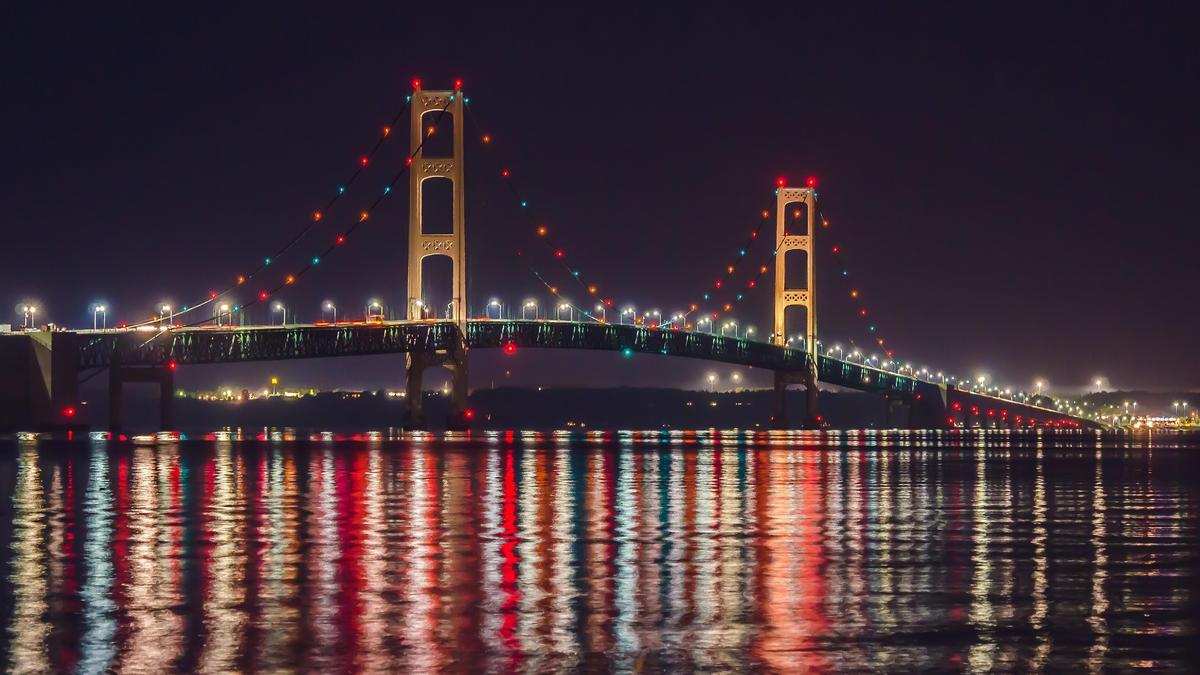
Bear in mind that both Mackinac (as in the name of the bridge and the strait) and Mackinaw (name of a village on the northern tip of Michigan’s Lower Peninsula) are pronounced “Mack-in-awe”.If you are wondering how that works (especially the name of the bridge and the strait), it is because the pronunciation is a nod to the area’s intertwined history that has Native American, French and British influences. The Native American name of the Mackinac Island is Michilimackinac, pronounced with an -awe ending. This Anishinaabe (a group of culturally related Indigenous peoples in the Great Lakes region of Canada and the U.S.) word means “place of the great turtle” as the Native Americans thought that the island looked like giant turtle coming out of the water. When the French exerted control in these regions, they built Fort Michilimackinac on the mainland in what is now Mackinaw City. When converting the Anishinaabe name to French, they spelt it with their silent “c” that is pronounced “aw”.Once the British took control of the fort, the name got shortened to Fort Mackinac, with the -awe pronunciation for the ending. While the island, strait, and the the fort retain the “c” ending, the city, which came later when under the British charge, is spelt “Mackinaw”, in order to reflect the way the word is pronounced in English. ***The Mackinac Bridge is a massive suspension bridge that spans the Straits of Mackinac between Lake Michigan and Lake Huron, thereby connecting the Lower and Upper peninsulas of Michigan. Thrown open to the public in 1957, the bridge nicknamed “Mighty Mac” was able to replace a fleet of nine ferries that carried as many as 9,000 vehicles on a single day. Not to mention clearing the bottleneck that existed before the bridge was built, as traffic pile-ups while waiting for a ferry ride stretched for miles on either side. Even as it continues to perform its main role on a routine basis, its claim to fame now lies in the fact that it is the longest suspension bridge in the western hemisphere. Above and beyond that, it represents a level of aerodynamic stability unseen in suspension bridges that came before it. That’s thanks in large to the innovations introduced by its chief engineer David B. Steinman.Dreams up his realityBorn on June 11, 1886, Steinman’s story starts from the time when he was a newsboy (street vendors of newspapers without a fixed newsstand). Working in the Brooklyn Bridge neighbourhood, Steinman told his friends that he was “going to build bridges like the famous structure that towers above us.” When he recalled this incident much later, he also mentions that “they laughed at me.” Steinman, however, had the last laugh. Growing up in shadows of the Brooklyn Bridge, which had opened in 1883, inspired Steinman to become a bridge engineer. His Ph.D. thesis from Columbia University in 1911 was published as The Design of the Henry Hudson Memorial Bridge as a Steel Arch. A little over 20 years later, Steinman’s thesis became a reality as he built the bridge over the Harlem River and it was thrown open in 1936. Steinman set up a consulting engineering firm in 1923 and remained active with it almost until his death in 1960. In addition to building bridges, Steinman actively involved himself in building theories around better aerodynamic stability of bridges and wrote extensively on the subject. He developed his set of principles for these years before the Tacoma Narrows Bridge collapse in 1940. In the debate that followed the failure of the bridge, Steinman was firm in the belief that it could have been averted and that the builders had not paid heed to his advice. The bridge builderBy 1950, Steinman had designed nearly 400 bridges around the world. It was then that he got a chance to work with the bridge that had inspired him to take up the profession. Steinman obtained a contract to upgrade the Brooklyn Bridge, even as the bridge continued to carry traffic. The bridge’s decks were increased from two to three with the aim of doubling the car-carrying capacity. Working one lane at a time, Steinman accomplished his objective by 1954, affording it another 50-plus years of life before major rehabilitation efforts were carried out this century.