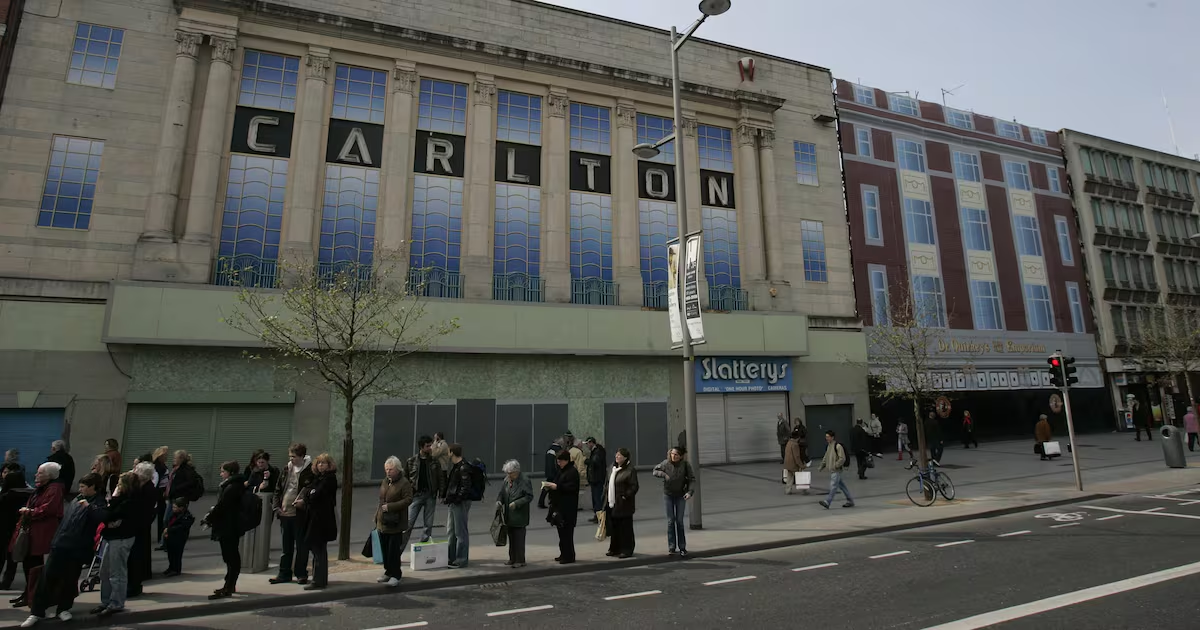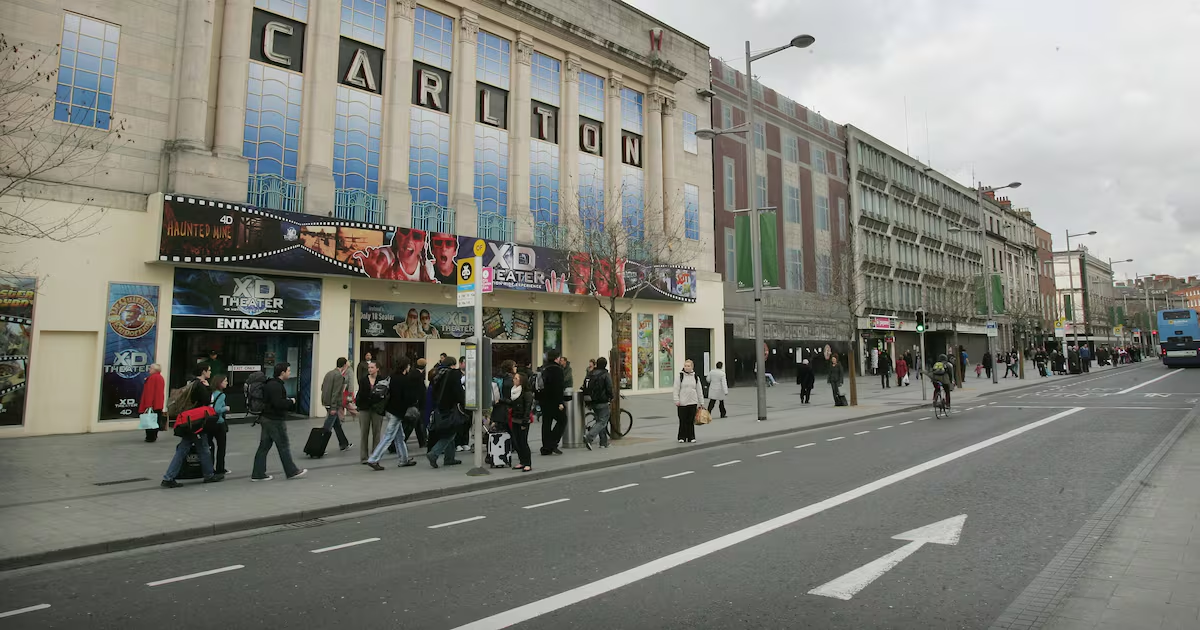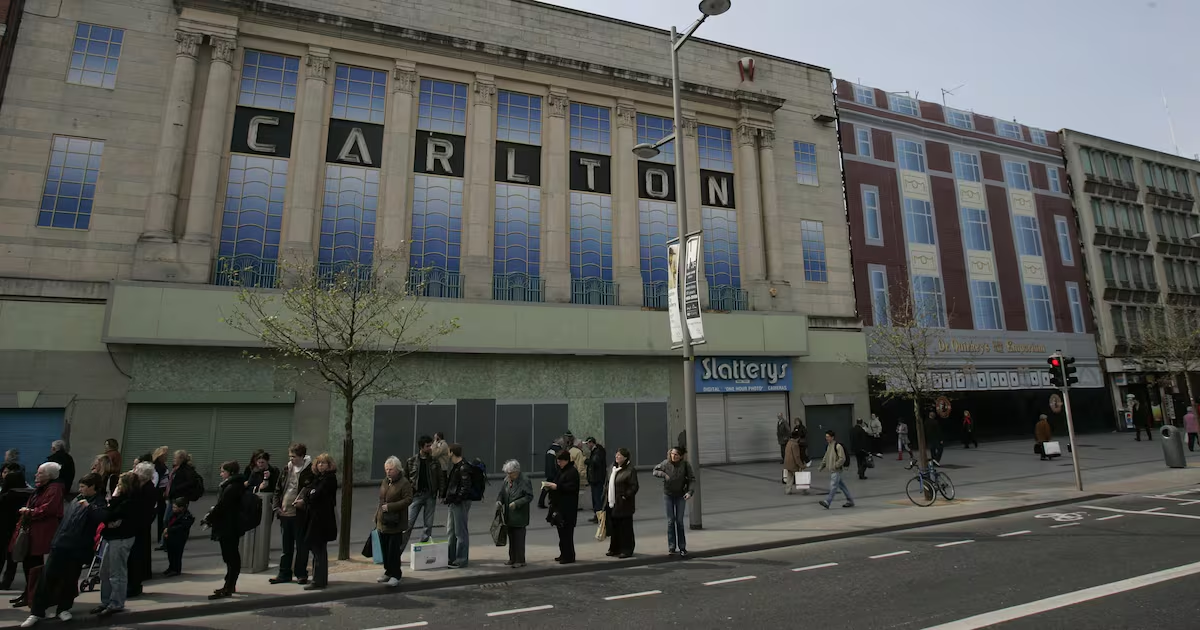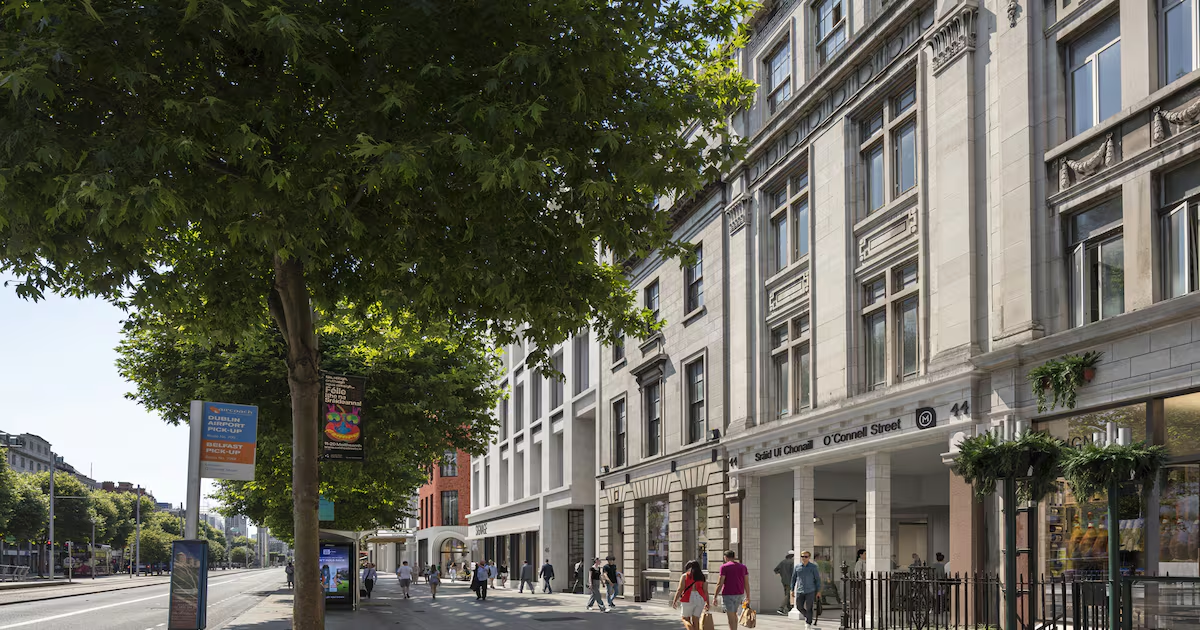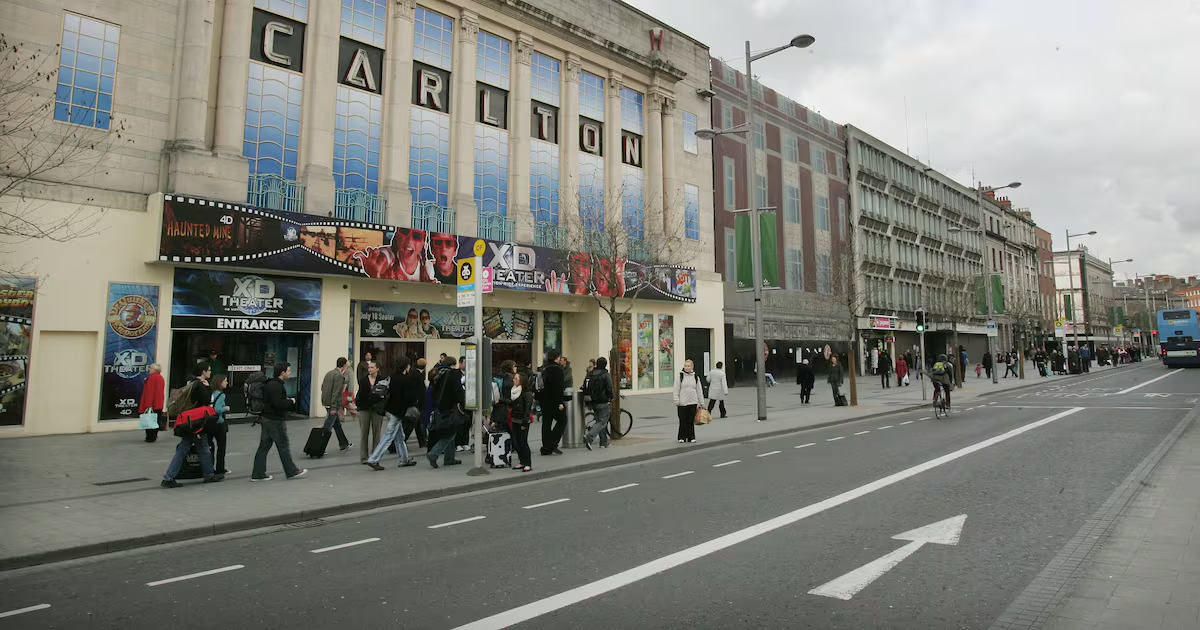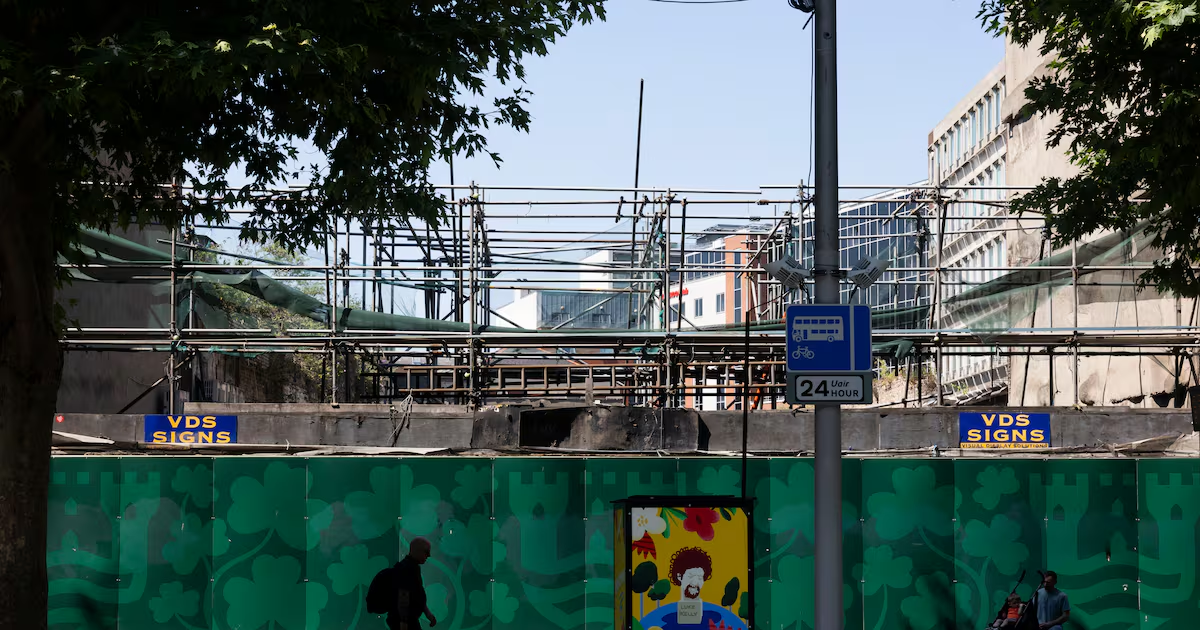
Sometimes you can only start to pick up the trails of a story after it happens. And this is how we can start to interpret the surprise move this week by Transport Infrastructure Ireland (TII) to buy the former Carlton Cinema site on O’Connell Street, Dublin, and some adjacent vacant lots. This was couched as a move connected to the development of the MetroLink railway and a station planned for the site. But there is more going on here. A lot more. Central to this is a plan to redevelop the site to provide housing on Dublin’s landmark thoroughfare – and, as is happening across the housing market, to have the State dive in to drive it all and take on a lot of the risk.Meanwhile, underneath, a station for the giant MetroLink is due to be built. A key test of Ireland’s infrastructure and housing and development ambitions are about to take place in a small area in Dublin’s North inner city. TII may have bought the site. But this development is going to be taken on by a so-called special purpose vehicle (SPV) – a subsidiary company typical in development projects – the establishment of which was announced by the Government in April, to be headed by senior public servant Robert Watt. It is charged with redeveloping key parts of the city centre, particularly around O’Connell Street, following the recommendations of the Dublin City Taskforce.The SPV has not been legally established yet, which is presumably why TII stepped in to make the purchase. Taking on this piece of land was probably one of the key reasons to establish the SPV in the first place, as it provides a legal structure where State and private investment can coexist. The plot between O'Connell Street and Moore Street Note that the day after the SPV was announced, a press release was issued by the then Dublin Lord Mayor, Ray McAdam, a Fine Gael councillor, who called for it to take on the Carlton site. You can either believe he was very prescient or had a sniff of what was planned.The owners of the site, UK developer Hammerson, had received planning permission to proceed with a large development, though part of this was subject to judicial review. The planning documents refer in detail to an agreement to give access as part of this to build the MetroLink station. So why did Hammerson sell and the TII buy? Perhaps the planning and judicial delays – together with the challenging state of the Dublin retail and office markets – had led Hammerson to cool on the project. Had it decided to sell to someone else, TII’s access to the vital site could have come back into question. That was the only clear rationale for the purchase which is directly linked to the MetroLink project, even if TII may also have needed to purchase a portion of the land before it started digging.But the move has a wider significance. The State is now going to lead the development of this area, rather than leaving the above-ground bit – the apartments, shops and offices – to the private sector.Traditionally in such situations, the Government and local authorities have “set up the pitch” via incentives and planning and then hoped that private investors would deliver. But here, as in much of the surrounding area of O’Connell Street and across much of Ireland’s city centres, development has failed to happen.Whether this is due more to Ireland’s seemingly endless planning and court delays or the difficulty in marrying private development with complex city-centre sites is debatable. Both have been on display in the Carlton site, along with lessons in Ireland’s financial and economic history. But the key point is that for the 18 years since the first plan was put forward, nothing has happened.The first plan for the site was drawn up in the Celtic Tiger era when developer Joe O’Reilly’s Chartered Land put forward an ambitious €1 billion proposal including a 40-apartment block tower with a “park in the sky” on its sloping roof. This received planning permission – without the park in the sky – in 2010, but soon after the aftermath of the financial crash meant O’Reilly’s loans went into Nama, the State agency which took loans off the banks’ books. There followed more years of inaction before Hammerson bought the O’Reilly loans from Nama in 2015. It had been working on plans for the site since. As well as Ireland’s planning process, the delays show the complexity of working on these kind of sites, added to in this case by the sensitivities related to 1916 Rising and the National Monument in 14-17 Moore Street. The quite understandable concerns of the Moore Street traders were another factor. Despite all this, the site got planning permission from Dublin City Council and then from An Bord Pleanála in September 2024, though parts of this are subject to a judicial review taken by the Moore Street Preservation Trust, a group involving a number relatives of those involved in the 1916 Rising, and Sinn Féin.This long saga involving two owners and lengthy planning processes has left us in the familiar situation where nothing happens for a long period. A State-led process may be able to navigate the historical concerns better, particularly if it can link in with plans for the GPO itself, about which the Office of Public Works – which has taken on ownership of the site – is to hold a public consultation. State ownership can also let the public sector shape the plans for the site. And here following the national strategy of providing housing in city centres close to transport hubs is central. The new plans are set to put a much bigger emphasis on providing city-centre homes than the Hammerson strategy with – presumably – some of the land sold off to allow associated retail and other commercial development. In a statement reacting to the deal, Watt referred to the opportunity it gave “to increase the supply of high-quality residential housing on O’Connell Street and, critically, build a more vibrant urban environment”. We are seeing this story of deeper State involvement across the housing market, where public investment spending now exceeds €9 billion a year. As in the Carlton site, private money will be part of the story. But the State is taking on more of the financial risk. Let’s hope this finally leads to some investment around O’Connell Street and Moore Street. Just don’t expect any sky parks.
Cliff Taylor: The State is stepping in to revive Dublin’s O’Connell St. Will it succeed?
A key test of infrastructure and housing ambitions is about to take place in the north inner city
1,084 words~5 min read