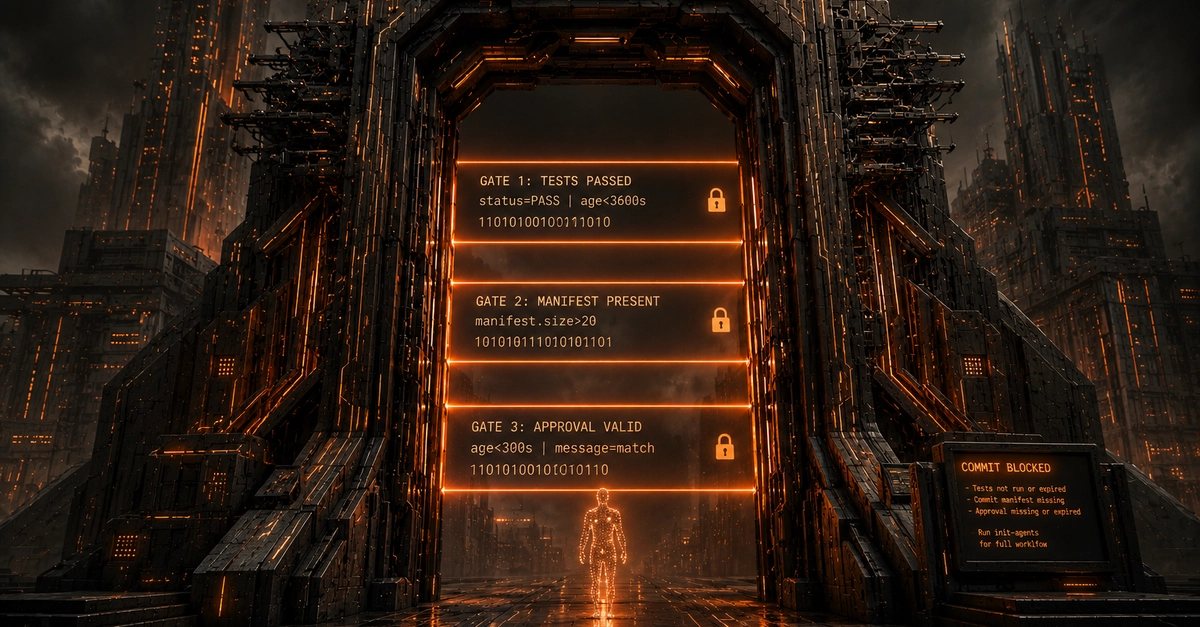
6 sessions, 150 standardized tasks, 2 rule formats. The mechanical gate won. Everything else was noise.
The Question
For two months, I've been building a mechanical verification system for my AI coding agent. File timestamps, regex checks, exit codes — things that don't rely on the AI judging itself. The thesis was simple: AI agents can't reliably self-verify because their self-assessment and task execution share the same decoder distribution. So don't ask them to.
I had published two articles about this. Then I realized: I had no controlled experiment. I had 34 growth-logs of anecdotal evidence. I had "~30% violation rate" — a number I'd never systematically measured. I needed data.
So I designed an experiment. Then an experimental methodologist tore it apart. Then I redesigned it. Then I ran it. Here's what happened.