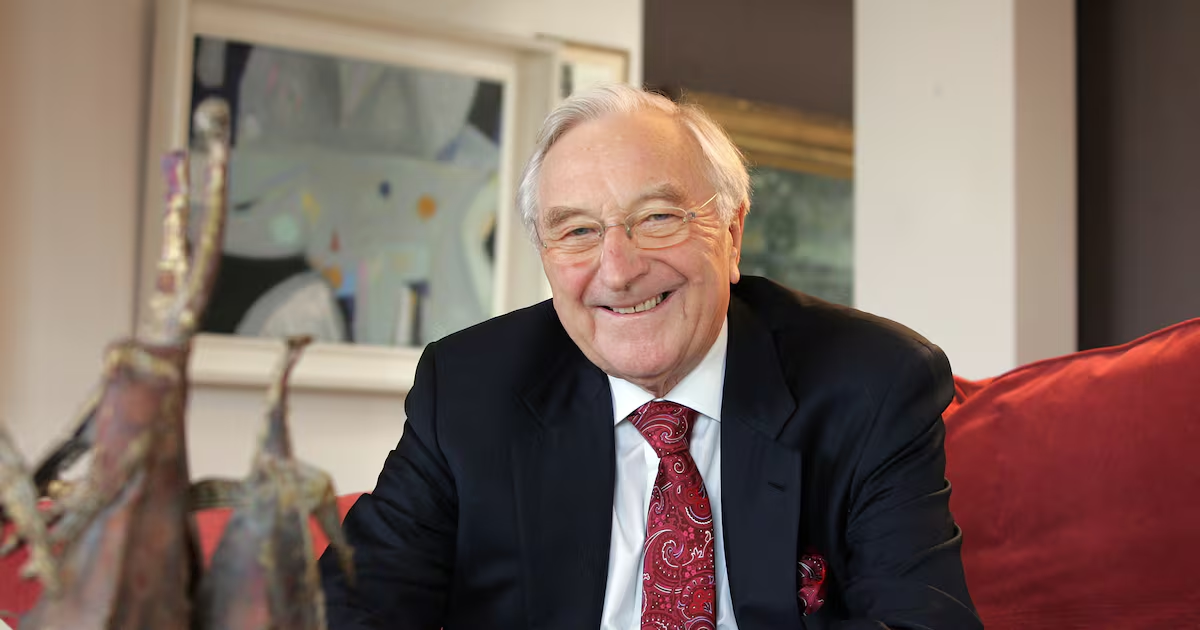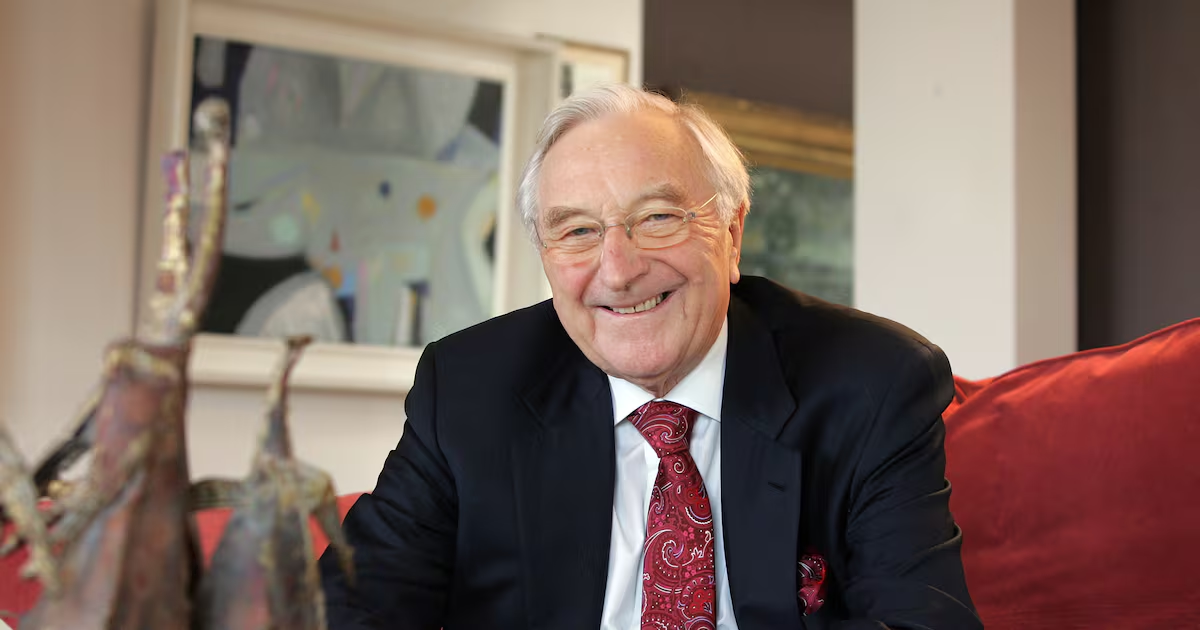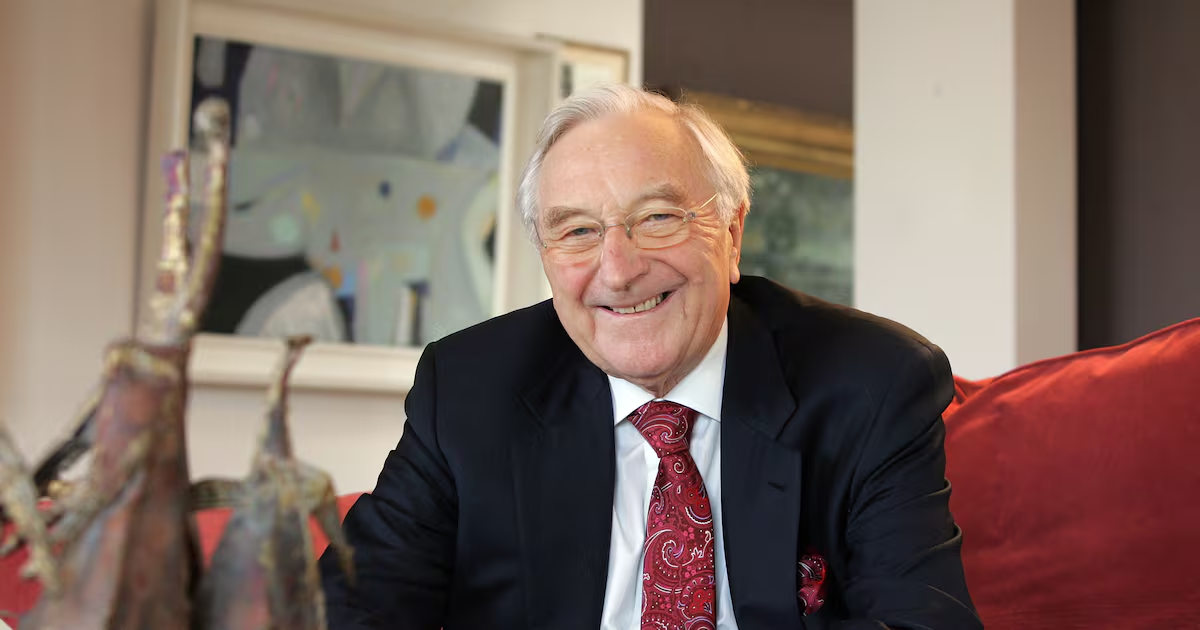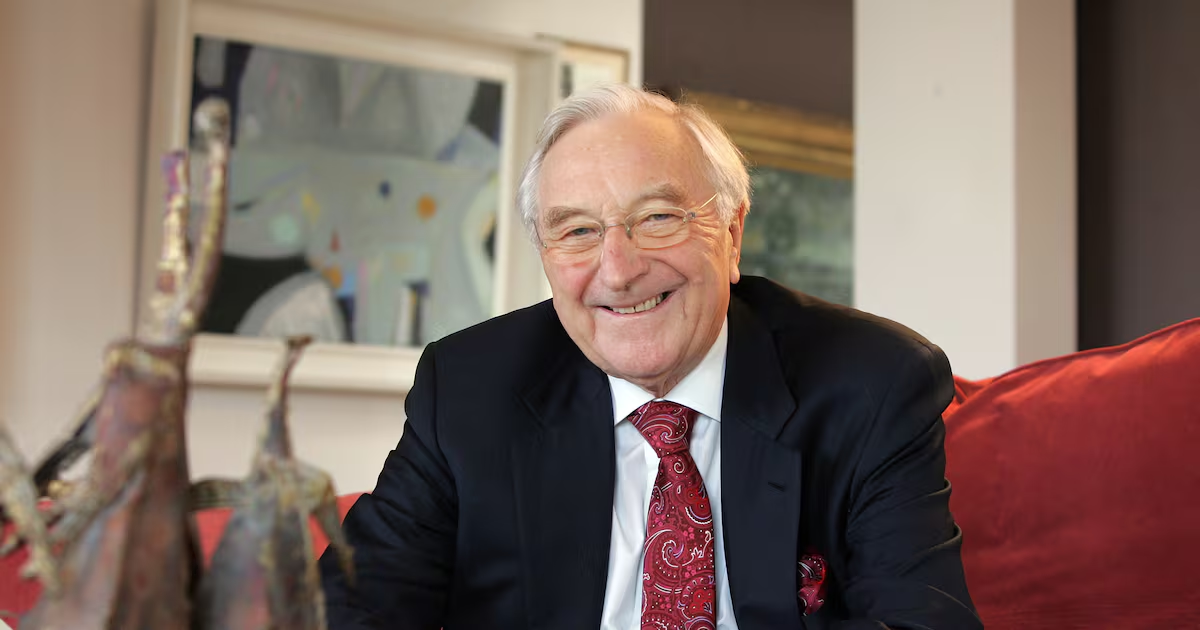
Born: May 2nd, 1939Died: July 3rd, 2026In a showroom for hundreds of pristine electrical products made by his Glen Dimplex group, Martin Naughton had a life-size stainless steel sculpture of an albatross with an oak beak suspended from the ceiling. “The albatross is my hero,” he would say, explaining how the huge seabird could fly great distances without flapping its wings, using wind power.This exemplar of almost mythical efficiency had deep resonance for Naughton, the pioneering industrialist who died aged 87. He made a fortune from radiators, cookers and toasters and became a noted philanthropist. A fervent believer in the power of education to transform lives and society, he gave scores of millions to benefit individual students and universities. His art collection included work by Jack B Yeats, Nathaniel Hone and John Lavery.From a standing start in the 1970s, Naughton built up a privately owned Irish multinational that became the world’s largest electrical heating maker. He went on to make gas and electric fires and flame-effect TV screens. “In many warm countries like in the Middle East, they like the concept of the flame but not the heat,” he said.With more than 8,000 staff, the business embraced consumer brands such as Roberts radio, Walker televisions, Belling cookers, Lec fridges and Morphy Richards toasters – and branched into cooling equipment, medical refrigeration, ventilation and renewable energy. It has factories in Ireland, the UK, France, Germany, the Netherlands, Norway, Australia, New Zealand, China and the US.A battle-scarred survivor of many recessions, Naughton was a Forbes-list billionaire long before his company’s 50th anniversary in 2023. He was not a tax exile but kept finances private, saying only he had an aversion to debt and that the business was always profitable. Annual sales exceed €1.5 billion.“He had enormous skills across wide spectrums of the business: marketing, production, finance. He was very clued in in every area. But he was particularly good with the people who worked for him,” said his long-time business partner Lochlann Quinn in a 2024 interview, “I think everybody who worked for Martin liked him and respected him.”Naughton was “never rushed into judgment” about hiring and firing, Quinn added. “He would buy a company in the morning but it might take him three months to hire somebody and take him maybe a year to fire somebody.”The single-minded son of a garda, Naughton was born in Dublin in 1939 and reared in Dundalk. One of nine (seven surviving) children, he spoke admiringly of his parents’ self-sufficiency. His mother made the children’s clothes. His father built the family home.[ The Irish Times view on Martin Naughton: a remarkable legacyOpens in new window ]Martin Naughton. In time, Naughton made his home at Stackallen House in Co Meath, one of the few surviving early eighteenth-century classical country houses. He bought the house from Margaret Heffernan of Dunnes Stores, refurbishing it at huge expense. Naughton married Carmel McCarthy in 1968. Their children – Fiona, Neil and Fergal – are involved in Glen Dimplex.Naughton’s career spanned the opening of the domestic economy in the Lemass era, 1970s oil shocks, the Troubles in Northern Ireland, the boom times of the Celtic Tiger and its downfall, Brexit and Donald Trump’s threat to open trade.As a young man travelling on the Dún Laoghaire mailboat, he witnessed “distraught fathers” leaving their families behind for work in England. Decades later, a transformed Ireland was rocked by the 2008 crash. Naughton found it “hard to believe a bunch of bankers in three years not only destroyed the great banks in the country but also brought the country to its knees.”Glen Dimplex rode out the crisis but Naughton had never seen anything like it: “It was like someone flicked the light switch and put the lights off, everywhere.”He lamented Brexit as the “most depressing outcome” in his career: “The danger is if Britain is shooting itself in the foot, it could ricochet and shoot us in the head.”He rejected Trump’s protectionism. “We all know nobody wins a trade war. We’ve all become wealthy because of global trade, the free trade.”Naughton had abundant determination, an engineer’s eye for detail and a supercharged work ethic that led him to avoid weekend breaks or holidays.“It went on for too long,” he said in old age of the “total commitment” he imposed on his younger self. In his early days in business, the sight of an empty factory during the summer holiday shutdown was said to leave him almost crestfallen.He studied mechanical and production engineering in Southampton, England. He worked for 12 years as an industrial engineer and plant manager, taking a post with US firm SPS in Shannon in 1961 and moving later to appliance company AET in Co Louth.Headhunted to return to Shannon, he was persuaded by Seán Lemass – a director of AET’s parent after retiring from politics – to stay with AET. It was a fateful decision. When AET ran into trouble after the Anglo-Irish free trade agreement, Naughton’s rescue plan was rejected.Martin Naughton. Photograph: Alan Betson
Martin Naughton obituary: Glen Dimplex founder, pioneering industrialist and philanthropist
Industrialist built one of Ireland's largest private companies and gave millions to education and the arts
1,228 words~6 min read