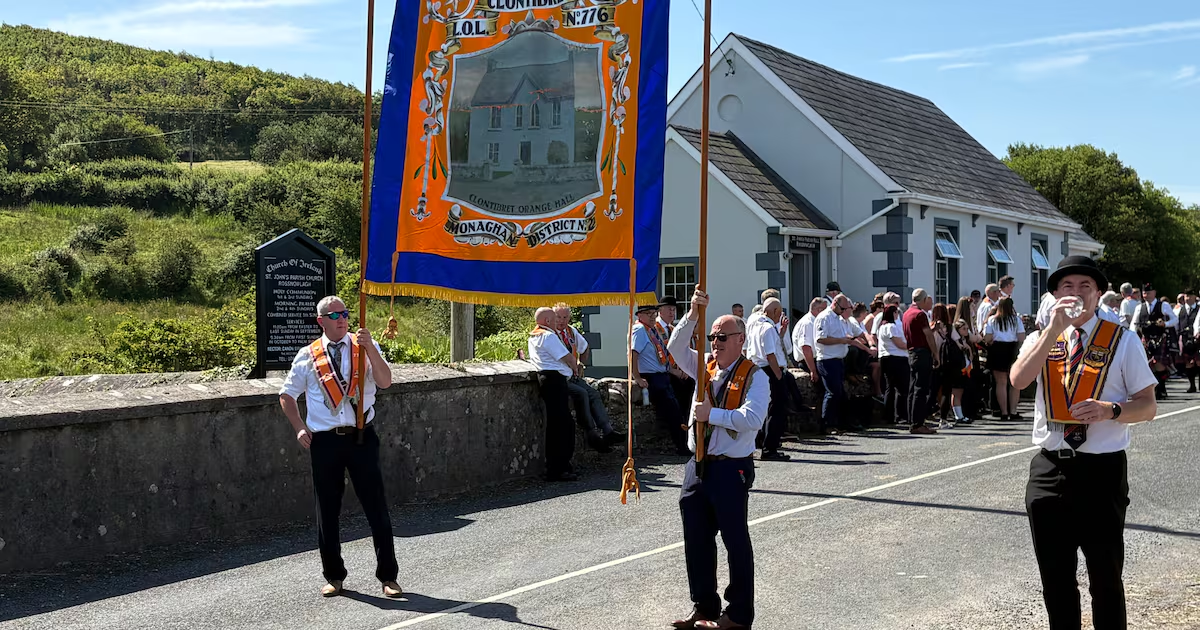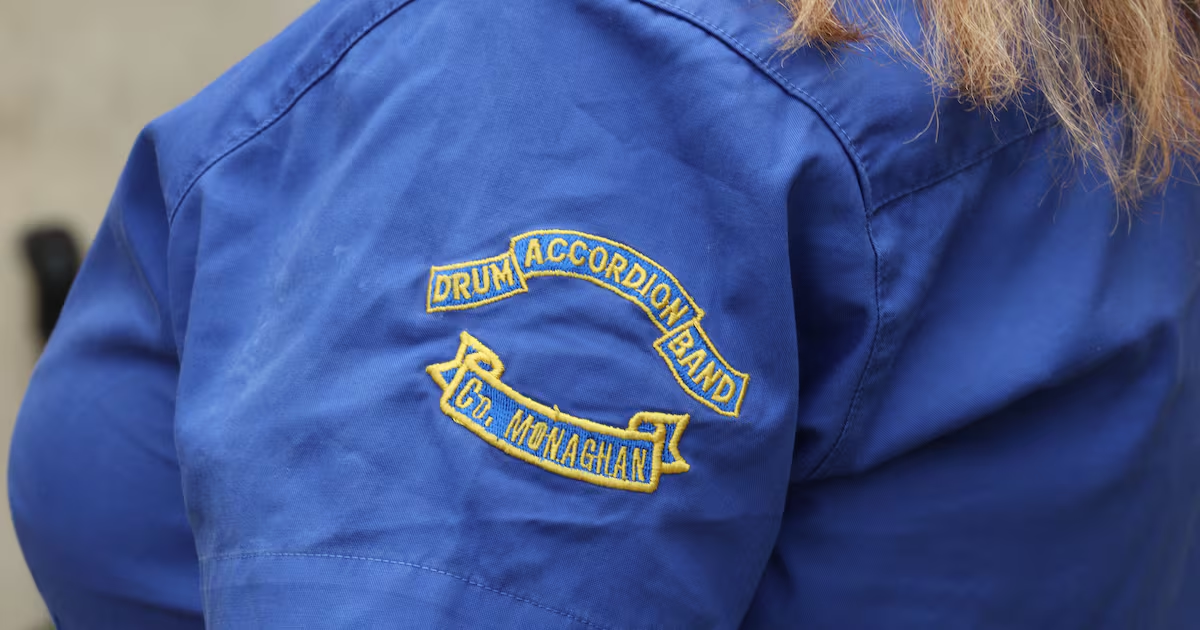
Angela Graham is not given to emotional responses, but she looks back on the St Andrew’s Sunflower Meadow Festival in Scotshouse, Co Monaghan, last August as the moment before a dark past returned.For years, Graham, a figurehead in her community, has played a leading role in the Drum Accordion Band, formed in the Border village of the same name, with fewer than 200 souls.Drum, Co Monaghan, is a village often described as the most Protestant place in the Republic.“There we were – in our uniforms, playing for everyone, all comers, to raise funds for Cavan-Monaghan Palliative Care, Crocus Cancer Support Group in Monaghan and Scotshouse Community Childcare,” she recalls of the festival last year.“Out among the sunflowers, it was beautiful. One of our loveliest experiences, where we were welcomed, wanted and applauded.”Two weeks later, the presidential campaign of local woman, Fine Gael’s Heather Humphreys, was quickly mired in the Daily Mail’s focus on her husband Eric and his membership of the Orange Order in the years before the Troubles.Within hours, vicious social trolling began: Humphreys was portrayed as “an Orange bitch” and unworthy of being the State’s first citizen because of her background.Heather Humphreys poses at the Ulster Canal in Clones, Co Monaghan, on the day her nomination for last year's presidential election was confirmed. Photograph: Lorraine Teevan Photographers But it was not just Humphreys who was targeted. So was Drum’s accordion band, which organises the village’s picnic every July around the time of the Twelfth, the Ulster Protestant holiday celebrated on July 12th that commemorates the 1690 victory of Protestant King William of Orange over Catholic King James II at the Battle of the Boyne. The picnic attracts Protestant bands from Cavan and Monaghan. Each year, hundreds – mostly families – come and are fed by tea and the fruits of weeks of cake baking. It is no closed shop. Fianna Fáil’s Éamon Ó Cuív came during his time in Cabinet, speaking to those gathered from a farm trailer.Graham is no stranger to difficult situations as for years she was the manager of Clones Family Resource Centre, which offers mediation, family support, counselling for people in difficulties in north Monaghan.One year on from the controversy over Humphreys and her family’s ties to the Orange Order – and on the eve of this year’s Twelfth celebrations – Graham remains shocked by the abuse directed at Drum, the village’s band and Border Protestants in general.During The Troubles, many Protestants living on the southern side lost loved ones from northern branches of their families who had joined the RUC or British Army in the same way that “lads in Cork joined the guards”, she says. In those years of conflict when loose words cost lives, she and others remained silent.“We say nothing. Because we know that storms will pass,” she says.Angela Graham laments the general lack of knowledge in the Republic about Border Protestants. Photograph: Alan Betson The response of some to the Humphreys campaign has cast Drum back to that past where people feel they have to watch what they say.“Last year has left a lot of pain. We thought we had left all of that behind, we really did. Unfortunately, we were targeted,” Graham says.“Because we are culturally Orange and Protestant, we were torn apart, that’s the truth of it,” says Graham, who received cross-community applause after she stepped down as the head of the family resource centre in May.“We could not take it in,” she tells The Irish Times.“We were shocked to the core. We were horrified. We felt the blatant sectarianism, and it hurt so much.”The silence of the past has returned. Graham is the only villager prepared to speak with the media a year on. Within days of last year’s controversy surrounding Humphreys and her Orange connections, they had agreed to say nothing, to respond to nothing. For all bar Graham, so it remains.The village remembers those who came to Drum after the 1998 Belfast Agreement that underpins the Northern Ireland peace process, intrigued by the Protestant village “on the wrong side of the Border” by an accident of geography.“We had scores from universities, politicians, community organisations – you name it – from anywhere and everywhere, They were welcomed with open arms; we were delighted to have them,” she says.“But they kept silent,” she says, in response to the attacks.The community was “very disappointed” that others, including Taoiseach Micheál Martin, former president Michael D Higgins and his successor, Catherine Connolly, did not speak out in support of them.“Would they have made some effort to come and speak to us, to offer us some support and comfort for the way we were treated. But we’ve had absolute zero, and it is regrettable,” Graham says.She remembers a visit to the Áras an Uachtaráin during Mary McAleese’s term of office: it was “wonderful” to be “invited as part of the Orange family”, she says.“In a time that needed leadership, to put the hand of welcome out, she gave it. She was amazing. So I don’t expect to get invited [to the Áras] anytime soon.” Graham is bemused at the ineptness of Fine Gael’s campaign for Humphreys, who never hid her family’s background, including her grandfather’s membership of the Ulster Volunteers a century ago.“How foolish was that? They could have done something,” she says, also saying that Humphreys was quite open about her family’s heritage. Graham says the party could have been more upfront about it and talked about it as part of the campaign.For decades, membership of the Orange Order for Border Protestants was no more remarkable than GAA membership for Catholics, she says.“They’re just same farming families around here; there was nothing unusual about it. It was the norm.” While Graham accepts last year’s abuse came from a minority, it was still, she feels, left unchallenged, except for some neighbours who “had the courage to speak up for us”. “They got a kicking, but we’re grateful to them,” she says.Graham knows most people in the Republic have forgotten last year’s controversy and were “utterly unaware” of its impact on Drum. She laments the general lack of knowledge in the South about Border Protestants.“The further you get away from the Border, the less understanding there is of Border life,” she says.“It’s a different life lived in Monaghan, Cavan and Donegal. They couldn’t have had an understanding. They wouldn’t really have understood Orange culture or marching bands.” The Drum band was formed in 1956, using button accordions and drums because they were affordable in a village ravaged, like others, by emigration.“Picnics are unique to Cavan and Monaghan. They were run back when my mother was growing up, by local churches. From when I was 12 or 13, they were run by the local bands, not the churches or the Orange Order,” says Graham, who is a Free Presbyterian.Graham is unsure whether last year’s controversy will make more local people attend or stay away from the annual Drum band parade taking place on Friday.“Who knows? But we’ll do it the same way,” she says.“We’ll say it with food, we say it with the music: you’re welcome.” Still, last year’s events have a cast a shadow on a community’s sense of itself – a Protestant community living along the Border – in broader Irish society.“I do believe it’ll make people more cautious. People like me, who were open to a conversation about a united Ireland, would now not be interested in having that conversation,” she says.“How could we say to our unionist neighbour or friends that this is a very welcoming place to live faced with a minority who engage in this terrible racist and sectarian behaviour and stirring up hate?”
‘We were torn apart’: Border Protestants still reeling from abuse of Heather Humphreys
In Drum, Co Monaghan, vitriol aimed at Fine Gael’s presidential candidate still chills residents almost a year on
1,278 words~6 min read