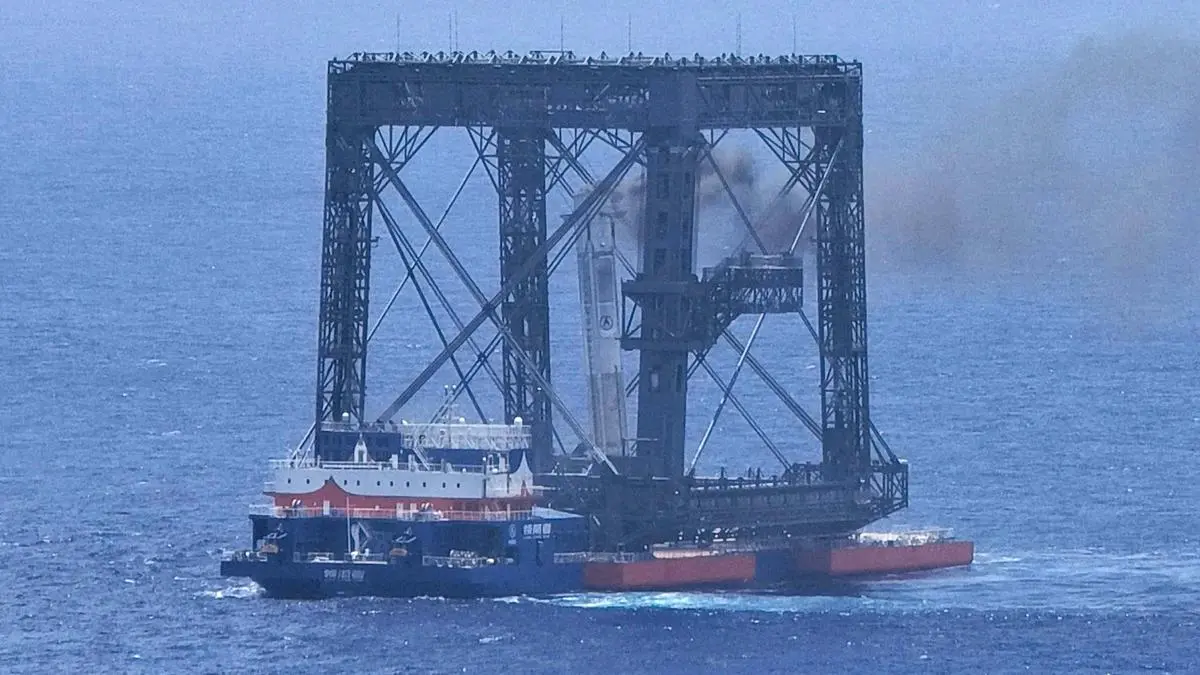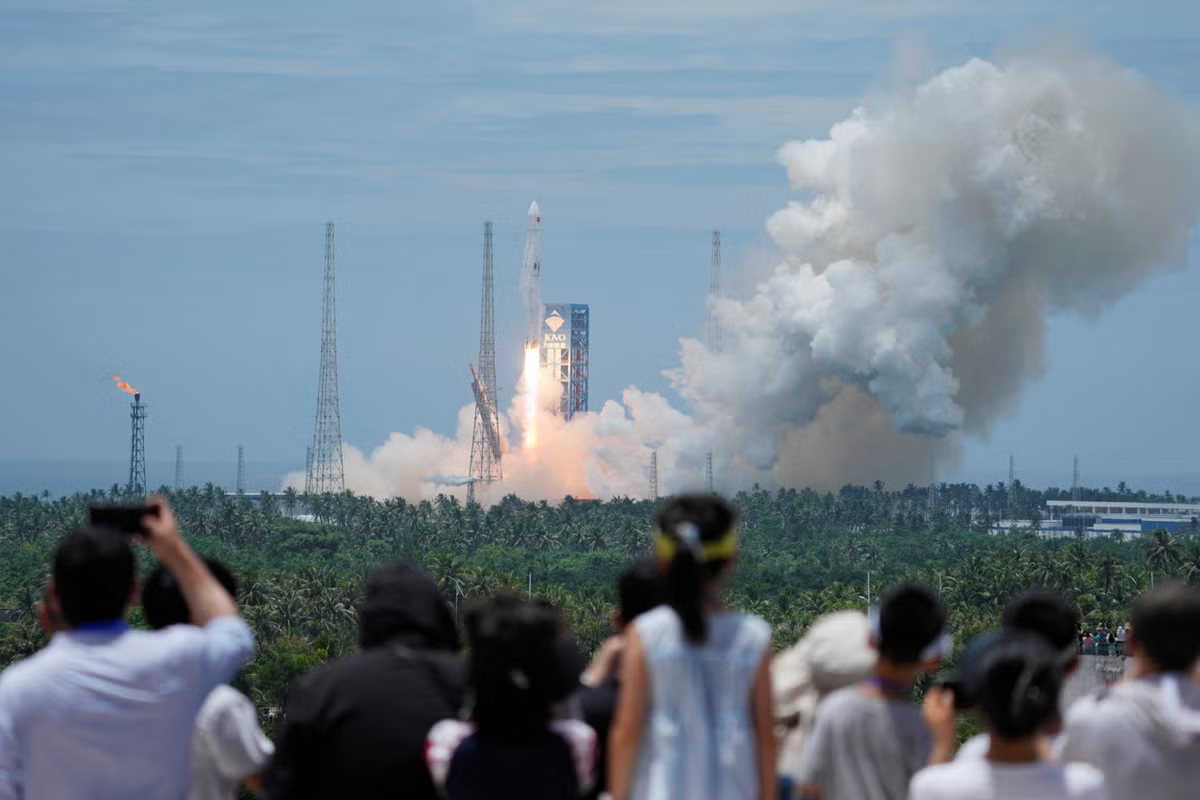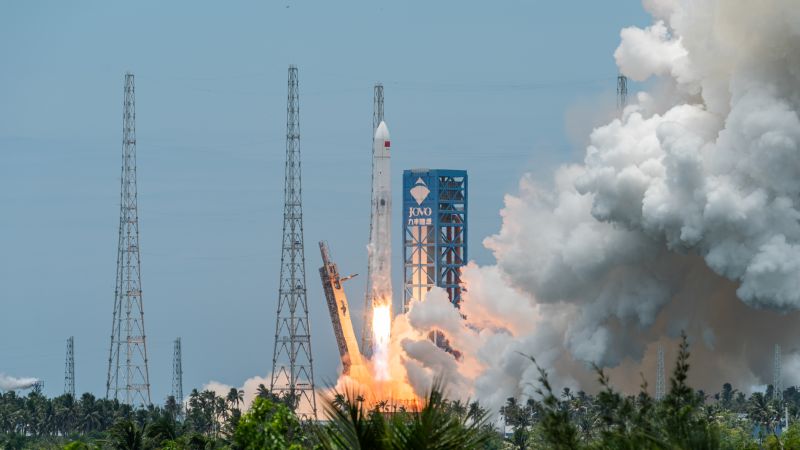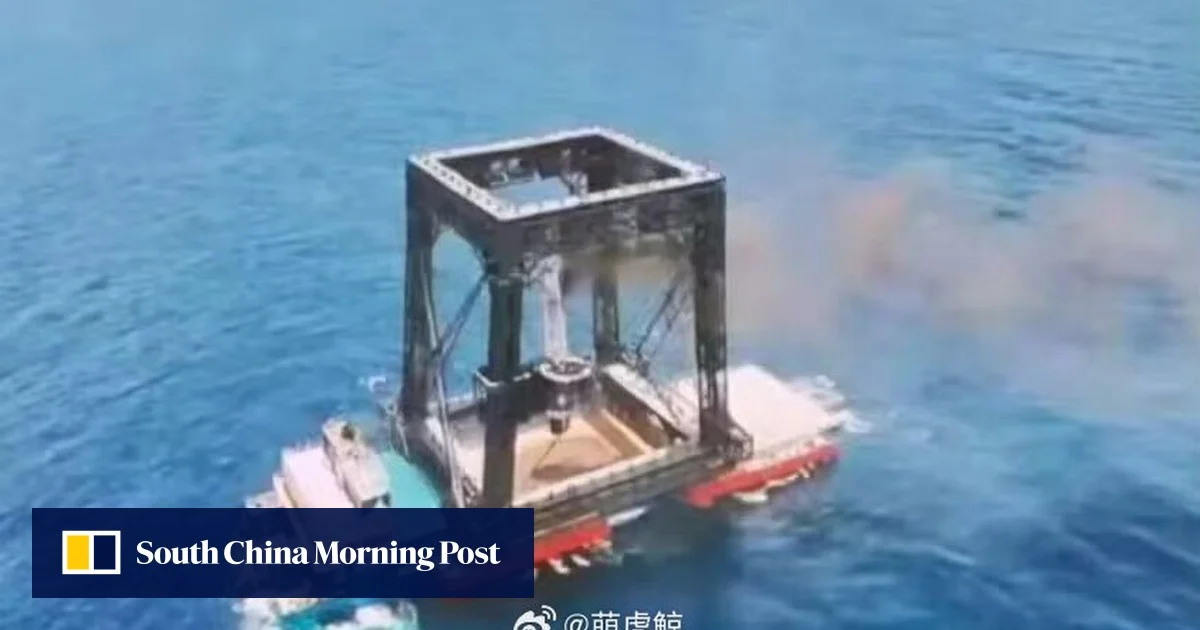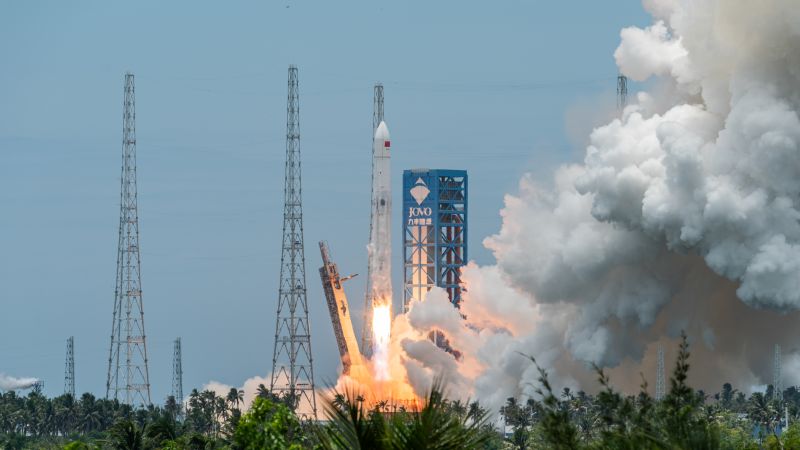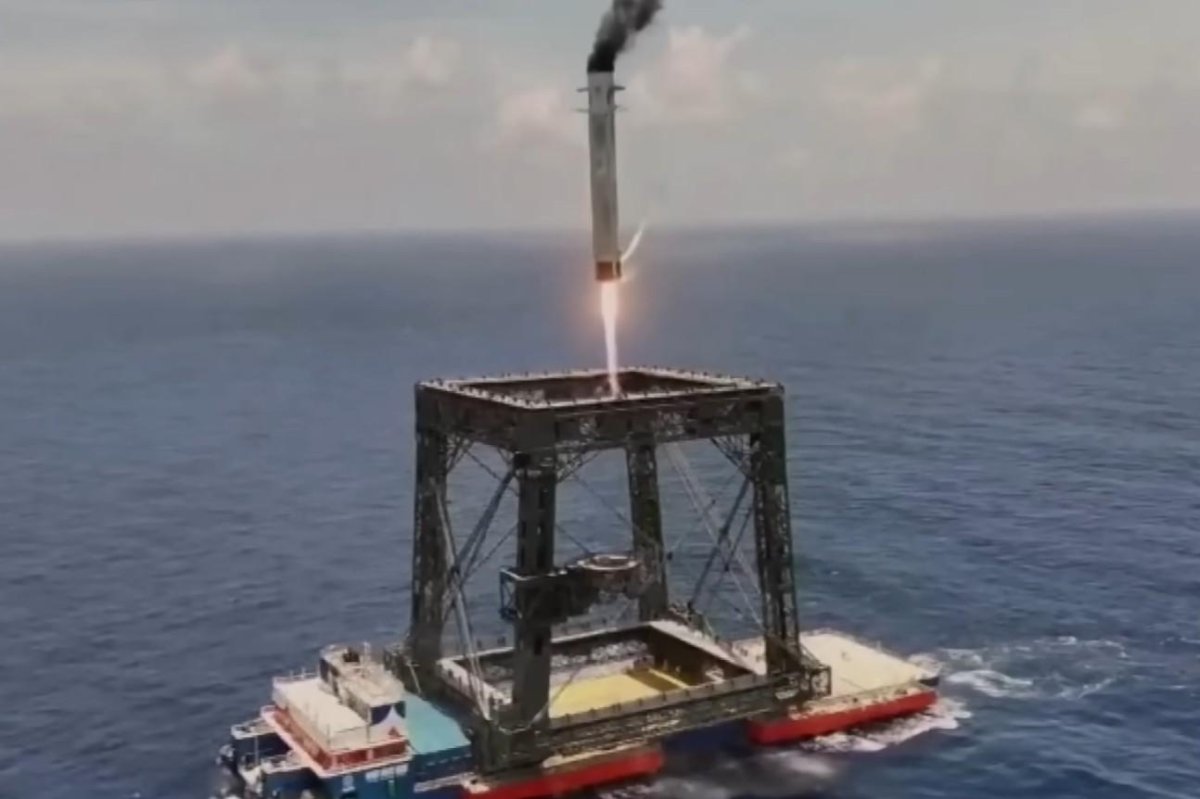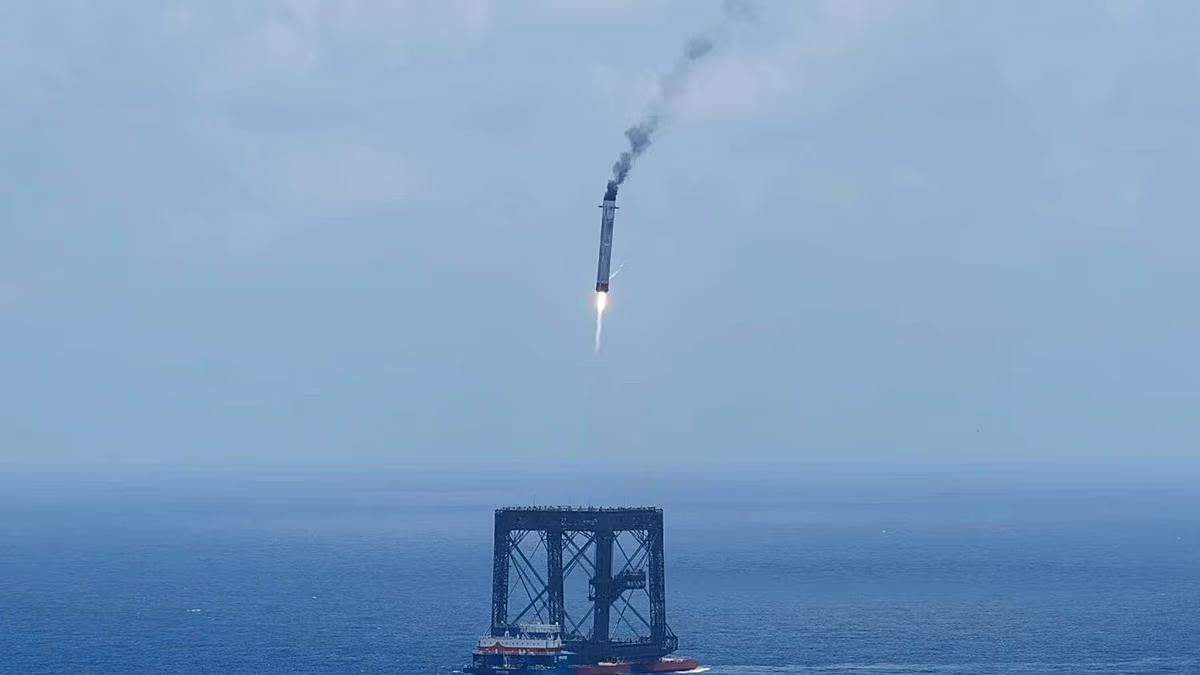
A Long March-10B carrier rocket lifts off from the Hainan Commercial Spacecraft Launch Site in Wenchang in Hainan, China on July 10, 2026 before the first stage was recovered via a net-based capture system on an offshore recovery platform. The mission, which also launched a satellite into space, marked China’s first successful controlled recovery of a carrier rocket’s first stage. — China OUT/AFP pic First Published: Saturday, 11 Jul 2026 11:34 AM MYT BEIJING, July 11 — China has successfully recovered a reusable rocket for the first time, marking a major milestone in its push to cut launch costs and close the gap with US space leaders.The breakthrough could put Beijing in a stronger position to challenge the reusable rocket dominance of Elon Musk’s SpaceX and Jeff Bezos’ Blue Origin.A Long March-10B rocket blasted off at 12.15pm (0415 GMT) from Hainan in southern China before sending a satellite into orbit, the China National Space Administration (CNSA) said.The rocket’s first stage – the lower section that provides the initial power needed for launch – was then recovered using a “net-capture system on a seaborne platform”, the agency said.China’s state broadcaster CCTV showed footage of the booster descending from the sky before making a controlled landing on the platform.“This mission marks China’s first successful controlled recovery of a carrier rocket’s first stage, as well as the world’s first at-sea net-based recovery of a rocket,” the CNSA said, calling it “a major breakthrough in Chinese reusable rocket technology”.Unlike SpaceX’s Falcon 9, the Long March-10B does not rely on landing legs for recovery.“The net-based recovery system offers unique advantages,” Chen Muye, a technical expert at the China Academy of Launch Vehicle Technology, was quoted as saying by Chinese newspaper Global Times.“Compared with current mainstream recovery solutions, net-based recovery is more adaptable to the landing requirements of rockets.”Most rockets are built for one-time use, with spent stages typically falling into the ocean, burning up in the atmosphere or becoming space debris, while the first stage remains the most expensive part of the launcher.“Net-based recovery helps simplify the rocket’s onboard structure,” Chen said, adding that removing the need for landing legs could reduce the rocket’s weight.The lighter design could improve “payload capacity and operational efficiency”, he added.Reusable rocket technology is seen as a key way to lower the cost of launching satellites and spacecraft, with China’s Long March-10 series also designed to support future crewed missions to the Moon. — AFP
China takes a giant leap towards cheaper space launches as reusable rocket returns home
BEIJING, July 11 — China has successfully recovered a reusable rocket for the first time, marking a major milestone in its push to cut launch costs and close the gap with US...
405 words~2 min read