Story audio is generated using AI
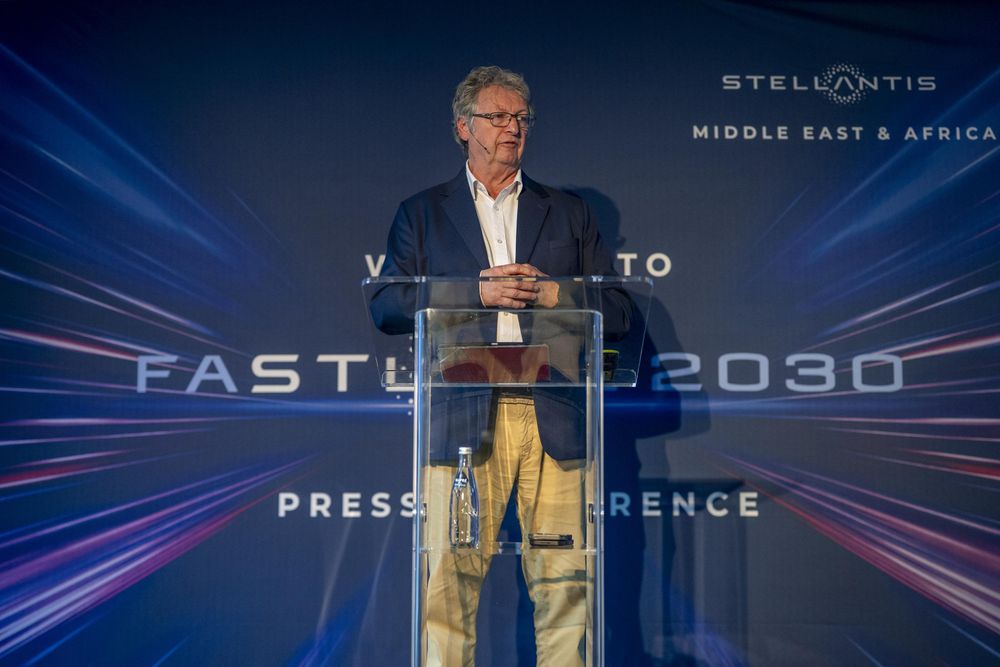
Stellantis South Africa is expanding its retail network and consolidating dealerships into multi-brand outlets as part of an ambitious plan to more than triple its local market share by 2030.The global automotive group, which owns Peugeot, Citroën, Opel, Jeep, Alfa Romeo and Fiat, has been reshaping its dealer footprint around a “Stellantis Brand House” model. The concept allows customers to access multiple brands under one roof rather than through separate dealerships.MD Mike Whitfield said the approach was central to the company’s long-term growth ambitions.“We’ve been moving on a journey towards what we call the Stellantis Brand House. Within a Stellantis dealership, customers can access Jeep, Alfa Romeo, Peugeot, Citroën and Opel under one roof.”Stellantis currently operates 34 dealerships nationwide and plans to expand that network to about 48 outlets over the next two years. Growth will come through a combination of new dealerships and the consolidation of existing outlets into larger multi-brand operations.“Where we had two dealers next to each other, one doing two brands and another doing two or three, we consolidated them into one,” Whitfield said.The push will be supported by a broader product portfolio. Locally, Stellantis will focus on Peugeot, Fiat and Jeep as its global brands, while Citroën, Opel and Alfa Romeo will continue as regional brandsThe retail expansion underpins Stellantis’s goal of increasing its South African market share from about 1.5% to between 4% and 5% by 2030.“To be relevant in the South African market, you need to be above that number,” Whitfield said.The push will be supported by a broader product portfolio. Locally, Stellantis will focus on Peugeot, Fiat and Jeep as its global brands, while Citroën, Opel and Alfa Romeo will continue as regional brands.The company is also preparing a wider rollout of Chinese electric vehicle manufacturer Leapmotor, in which Stellantis holds a stake. The range will include battery-electric and range-extender models as the group expands its new-energy vehicle offering.Whitfield said each brand would serve a distinct market role: Citroën will target value-conscious buyers in the sub-R400,000 segment; Opel will compete in the mainstream market; Peugeot will strengthen its commercial vehicle offering, with vans added to the portfolio; and Jeep will expand beyond its traditional premium off-road positioning into the higher-volume C- and D-SUV segments. Fiat, meanwhile, is expected to spearhead Stellantis’s entry into Africa’s emerging micro-mobility market with electric two-, three- and four-wheel vehicles aimed at ride-hailing, courier and last-mile delivery operators.The expansion comes as South Africa’s automotive industry undergoes rapid change, driven by affordability pressures and the growing influence of Asian manufacturers.Whitfield noted that vehicles priced below R400,000 now account for about 64% of the passenger vehicle market, while Chinese brands have captured roughly 19% of domestic vehicle sales. “The speed at which we’re seeing change in the industry is phenomenal,” he said.The market continues to get more competitive, mainly because of the supply and the new entrants, which is good. It’s the right thing for the consumer to have choice— Mike Whitfield, Stellantis SA MDRather than viewing Chinese automakers purely as competitors, Stellantis plans to source an increasing share of its future product portfolio from Asia while also leveraging regional manufacturing to improve affordability and competitiveness.Whitfield said heightened competition had benefited consumers by keeping vehicle price increases below inflation, expanding choice and forcing manufacturers to become more agile and cost-efficient.“The market continues to get more competitive, mainly because of the supply and the new entrants, which is good. It’s the right thing for the consumer to have choice.”The South African strategy forms part of Stellantis’s broader Middle East and Africa growth plan unveiled last week under its FaSTLAne 2030 strategy. The group, currently the region’s second-largest automaker with annual sales of more than 500,000 vehicles, plans to invest about €300m (about R5.5bn) a year through partnerships and co-investments.The strategy aims to increase regional revenue by 40% while maintaining double-digit operating margins. Stellantis expects 90% of regional sales to come from a focused portfolio of 22 models, with roughly half produced within the region and the remainder sourced from Asia.South Africa is expected to play a key role in that growth. While Stellantis will continue leveraging manufacturing operations in Morocco, Türkiye and Algeria, local expansion will be driven largely by competitively sourced vehicles, supported by localisation opportunities where viable.Whitfield said that by 2030, about 90% of vehicles sold by Stellantis in South Africa would either be sourced from the Africa-Middle East region or imported from Asia, helping the company improve affordability and strengthen its competitive position.Business Times