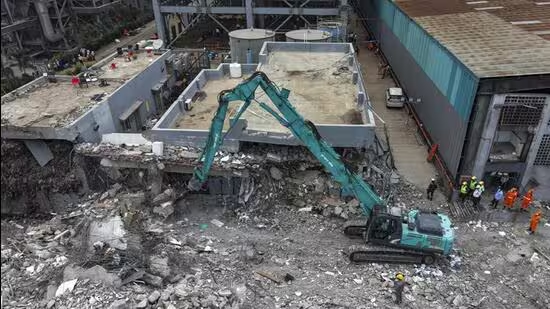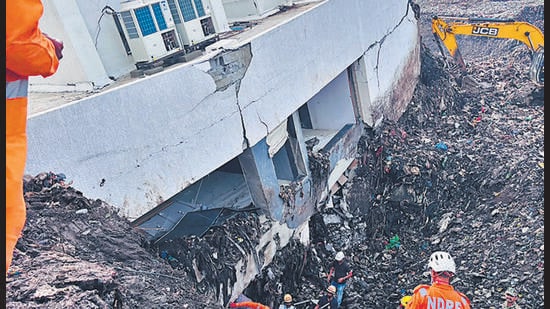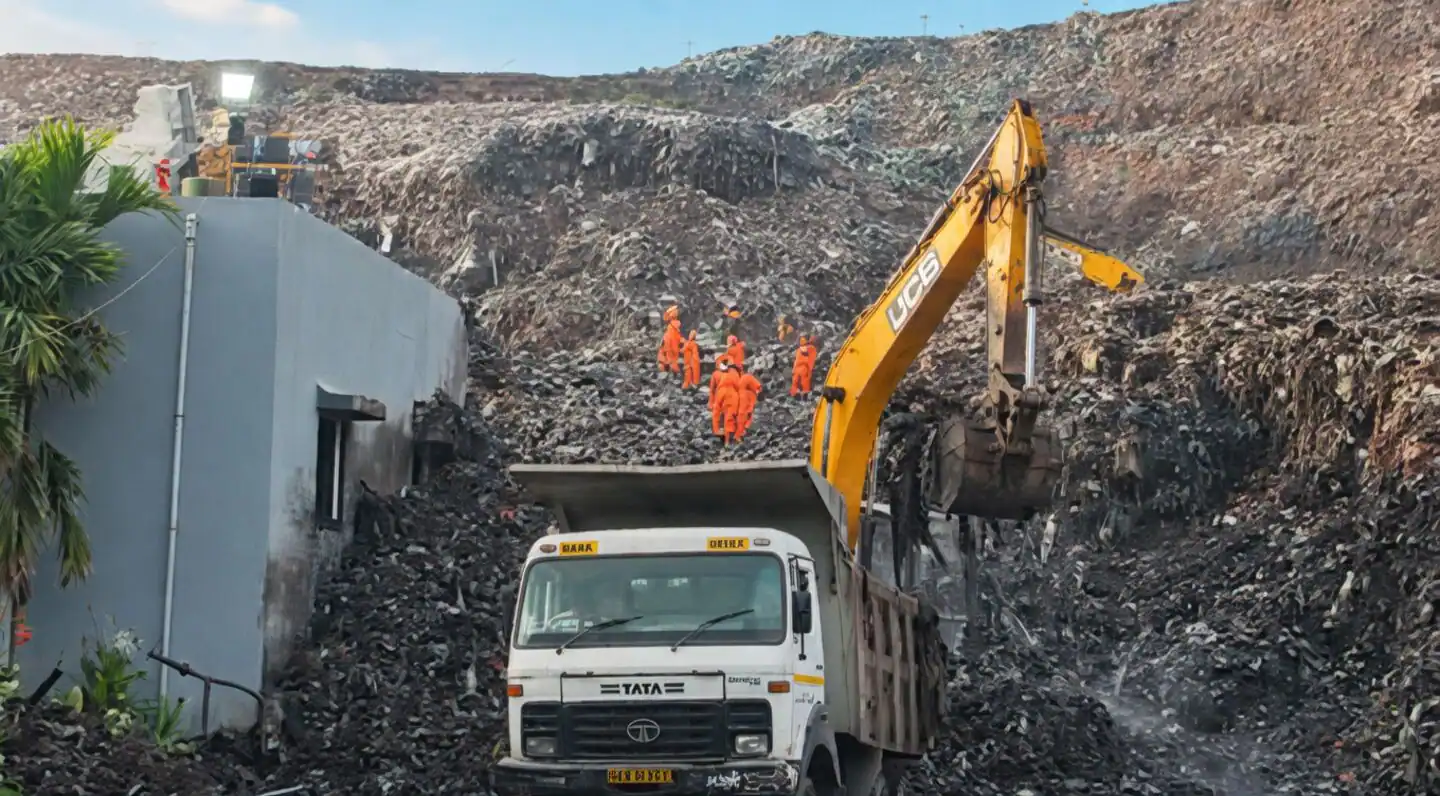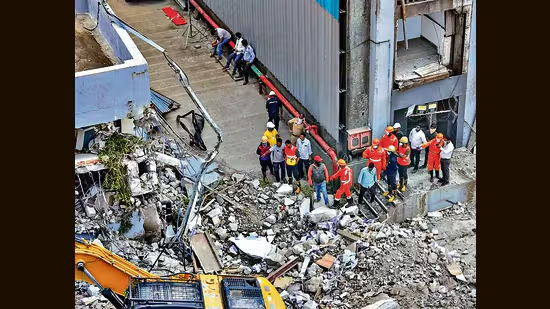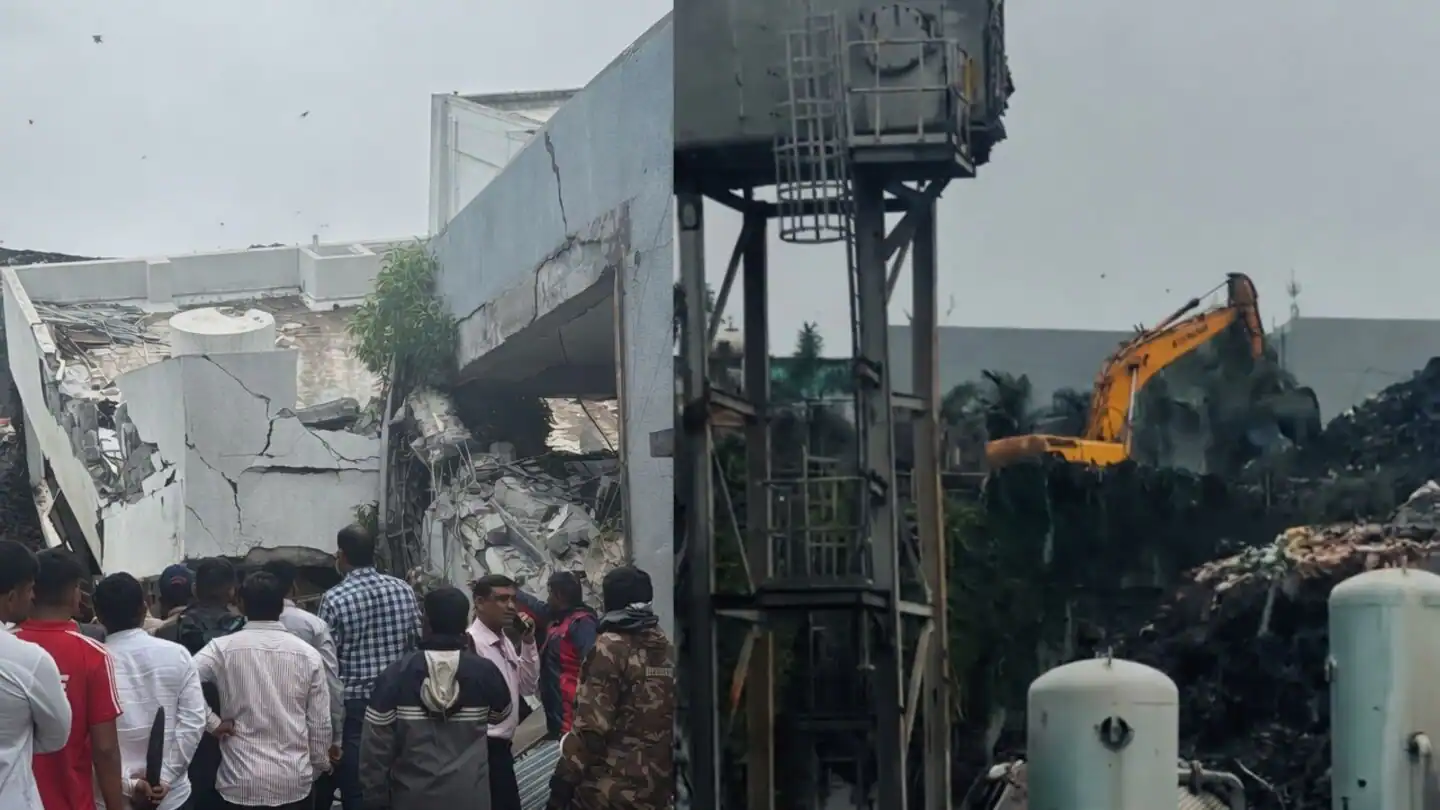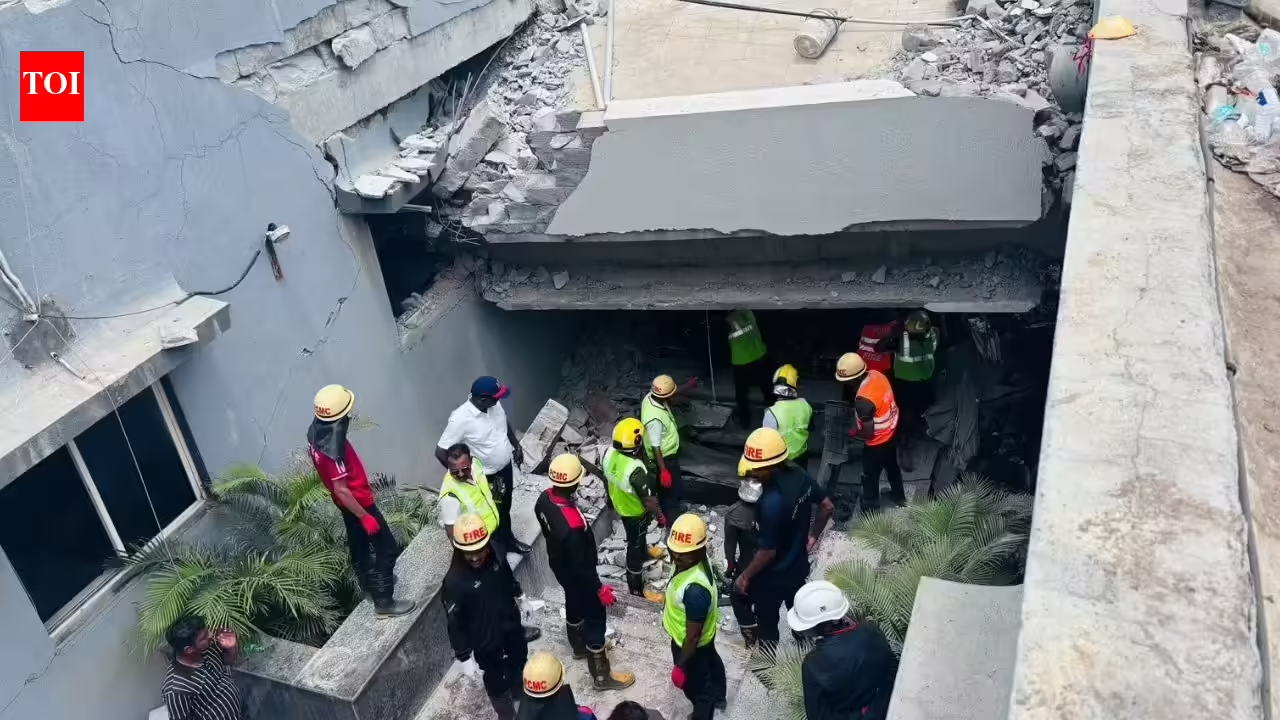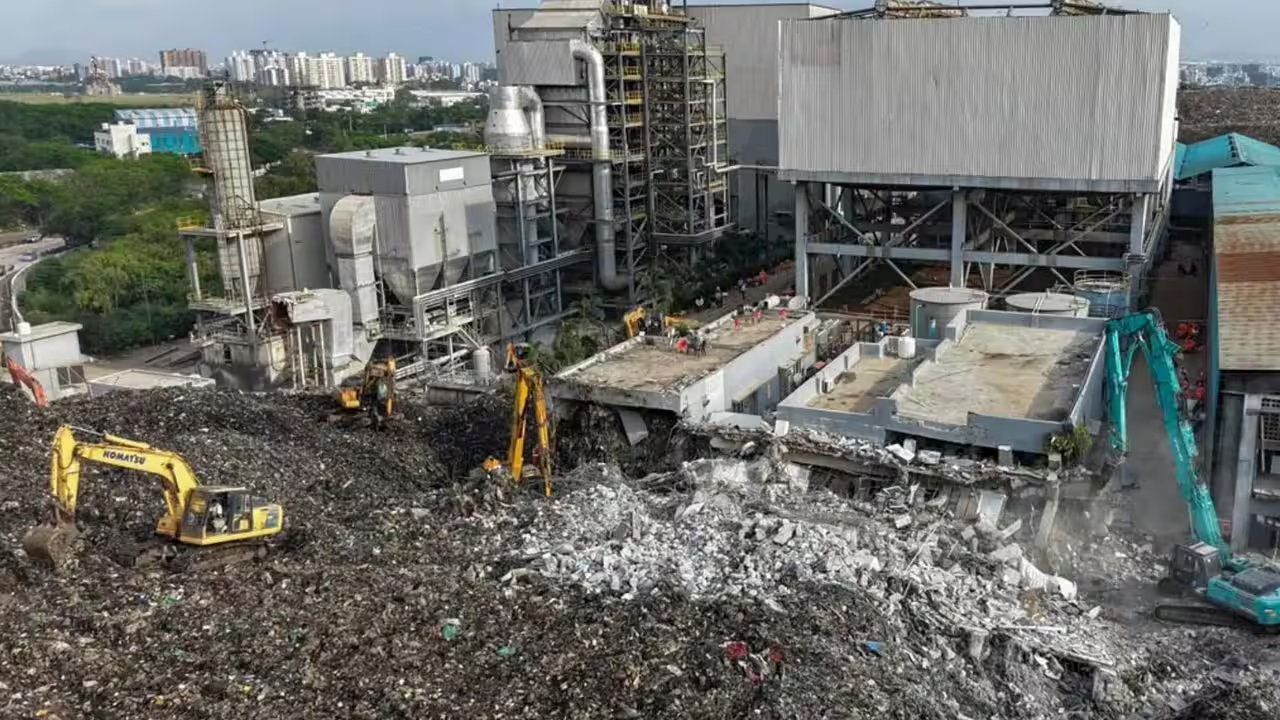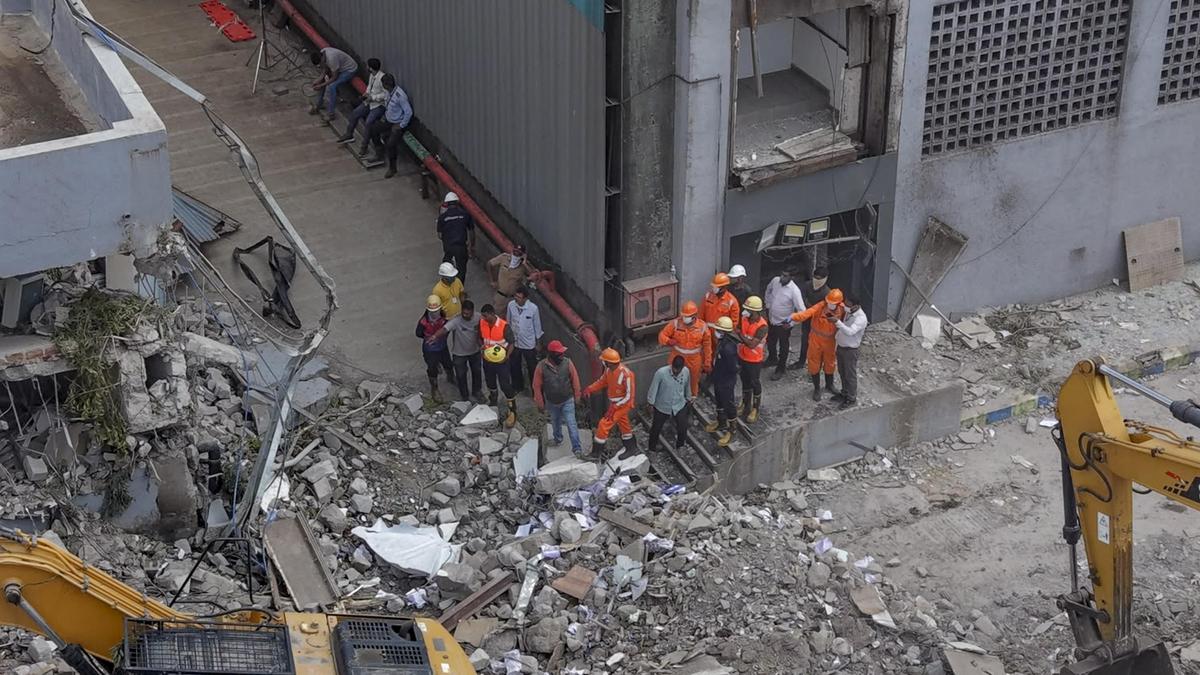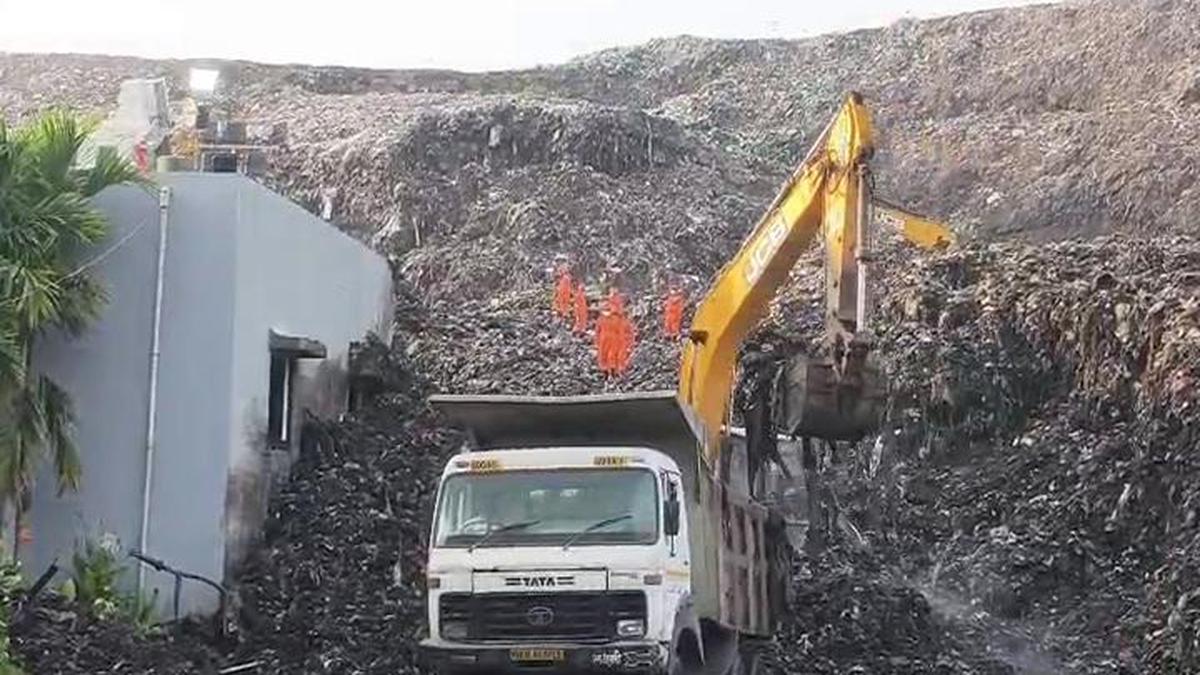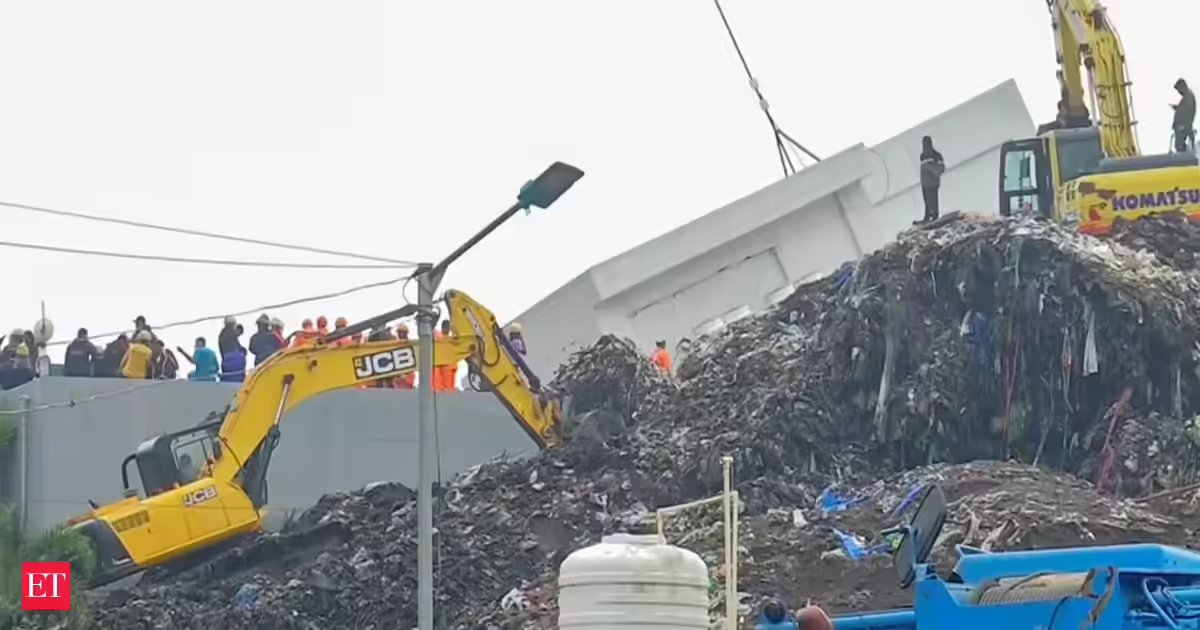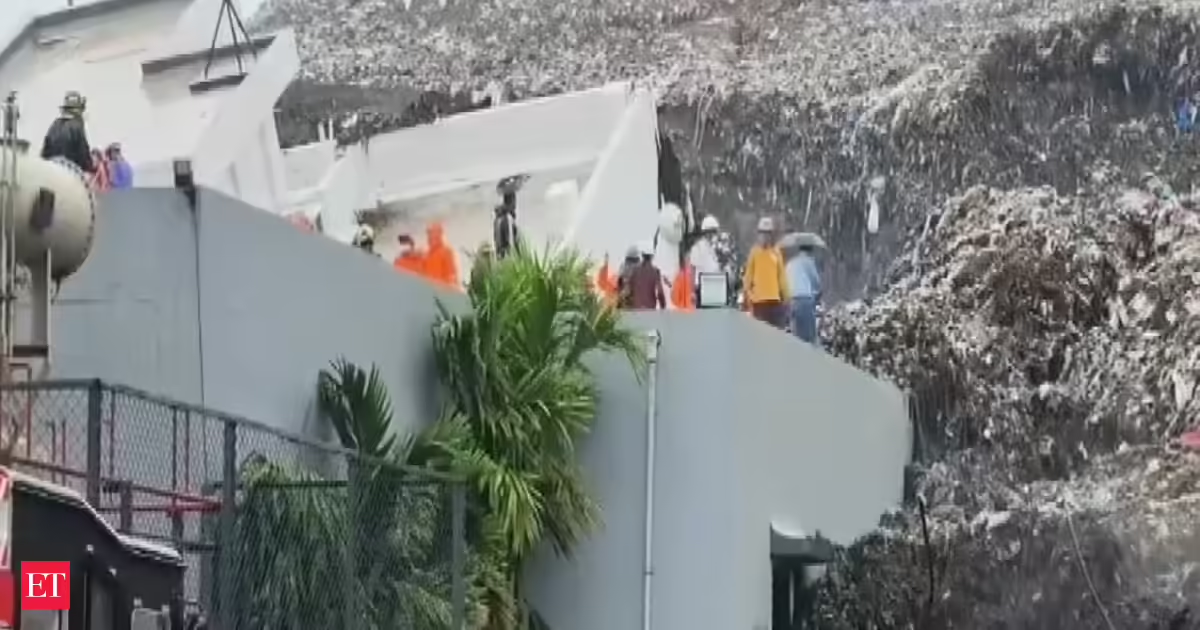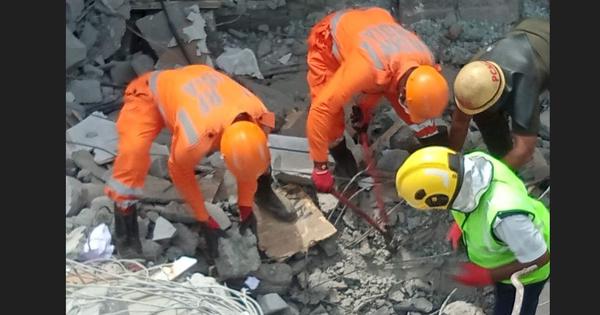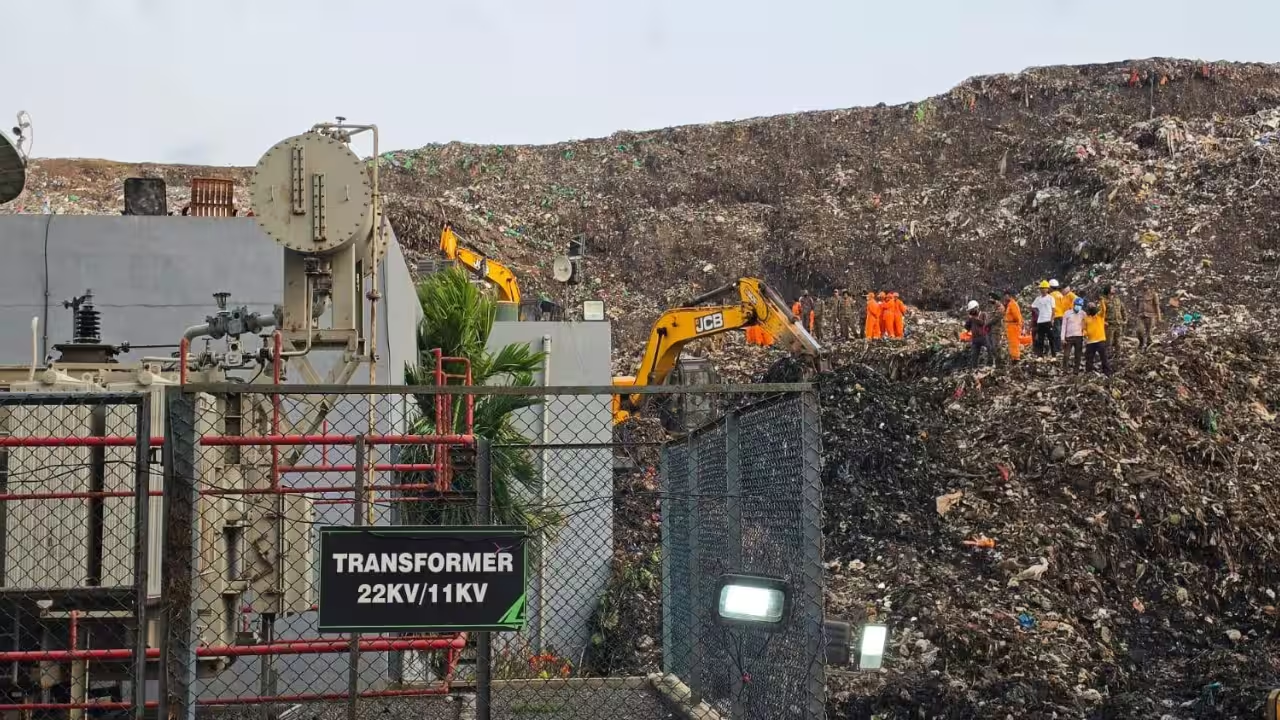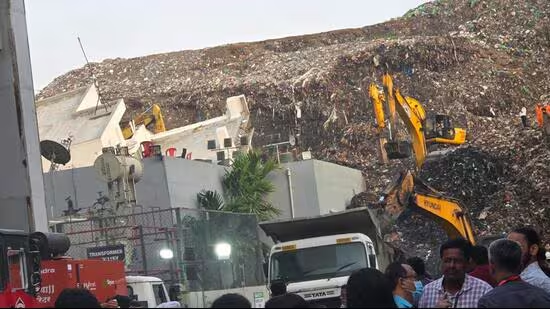
Pune: The massive garbage mound at the Moshi waste depot may have become saturated following continuous rainfall and moved like a fluid mass towards the administrative building, exerting strong lateral pressure that caused the structure to collapse, according to a preliminary assessment by the Professional Structural Engineers Association (PSEA).Lateral force from saturated garbage may have caused Moshi building collapse: Engineers’ bodyA team led by PSEA president Sheshrao Kadam visited the accident site on Friday and carried out a visual inspection of the collapsed building and the surrounding area.According to the association, the huge mound of solid waste and the soil beneath it were likely saturated with rainwater. The garbage mound was located around 30 metres from the affected building. However, the continuous rainfall may have significantly reduced the shear strength of the waste mass and the underlying soil. This could have caused the saturated garbage to move towards the building like a fluid mass, the association said.Kadam said, “The saturated solid waste entered the building and exerted substantial lateral force on the structure. The additional pressure may have disturbed the stability of the building and caused it to collapse.”The engineers also observed that most of the building’s main structural elements appeared to be intact during the preliminary inspection. The findings, therefore, do not indicate that inadequate structural capacity of the building was the primary cause of the accident, the association said.However, PSEA cautioned against drawing any final conclusion based solely on the visual inspection.“The exact cause of the accident can be established only after a detailed geotechnical and forensic investigation. The source of the saturated waste, its flow pattern and path of movement, along with the condition of the underlying soil, need to be scientifically examined,” said Kadam.The findings assume significance amid questions over how a massive garbage mound moved towards the administrative building and caused the structure to collapse. A detailed investigation will also be required to determine whether adequate safety measures were in place to prevent the movement of the waste mass towards buildings at the facility.Meanwhile, PSEA has launched an emergency help cell to provide technical assistance during building collapses, landslides, floods, heavy rainfall and other structural emergencies.The cell comprises structural engineers, field experts, retired police officers and administrative professionals. It will provide preliminary structural assessment, technical guidance at accident sites, damage evaluation and coordination with government agencies.The facility will be available not only to PSEA members but also to citizens, housing societies, local bodies and government departments requiring technical assistance during emergencies, they said.
Lateral force from saturated garbage may have caused Moshi building collapse: Engineers’ body
According to a preliminary assessment by the Professional Structural Engineers Association, the huge mound of solid waste and the soil beneath it were likely saturated with rainwater.
418 words~2 min read