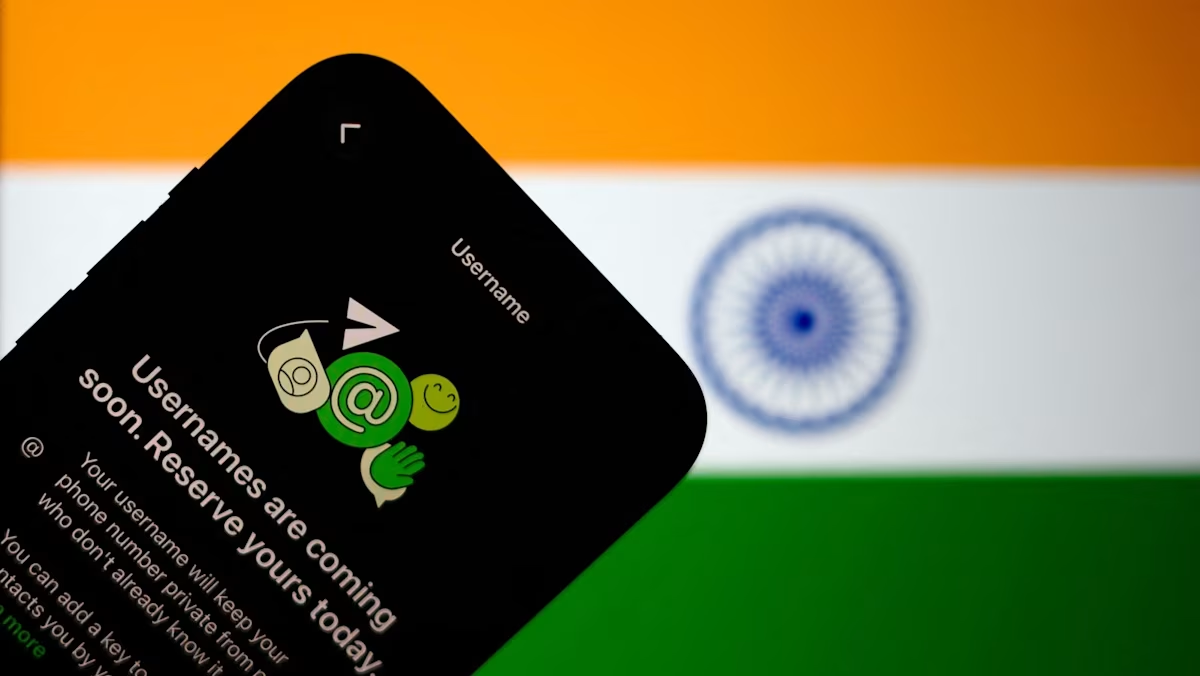
The ministry of electronics and information technology (Meity) is working on common standards for messaging platforms operating in India, as it moves to formally oppose WhatsApp’s proposed username feature over concerns that it could fuel impersonation, online fraud and digital arrest scams while making law enforcement investigations more difficult, a government official familiar with the matter told HT.The ministry of electronics and information technology has formally opposed WhatsApp’s proposed username feature over concerns that it could fuel impersonation. (REUTERS/Representational Image)“We are not in favour of WhatsApp introducing this feature. Given its massive user base in India, usernames could make impersonation, digital arrest scams, online fraud and even investigations by law enforcement more difficult,” the official said. WhatsApp has more than three billion users worldwide, and India is among its largest markets.Common standards for messaging platforms The push for a common standard amounts to an attempt to close a newly discovered regulatory gap: right now, the ministry has stopped one platform’s feature while rivals offer the same thing, without a rule that explicitly permits or denies such action“We are also looking at bringing in common standards for messaging platforms so there is legal backing for such decisions. It cannot be that we stop one platform from rolling out a feature while allowing others to continue offering the same thing. The rules have to be uniform for everyone. We will discuss this with all messaging platforms before taking a final decision,” the official said.WhatsApp, Telegram submit responsesThe development comes a day after WhatsApp and Telegram submitted their responses to Meity’s notices, purportedly explaining the safeguards built into their username features.An official who asked not to be named said the government is examining both responses but did not give details of the responses.Signal, which received a notice alongside Telegram on July 3, is yet to reply.Sridhar Vembu, founder of Zoho, which owns messaging app Arattai, said in a July 2 post on X that the company would disable the messaging app’s username-based account feature “to comply with the regulatory change.”WhatsApp, Telegram, Signal and Arattai operate in India as intermediaries under the Information Technology Act, 2000, and the IT (Intermediary Guidelines and Digital Media Ethics Code) Rules, 2021, which require them to exercise due diligence, assist law enforcement and comply with lawful government orders.Neither law sets out common rules on what features a messaging platform can or cannot offer — a gap officials say the ministry is now looking to close.The ministry’s growing scrutiny has drawn pushback from digital rights advocates and some legal experts, who have questioned whether the IT Act and its rules give Meity the authority to regulate how messaging services are designed.
Centre plans uniform rules for messaging platforms after WhatsApp username row
The development comes a day after WhatsApp and Telegram submitted their responses, purportedly explaining the safeguards built into their username features. | India News
442 words~2 min read