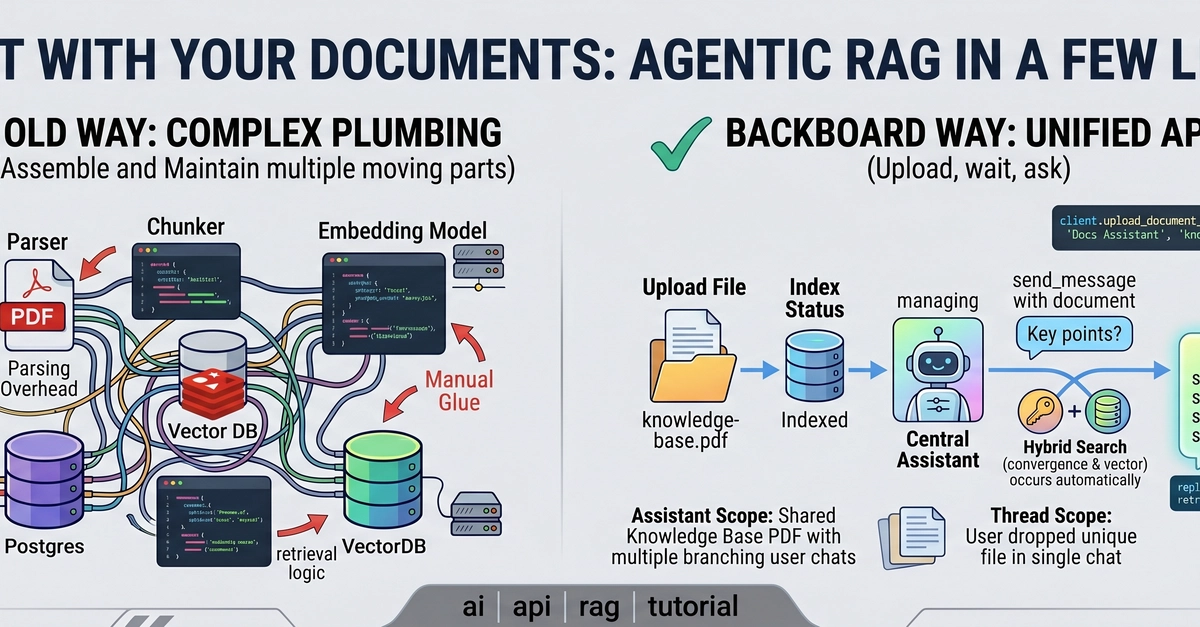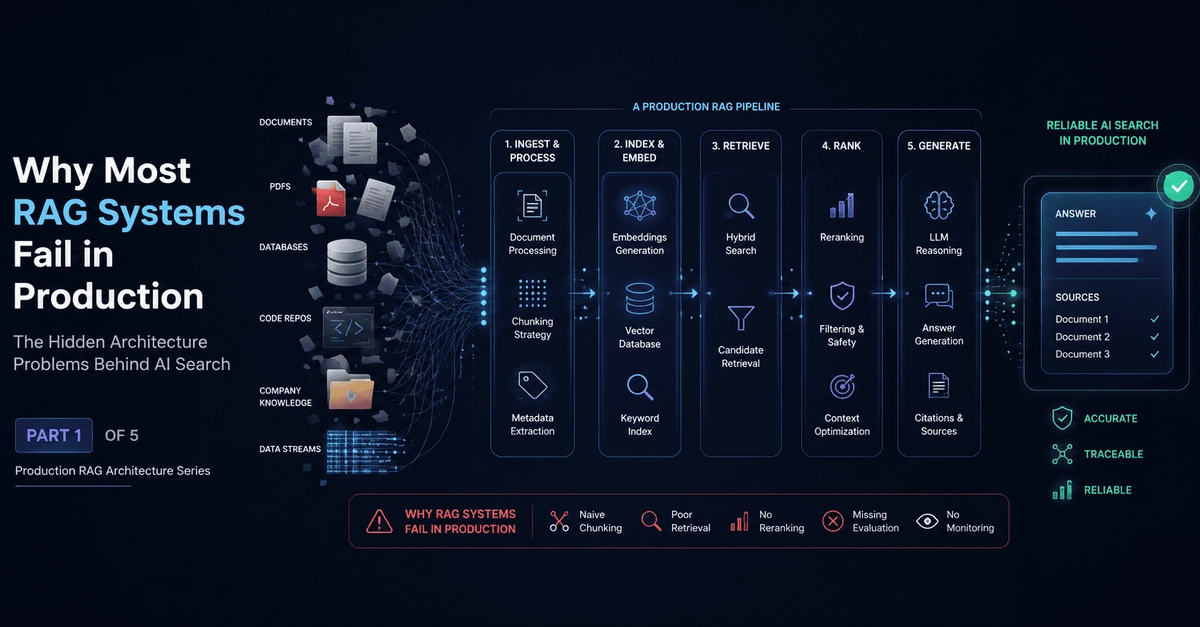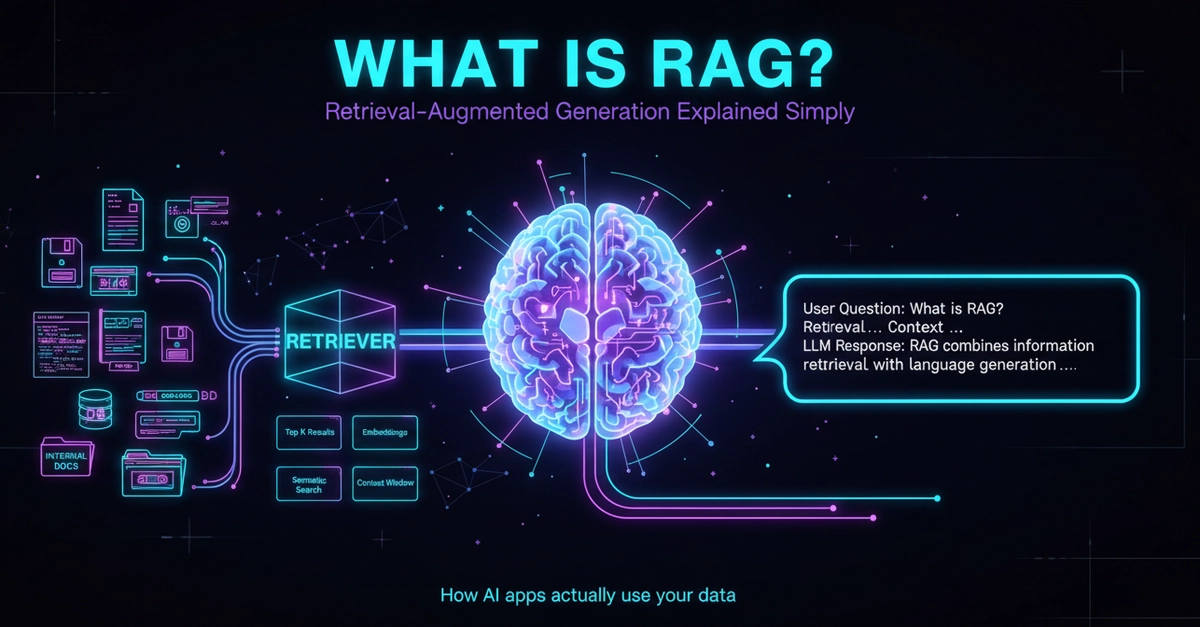
Most RAG tutorials online show the same pattern: take a document, split it into chunks, generate embeddings, store them in a vector database, and when a query arrives search for the nearest vectors and send them to the LLM. It works. The problem is that in production, that pattern fails in ways that don't show up in the tutorial.
A user types "SNAT error in network configuration". The vector for that query is semantically similar to dozens of documents about NAT, networking, and general network configurations. The vector search returns conceptually relevant results, but the specific document that contains "SNAT" many times over might not be in the top five. Keyword search would have found it immediately.
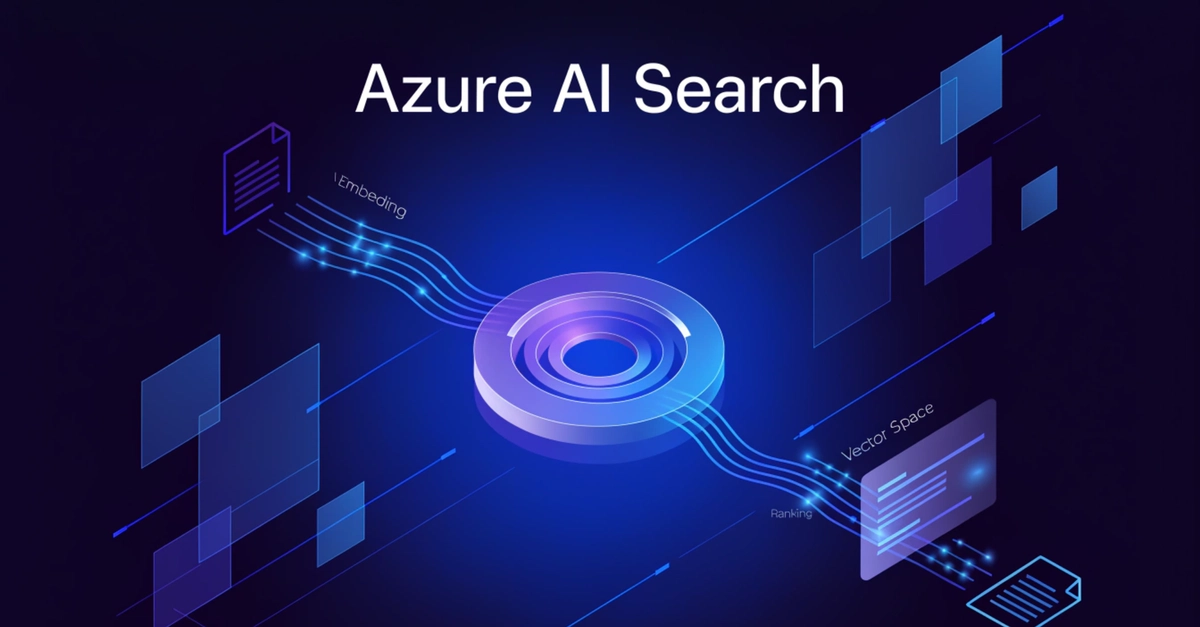
Azure AI Search exists to solve exactly that kind of problem, and in 2026 the service has changed enough that much of what was written about it before is outdated.
What Azure AI Search actually is today
The service was called Azure Search, then Azure Cognitive Search, and since November 2023 it is Azure AI Search. The most recent name that appeared at Build 2026 is Foundry IQ, which is how Microsoft exposes it inside the Azure AI Foundry portal. They are not two separate services: Foundry IQ is Azure AI Search seen from the agent platform.