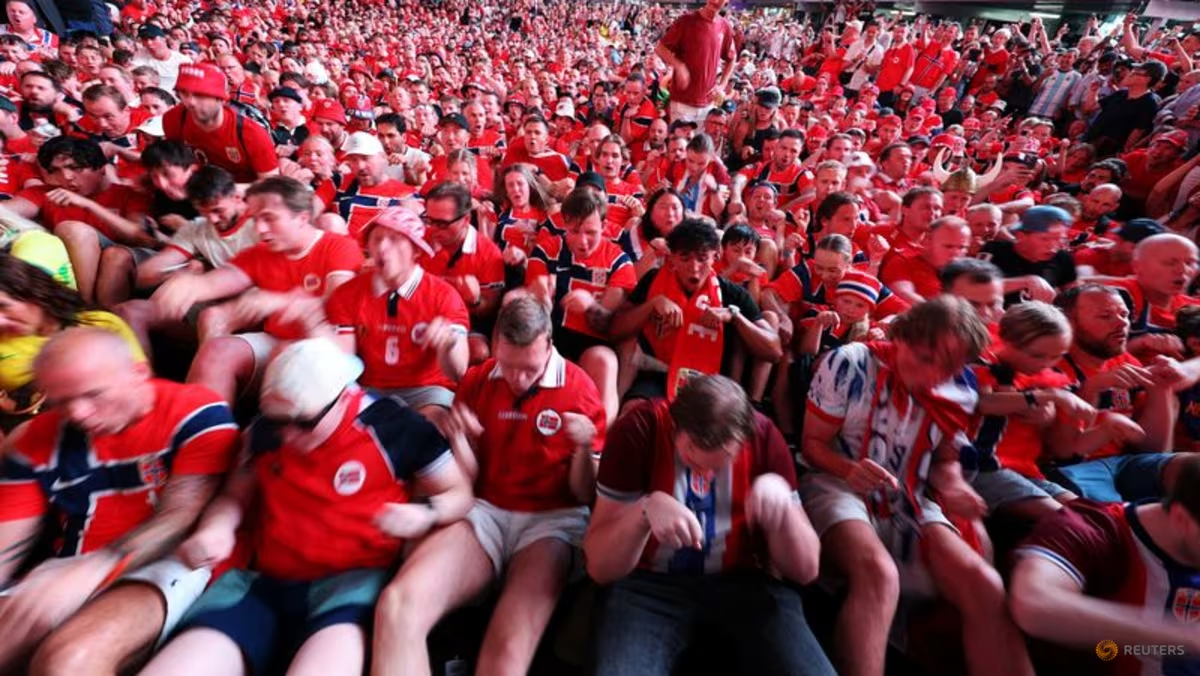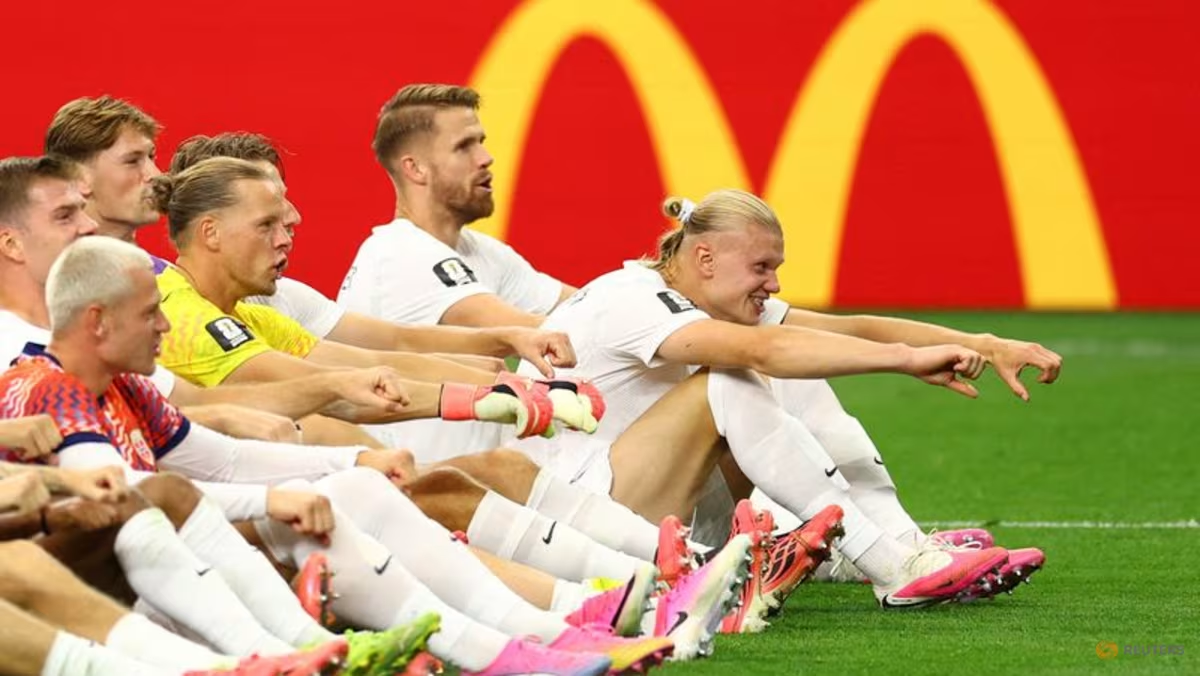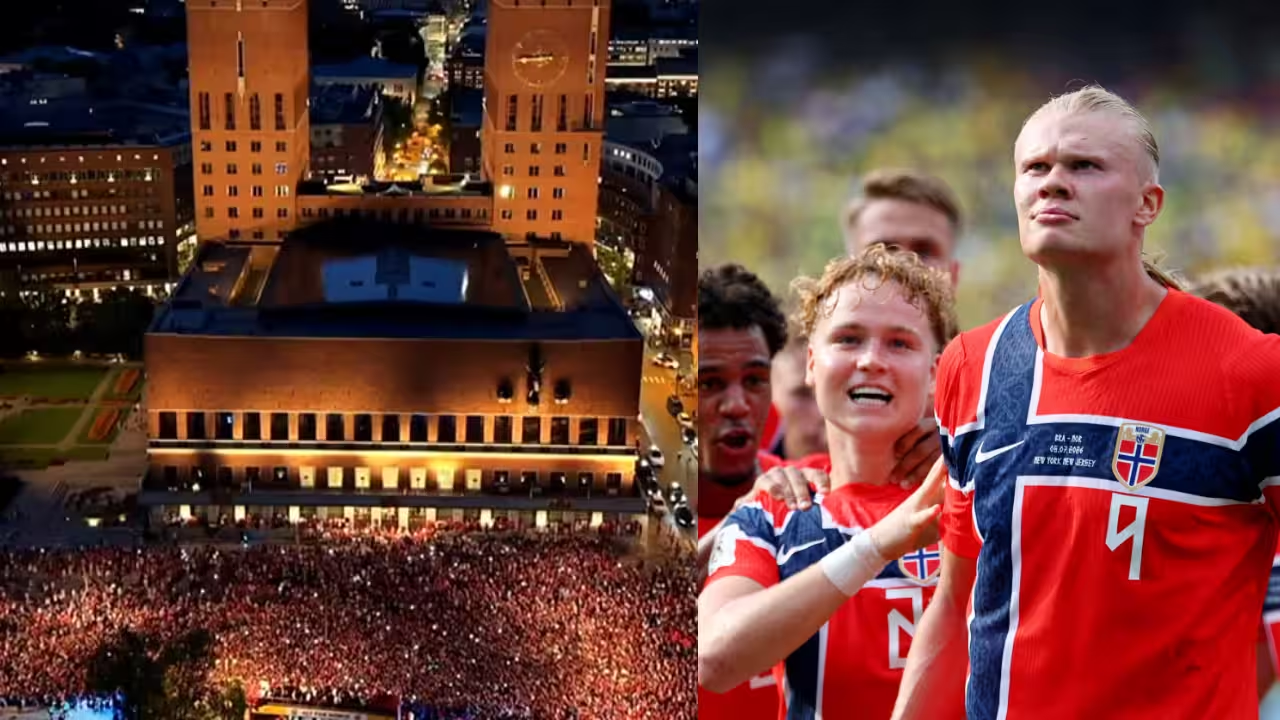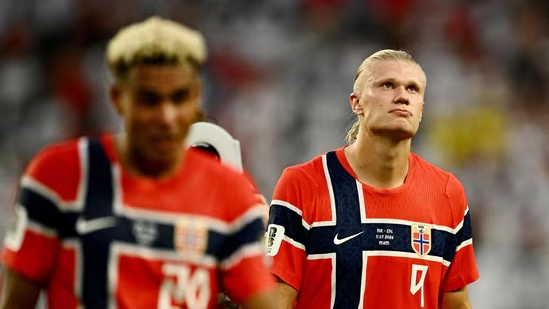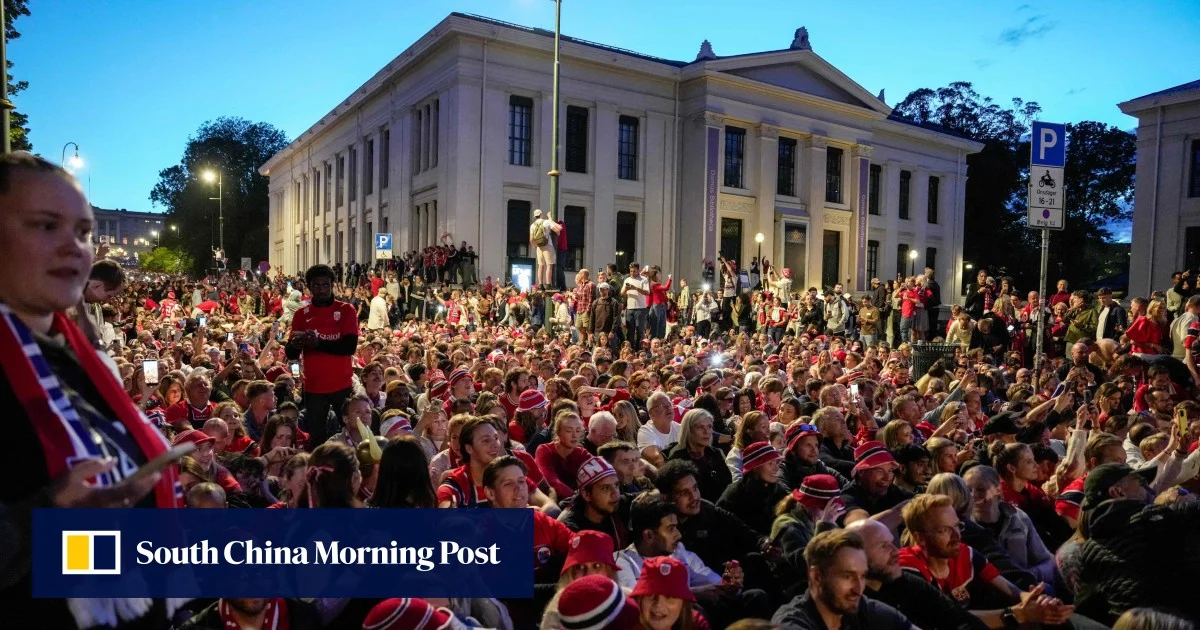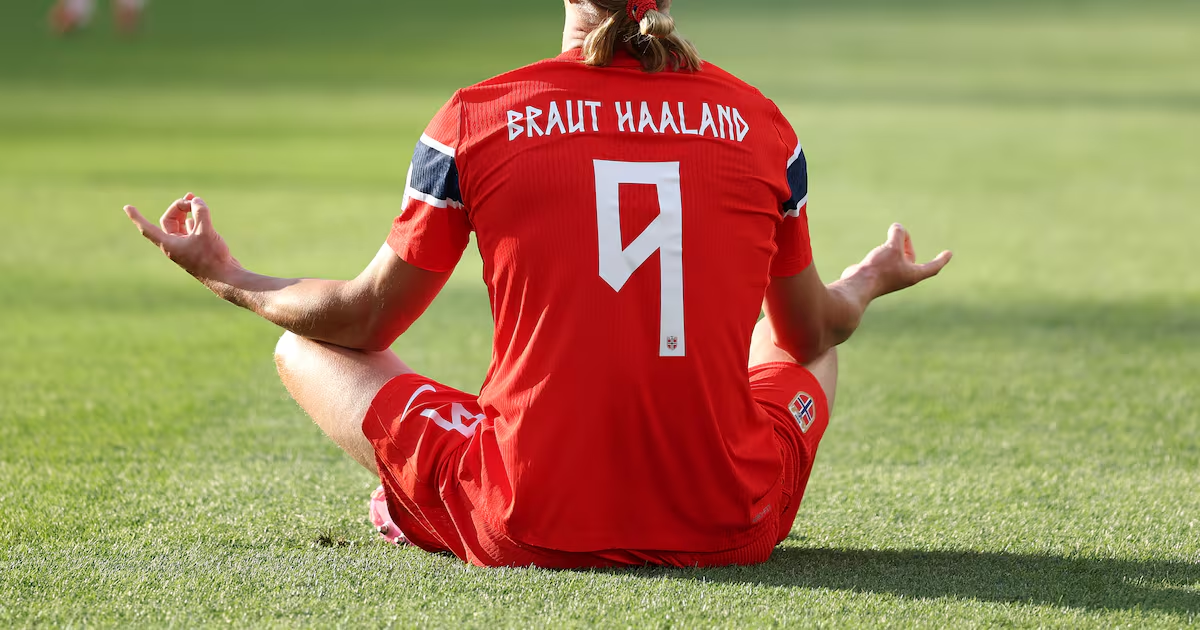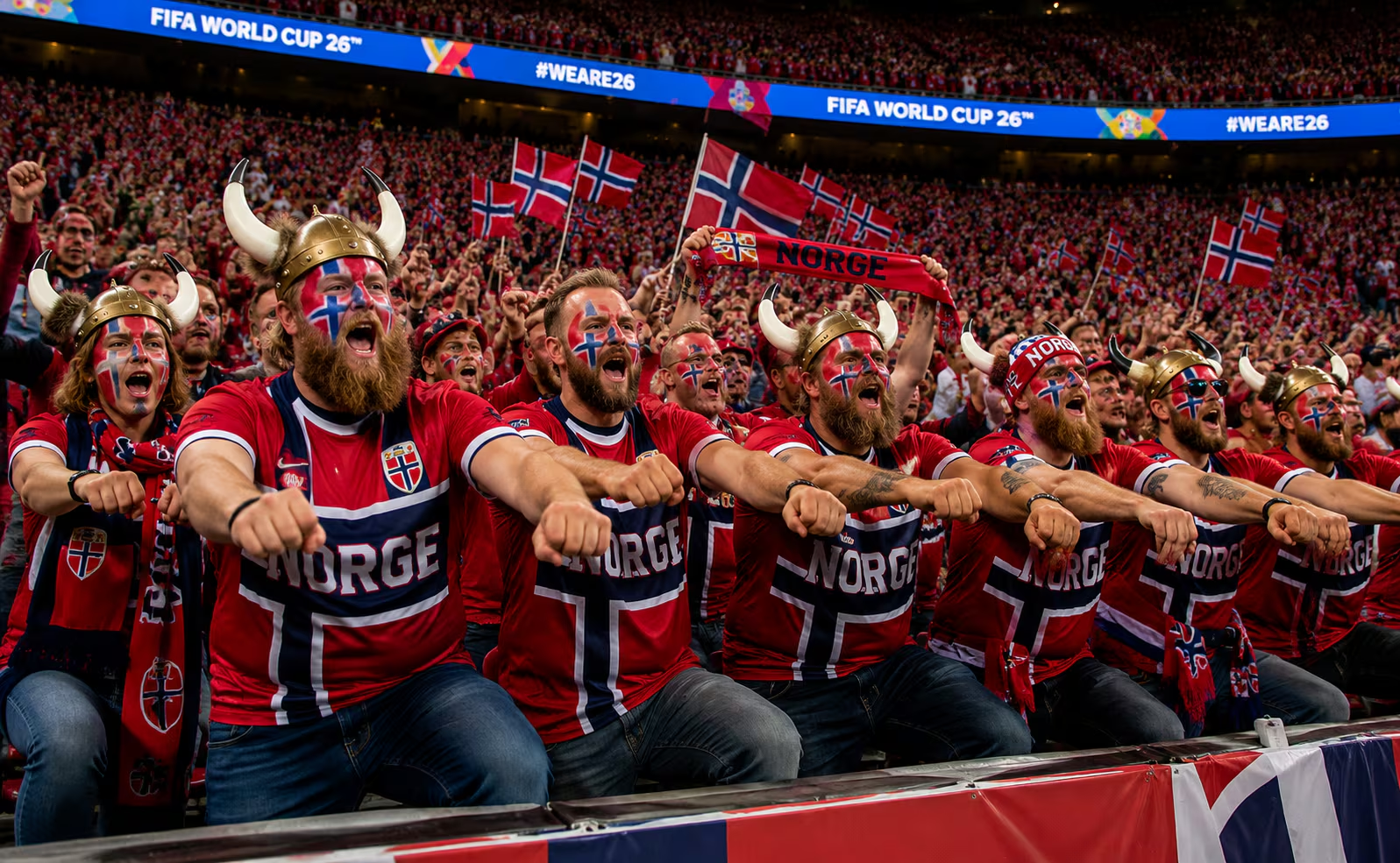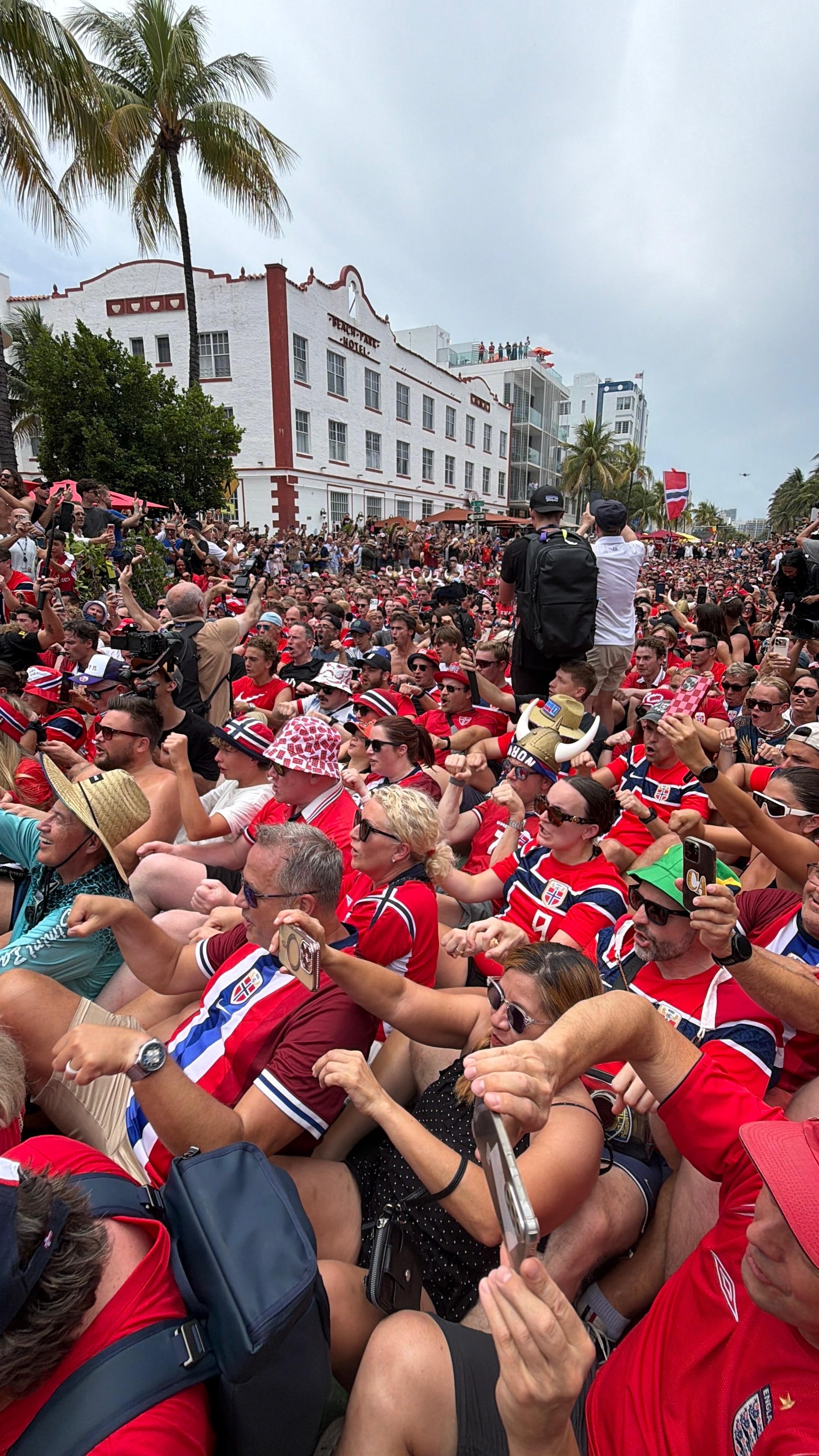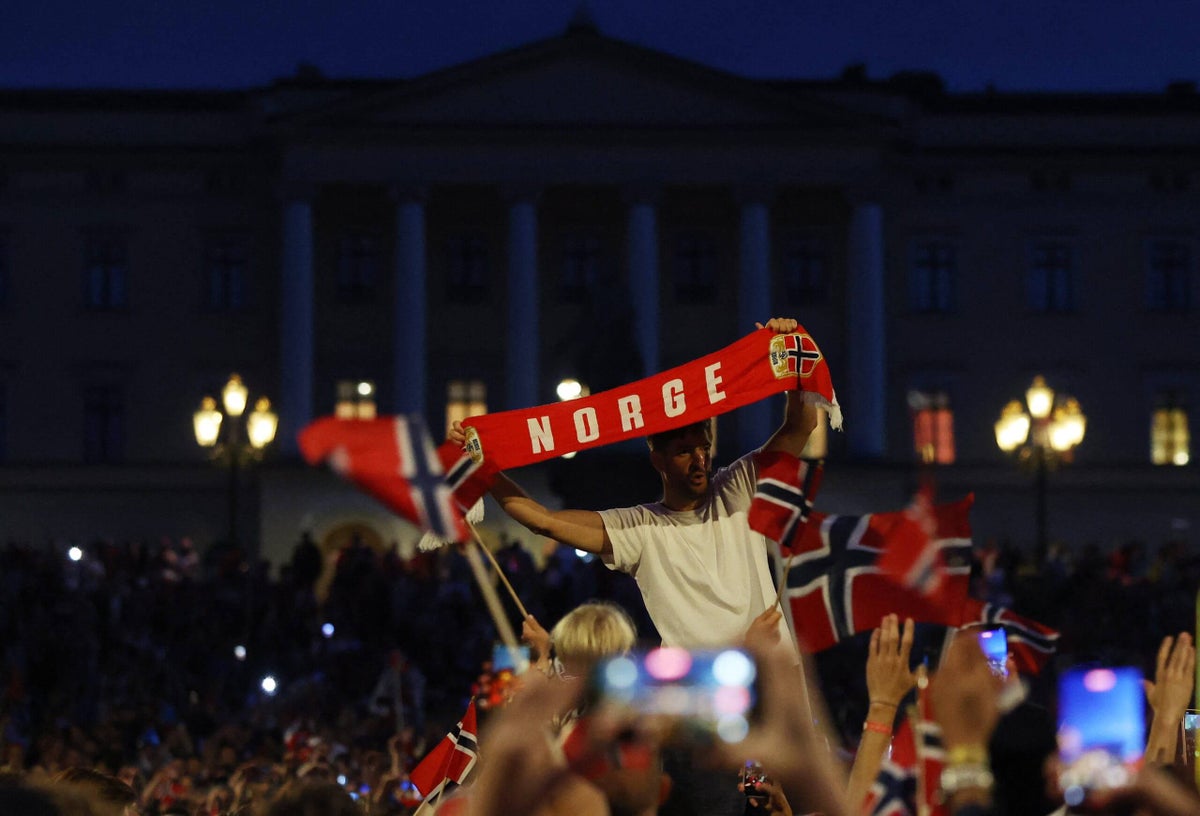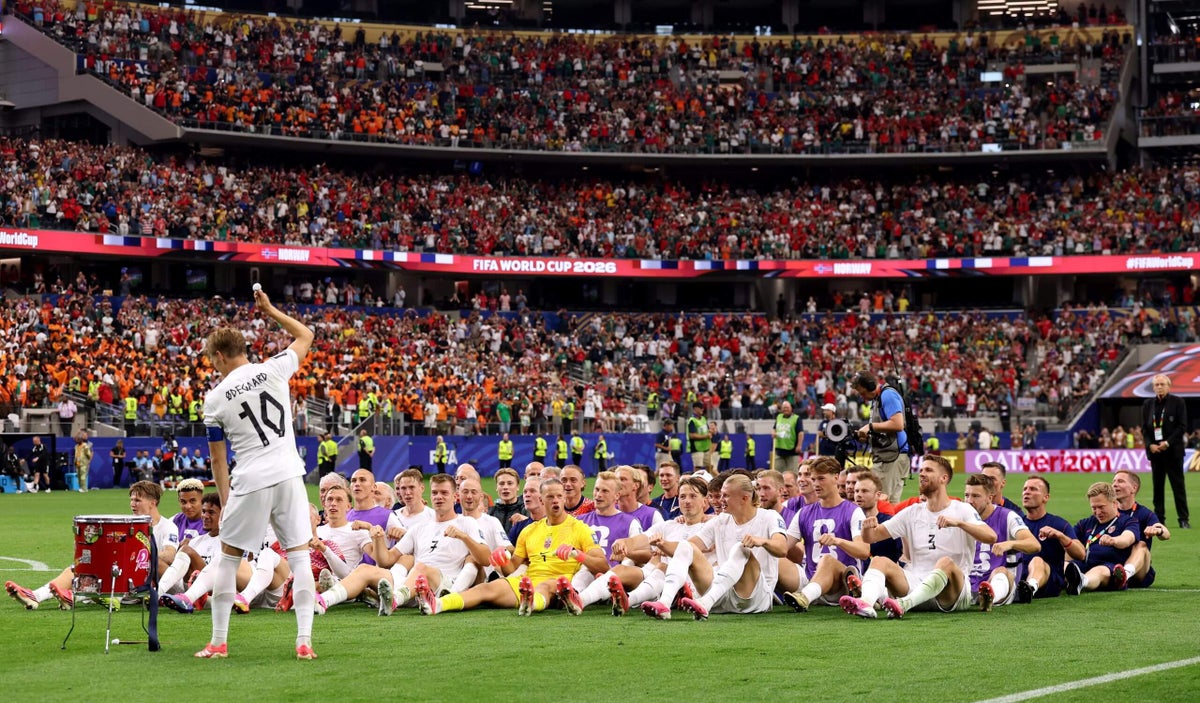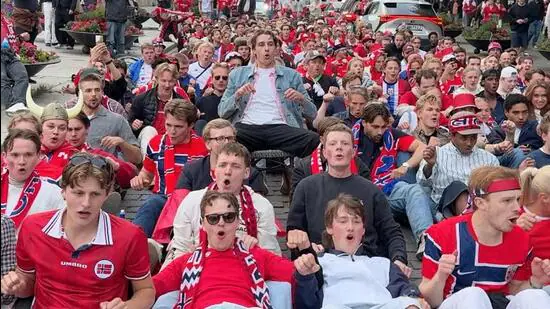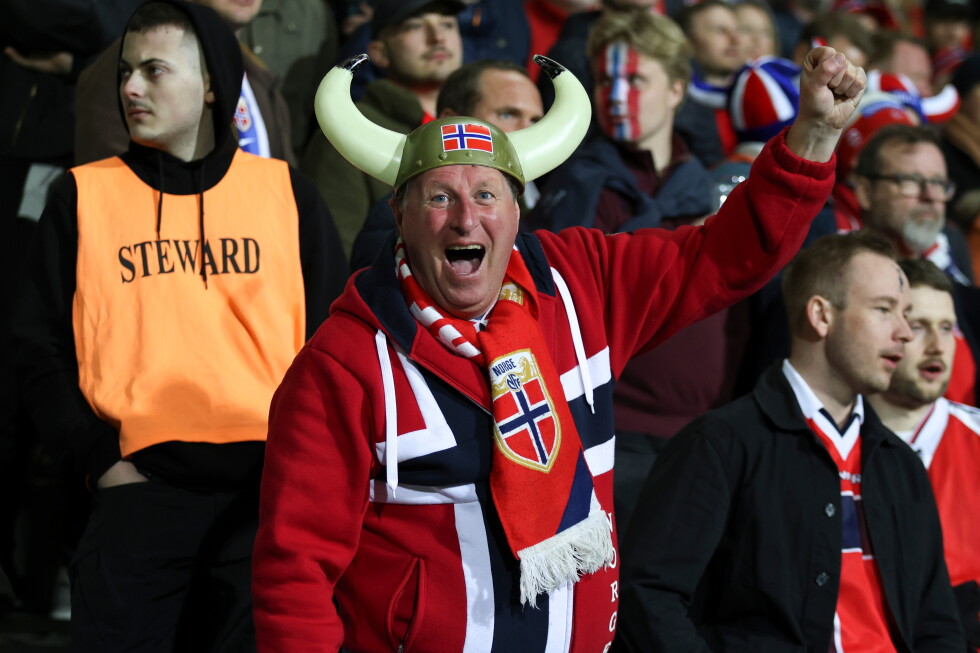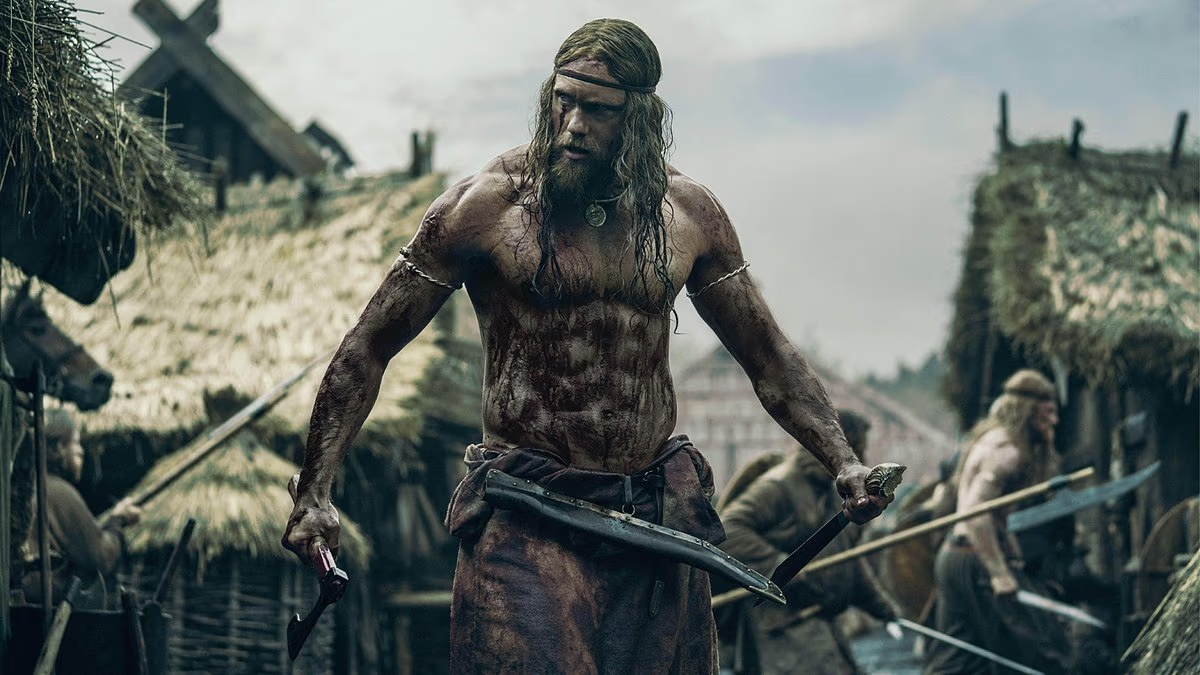
When England step out to face Norway in Miami this evening, the antics in the stands are likely to provide an entertaining addition to the drama on the pitch.The Norwegian fans are an exuberant bunch, with much of the fun and games celebrating their nation’s Viking past.Horned helmets have been much in evidence. But their party piece – which has captured the imaginations of audiences worldwide – is Norway’s answer to the Mexican Wave. It’s a marvellous exhibition of stadium choreography in which thousands of fans heave on imaginary oars, rocking back and forth in synchronised perfection and chanting ‘Ro! Ro! Ro!’ like ninth century Viking warriors powering their longships through the northern seas before falling on some unsuspecting peaceful coastal village.The Viking Row tradition – the words are the same in English and Norwegian – only started when Norway beat Italy twice in qualifiers last year and booked their place in the World Cup finals for the first time since 1998. It’s been embraced the length and breadth of the land and the internet is awash with videos from nursing homes to kindergartens showing pensioners and toddlers demonstrating their technique.Parliamentarians have got in on the act, posting a clip of themselves doing the row in the Storting, or national parliament. After their victory over Senegal the players performed it on the pitch with team captain Martin Odegaard beating time on a drum.It’s all part of a wider phenomenon. Both footballers and the footballing authorities have been revelling in Norseman iconography. The official team photos show the squad posing on the shore of a fjord. They are dressed for battle in wolfskins and leather and clutch spears, swords and bows, while behind them lie the longships that will carry them off on their marauding mission.These somewhat startling images caused minor controversy when journalist Markus Slettholm of the newspaper Morgenbladet called them ‘chauvinistic and exclusionary’. Swedish actor Alexander Skarsgard plays a Viking warrior prince in 2022's The Northman Patrick Bishop notes how the football world has been revelling in Norseman iconographyFor most though, the Viking craze is a bit of fun which gives Norwegians a sense of national togetherness as their team displays their best form in decades, while at the same time provoking an indulgent smile from the rest of us.At the risk of sounding earnest, though, I have to say that beneath the surface skylarking I see something more significant going on here.Norway’s embrace of its Viking past strikingly illustrates just how differently nations deal with their own stories. Almost everyone, from the prime minister Jonas Gahr Store who was seeing doing the ‘row’ while standing alongside Ukrainian President Zelensky at the Nato summit this week, feels they have nothing to worry about when invoking national mythology.In contrast, the English live in an era of dubious and ignorant historical revisionism and appear terrified of celebrating our island story.Our institutions more often than not find the past a painful subject, a source mostly of shame that provokes hand-wringing, self-flagellation and endless apology.Our football-loving Prime Minister Keir Starmer refused even to fly the St George’s flag at Downing Street, for instance, until the knockout stages of the World Cup, almost certainly because so many Labour MPs and supporters regard it as a toxic relic of our colonial past. The Norwegians’ insouciance is all the more impressive given the story of the Vikings is one of colonialism in its most ultra-violent and nihilistic form.The men who fanned out across the treacherous seas to rape and pillage wherever they made landfall gloried in their savagery, awarding themselves noms de guerre such as Erik Bloodaxe and Thorfinn Skullsplitter, and even their treasured swords names like Brainbiter.One group of warriors was described in a Nordic poem as ‘Wolfcoats... who bear blood-stained swords to battle; they redden spears when they come to the slaughter’. These men wore wolf skins, imagining they could absorb the ferocity of the beast for the oncoming slaughter.Fighters would psyche themselves up into a war frenzy before battle, become ‘berserk’ – literally bear-like in bloodlust and strength. On the eve of one battle, a body of fighters became as ‘mad as dogs or wolves and bit their shields and were as strong as bears or wild oxen’.The first band of Vikings – a term that was only coined in the 19th century and encompasses Norwegians, Swedes and Danes – descended on England in July 793. Driven by overpopulation to seek new lands, the warriors arrived in a fleet of longships, their prows carved with dragons and decorated with ravens which were destined supposedly to feast on the flesh of the dead. They beached on the tidal island of Lindisfarne off the Northumberland coast and advanced on the monastery founded more than 150 years before and a major centre of Christian learning.They hacked down priests, monks and nuns in an orgy of barbarity, scooped up golden chalices and crucifixes and set fire to the buildings.Those they did not kill were sold into slavery. ‘Never before has such terror appeared in Britain as we have now suffered from a pagan race,’ lamented Alcuin of York, the great Northumbrian scholar and confidant of Charlemagne. ‘The heathens poured out the blood of saints around the altar, and trampled on the bodies of saints in the temple of God.’The brutality was beyond comprehension. Enormous physical force was required: skeletons of men who died in battle reveal sword blows that smashed through helmets and skulls to the brain.After victory, one Viking leader ordered his warriors to cut the outline of an eagle on a prisoner’s back, slice the man’s ribs from his backbone and pull out his lungs as an offering to the god Odin.For centuries, the coasts of England, Scotland, Ireland and north-west Europe were at the mercy of these pitiless raiders whose fury seemed at times to threaten the overthrow of Christian civilisation. In one raid on the monastery at Iona, a defiant priest was ‘cut in pieces with severed limbs’ and yet his assailant, unsated, went on to hack at his entrails.Forewarned of another raid, the men and women of Fife ‘dragged themselves off to the woods and wastes with weeping and wailing’. They would return to famine, for the Vikings would have smashed their farm equipment and burned or plundered their granaries.Gradually, the Norsemen shifted from raiding to settling. By the end of the 9th century they had won in battle a domain known as the Danelaw which covered much of northern and eastern England. But it was not until 1066 when a Viking invasion force was defeated at the battle of Stamford Bridge that the menace finally abated.The Vikings have left their mark not least in our words for the days of the week, named for their gods. Wednesday is Woden’s Day, Thursday, Thor’s Day and so on. Any town with the suffix ‘thorpe’ reveals its Nordic origins. The Norse tradition of using a 12-man jury to settle community disputes undoubtedly influenced the English common law system – a modest contribution to Britain’s historical foundations to set against the havoc and destruction they wrought.Since the 1950s some historians and archaeologists have tried to revise our perception of Vikings as bloodthirsty savages, talking up their achievements as traders, shipbuilders and explorers. The broad truth, however, is that the men whose spirit the Norwegian fans and players are echoing were indeed the battle-crazed berserkers of popular imagination.So how come it is OK for them to hark back to their warrior past and not us Brits? Google Norway’s superstar striker Erling Haaland this morning and you will see a line of Vikings rowing across the bottom of your computer screen. Imagine the howls of horror from the liberal establishment were Harry Kane and the team to pose in pith helmets and red tunics or as crusaders bearing the cross of St George?In Britain, for progressive liberals, be they in politics, the arts, academia or the media, our past – and in particular our colonial and imperial past – appears to be a source of shame requiring eternal contrition. For years now, a heavy-handed reframing of history has been underway often with little concern for context or nuance.Britain, like Norway, is a maritime nation, but the way each approaches its seafaring past is very different. The Norwegian Maritime Museum in Oslo sets out to explain the nation’s deep relationship with the sea in straightforward terms with no attempt to forge spurious links to current political and social woes.Attractions include a special exhibit on Viking boat-building techniques and artefacts from an extraordinarily well-preserved 18th century merchant ship lying 1,800ft down on the sea bed.The National Maritime Museum in Greenwich, on the other hand, earnestly strives for ‘relevance’, seeking to link long ago stories to contemporary events in what often feels like an exercise in breast-beating. Not long ago, an interactive exhibition at the museum displayed a statue of a ‘migrant goddess’ berating Nelson for failing to ‘move over’ and make room for ‘unsung heroes of the sea’ – the illegal migrants who arrive on Britain’s shore in small boats.Great emphasis is placed on the undoubted evils of the slave trade. Yes, Britain was deeply involved. But it was also among the first nations to recognise the appalling inhumanity of slavery and do something about it.Another country might have chosen to foreground Britain’s leading role in abolition and its decision to direct the Royal Navy to establish, at vast cost, the West Africa Squadron, which for decades hunted down the slave ships plying to America, freeing about 150,000 Africans.The drive to outlaw slavery owes much to the humanitarian campaigner William Wilberforce who, on his death in 1833, was given a state funeral and buried in Westminster Abbey.Given his thundering achievement and relevance to the progressives’ fascination with the subject, you might expect his memory to be widely celebrated. As a wealthy white, establishment male, however, Wilberforce does not fit comfortably into their narrative. True, August 24 has been designated Wilberforce Day. But there will be no national celebration, just a few low-key local events.The hairshirt brigade sees no good at all in the British Empire, presenting it as a simple exercise in exploitation and oppression. There is no room for a corrective to this narrative which argues that while undoubtedly driven by the pursuit of profit and power, imperialism also brought benefits in the form of railways, communications, public works, educational and medical advances and legal and political systems across the world that endure today.Putting the worst interpretation on the past may be a manifestation of what George Orwell identified as the tendency of British Left-wing intellectuals to despise ordinary patriotism.‘England is perhaps the only great country whose intellectuals are ashamed of their own nationality,’ he wrote in 1941. ‘It is a strange fact, but it is unquestionably true that almost any English intellectual would feel more ashamed of standing to attention during God Save The King than of stealing from a poor box.’The impulse to atone may be a reflection of the social backgrounds of the progressive elites. Though the proportions are declining, private school and Oxbridge graduates are still significantly over-represented among those in politics and state cultural institutions who have encouraged an atmosphere of national self-recrimination. Some will have ancestors who were beneficiaries of the colonial system and feel some inherited guilt.That is not the case for most of us. The benefits of empire can’t have seemed very real to my Irish peasant and Scottish miner forbears whose lives of back-breaking labour and poverty were much different to those of Queen Victoria’s white colonial subjects.Most of us, I expect, struggle to feel any connection with the misdeeds of the past. Nor, I imagine, do we recognise the myth of a contemporary Britain riven by racism that the progressives tirelessly peddle. Having lived in Italy and France, I can honestly say I would rather be an immigrant in the UK than in either place.England’s exhilarating World Cup run has brought a blessed break in the enveloping cloud of national self-denigration. Now is the time for a reset that starts with celebrating our virtues.We do not need to be told by earnest busybodies of the duty to be tolerant and inclusive. Ordinary people have been doing it for ever. It is they who befriend, marry and reproduce with incomers, not the intellectual elites who, in my experience, seem to prefer to stick with each other.The reboot should include junking the sackcloth-and-ashes approach to our history, with its absurd attempts to impose a modern moral template on the events of centuries ago.For the past is another country and, as the late historian David Abulafia declared, it is essential to look at it ‘through the eyes of those who lived then, realising that they operated according to different ideas about the world which, unsettling as that might be, legitimated behaviour we would deplore if it were exercised today’.The Norwegians and many other nations get it. So should we. As the kick-off in Miami beckons, it’s time to don the fake chainmail, raise our plastic broadswords and cry: ‘God for Harry, England and Saint George!’Patrick Bishop is a military author and historian.
Norwegians are celebrating their heritage. Why can't WE fete ours?
When England step out to face Norway in Miami this evening, the antics in the stands are likely to provide an entertaining addition to the drama on the pitch.
2,191 words~10 min read