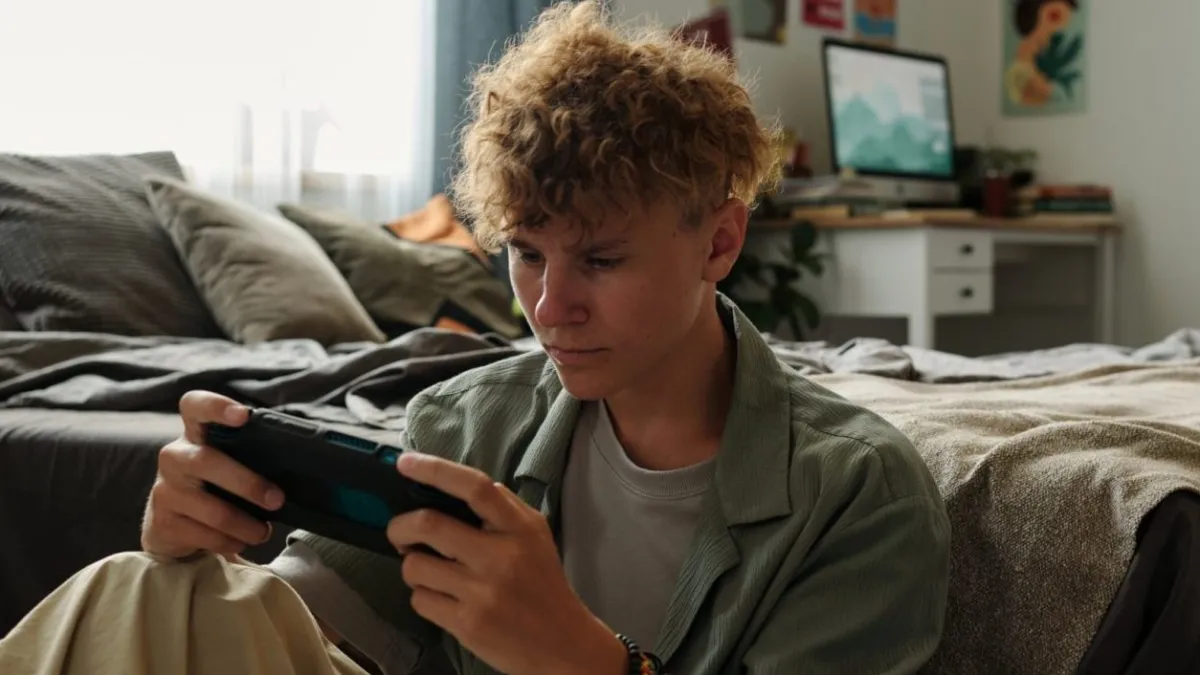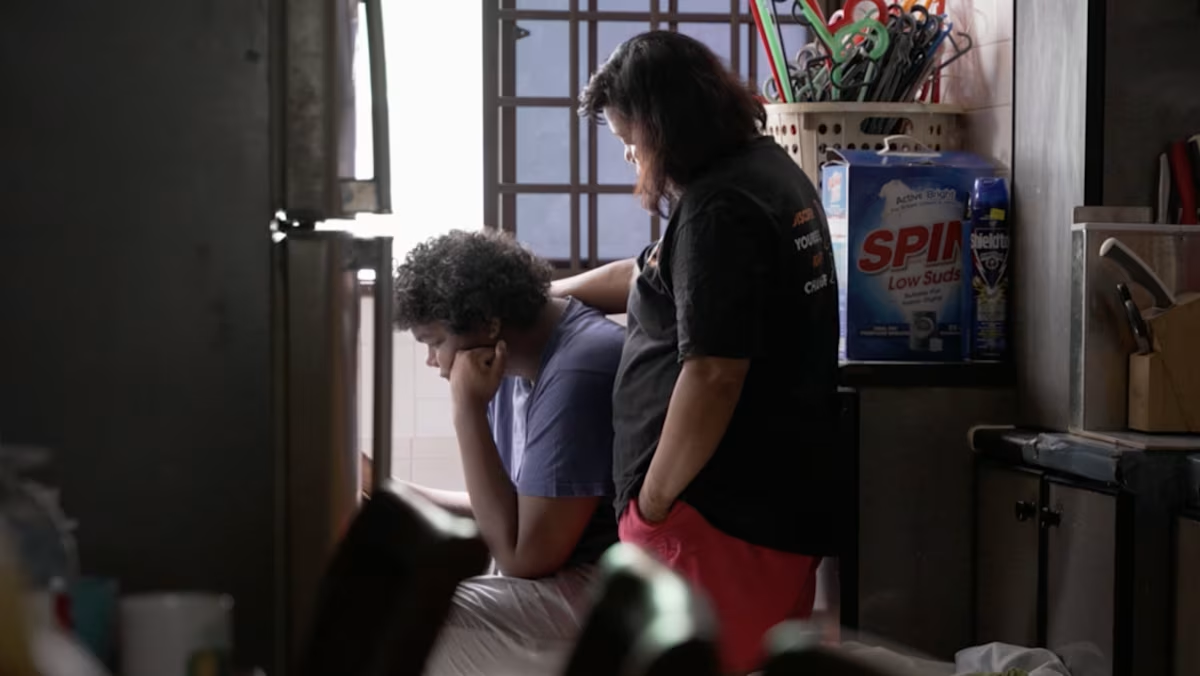
SINGAPORE: The first time Danzel Panniachelvam tried to disappear, he was a primary school pupil hiding under his bed. He had told his mother he was being bullied in school.By Secondary 1, he had stopped attending classes. By age 19, his world had shrunk almost entirely to his family’s flat as he slept the days away, gamed through the night and avoided almost all contact with the outside world.“He doesn’t want to see anybody,” said his mother, Aludia Cabigunda Panniachelvam. “The doctor’s diagnosis is extreme depression. He’s afraid to go out.”The years of inactivity has also weakened his legs and affected his balance, leaving him in need of physiotherapy. But even leaving home for medical appointments can overwhelm him.
Danzel covering his head after feeling overwhelmed by the film crew during a visit to the Institute of Mental Health.
To reach him, case worker Tan Yang Hong had to start small and consistently show up once every fortnight for six months.“A lot of what I did with Danzel was to … try and engage him as much as possible,” Tan said.Such is the slow, often invisible work involved in helping Singapore’s hidden youth — young people whose withdrawal is not simply shyness, defiance or a preference for staying at home.For many of them, retreating from the world becomes a way to cope with their fears until it hardens into a way of life over the months and years.Better known by the Japanese term, hikikomori, hidden youth isolate themselves from school or work and social life for at least six months. Some never leave their bedrooms. Others can venture outside but only with trusted companions by their side.