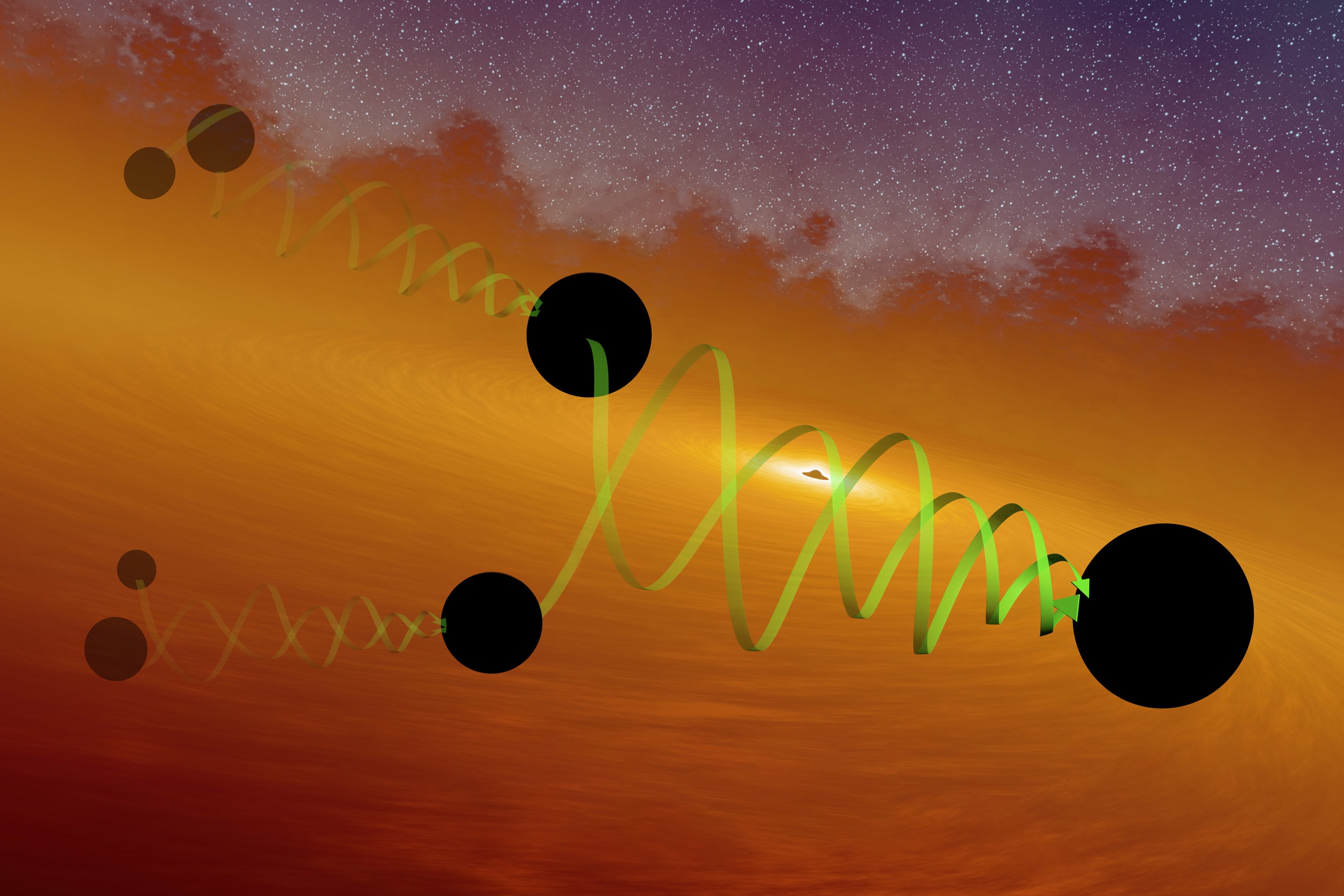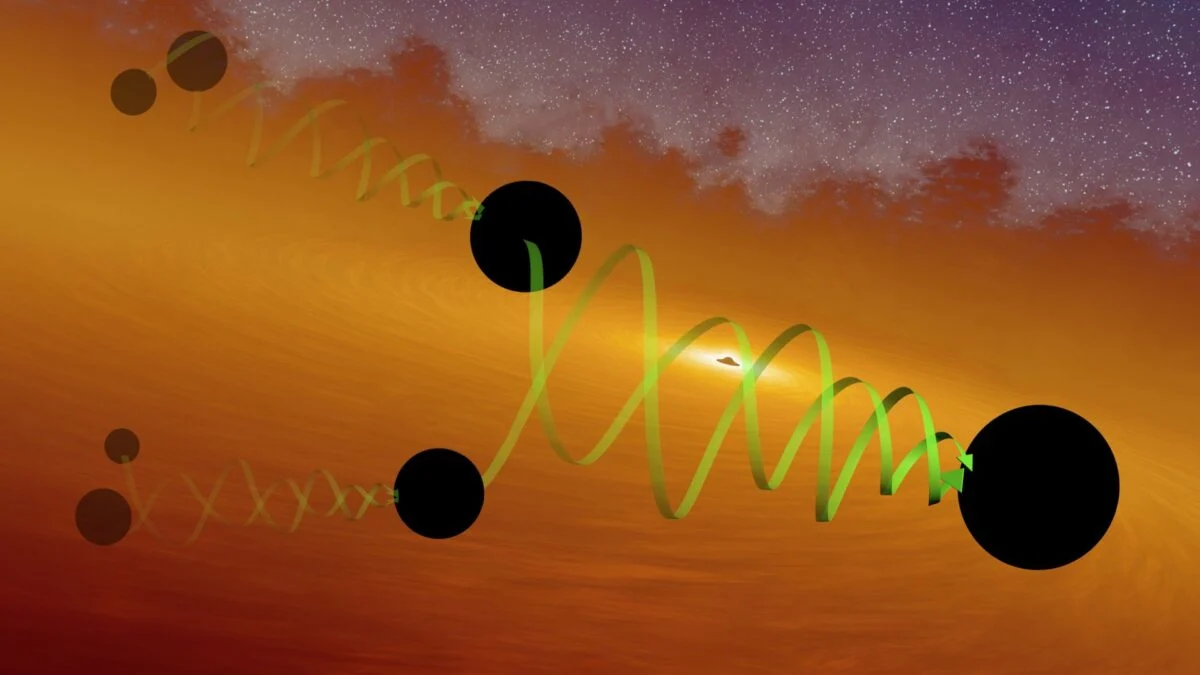
Since LIGO’s Nobel-winning discovery of gravitational waves—ripples in spacetime—the U.S.-based detector has been picking up on hundreds of signals from black hole mergers. And, after a decade of studying gravitational waves, researchers believe a significant fraction of black holes may come from cosmic chain reactions. A recent paper published in Physical Review Letters describes an analysis of 155 pairs of binary black holes, identified by LIGO and its sisters, Virgo and KAGRA, in Italy and Japan, respectively. According to the study, about 14% of merging black holes may be what’s called “second-generation black holes,” or black holes that form from previous mergers of two smaller black holes. This “hierarchical” backstory is vastly different from the textbook version of how black holes emerge from the explosive death of a star. “Overall in the universe, black holes are merging all the time,” Cailin Plunkett, the study’s first author and a graduate student at the Massachusetts Institute of Technology, told MIT News. “Now we’re seeing a relatively consistent picture where there’s a decent percentage of black holes that are coming from this repeated pathway.”
Tracking the invisible Gravitational waves that reach Earth’s detectors typically come from extremely intense events. Over the years, LIGO has picked up some truly perplexing signals. For example, last summer it found the most colossal black hole merger ever—and if that wasn’t wild enough, the black holes that took part in the merger lie within a cosmic “dead zone” for black holes.