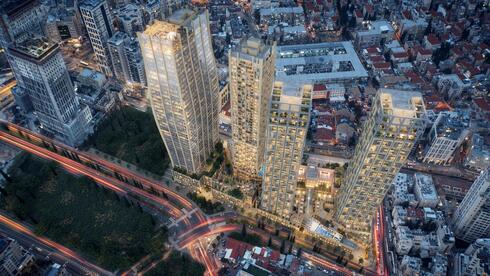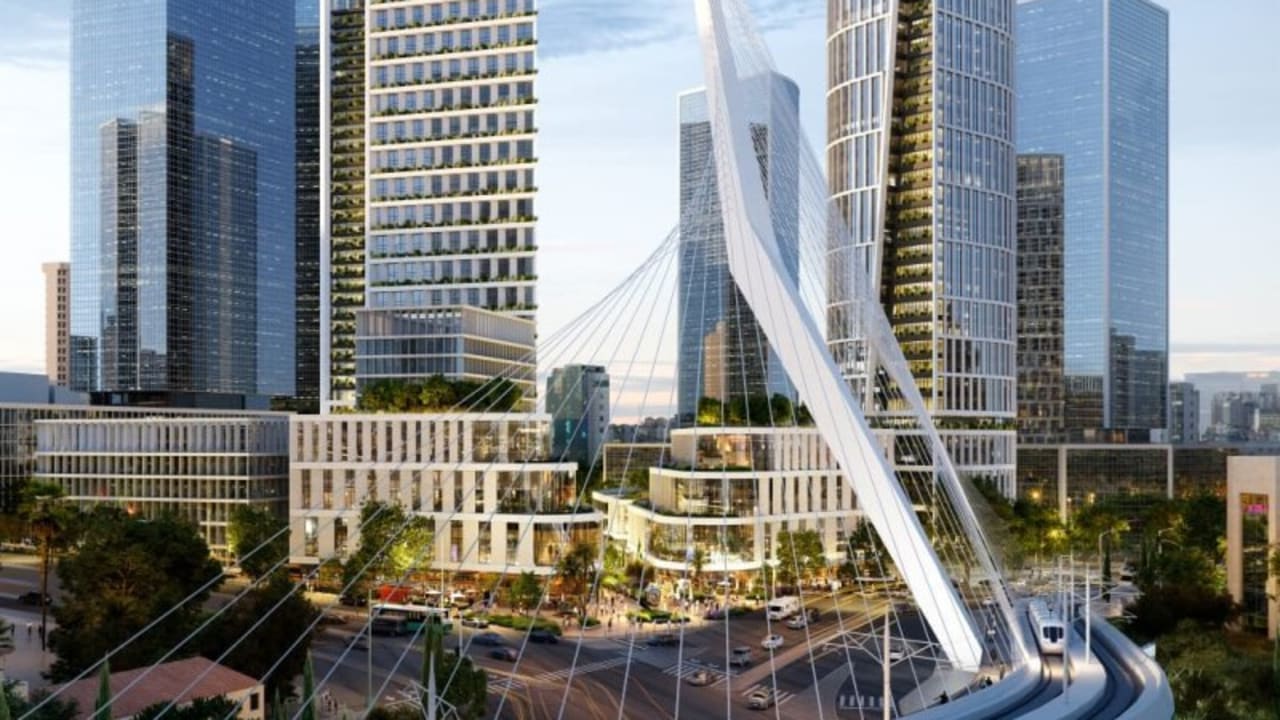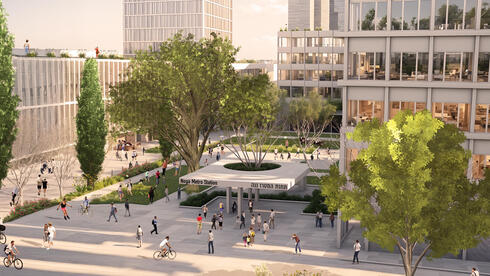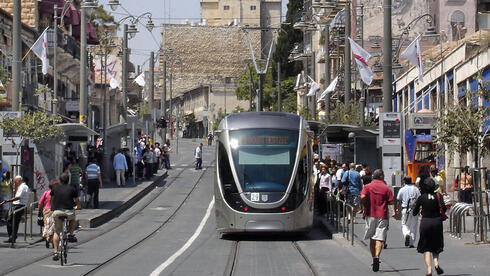
Jerusalem is undergoing unprecedented growth, with record construction, urban renewal, expanding employment hubs and a growing light rail network reshaping the capital into a modern metropolitan center and drawing young families back to the cityOri Chudy|Jerusalem is in the midst of a construction and development boom. The number of new projects moving forward has reached record levels, and the city appears poised for a dramatic transformation in the not-too-distant future.At a recent real estate conference hosted by the Building Center in Jerusalem, industry professionals highlighted the unprecedented scale of development underway, along with sweeping changes expected in housing, employment centers, transportation infrastructure and other sectors. Industry figures agree that today's Jerusalem is on the verge of becoming a very different city.GalleryGolden City Project in Jerusalem, designed by Canaan Shenhav Architects (Illustration: Canaan Shenhav Architects)Racheli Kalimi, marketing director at Guy & Doron Levy, said Jerusalem is now leading Israel in its capacity for urban renewal."The city has the potential to add about 50,000 new housing units through urban renewal — roughly one-third of Israel's total urban renewal potential — and that's only the first indication of where Jerusalem is headed. If the city was once seen as a place young people tended to leave, the picture has now reversed. A renewed, high-quality housing supply, combined with improved transportation access, is bringing young families back into the heart of the city."Kalimi said two main forces are driving the transformation."Jerusalem's limited ability to expand geographically means virtually all future growth is directed inward through urban renewal. At the same time, the light rail has turned once-remote neighborhoods into accessible, central locations. In Kiryat HaYovel, for example, the Red Line, Jerusalem light rail, completely changed demand. Mixed-use development is a key part of this approach. It creates a more dynamic urban environment and responds to what younger residents are looking for — housing, work and leisure within walking distance. We see it as our responsibility to help build a prosperous future for Jerusalem, a modern city that remains connected to its distinguished past."Omer Dellus-Neeman, an associate at Auerbach Halevy Architects, also described what he called a profound shift in the capital."Jerusalem is undergoing a real revolution in planning and construction. It is transforming from a city that for years functioned primarily as the seat of government and the end point of Highway 1 into a genuine metropolitan center. Mixed-use development is only one element of a much broader vision."According to Dellus-Neeman, Jerusalem faced unique constraints for decades."There were historical limitations and significant concern about intensive development out of a desire to preserve the city's character. But in recent years, the city engineer and the district planning committee have led policies encouraging more substantial construction along public transportation corridors, allowing Jerusalem to emerge from decades of stagnation."Jerusalem Light Rail Maintenance Center, designed by Auerbach Halevy (Illustration: Auerbach Halevy Architects)He said the city's planning model had long failed to keep pace with demand."Employment districts operated only during the day, while residential neighborhoods came alive only in the evening. Jerusalem's topography also required residents to travel constantly between different parts of the city. All of this created a less efficient urban environment."Public transportation, he said, is the key to changing that reality."Jerusalem has spent more than a decade developing a light rail-based public transportation network. The Red Line has been operating for nearly 20 years, the Green Line is expected to open later this year and the Blue Line, which we are working on, will open in stages over the coming years. This is not just a transportation project. It's a social and economic project with the ability to bridge physical and cultural divides between different communities. It is turning Jerusalem into a truly connected city where residents can travel from almost any neighborhood to almost anywhere else."Dellus-Neeman said comparisons with Tel Aviv are misleading because the two cities developed differently."Jerusalem's foundation is the opposite of Tel Aviv's. It did not grow as a business center, so the way it is developing today is different. Growth is concentrated along light rail corridors and in areas with lower environmental sensitivity. Because Jerusalem is unique, every planning decision is made with great caution. Yet that very caution is creating a significant opportunity."He believes the city has reached a historic turning point.'Potential for tens of thousands of housing units'. Simulation of genius towers by Guy and Doron Levy in Kiryat HaYovel
Jerusalem's construction surge is transforming the city into a modern metropolis
Jerusalem is undergoing unprecedented growth, with record construction, urban renewal, expanding employment hubs and a growing light rail network reshaping the capital into a modern metropolitan center and drawing young families back to the city
1,559 words~7 min read