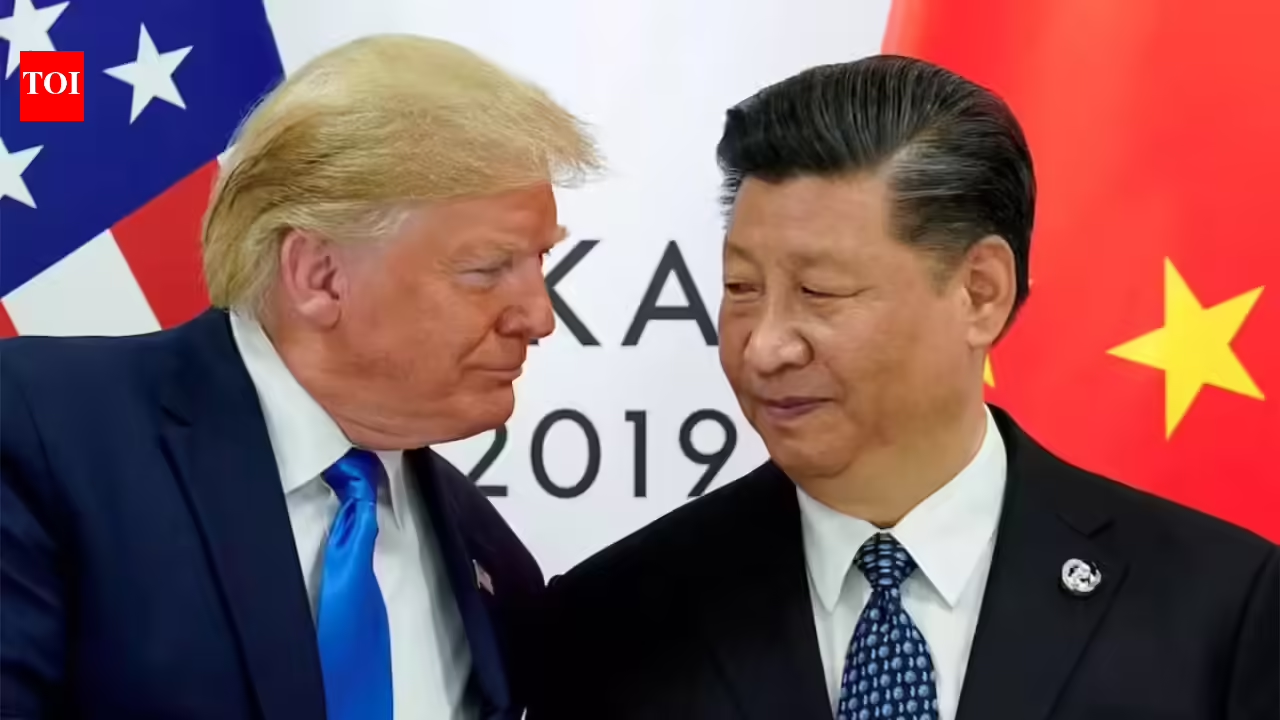
Despite the May meeting between Chinese President Xi Jinping and U.S. President Donald Trump in Beijing, where the United States and China agreed to pursue a “constructive relationship of strategic stability,” strategic competition between the two countries continues to deepen beneath the surface.
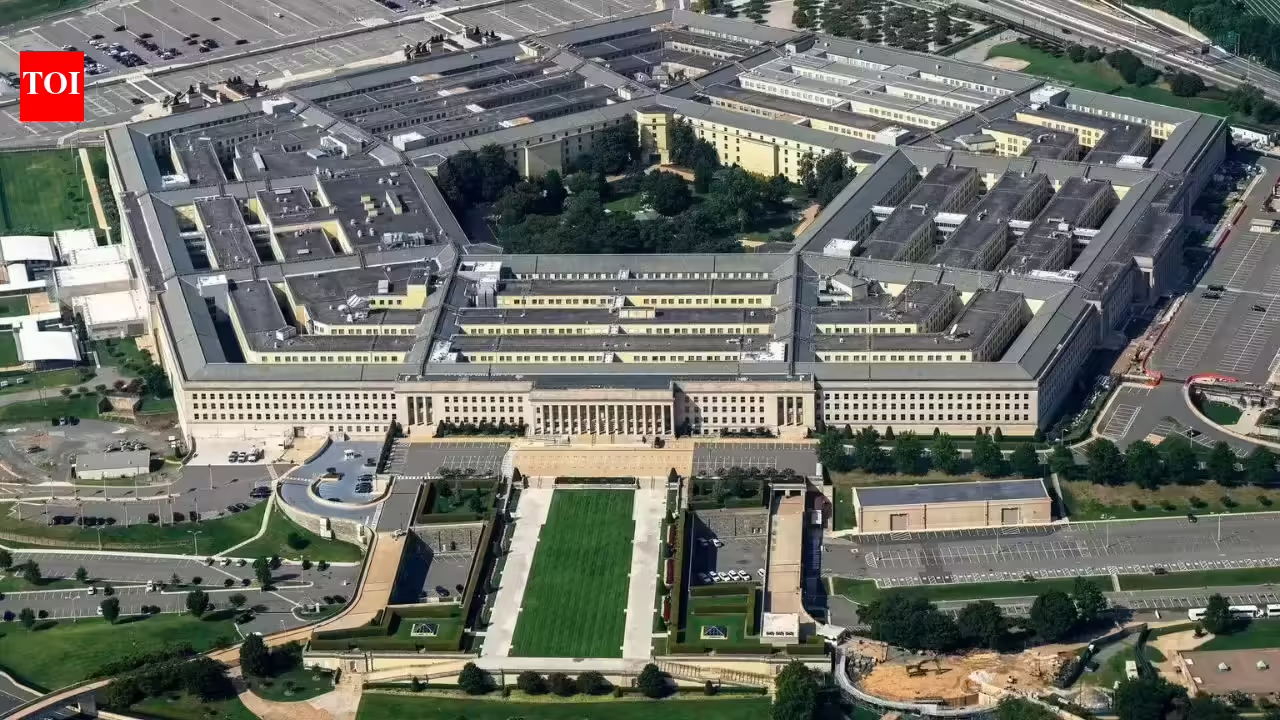
The expansion of national security-related measures targeting Chinese firms remains a central feature of this competition. On June 8, the U.S. Department of Defense expanded its Chinese Military Companies (CMC) List to 188 entities, adding 64 Chinese companies identified under Section 1260H of the National Defense Authorization Act for Fiscal Year 2021. The update drew widespread attention not only because of its unprecedented scale, but also because it included several of China’s best-known private companies in China, including Tencent, DJI, Unitree, Alibaba, etc.
The CMC List has become an increasingly visible instrument in Washington’s approach to China, yet it differs fundamentally from tools such as the Entity List or the Specially Designated Nationals (SDN) List. Inclusion on the CMC List does not prohibit commercial transactions, impose export controls, trigger economic sanctions, or otherwise bar listed firms from the U.S. market. Despite these limited immediate legal consequences, Washington continues to devote growing political attention to expanding the list.