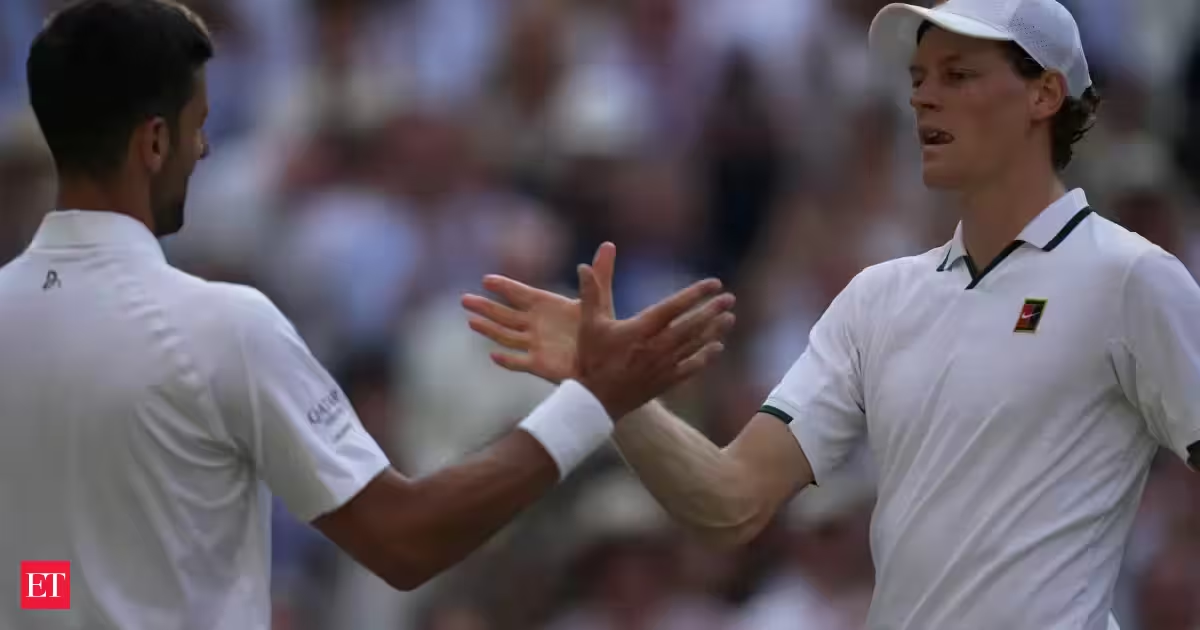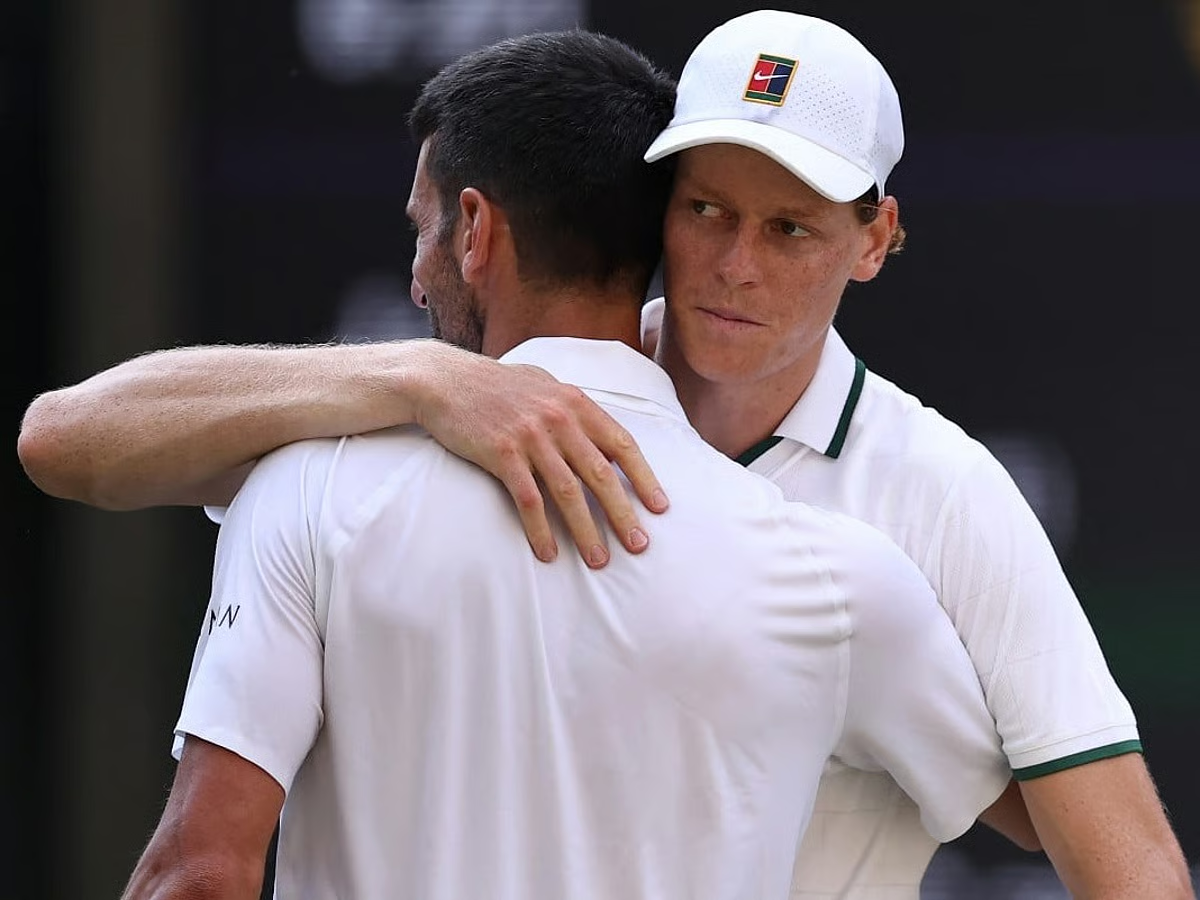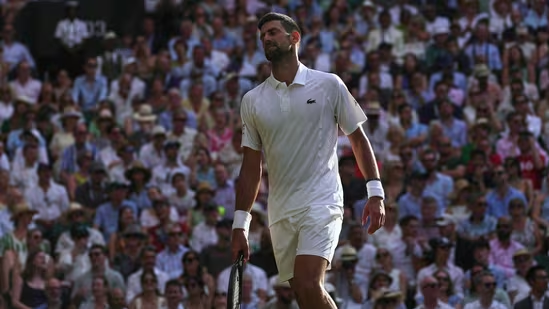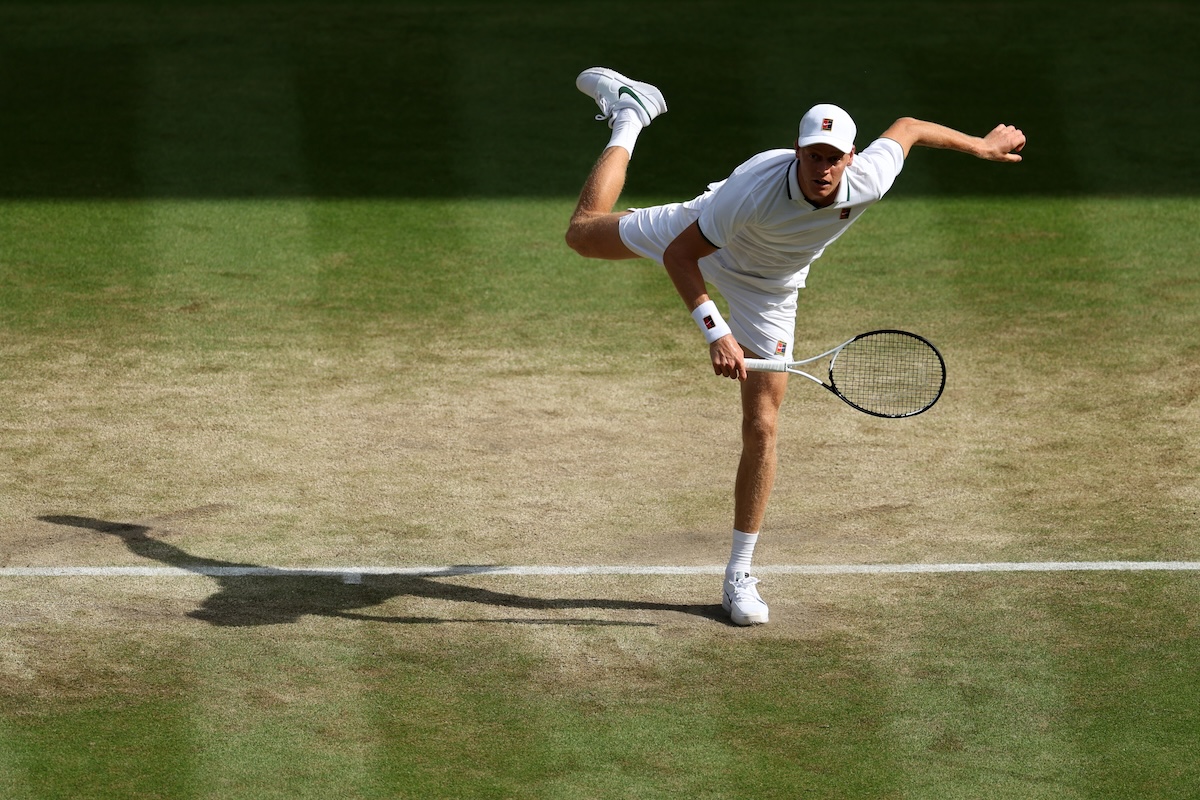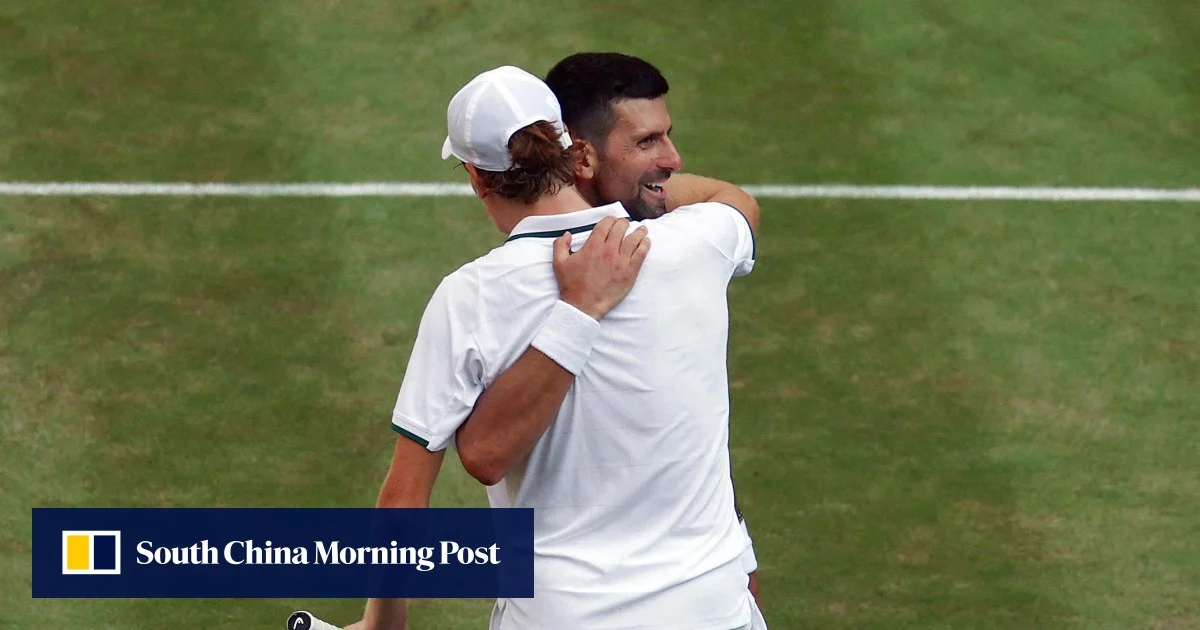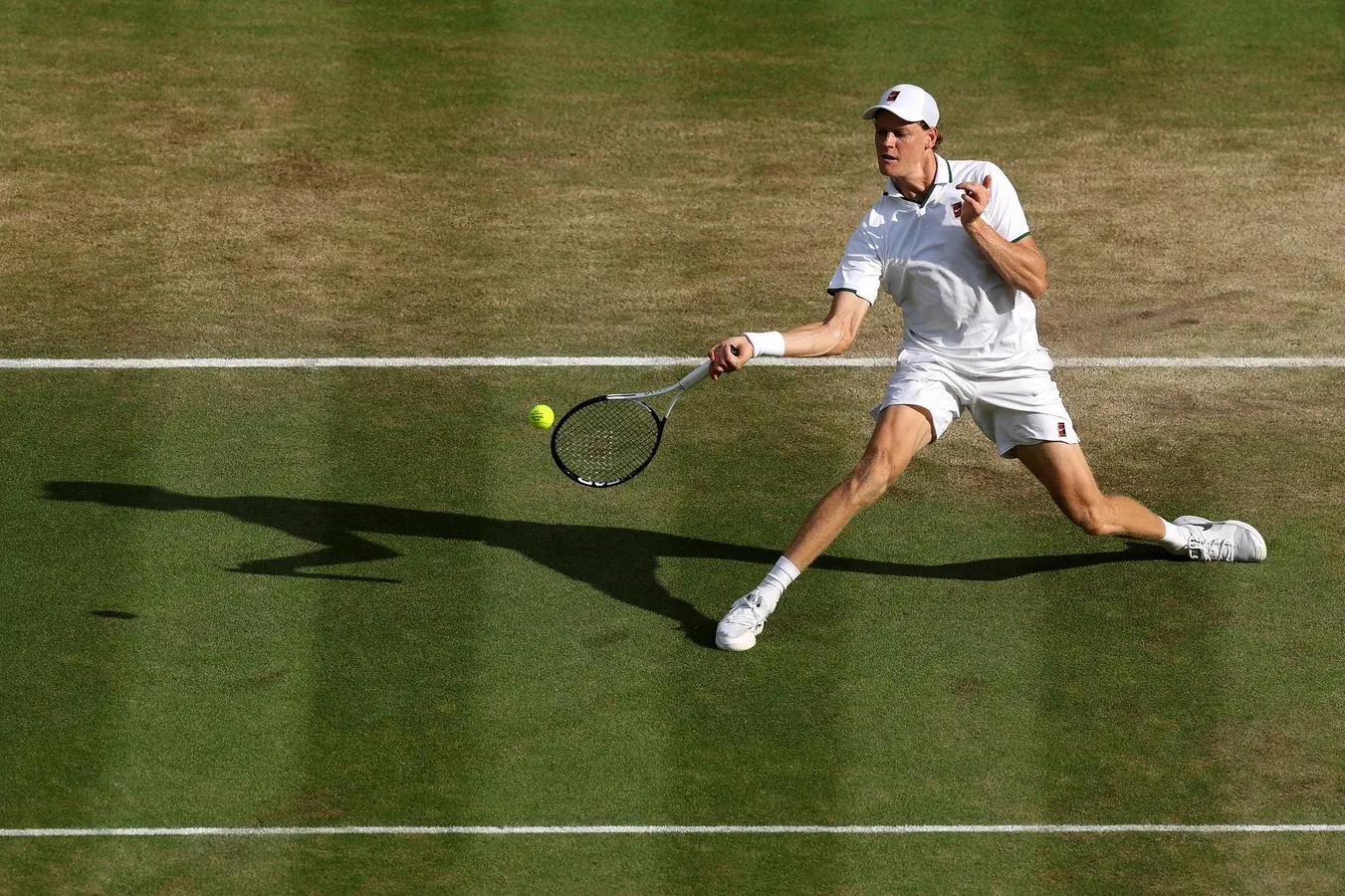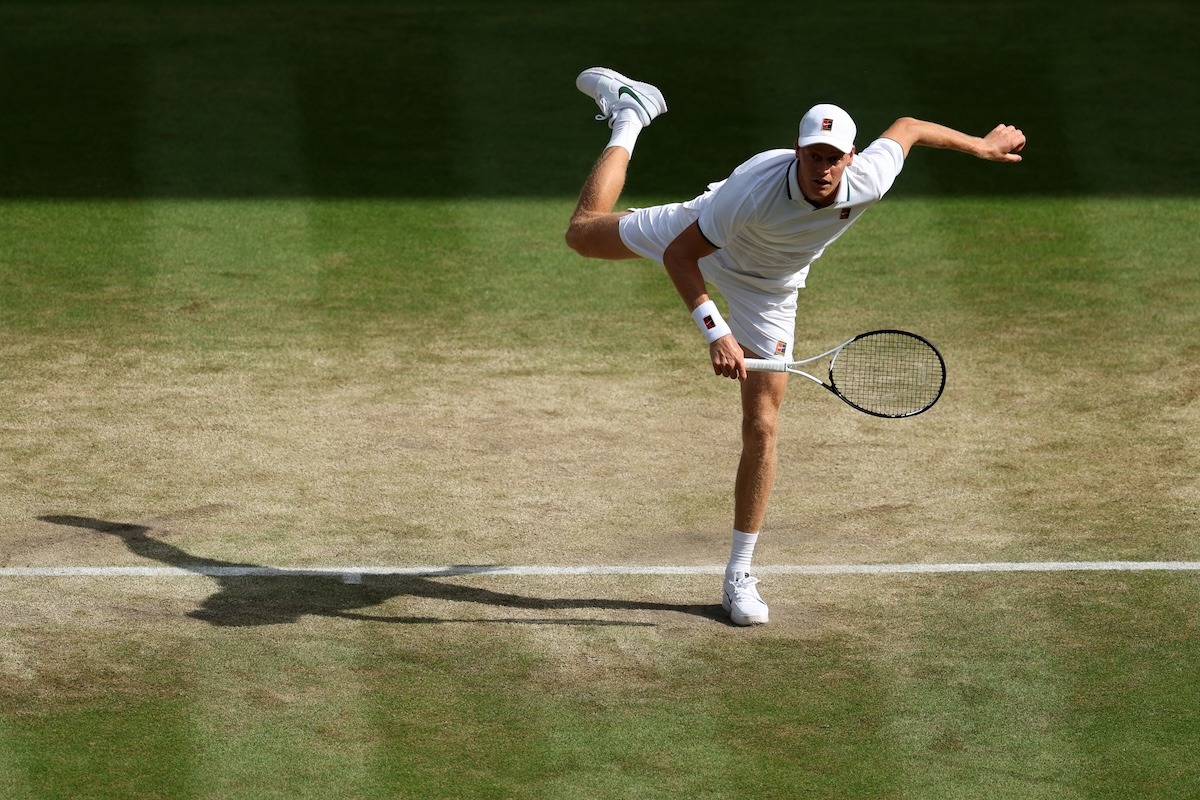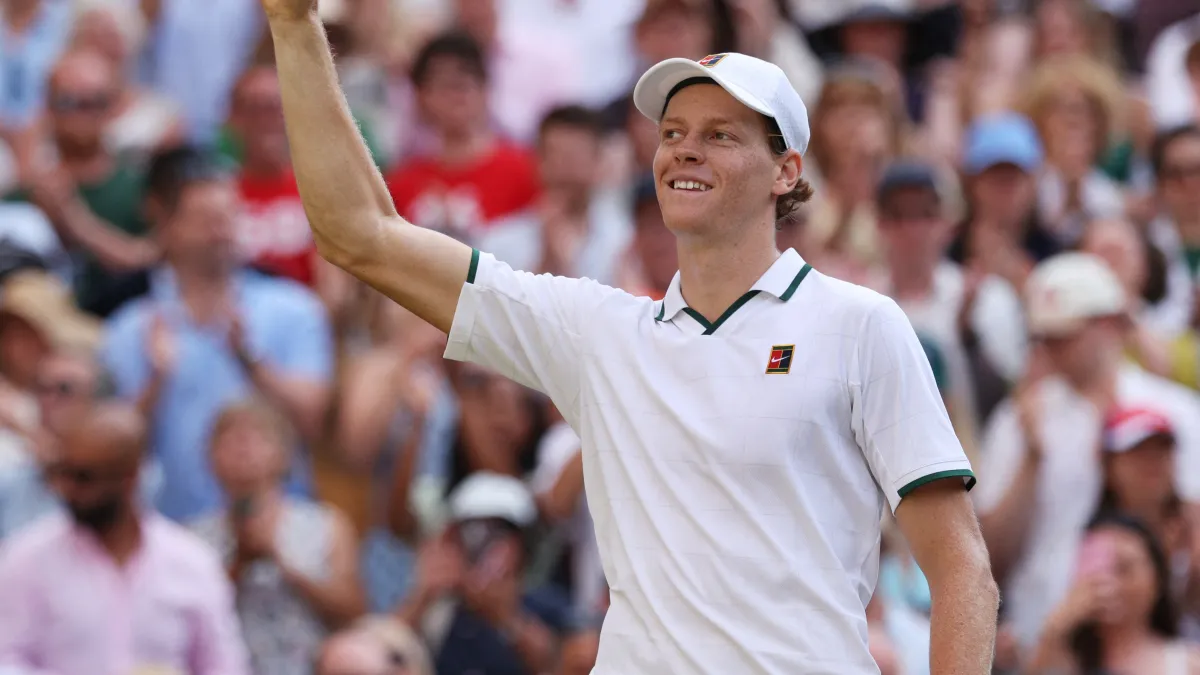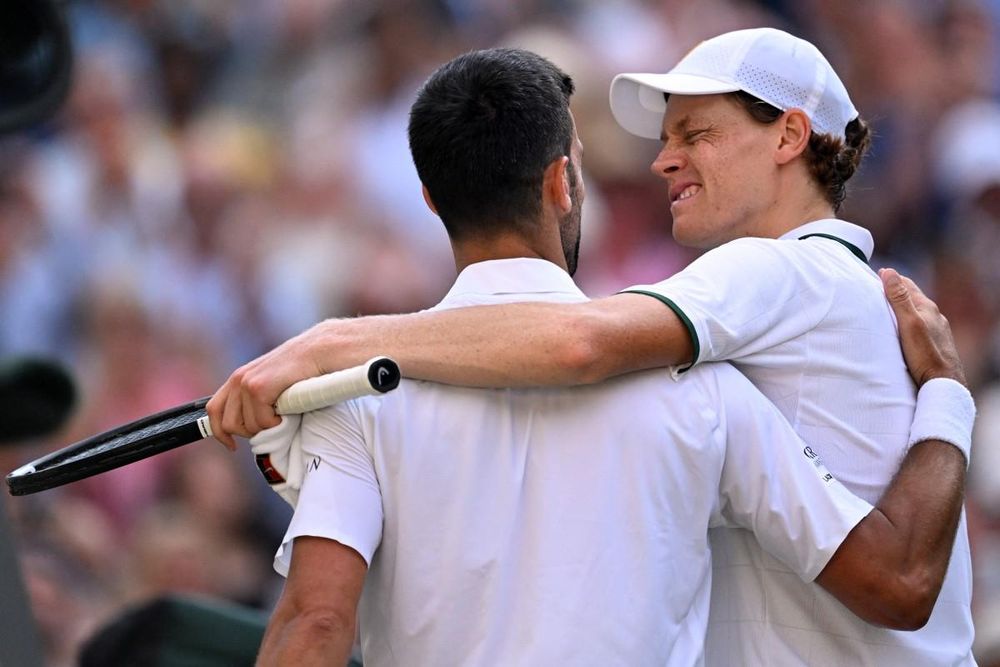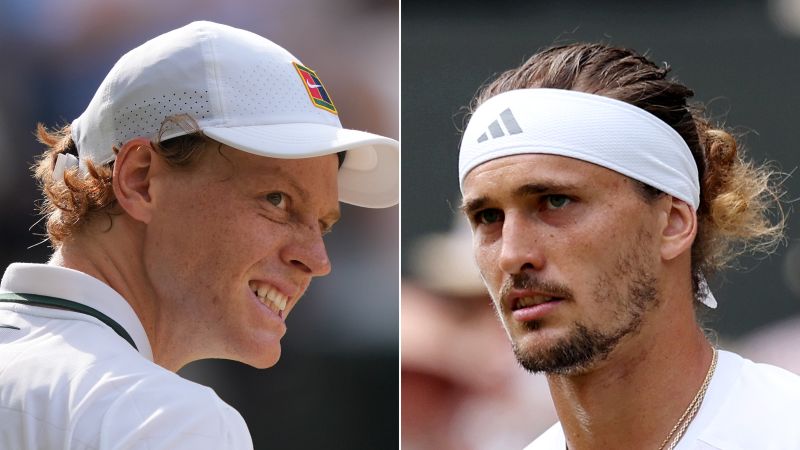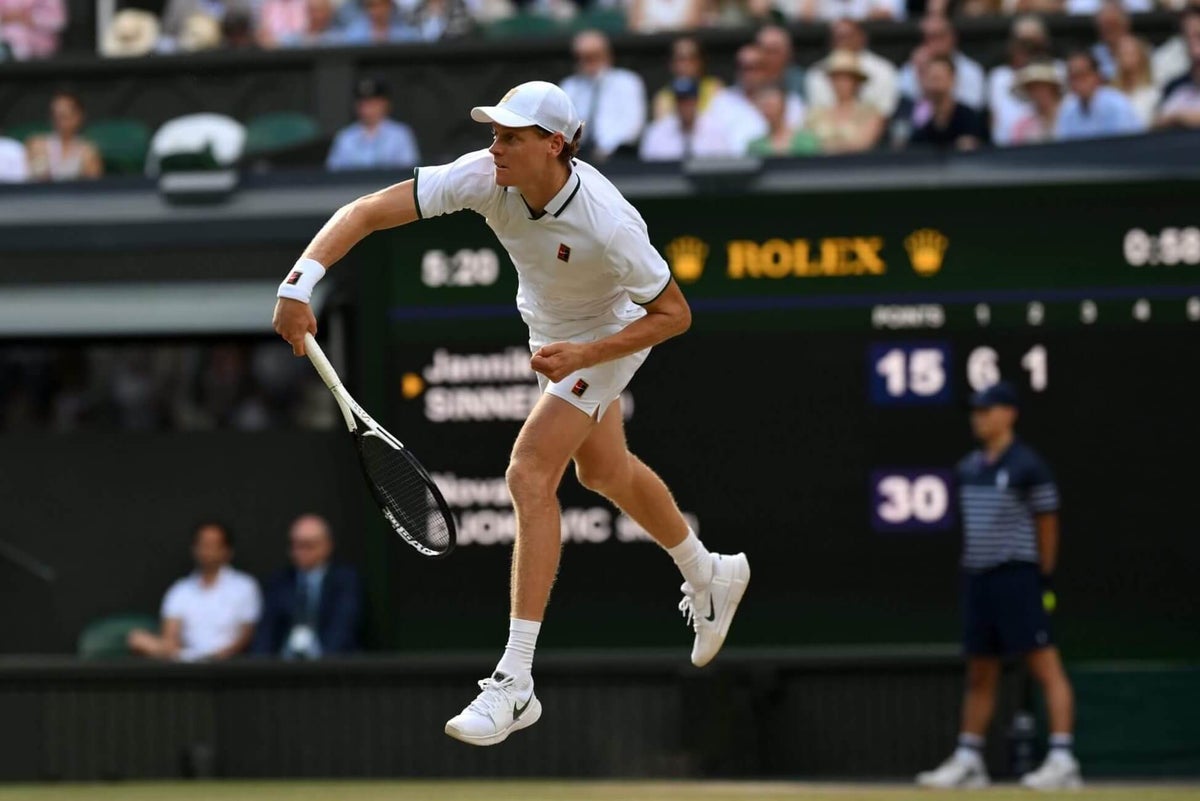
THE ALL ENGLAND CLUB, London — Jannik Sinner is headed to a second consecutive Wimbledon final.Making sure recent history would not repeat itself, Sinner, a four-time Grand Slam champion, moved to within one win of a successful title defense with a straight-sets handling of Novak Djokovic, a seven-time champion at the All England Club.Six months after Djokovic stunned Sinner with a five-set comeback win at the Australia Open, and six weeks after Sinner dissolved into an upset loss in the second round of the French Open, the 24-year-old Italian produced a nearly immaculate level of tennis to beat Djokovic, 6-4, 6-4, 6-4 in two hours and 20 minutes.After Djokovic lost a tight first set that turned on a single lashing forehand from Sinner in the ninth game, which preceded a crushing backhand down the line, any realistic chance the 24-time Grand Slam champion had of keeping alive his hopes for a 25th disintegrated during a seven-minute sequence midway through the second set.Djokovic escaped his likely demise once, saving two break points when serving at 2-2. On one, Sinner sent a rally-ball forehand long, as he has been doing more often than usual this past fortnight. Then Djokovic pushed him into an error on the next point.Two points later they were still on serve, and two points after that Sinner was in a hole of his own at 0-30. But then, he did the other thing he has been doing this past fortnight. He trusted his serve, cracked the ball into the box and dug his way out.That put the pressure back on Djokovic to keep the set even. He couldn’t do it. A double fault, a missed backhand and yet another blasted shot, and Sinner was on his way. When it was over, both men had put in sublime serving performances. Djokovic won over 75 percent of points on his first serve; Sinner won a staggering 88 percent. But it was on second serves where the difference lay. Djokovic won 34 percent. Sinner won 61.Messi and Djokovic: Two 39 year olds still owning their sportsLukas WeeseAt the start, Djokovic, 39, had a chance. The forecast was sun and temperatures in the high-80s, edging toward the trouble zone for Sinner when he is prone to stress during a match. As he and just about everyone else often points out, playing Djokovic is always incredibly stressful.Plus, the match was on Centre Court, where Djokovic understands and can exploit the geometry of the court and the physics of grass better than anyone. Those talents were on full display for most of Tuesday evening against Félix Auger-Aliassime, as Djokovic raced across the grass and laced his groundstrokes as he hadn’t in most of his four previous matches, aside from a routine thrashing of Greece’s Stefanos Tsitsipas.Midway through the fifth set against Auger-Aliassime, the Canadian No. 3 seed, he lasered a backhand down the line for the ages, The quality was still there. He looked like he was rounding into form just in time for another semifinal showdown with Sinner. And if he could survive that, no matter what player was on the other side of the net in the final, it wasn’t going to be Carlos Alcaraz.That’s been the real problem for Djokovic, and for everyone else in tennis, for most of the past two-plus years at the Grand Slams. Even if they beat one generational talent, the other one was almost always there standing between them and the big trophy.But Alcaraz isn’t here. He’s sidelined with a wrist injury. He missed the French Open, too, where Djokovic had what looked like an almost as good chance for No. 25 as he had here at Wimbledon. There, he was on the other side of the draw from Sinner.Then Sinner became moot. A game from victory, heat and an illness, he said, caused him to melt down against Argentina’s Juan Manuel Cerúndolo.The next day, Djokovic couldn’t handle the prosperity. He frittered a two-set lead to João Fonseca in the third round. After the loss, he snapped when asked if he had considered how rich the opportunity that had just slipped away was“I don’t care, I don’t care.” he said in a news conference. “I’ll stop you right there. No. Just lost third round. Let’s just talk about something else. Thank you.”Novak Djokovic could not get into the match against Jannik Sinner on Centre Court. (Clive Brunskill / Getty Images)Still, he knew Sinner was out and Alcaraz was injured. But the real problem was that he was gone long before he could start thinking about another title — and someone not named Sinner or Alcaraz had sent him packing.Those two have dominated the Grand Slams since the start of 2024, sweeping them until Alexander Zverev prevailed amid the chaos of Paris last month. But Djokovic had every reason to believe that he was still within shouting distance of one more title. He made the semifinals of all four Grand Slams last year, the only player other than Sinner or Alcaraz to do that.He made the final at this year’s Australian Open, and had Alcaraz in trouble for the better part of the first two sets before his battery ran low and Alcaraz dispatched him in four. Heading into the spring, Djokovic still seemed like the next best player in the biggest events.He knew that prevailing remained a long shot. He’d said as much after losing to Sinner in the Wimbledon semifinals last year, expressing a sense of futility in his mission as his late-30s body struggled to withstand the punishment.“I probably have to revisit everything and see with my team, with my family, how I want to proceed with my schedule and where I want to peak and how I want to train,” he said in a news conference.“I don’t know what I can do differently, to be honest, because the amount of hours that I spend on a daily basis to take care of myself, I’d like to challenge everyone who is out there on the tour to see if anybody takes care of themself more than me. And I, unfortunately, don’t get rewarded for that right now, with injuries at the later stages of Slams.”He waxed about the good fortune he had experienced in his life and his career, then spoke as honestly as an aging superstar could about the fade that inevitably comes.“It’s just that physical aspect that is bothering me. You’re there. You want to play. You’re determined. But then the body doesn’t want to listen. That’s it. That’s what you can say about it.”The body was still good enough to get through everyone but the best of the best. So on he went. Another semifinal in New York. Another loss to Alcaraz. But then came that magical night in Melbourne, toppling Sinner with a bracing display of down-the-line forehands and aggressive serving, especially on his second serve, to prevent the Italian getting his teeth into points.As they took the court in southwest London Friday afternoon, both Sinner and Djokovic knew the only man left standing was Zverev, who will be playing in his first Wimbledon final and has long been largely allergic to the grass. Zverev’s straight-sets thumping of wild card Arthur Féry Friday was his first Wimbledon semifinal. Wednesday was his first Wimbledon quarterfinal.In their match, Sinner and Djokovic employed the same strategy early on. They went hard after each other’s backhands in the first set.Both also started off serving about as well as they could have hoped. Djokovic was landing nearly 80 percent of his first serves. Sinner was at 71 percent. For more than half an hour, the match unfolded as a tactical baseline battle.Neither player wanted to give up an inch. Djokovic didn’t hit a volley for a winner the entire first set. Sinner hit just three. This was a very stubborn, video game-style tennis.Finally, in the ninth game, Sinner found the slightest of openings. He lashed a forehand winner at 15-15, then pushed Djokovic deep into his backhand corner to force an error.Djokovic got a temporary reprieve when Sinner pelted an overhead into the net. But a point later, Sinner opened the court and sent a backhand down the line for the first break. A game later, he found the big serves when he needed them and rolled a swinging forehand volley into the open court to grab the early advantage.Sinner had done that in Australia, too, before growing profligate on break points, ultimately converting two of 18. And as the night fell over Melbourne, after a restful few days in which his fourth-round opponent gave him a free pass with an injury and his quarterfinal foe quit with an injury after two sets, Djokovic found his magic of old.His legs ricocheted him in and out of the corners. He whipped his groundstrokes with a ferocity that no one on the planet can handle when he’s on. He got better and better as that night got darker.Even with Sinner similarly profligate on break points, Djokovic barely gave any hints of any of that. The last one? Maybe it was a sweeping forehand down the line when he was down a break of serve in the third set. That got a roar out of a crowd that showed up hoping for another turn-back-the-clock classic.Soon he had his lone break point chance of the afternoon. The crowd squealed and chanted his name. Sinner snuffed it out with an ace down the middle. He would finish with 16. He’s been doing this for 12 days, and his baseline game has barely gotten going.As the ball streaked past him, Djokovic nodded and walked across the baseline, accepting the order of the day, and maybe all the rest of the days of his tennis life.
Jannik Sinner serves Novak Djokovic sobering defeat, sets up Wimbledon final against Alexander Zverev
The defending champion kept the 24-time Grand Slam winner at arm's length with a masterful serving performance.
1,624 words~7 min read