Two years ago I sat down with a stack of research on cognitive training and asked a stupid question: what if the twenty-year clinical protocol we ran in-person for professionals could live in a browser and coach itself?
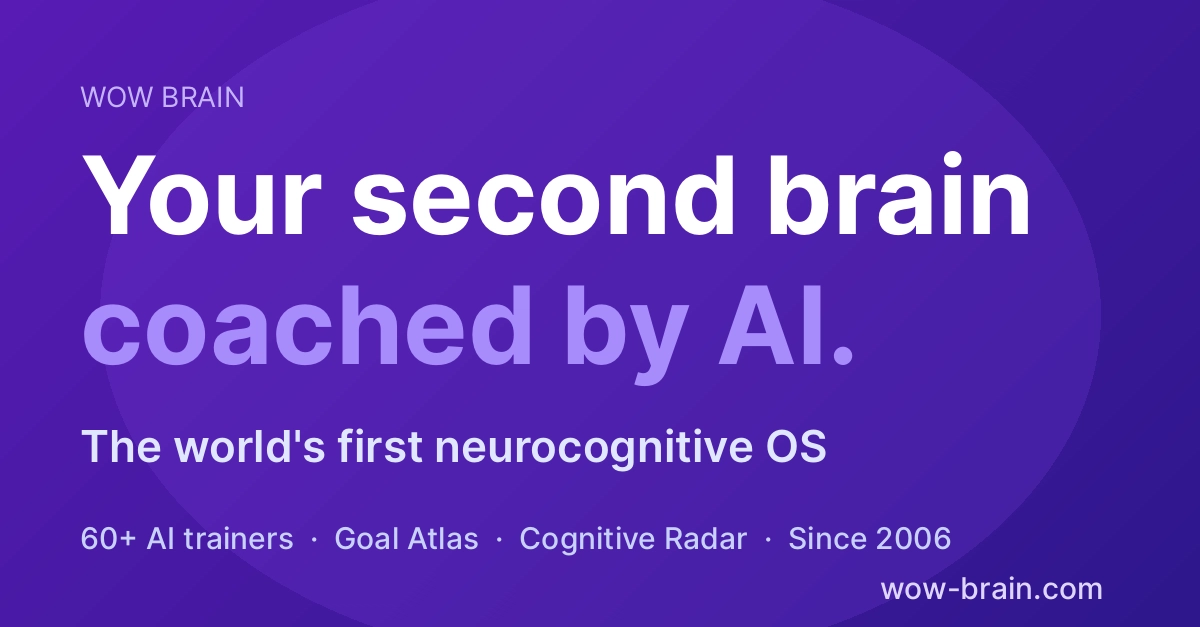
The result is WoW Brain — a neurocognitive OS with 60+ adaptive trainers, an AI Neuro-Probe that reads your state in the morning, and a Goal Atlas that turns a 3-year vision into today's next step. It runs on FastAPI + SQLite + Jinja + a lot of code review with Claude Opus.
This post is not a launch announcement. It's what I actually learned from shipping cognitive training as a daily habit, from a technical and product perspective. If you're building anything AI-adjacent for real humans who need to come back tomorrow, some of these might save you a month.
1. Adaptive difficulty is a UX problem, not a math problem
The academic literature on cognitive training is full of adaptive algorithms — 2-up-1-down staircases, Bayesian ability estimation, ELO-style tracking. I tried them. They work in the lab. They fail in the wild.